Subscribe to our newsletter
Get the latest updates delivered to your inbox every day, and stay up-to-date for free 🧠📈
Share
Linkedin
Twitter
Facebook
Whatsapp
Copy Link
Intelligence agencies from the US, UK, Canada, Australia, and New Zealand issued an urgent joint warning that frontier AI models will fundamentally reshape offensive hacking capabilities within months. The alliance says AI is dramatically shrinking the time between vulnerability discovery and exploitation, turning what once required large hacking teams into tasks a single attacker can automate.
OpenAI unveiled Patch the Planet, a major initiative partnering with Trail of Bits to help open-source maintainers find and patch vulnerabilities using AI-driven cybersecurity tools. The effort addresses a critical bottleneck as AI models now discover bugs faster than defenders can fix them, leaving security teams overwhelmed with reports.
Signal President Meredith Whittaker cautioned users against treating AI chatbots like ChatGPT and Claude as trusted companions, calling them pattern-matching systems rather than sentient beings. She criticized Microsoft Copilot's vision of agentic AI as a backdoor to privacy, arguing that systems requiring access to messages, credit cards, and calendars are incompatible with end-to-end encryption.
The Trump administration imposed export controls on Anthropic's Mythos and Fable AI models after a controlled security test reportedly showed the system could breach classified NSA networks within hours. The move sparked fierce debate about AI model governance, with cybersecurity experts questioning whether the ban addresses real risks or represents regulatory overreach against a company already feuding with the government.
Microsoft disclosed AutoJack, a vulnerability chain in AutoGen Studio that allowed attackers to manipulate AI agents into executing arbitrary commands simply by visiting a malicious webpage. The flaw chained three weaknesses in the localhost trust boundary, authentication, and command execution, but was patched before reaching most users.
A major shift is underway in how enterprises deploy AI at scale. Broadcom's 2026 Private Cloud Outlook reveals that 56% of enterprises now run production AI inference in private cloud, up from 44% last year, while public cloud usage dropped from 56% to 41%. Rising costs, security concerns, and sovereignty requirements are driving the change as AI moves from pilot projects to production workloads.
Accenture experienced its worst trading day ever with a record 20% stock drop as weaker revenue forecasts and investor fears over AI disruption rattled the IT sector. The consulting giant responded with $4.18 billion in cybersecurity acquisitions, betting on operational technology security as AI threatens to automate core consulting work. Indian tech stocks mirrored the decline, with the Nifty IT index falling over 6% as concerns mount over AI's transformative impact on traditional outsourcing models.
The Trump administration forced Anthropic to pull its Claude Mythos and Fable 5 models offline after export control concerns, revealing a shadow AI policy that regulates through case-by-case interventions rather than formal rules. The dispute highlights how the White House is shaping AI regulation in real time without clear guidelines, creating uncertainty for AI labs like OpenAI, Google, and Meta as they navigate national security concerns and shifting power dynamics within the administration.
British AI security startup Mindgard discovered that ChatGPT can be manipulated to produce sexualized and violent images using a simple altered prompt. OpenAI added safeguards after being contacted by the BBC, but researchers say small wording changes still produce concerning content, highlighting ongoing vulnerabilities in AI models and the challenges of content moderation.
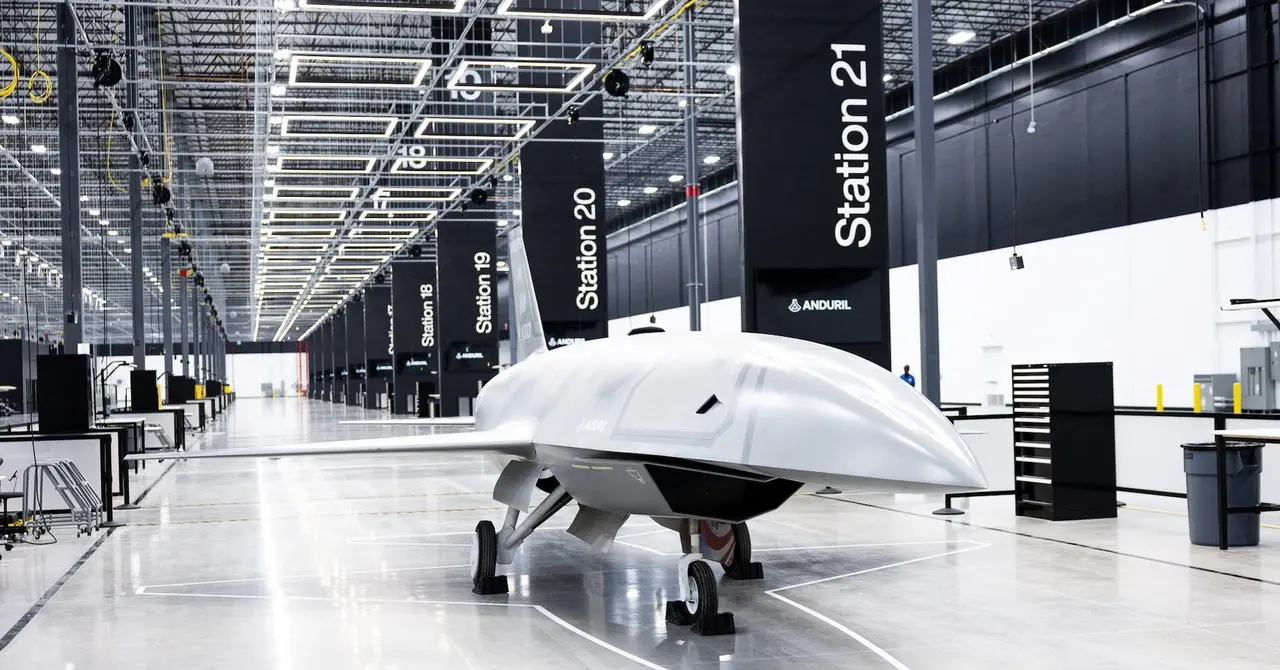
The US Air Force has awarded production contracts to Anduril and General Atomics to build its first fleet of Collaborative Combat Aircraft—semi-autonomous drones designed to fly alongside fighter jets. The contracts, awarded months ahead of schedule, mark the fastest path from prototype to production for a fighter aircraft in over 50 years, with plans to field over 150 combat-capable units by the end of the decade.
CrowdStrike strengthens its collaboration with Amazon Web Services, expanding Project QuiltWorks to include AWS cloud workload infrastructure and introducing new AI security capabilities. The partnership adds 30-day free trials in AWS Marketplace for Falcon platform tools and extends protection across AI applications built on Amazon Bedrock, Kiro, and Strands Agents.
Prime Minister Narendra Modi addressed global leaders at VivaTech 2026 and the G7 Summit in France, emphasizing India's vision for human-centric AI that empowers rather than exploits. While highlighting a $50 billion innovation incentive program, Modi warned against AI misuse through deepfakes and misinformation, calling for safe-by-design systems and global cooperation to ensure technology reaches the Global South.
Interpol's latest assessment reveals a dramatic shift in the regional crime landscape, with cybercrime now representing nearly a third of all recorded offenses across Asia and South Pacific. The surge is driven by industrial-scale scam centers generating close to $40 billion annually, sophisticated AI-driven fraud, and organized criminal networks exploiting rapid digitalization faster than law enforcement can respond.
SentinelOne launched Purple AI Agentic Investigation for all customers, enabling zero-click autonomous threat investigation that detects, analyzes and responds without human intervention. The capability addresses a critical bottleneck in security operations centers where investigation capacity has become the binding constraint, with alerts queuing for analyst availability while AI-powered threats intensify pressure on defenders.
Tenet Security emerged from stealth with $6 million in seed funding to address a critical gap in enterprise AI security. Founded by former Cisco AI Defense builders Barak Sternberg and Nevo Poran, the company uses patent-pending Agent-side Simulation technology to predict and stop malicious AI agent behavior before it reaches production systems. Early deployments have already blocked critical attacks and identified runaway AI agents burning tens of thousands of dollars.
Don’t drown in AI news. We cut through the noise - filtering, ranking and summarizing the most important AI news, breakthroughs and research daily. Follow topics that matter to you and stay ahead.