Share
Linkedin
Twitter
Facebook
Whatsapp
Copy Link
Alphabet completed a historic $3.6 billion yen-denominated bond sale, the largest ever by a foreign company in Japan. The Google parent tapped Japanese institutional investors as part of its aggressive multi-currency funding strategy to finance up to $190 billion in AI capital expenditure. The move signals how US tech companies are shifting from cash reserves to debt markets to support massive AI infrastructure investments.
SoftBank Group's mobile-services subsidiary will begin manufacturing large-scale battery cells at a converted Sharp factory in Sakai, Osaka, targeting one gigawatt-hour per year. Partnering with South Korea's Cosmos Lab and DeltaX, the company plans mass production from April 2026 to address surging power demands of AI data centers while avoiding Chinese supply chains.
Sony Semiconductor Solutions and TSMC signed a non-binding memorandum of understanding to establish a joint venture in Kumamoto, Japan, focused on developing next-generation image sensors. With Sony as the majority shareholder, the partnership targets automotive and robotics markets where AI perception systems are becoming critical infrastructure.
SoftBank Corp has initiated discussions with chip giant Nvidia and contract manufacturer Foxconn to develop made-in-Japan AI servers. The telecom company plans to start with component assembly by the decade's end before taking full control of manufacturing, focusing on high-performance servers capable of running advanced GPUs at high speeds.
Across Japan and Australia, residents are pushing back against massive data centre construction in their neighborhoods. In Tokyo, a couple's property lost 25% of its value after a 52-meter data centre was approved near their home. From Melbourne to Sydney, communities report noise pollution, diesel generator exhaust, and concerns over outdated zoning rules that classify these industrial-scale facilities as office buildings.
Toto's shares jumped 18% to a five-year high after announcing plans to invest $190 million in semiconductor component production. The company's advanced ceramics business, which produces electrostatic chucks for Nand memory chips, now accounts for over half its operating profit as the AI boom transforms the toilet manufacturer into an unexpected AI play.
Japan Airlines has launched a trial deploying humanoid robots for ground handling tasks at Tokyo's Haneda Airport, addressing a severe labor shortage driven by surging tourism and Japan's aging population. The pilot program, running through 2028, will test robots from Chinese manufacturers Unitree Robotics and UBTECH for tasks like cargo loading and cabin cleaning.
Japan's NEDO has selected the ZAM memory development project for government subsidies, backing Intel and SoftBank subsidiary SAIMEMORY's effort to create a power-efficient alternative to HBM. The next-generation memory technology promises 40% lower power consumption and aims for mass production by 2029, marking Japan's strategic push to re-enter the semiconductor market.
SoftBank is transforming part of its former Sharp LCD factory in Osaka into one of Japan's largest battery production facilities to power its own AI data centers. The mobile unit aims to bring production online within five years, initially supporting its infrastructure before offering batteries to other Japanese companies. The move completes a vertical integration strategy spanning chips, data centers, and energy storage.
Japan has established a task force to address cybersecurity risks posed by Anthropic's Mythos AI model after it uncovered thousands of vulnerabilities across major operating systems and web browsers. Finance Minister Satsuki Katayama convened Japan's top banks, the Financial Services Agency, and the Bank of Japan to tackle what she called "a crisis that is already at hand."
Japanet Holdings, a Japanese TV shopping company, has expanded its venture capital fund from $50 million to $200 million after early investments in Anthropic, xAI, SpaceX, and OpenAI generated extraordinary returns. Anthropic's valuation soared from $550 million in 2021 to $380 billion in 2026. The move reflects a broader trend of Japanese corporations racing to secure stakes in Silicon Valley startups amid fears of missing the AI revolution.
Nissan announced an aggressive push into autonomous driving, planning to deploy AI driving technology across 90% of its vehicle lineup while cutting 11 models. CEO Ivan Espinosa revealed the strategy includes new hybrid and electric models, partnerships with Wayve and Uber for robotaxis, and ambitious sales targets of 1 million vehicles each in the U.S. and China by 2030.
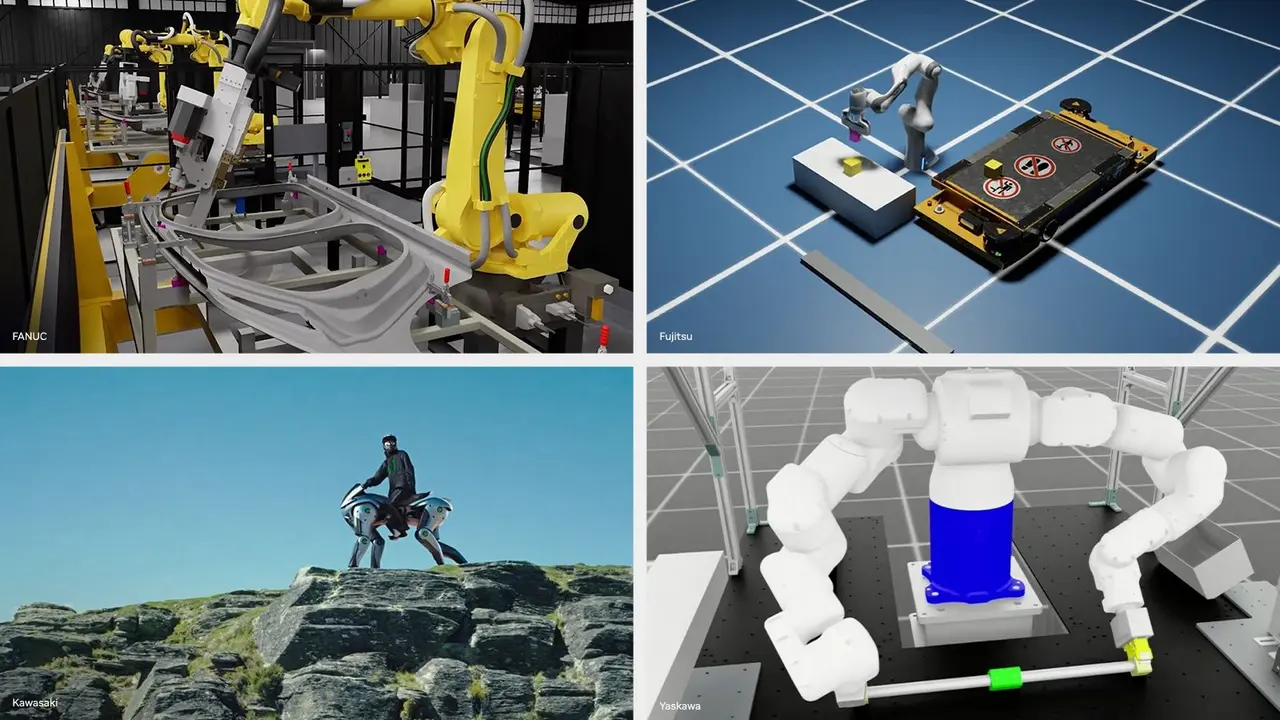
SoftBank, NEC, Sony Group, and Honda have formed a joint venture to develop a trillion-parameter AI model focused on Physical AI—systems that control robots, autonomous vehicles, and factory automation. With ¥1 trillion (~$6.3 billion) in government backing over five years, Japan aims to challenge U.S. and China AI dominance while keeping Japanese data domestic.
Microsoft announced a four-year, $10 billion commitment to Japan, focusing on AI infrastructure development and cybersecurity partnerships. The tech giant will collaborate with SoftBank and Sakura Internet to expand computing capacity while training 1 million engineers by 2030, addressing Japan's projected shortfall of over 3 million AI and robotics workers by 2040.
Fujitsu plans to develop an advanced 1.4nm AI chip manufactured entirely in Japan by Rapidus, marking a significant push toward sovereign AI capabilities. Japan's NEDO will fund roughly two-thirds of the ¥58 billion ($363 million) development cost. The NPU will integrate with Fujitsu's Arm-based Monaka CPUs for deployment in server systems and the Fugaku NEXT supercomputer.
Don’t drown in AI news. We cut through the noise - filtering, ranking and summarizing the most important AI news, breakthroughs and research daily. Follow topics that matter to you and stay ahead.