Share
Linkedin
Twitter
Facebook
Whatsapp
Copy Link
Uber has announced its first autonomous vehicle partnership in Japan, joining forces with British AI startup Wayve and Nissan to pilot a robotaxi service in Tokyo by late 2026. The deployment will use Nissan LEAF electric vehicles equipped with Wayve's AI Driver technology, connected to Uber's platform with trained safety operators initially behind the wheel. This marks a significant expansion of Uber's global robotaxi ambitions into one of the world's most challenging urban driving environments.
Silicon Valley startup Nuro has begun testing self-driving vehicles on Tokyo's public roads, marking its first overseas expansion. The company's AI-powered system navigates Japanese streets without prior training on local data, using what it calls zero-shot autonomous driving. Backed by Nvidia, Uber, and Softbank, Nuro aims to license its technology globally as it competes with established players like Waymo.
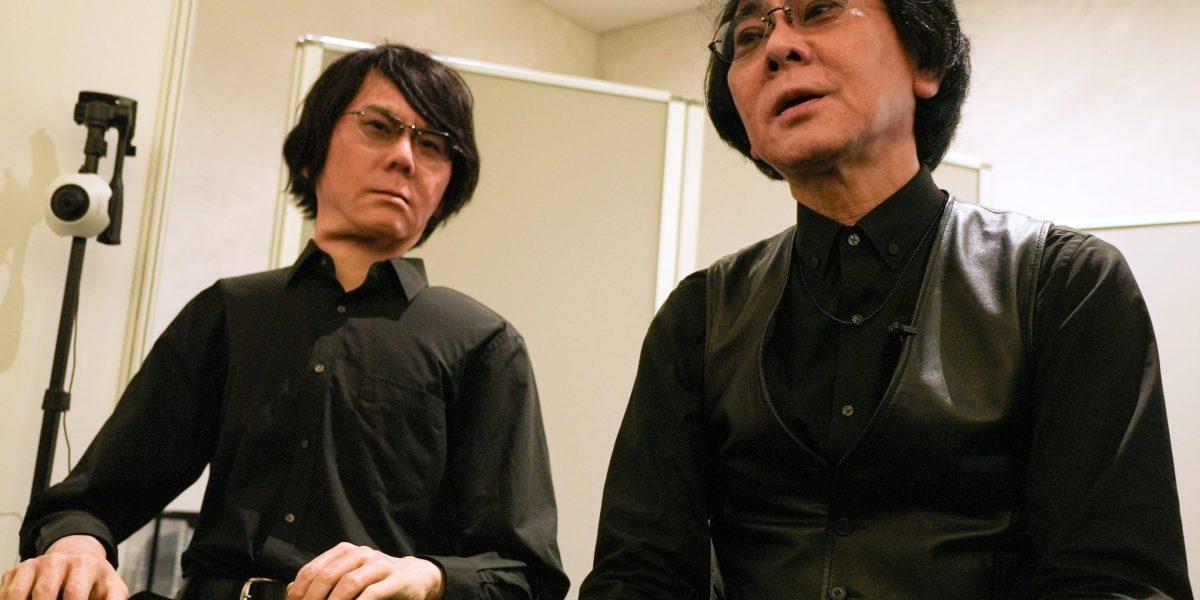
Kyoto University researchers have introduced Buddharoid, an AI-powered robot monk trained on vast Buddhist scriptures. The humanoid robot can hold dynamic conversations, perform human-like gestures, and adopt traditional prayer postures in temple environments. As Japan faces an aging population and shrinking workforce, this innovation addresses the shortage of Buddhist monks while showcasing the intersection of AI and spiritual practice.
Toto, the Japanese company known for Washlet bidets and heated toilet seats, is being repositioned as a critical AI infrastructure player. Activist investor Palliser Capital claims the company's advanced ceramics business—producing precision components for semiconductor manufacturing—makes it the most undervalued and overlooked AI memory beneficiary. Shares have jumped nearly 40% in early 2026 as investors recognize the connection between Toto's ceramic parts and the booming demand for memory chips in AI data centers.
EVA AI transformed a Manhattan wine bar into an AI pop-up cafe where users could video chat with virtual companions like John Yoon and Claire Lang. The Valentine's Day event tested whether AI relationships could transition from private screens to public spaces, revealing both the appeal and awkwardness of human-AI connection.
Taiwan's TSMC announced plans to manufacture advanced 3-nanometer semiconductors at its second Kumamoto factory in Japan, a significant upgrade from initial plans. The move addresses bottlenecked production capacity driven by surging AI demand from customers like Nvidia, while also reflecting geopolitical considerations as the chipmaker diversifies beyond Taiwan.
Japanese flash memory maker Kioxia is promoting Hiroo Oota to CEO as it positions itself to capitalize on surging demand for NAND storage in AI data centers. While competitors Samsung, SK Hynix, and Micron focus on high-bandwidth memory, Kioxia sees opportunity in high-density storage solutions. The company's shares have jumped more than 13 times since its late 2024 IPO, reflecting investor confidence in its strategic positioning.
Google has invested in Japanese AI startup Sakana AI to strengthen Gemini chatbot's position in Japan, where it trails OpenAI's ChatGPT. The partnership allows Sakana AI to leverage Google's language models while helping Gemini penetrate Japan's corporate landscape. Founded in 2023 and valued at $2.6 billion, Sakana AI has already secured contracts with major Japanese banks and is expanding into government and defense sectors.
Japan has launched an investigation into Elon Musk's Grok AI service over concerns about non-consensual sexualized images. Economic Security Minister Kimi Onoda warned that all options, including legal measures, are on the table if X Corp fails to improve safeguards. The probe adds Japan to a growing list of countries taking action against the chatbot.
Japanese game developer Cygames apologized after announcing Cygames AI Studio, an AI-focused subsidiary, sparking widespread criticism from fans. The studio behind Umamusume and Granblue Fantasy clarified that generative AI isn't used in its products and promised not to implement it without prior notice, though the commitment has left some fans skeptical about future AI adoption.
A critical glass cloth shortage is threatening AI chip production as Apple, Nvidia, Google, and Amazon compete for limited supplies from Japanese manufacturer Nitto Boseki. The supply crunch, driven by surging AI data center demand, won't ease until 2027. Tech giants are dispatching executives to Japan while racing to qualify alternative suppliers.
Japan's Ministry of Economy, Trade and Industry is set to nearly quadruple its budgeted support for cutting-edge semiconductors and AI development to ¥1.23 trillion ($7.9 billion) for fiscal year 2025. The massive increase reflects Japan's push to strengthen its position in frontier technology as the U.S. and China continue their dominance, while also securing better supply chain access for critical technologies.
Japan's state-backed chipmaker Rapidus has developed a prototype glass interposer that could cut AI chip production costs significantly. The company plans mass production by 2028, using 600mm glass substrates that yield 10 times more interposers than traditional silicon wafers. This breakthrough positions Rapidus to compete directly with TSMC as Japan invests heavily to rebuild its semiconductor industry.
Over 670 companies gathered at Tokyo's International Robot Exhibition to showcase AI robots and humanoid robots designed for disaster response and workplace tasks. Kawasaki Heavy Industries demonstrated its Kaleido humanoid performing fire extinguishing and rescue operations, while other exhibitors displayed robots addressing labor shortages through autonomous movement and remote control capabilities.
US memory chip giant Micron Technology plans to invest $9.6 billion in building a new high-bandwidth memory (HBM) chip plant in Hiroshima, Japan, targeting the growing AI market with Japanese government subsidies supporting the project.
Don’t drown in AI news. We cut through the noise - filtering, ranking and summarizing the most important AI news, breakthroughs and research daily. Follow topics that matter to you and stay ahead.