Subscribe to our newsletter
Get the latest updates delivered to your inbox every day, and stay up-to-date for free 🧠📈
Share
Linkedin
Twitter
Facebook
Whatsapp
Copy Link
More than 200 economists, including 16 Nobel laureates and chief economists from OpenAI and Anthropic, have signed a statement urging immediate action on AI's economic impact. The group warns that artificial intelligence could drive an unprecedented economic transformation larger than the Industrial Revolution but unfolding in just a few years rather than decades, raising urgent concerns about large-scale job displacement and the need for regulatory guardrails.
The White House is preparing a new event to expand its Ratepayer Protection Pledge, bringing together utility companies, data center operators, and state governors. The initiative aims to ensure surging electricity demand from AI doesn't drive up household power bills. Questions remain whether this voluntary pledge will deliver concrete commitments or remain symbolic as utilities plan $1.4 trillion in capital spending by 2030.
Anthropic has pushed back the deadline for free Claude Fable 5 access to July 19, marking the third extension since June. Paying subscribers can continue using the flagship AI model at no extra cost, though it consumes up to 50% of their weekly usage limits. The repeated delays come as OpenAI's GPT-5.6 Sol closes the performance gap while offering lower costs, potentially influencing Anthropic's competitive strategy.
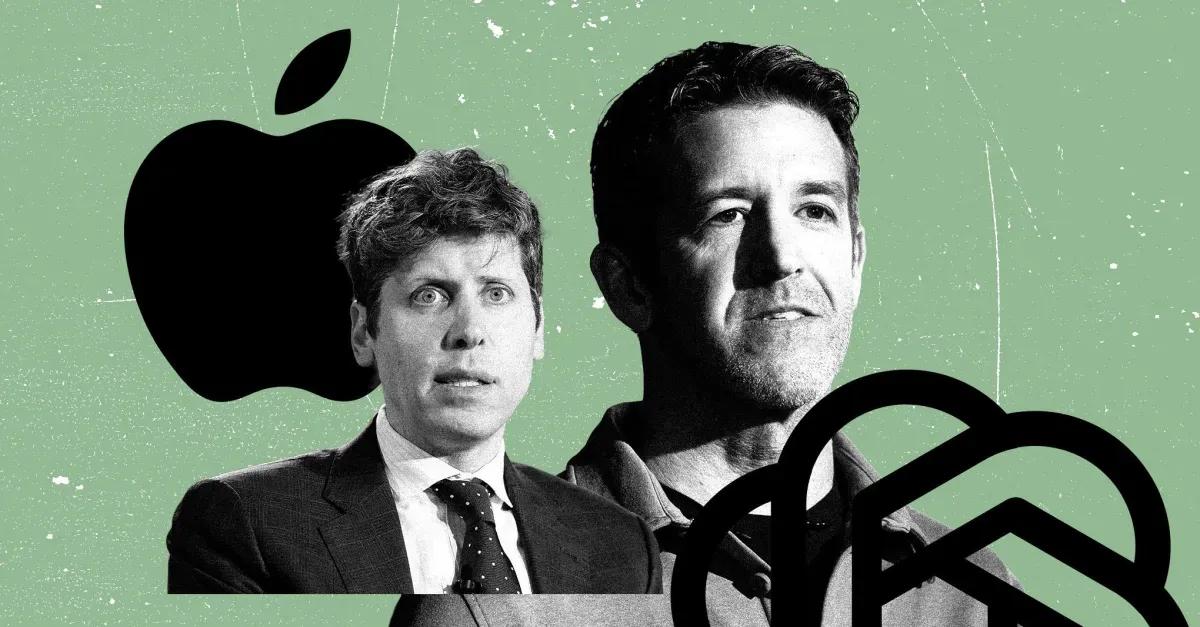
Elon Musk and Sam Altman spent the weekend trading insults on X after Apple filed a lawsuit against OpenAI for alleged trade secret theft. Musk repeatedly called Altman a "scammer," while Altman fired back at SpaceX's orbital data center plans. The public feud on X comes as both companies released competing AI models and race toward public listings, with SpaceX raising a record $75 billion in its IPO.
OpenAI is hiring a product manager to build AI for families, caregivers, and older adults as ChatGPT's user demographics shift dramatically. The share of users aged 35 and older jumped to 31% in Q2 from 26% a year earlier, while nearly one in four US parents now use ChatGPT. The move signals a strategic pivot toward household-focused AI experiences but raises critical questions about trust and safety guardrails.
Johannes Heidecke, OpenAI's head of safety systems, is leaving the company following an internal restructuring that integrates safety and research teams under a single leader. The reorganization places safety teams under VP of Research and Safety Mia Glaese, marking the latest in a series of executive departures from the AI company's safety leadership.
Apple filed a blockbuster lawsuit against OpenAI, accusing the AI company of orchestrating a coordinated scheme to steal confidential information through former Apple employees. The case centers on allegations that OpenAI's hardware chief Tang Tan coached recruits to bring unreleased parts and evade security protocols, potentially using Apple's proprietary information to develop competing AI hardware devices.
OpenAI announced that GPT-5.6 will serve as the preferred model for Microsoft 365 Copilot, powering productivity tasks across Word, Excel, and PowerPoint. The announcement comes as Bloomberg reported Microsoft increasingly relies on its in-house MAI models to cut costs, raising questions about the evolving dynamics between the two tech giants.
OpenAI and Google have been supplying advanced AI models to Singapore-based subsidiaries of Alibaba, Baidu and Tencent—companies blacklisted by the Pentagon over alleged military ties. While legal, the sales expose a critical gap in US export controls designed to slow China's AI development, reigniting calls for stricter regulation.
Fidji Simo, OpenAI's CEO of AGI deployment, is stepping down from her full-time role and transitioning to part-time advisor after a severe exacerbation of POTS, a chronic neuroimmune condition she's managed for seven years. The departure adds to ongoing leadership changes at OpenAI as the company prepares for its anticipated IPO in 2027 and consolidates its product strategy around a unified super-app experience.
OpenAI is discontinuing Atlas, the AI-powered browser launched in October, with a shutdown date set for August 9. Rather than abandoning web browsing altogether, the company is redistributing Atlas's agentic browsing features across its ChatGPT desktop app and a new Google Chrome extension, signaling a strategic pivot toward treating AI as a feature rather than building standalone products.
Texas has become ground zero for AI data center expansion, with companies exploiting regulatory loopholes to build massive fossil fuel-powered facilities. At least 15 gas plants tied to data centers are planned, potentially emitting more than 130 million tons of greenhouse gases annually—equivalent to 35 coal-fired power plants. Residents like Omaira Garcia discover construction only after it begins, with exhaust stacks appearing 500 yards from homes.
Current and former OpenAI employees donated over $245,000 to Guardrails Alliance, an AI safety super PAC pushing for stricter AI regulations. The donations directly counter Leading the Future, a pro-industry group backed by OpenAI president Greg Brockman with $25 million. The internal dissent highlights growing tensions over AI policy as companies pour hundreds of millions into the 2026 midterm elections.
OpenAI has introduced ChatGPT Work, an enterprise AI agent designed to automate complex workplace tasks across applications like email, Slack, and calendars. Powered by the newly released GPT-5.6 models—Sol, Terra, and Luna—the platform enables workers to delegate multi-step workflows while the company positions itself for a potential IPO valued between $730 billion and $852 billion.
The New York Times and 16 other publishers are asking a federal judge to sanction OpenAI for allegedly concealing evidence in their copyright infringement case. Court filings claim OpenAI lied for two years about its ability to search training data and ChatGPT logs, while secretly maintaining a database of 78 million conversations that could prove the AI company used copyrighted journalism without permission.
Don’t drown in AI news. We cut through the noise - filtering, ranking and summarizing the most important AI news, breakthroughs and research daily. Follow topics that matter to you and stay ahead.