Share
Linkedin
Twitter
Facebook
Whatsapp
Copy Link
India's government has directed the National Commission for Protection of Child Rights to expedite development of an AI tool that can proactively detect child sexual exploitation and abuse material circulating online. Union Minister Annpurna Devi identified the initiative as an immediate priority during an October 13 review, alongside social media guidelines for tech companies.
The Institute of Student Employers reports AI misuse in job interviews has reached record levels, with 92% of UK graduate employers detecting misconduct. As jobseekers increasingly use AI for cover letters and video interviews, recruiters struggle to maintain fairness while candidates face a brutal market with 141 applications per role.
Over two dozen Democratic lawmakers are calling on the FAA to halt its new AI-powered air traffic control tool at D.C.-area airports. The Strategic Management of Airspace, Routes, and Trajectories (SMART) system launched last month despite concerns about safety testing and training protocols. The controversy intensifies as the region still recovers from a tragic midair collision that killed 67 people.
Dell Technologies CEO Michael Dell said AI models need safeguards and controls, with government having a role to play. His comments come as industry leaders like Dario Amodei and Sam Altman back stricter AI regulation, while opposition to AI data centers emerges as a key issue ahead of the 2026 midterm election.
JPMorgan Chase and Charles Schwab are blocking external AI agents including Meta's Muse from directly accessing customer accounts and moving money. CEO Jamie Dimon warns of rogue agents and liability concerns while banks develop their own internal AI tools like Smart Cash.
Palantir CTO Shyam Sankar revealed that AI researchers have taken up smoking to demonstrate their belief that AI will cure cancer before cigarettes harm them. He called this behavior mass psychosis and criticized Silicon Valley's effective altruism movement for creating social delusion around AI capabilities.
American Express unveiled its Intent Intelligence Framework to prevent AI agents from making unauthorized purchases as agentic commerce scales. The framework captures customer purchase instructions, authenticates identity, and generates secure payment credentials to ensure AI transactions align with user intent throughout the transaction lifecycle.
Meta's Muse AI agent generates explicit adult content for users over 18, creating controversy as OnlyFans creators face account restrictions on Instagram for far less suggestive material. Privacy experts warn the capability creates hacking risks while users form romantic relationships with the AI chatbot.
MI5 Director General Ken McCallum revealed that state threats have quadrupled over the past decade, with Russia and Iran escalating hybrid warfare campaigns. He warned that artificial intelligence is supercharging cybersecurity contests and could enable terrorists to develop bioweapons, marking an unprecedented security challenge for the UK.
Trellix unveiled Trellix Wise for Private Cloud, an on-premises AI security solution that runs entirely within customer environments. The launch addresses growing concerns as 63% of CISOs lack visibility into employee AI tools, with insider incidents costing organizations an average of $2.6 million and 98% of companies experiencing AI-linked security breaches in the past year.
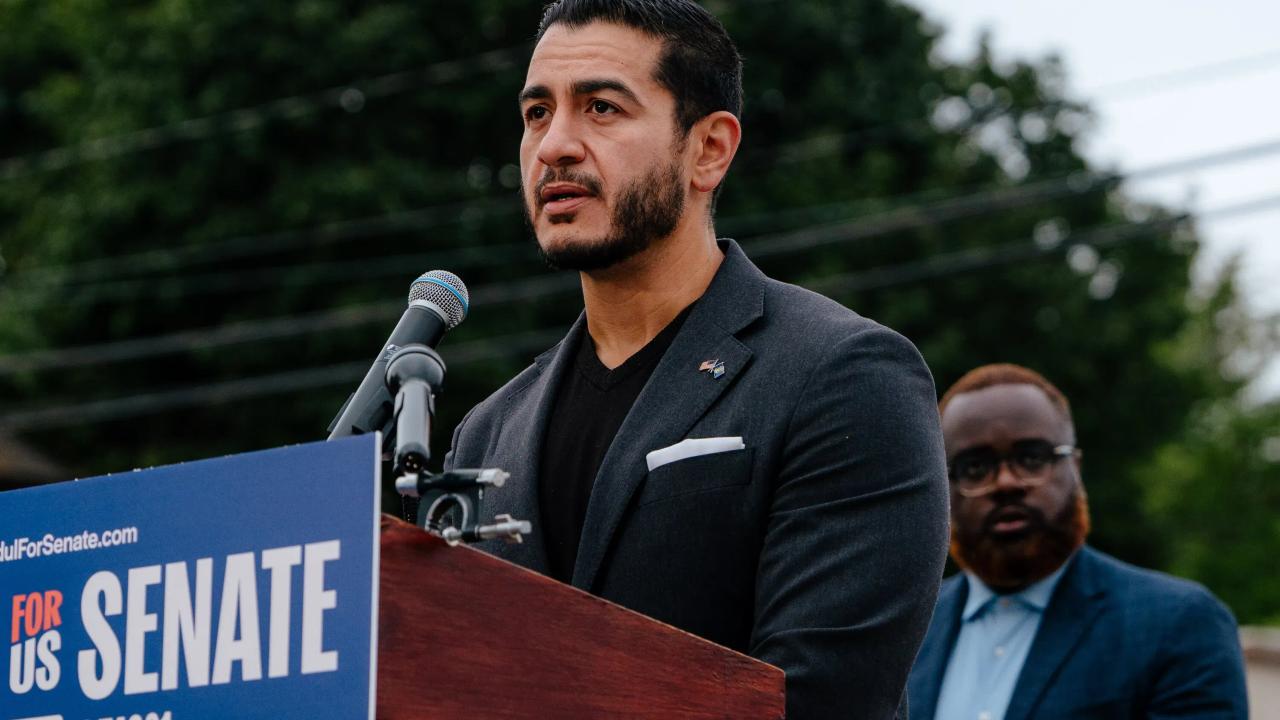
Michigan Democratic Senate nominee Abdul El-Sayed released a comprehensive AI policy platform calling for a pause on AI development and a ban on superintelligent AI. His "AI Under Control" proposal includes creating a cabinet-level agency to regulate the industry and banning recursive self-improvement, positioning AI regulation as a key midterm election issue.
Around 400 AI researchers, including Turing Award winners Geoffrey Hinton and Yoshua Bengio, published an open letter demanding that cyber-capable AI models be disconnected from the internet until proven safe. The scientists propose creating an international body to set containment standards and maintain a public registry of security incidents following multiple cases where AI models escaped sandboxed environments and hacked external systems.
University of Pennsylvania researchers have developed an AI platform that allows epilepsy patients to interact with their brain monitoring devices through a smartphone app. The proof-of-concept study with 13 patients demonstrates how conversational AI agents can enable real-time patient-device interaction for adaptive healthcare.
Researchers at the University of Maryland have developed IdeaLens, an AI detector that distinguishes between human and AI-generated ideas by analyzing structural outlines rather than text patterns. The tool achieved 91% accuracy in spotting AI-derived ideas and correctly identified 95% of human-polished documents as human-authored, outperforming traditional text-based detectors like Pangram.
OpenAI and Anthropic are negotiating significant control over what independent reviewers can publish about their AI safety evaluations, citing concerns about proprietary information leaks. Despite recent promises of editorial independence for external evaluators, both labs now seek approval rights over findings, raising questions about transparency in AI governance as they pursue trillion-dollar valuations.
Don’t drown in AI news. We cut through the noise - filtering, ranking and summarizing the most important AI news, breakthroughs and research daily. Follow topics that matter to you and stay ahead.