Subscribe to our newsletter
Get the latest updates delivered to your inbox every day, and stay up-to-date for free π§ π
Donβt drown in AI news. We cut through the noise - filtering, ranking and summarizing the most important AI news, breakthroughs and research daily. Follow topics that matter to you and stay ahead.
Category
Year
Month
12 Jul 2026
Tata Consultancy Services is building a team of up to 8,900 forward-deployed engineers while actively pursuing AI acquisitions. CEO K Krithivasan dismisses concerns that AI will disrupt the outsourcing model, arguing deep client knowledge remains essential for integrating AI systems. The move positions TCS against OpenAI, Anthropic and Microsoft in the race to help enterprises deploy AI tools.
2 Sources
New research from Boston College reveals workers aged 55 and over in AI-exposed jobs are leaving work at accelerating rates since ChatGPT's 2022 launch. Computer programmers and accountants face the steepest increases, with exits rising over 25% and 22% respectively. The departures appear driven by unemployment rather than voluntary retirement, raising concerns about Social Security reform proposals.
5 Sources
11 Jul 2026
Johannes Heidecke, OpenAI's head of safety systems, is leaving the company following an internal restructuring that integrates safety and research teams under a single leader. The reorganization places safety teams under VP of Research and Safety Mia Glaese, marking the latest in a series of executive departures from the AI company's safety leadership.
4 Sources
10 Jul 2026
JPMorgan Chase revealed that AI-powered investing agents outperformed a traditional 60/40 portfolio by 0.7 percentage points annually in historical backtests spanning two decades. The system dynamically shifts between stocks and bonds based on market conditions, though strategists caution against treating the results as proof that AI can consistently beat markets.
The AI industry is experiencing a fundamental shift as companies move away from simply chasing the most powerful models toward prioritizing cost efficiency and task-specific performance. Major players like OpenAI, Meta, and SpaceXAI are now competing on token efficiency and pricing, while open-source models gain traction with enterprises looking to control AI spending that has spiraled into millions monthly.
6 Sources
Meta Platforms erased its 2026 losses with a 15% weekly surge, its strongest performance since early 2024. The rally came after the company unveiled plans to sell AI computing capacity through Meta Compute and launched new AI models including Muse Spark 1.1 and Muse Image. Wall Street's enthusiasm signals a shift in sentiment around Meta's massive AI infrastructure spending, though the company has yet to prove it can compete with established cloud providers.
7 Sources
Major investment firms Stifel and Bank of America have upgraded Shopify to buy ratings, setting $150 price targets that suggest nearly 25% upside. Both cite the emerging agentic AI marketβprojected to reach $24.5 billion by 2030βas a key driver. The firms argue that AI-powered autonomous shopping bots will strengthen rather than threaten Shopify's position in e-commerce infrastructure.
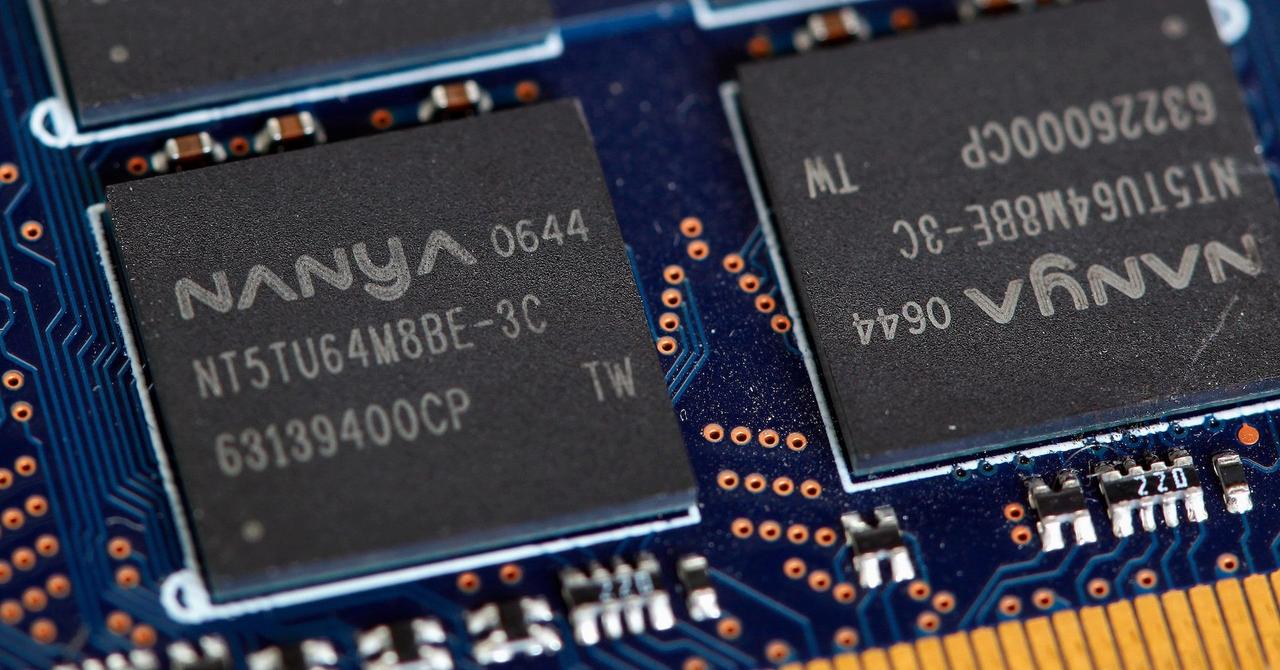
Taiwanese chipmaker Nanya Technology announced plans to spend $6.2 billion in 2027, quadrupling its current investment, as it races to expand memory chip production amid an AI-driven shortage. The company reported second-quarter revenue up 684% year-over-year, with gross margins climbing to 79.5% as customers including Nvidia, Qualcomm, and Google drive demand for AI-specific memory products.
Poste Italiane, Italy's state-backed postal service, is making an unexpected move into the AI infrastructure race with a β¬13.5 billion bid for Telecom Italia. The company plans to transform its nationwide network of post offices and sorting centers into distributed computing hubs, positioning itself as a sovereign alternative to U.S. tech giants in Europe's push for digital independence.
Tencent is leading a consortium to buy back Manus, the Chinese AI agent startup, after Beijing ordered Meta to reverse its $2 billion acquisition. The move signals China's determination to keep homegrown AI talent and technology under domestic control as U.S.-China competition intensifies in artificial intelligence.
9 Sources
Chinese AI company MiniMax closed a $2 billion fundraising round through discounted share placement and convertible bonds, even as its stock has lost 80% since March. CEO Yan Junjie pledged to forgo salary until the company achieves artificial general intelligence and give away 5% of his shares to employees and open-source projects.
Palo Alto Networks CEO Nikesh Arora says AI token costs need to plummet by as much as 90% before businesses can deploy the technology at scale. While OpenAI's 54% efficiency improvement is welcomed, Arora argues it's nowhere near enough. His warning reflects a growing frustration among enterprise leaders as total AI bills triple despite per-token prices falling 98%, driven largely by agentic AI usage.
AI training startup Mercor is in talks to raise funding at a $20 billion valuation, doubling its worth in just nine months. The company announced it's acquiring Deeptune to build training environments for AI agents, though questions emerge around conflict-of-interest as CEO Brendan Foody was an angel investor in the target. Despite a major data breach in March, Mercor reports its annualized revenue crossed $2 billion.
Nvidia has shed nearly $1 trillion in market value over two months, driving its forward P/E ratio to its lowest point since early 2019. Despite the steep correction, the company continues posting record revenue growth with Data Center sales reaching $75.2 billion. Wall Street analysts see the selloff as a buying opportunity, with Bank of America projecting $20 billion in new Vera CPU sales and maintaining a $350 price target.
09 Jul 2026
Microsoft reported a 25% increase in carbon emissions during fiscal 2025, reaching 20.3 million metric tons as rapid AI infrastructure expansion collides with its pledge to become carbon-negative by 2030. The tech giant now faces mounting pressure to reconcile AI ambitions with environmental commitments, even as it claims progress on renewable energy and water replenishment targets.
Get all updates into your inbox π, Stay Up-to-date for Free π₯³