Nanya Technology plans $6 billion spending surge in 2027 to capitalize on AI boom


2 Sources
[1]
Taiwanese chipmaker Nanya plans $6 billion in spending in 2027, riding AI boom
TAIPEI, July 10 (Reuters) - Taiwanese memory chipmaker Nanya Technology (2408.TW), opens new tab said on Friday it plans capital spending of more than T$200 billion ($6.2 billion) next year, roughly four times this year's figure, amid soaring demand for memory chips as it rides an AI
[2]
Nanya plans a $6bn spending surge in 2027 to ride the AI memory boom
The Taiwanese DRAM maker, long the smallest of the memory players, is racing to expand capacity into a shortage it expects to persist. Nanya Technology spent years as the also-ran of the memory business, the Taiwanese DRAM maker that Samsung, SK Hynix and Micron never had to worry about much. The
Share
Copy Link
Taiwanese chipmaker Nanya Technology announced plans to spend $6.2 billion in 2027, quadrupling its current investment, as it races to expand memory chip production amid an AI-driven shortage. The company reported second-quarter revenue up 684% year-over-year, with gross margins climbing to 79.5% as customers including Nvidia, Qualcomm, and Google drive demand for AI-specific memory products.
Nanya Technology Accelerates Investment Plans Amid AI Boom
Taiwanese DRAM manufacturer Nanya Technology has unveiled ambitious investment plans to spend more than T$200 billion ($6.2 billion) in 2027, marking a dramatic escalation from its current year's budget of T$50 billion
1
. The strategic expansion comes as the company rides an AI boom that has transformed its financial performance and market position. President Pei-Ing Lee announced the preliminary expenditure plan during an online press briefing, noting that the budget still requires board approval but aims to accelerate spending on a new manufacturing facility1
.Record Financial Performance Drives Expansion Strategy
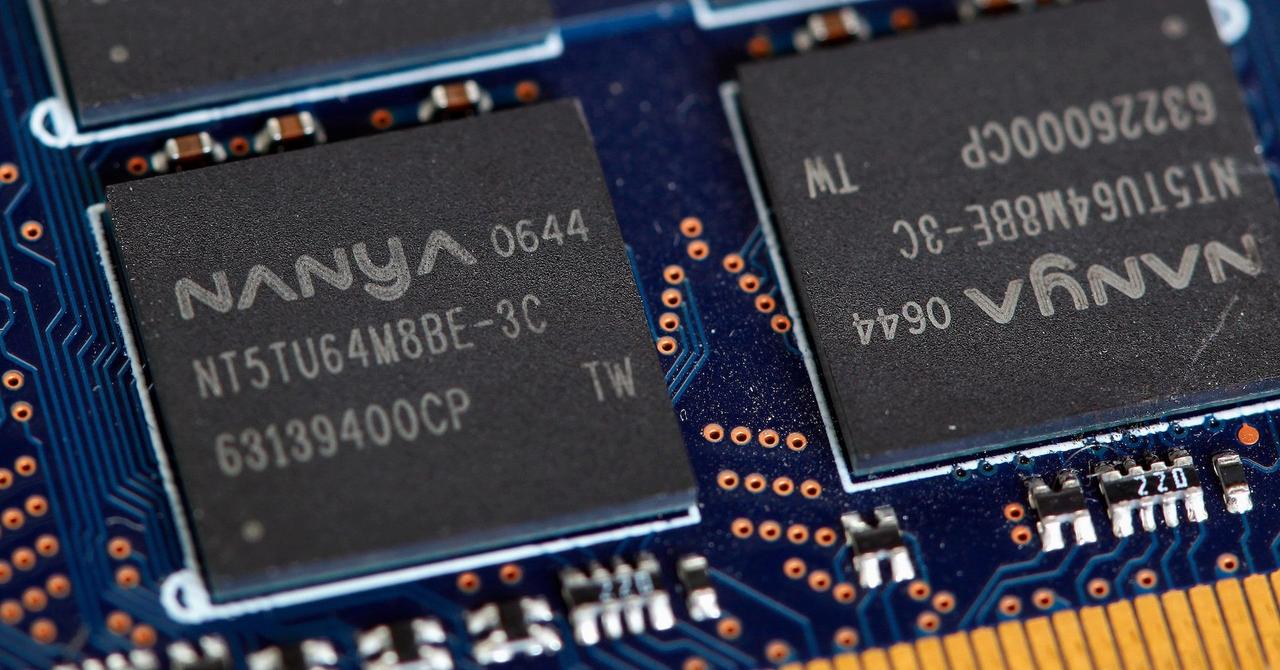
The spending surge follows exceptional financial results that underscore the intensity of the AI-driven memory boom. Nanya Technology reported unaudited second-quarter revenue of T$82.55 billion, representing a staggering 684% increase from a year earlier
1
. Net income surged 1,324% to T$50.19 billion, while gross margin improved dramatically to 79.5% from a negative 20.6% in the same period last year1
. These figures reflect the structural changes occurring in the memory chips industry as artificial intelligence applications create unprecedented demand. First-quarter 2026 revenue also surged more than 580% year-over-year, with gross margins climbing to around 68%2
.
Source: Reuters
New Facility to Double Production Capacity
The bulk of Nanya Technology's investment will target its new 5A fabrication plant, which is scheduled to begin equipment move-in during the first quarter of 2027
2
. The first phase aims to reach capacity of 30,000 wafers per month by 2028, eventually expanding to 45,000 wafers per month1
. Once operational, the new facility is expected to roughly double the company's total production capacity2
. Total investment in the plant will reach approximately T$480 billion at full production capacity, representing the most aggressive build-out in the company's history1
.Customer Base and Strategic Partnerships Support Growth
Nanya Technology serves major technology companies including Nvidia, Qualcomm, and Google, positioning it at the center of the AI infrastructure buildout
1
. To fund its expansion, the company raised NT$78.72 billion (approximately $2.5 billion) through a private placement backed by firms dependent on its output, including SK Hynix's Solidigm unit, Japan's Kioxia, Cisco, and SanDisk2
. Several of these partners have locked in supply through multi-year agreements, providing revenue visibility as Nanya Technology pushes into AI-specific memory products like high-bandwidth memory that sits beside AI accelerators2
.AI-Driven Memory Shortage Expected to Persist
President Lee emphasized that structural changes driven by artificial intelligence support a stronger long-term outlook for the memory industry, with the current supply shortage expected to persist for several more quarters
1
. Industry observers suggest the AI-driven memory shortage could extend through 2027 or even 2028, creating sustained pricing power that has sent contract prices sharply higher2
. The scarcity has affected ordinary buyers from cloud operators to Apple, which pulled its cheapest Mac Mini from sale as memory costs surged2
.Related Stories
Competitive Landscape and Market Positioning
Nanya Technology has historically operated as the smallest player among major memory manufacturers, trailing Samsung, SK Hynix, and Micron in scale and market share
2
. The company, part of Taiwan's Formosa Plastics group, has traditionally focused on commodity DRAM for PCs and consumer devices, the lowest-margin segment of the market2
. Now it aims to redirect capacity toward AI server supply chains, with domestic brokerages expecting server-related products to comprise more than 60% of sales by 20272
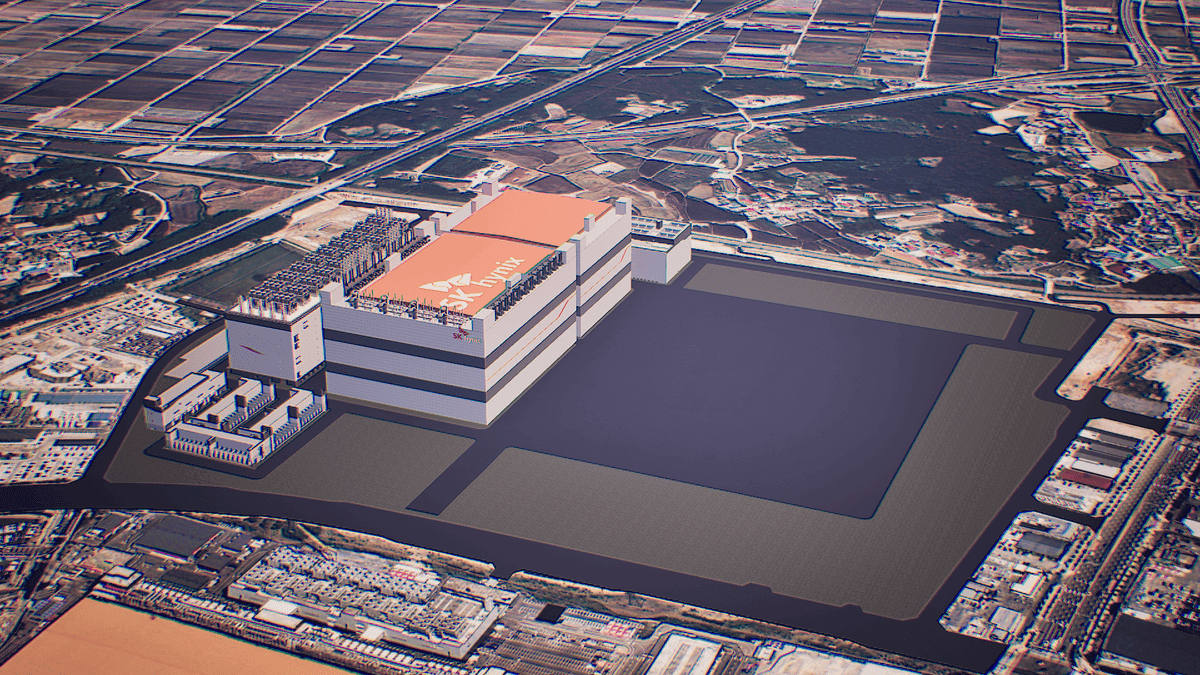
. Global memory makers including Samsung and SK Hynix are simultaneously ramping up investment to meet surging demand, with SK Hynix spending $51 billion on a single new memory plant and Micron breaking ground on a $9 billion expansion in Hiroshima2
.Risks and Market Dynamics
The aggressive expansion carries inherent risks tied to cyclical market fluctuations that have historically defined the memory industry. A synchronized expansion across every major maker raises concerns that the shortage could flip to oversupply just as new fabrication facilities come online, potentially squeezing prices when debt taken on to build them comes due. The capacity Nanya Technology is adding will not come fully online for years, well after current market conditions may have shifted
2
. However, President Lee expressed confidence in the industry's broader ecosystem, noting that expanded semiconductor production efforts across the region reflect positive momentum and confidence in sustained market demand1
. With a market value around $47 billion, Nanya Technology is wagering that AI's appetite for memory will outlast the construction timeline and that demand will remain strong when its new facility begins production1
2
.References
Summarized by

Navi
Related Stories
SK Hynix commits $38 billion to new memory chip plants as AI demand reshapes semiconductor industry
07 Aug 2026•Business and Economy

SK Hynix invests $64 billion in AI memory chips as NAND flash shortage intensifies
02 Jul 2026•Business and Economy

TSMC profit surges 58% on AI demand as chipmaker expands 3nm capacity amid rising costs
16 Apr 2026•Business and Economy
Recent Highlights
1
Microsoft and Nvidia Launch Surface Laptop Ultra: A $2,599 AI-Ready PC With RTX Spark Chip
Technology

2
OpenAI Releases 722 AI-Generated Math Papers on GitHub, Igniting Fury Among Mathematicians
Science and Research

3
Trump Consulted Grok AI Before Ordering Venezuela Invasion and Capture of Nicolás Maduro
Policy and Regulation

Recent Highlights
Today's Top Stories












Don’t drown in AI news. We cut through the noise - filtering, ranking and summarizing the most important AI news, breakthroughs and research daily. Follow topics that matter to you and stay ahead.


