AI Deciphers How Wild Elephants Coordinate Through Deep Rumbling Sounds in Group Choruses


2 Sources
[1]
AI helps decipher what elephant herds are 'saying'
At a protected savanna in Kenya, a young elephant named Nastya is lost. She spends more than an hour calling for her family until finally reuniting with her mother, as seen in the video above. They exchange soft rumbles before walking back to the herd together. Elephants use rumbles to greet each
[2]
Elephants imitate each other when they produce deep rumbling sounds | New Scientist
Elephants appear to harmonise their vocal rumbles when they join together to form choruses, tuning their voices to sound more alike as the chorus unfolds. The findings come from a machine learning study, which also reveals that this convergence is particularly likely to occur during specific kinds
Share
Copy Link
Researchers used machine learning to decode elephant vocalizations from over 900 recordings spanning four decades in Kenya's Amboseli National Park. The study reveals that African savannah elephants harmonize their deep rumbling sounds during group choruses, particularly when greeting or coordinating movements, demonstrating sophisticated group communication.
Machine Learning Unlocks Elephant Communication Secrets
Researchers have made a breakthrough in understanding elephant communication by using machine learning to decode the complex vocalizations of wild elephants. A study published in Scientific Reports analyzed over 900 recordings of rumbles collected across four decades from African savannah elephants in Kenya's Amboseli National Park
1
2
. The findings reveal that elephant herds actively communicate as coordinated groups rather than producing random cacophonies of sound.Sara Keen at Earth Species Project, a US non-profit organization that uses artificial intelligence to decode non-human animal communication, led the research team in tackling what scientists call "the cocktail party problem"—the challenge of distinguishing individual voices within overlapping group vocalizations
2
. By training AI models on single rumbles labeled according to behavioral context, researchers could predict the meaning of chorused rumbles with similar accuracy.Vocal Convergence Reveals Sophisticated Social Coordination
The study uncovered a remarkable phenomenon: elephants imitate each other when they produce deep rumbling sounds, tuning their voices to sound more alike as choruses unfold. This vocal convergence occurs particularly during specific social situations—when staying in contact while separated, coordinating what to do next, and greeting after a separation
2
. Joyce Poole at Elephant Voices explains that this behavior mirrors human conversation patterns where people adopt speaking patterns or accents of those they interact with.The research team categorized elephant vocalizations into six distinct social contexts: staying in contact while separated, preparing to move, coordinating future actions, comforting calves, greeting close family members, and participating in large family reunions. Machine analyses revealed that group choruses carry multiple layers of information simultaneously, encoding details about what a family is doing together and what happens next
2
.Deep Rumbling Sounds Enable Long-Distance Communication
Elephant rumbles are so low-pitched they're often undetectable by humans, yet they can travel up to 10 kilometers, transmitting long-distance information that potentially includes the caller's identity and current activities
2
. These deep rumbling sounds represent the most common vocalization in elephant communication, more frequent than their iconic trumpet calls or throatier roars. The findings suggest that African savannah elephants use these rumbles not just for individual expression but as coordinated group signals that facilitate complex social interactions.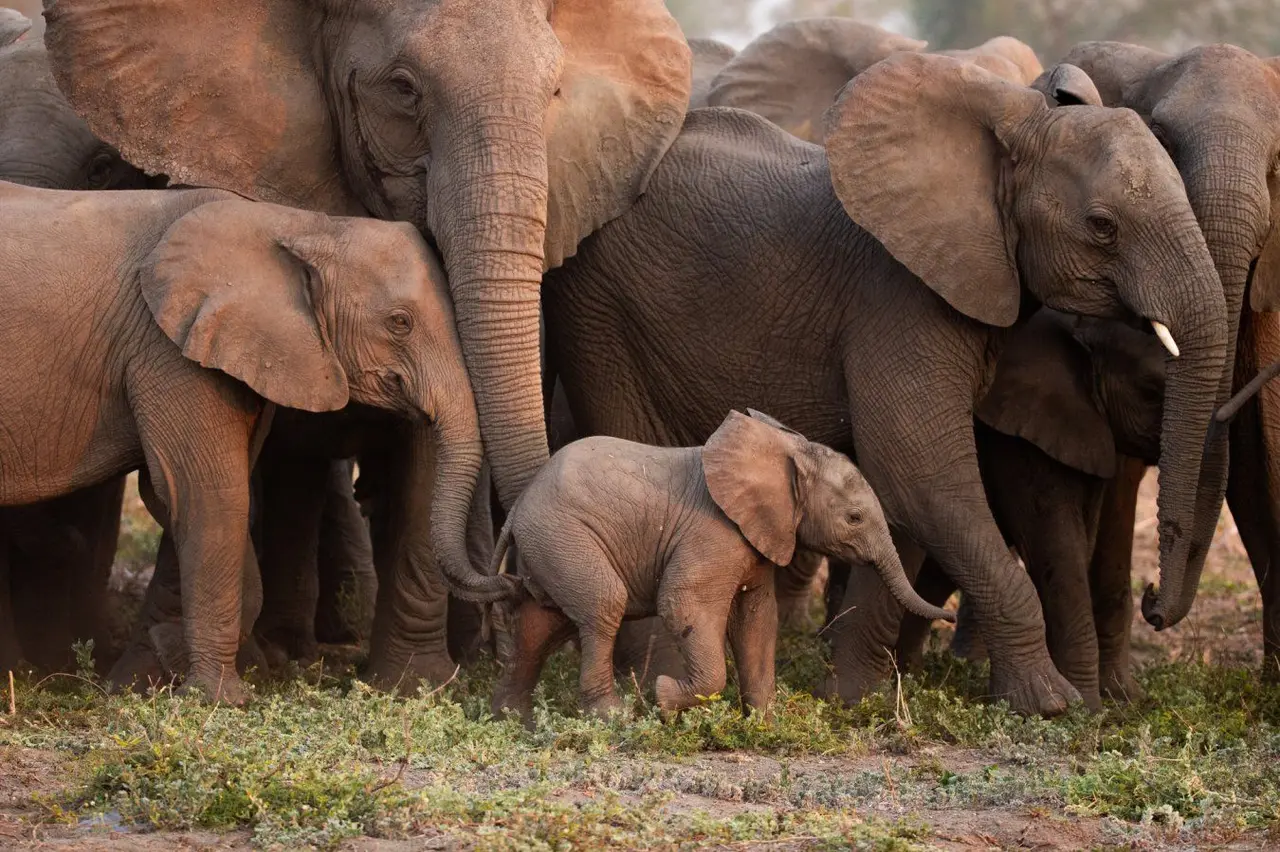
Source: New Scientist
Andrew McLean, a member of the International Union for the Conservation of Nature's Asian Elephant Specialist Group, notes that elephants' ability to unite through their voices reflects their advanced cognition and environmental evolution. "Evolving and elaborating this for social cohesion, group survival and foraging efficiency is very adaptive," he says
2
. Combined with body language and other communication tools, the rumbling calls help elephants negotiate, agree, disagree, and make plans of action.Related Stories

AI-Driven Animal Communication Analysis Opens New Research Paths
The bioacoustics research demonstrates how AI helps decipher elephant herds' sophisticated communication systems. Earlier research published in 2005 showed elephants can learn to imitate each other's voices generally; the new work confirms this imitation specifically involves rumbles during group choruses
2
. The structure of elephant calls and the context in which they're used remains consistent whether elephants call individually or in a chorus, indicating deliberate group communication rather than random vocalizations1
.Researchers are now investigating deeper questions about elephant vocalizations: Could certain individual rumbles encode information only understood in group contexts? Are there rumbles elephants produce exclusively when communicating with entire herds?
1
These AI-driven animal communication analysis techniques could eventually aid conservation efforts by helping researchers track elephant behavior and movements remotely, offering new tools for protecting these highly social animals in their natural habitats2
.References
Summarized by

Navi
[1]
Related Stories
AI Breakthroughs in Decoding Animal Communication: A Step Towards Interspecies Dialogue
31 Dec 2024•Science and Research

AI Discovers Lions Have Two Distinct Roars, Revolutionizing Wildlife Conservation Monitoring
21 Nov 2025•Science and Research

AI Breakthrough in Animal Communication: Researchers Win $100,000 Prize for Dolphin Language Study
17 May 2025•Science and Research

Recent Highlights



Recent Highlights
Today's Top Stories





Don’t drown in AI news. We cut through the noise - filtering, ranking and summarizing the most important AI news, breakthroughs and research daily. Follow topics that matter to you and stay ahead.


