AI Decodes Brain Cell Evolution Across 320 Million Years


2 Sources
[1]
Study sheds new light on brain evolution
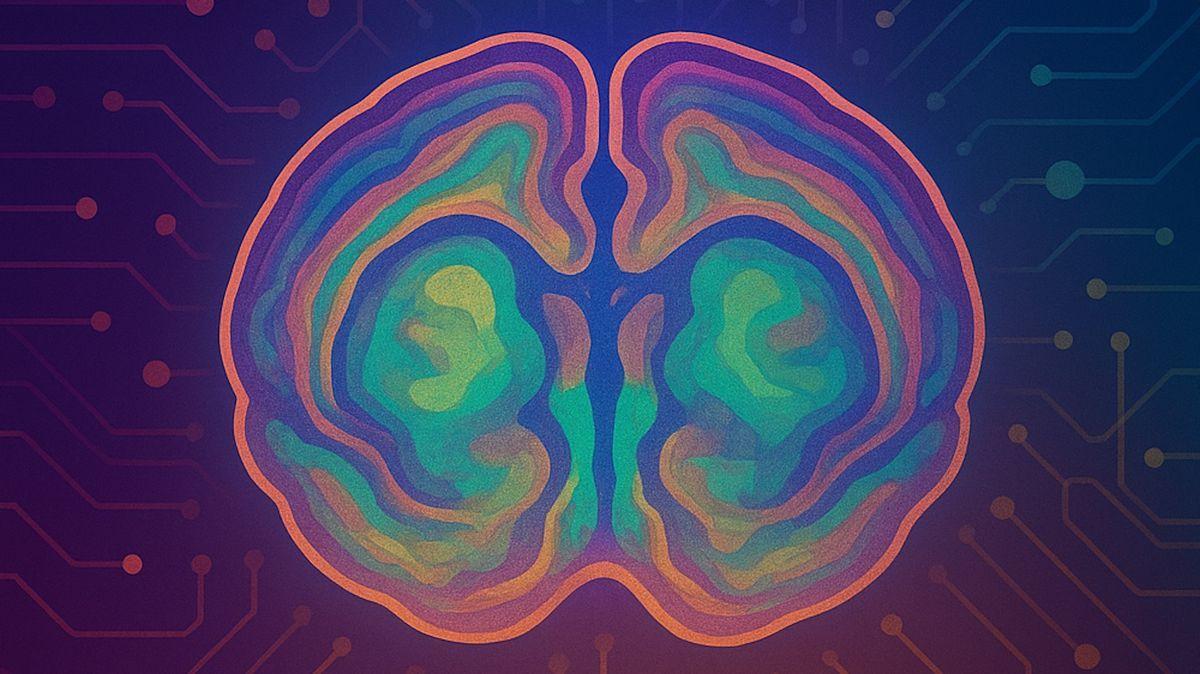
Vlaams Instituut voor BiotechnologieFeb 17 2025 In a new study published in Science, a Belgian research team explores how genetic switches controlling gene activity define brain cell types across species. They trained deep learning models on human, mouse, and chicken brain data and found that
[2]
AI Reveals How Brain Cells Evolved Over 320 Million Years - Neuroscience News
Summary: A new study reveals how AI-driven deep learning models can decode the genetic regulatory switches that define brain cell types across species. By analyzing human, mouse, and chicken brains, researchers found that some brain cell types remain highly conserved over 320 million years, while
Share
Copy Link
Belgian researchers use deep learning to analyze genetic regulatory codes in human, mouse, and chicken brains, revealing insights into brain cell evolution and potential applications in disease research.

AI Unveils Evolutionary Secrets of Brain Cells
In a groundbreaking study published in Science, Belgian researchers have employed artificial intelligence to decode the genetic regulatory switches that define brain cell types across species, shedding new light on brain evolution over 320 million years
1
2
. The team, led by Prof. Stein Aerts at VIB.AI and the VIB-KU Leuven Center for Brain & Disease Research, developed deep learning models to analyze brain data from humans, mice, and chickens.Deciphering the Regulatory Code
The study focuses on the complex puzzle of what makes each cell type unique, despite sharing the same DNA. Researchers have long sought to understand how short DNA sequences act as switches, controlling which genes are turned on or off in different cell types. This fine-tuned regulation, referred to as the "regulatory code," ensures that each brain cell uses the right genetic instructions to perform its specific role
1
.AI-Powered Comparative Analysis
Nikolai Hecker and Niklas Kempynck, key researchers in the Aerts lab, developed machine learning models to characterize and compare different cell types across the three species. Their work covered approximately 320 million years of evolution
2
. Before conducting the comparative analysis, the team created a comprehensive transcriptomic atlas of the chicken brain to better understand its cell type composition1
.Key Findings and Implications
The study revealed that while some regulatory cell type codes are highly conserved between birds and mammals, others have evolved differently. Notably, the researchers found that regulatory codes for certain bird neurons resemble those of deep-layer neurons in the mammalian neocortex
1
2
.Prof. Aerts emphasized the significance of this approach:
"Looking directly at the regulatory code presents a significant advantage. It can tell us which regulatory principles are shared across species, even if the DNA sequence itself has changed."
1
Related Stories
Beyond Evolution: Applications in Disease Research
The implications of this research extend beyond evolutionary biology. The team's models provide powerful tools for studying how gene regulation shapes different cell types across species and in various disease states
2
. Previous work by the Aerts lab has already shown that regulatory codes for melanoma cell states are conserved between mammals and zebrafish1
.Future Directions
The researchers are now expanding their evolutionary modeling to a wider range of animal brains, including various fish species, deer, hedgehogs, and capybaras. Simultaneously, they are exploring how these AI models can help unravel genetic variations linked to Parkinson's disease
1
2
.Prof. Aerts concluded:
"Ultimately, models that learn the genomic regulatory code hold the potential to screen genomes and investigate the presence or absence of specific cell types or cell states in any species. This would be a powerful tool to study and better understand disease."
1
This innovative use of AI in genomic research not only advances our understanding of brain evolution but also opens new avenues for studying neurological disorders and cognitive traits across species.
References
Summarized by

Navi
[1]
[2]
Related Stories
Genomic Bottleneck Algorithm: Nature-Inspired AI Breakthrough Mimics Innate Abilities
26 Nov 2024•Science and Research

AI Sheds Light on Gene Regulation: Enhancer Mutations and Their Far-Reaching Effects
19 Jun 2025•Science and Research

Stanford's AI models unlock cross-species cell biology insights from 112 million cells
15 Sept 2026•Science and Research
Recent Highlights



Recent Highlights
Today's Top Stories



Don’t drown in AI news. We cut through the noise - filtering, ranking and summarizing the most important AI news, breakthroughs and research daily. Follow topics that matter to you and stay ahead.


