AI-Generated Microdramas Transform Chinese Entertainment Industry Despite Job Loss Concerns


2 Sources
[1]
Chinese microdrama creators turn to AI despite job loss concerns
Shanghai (AFP) - Ultra-short video series "Strange Mirror of Mountains and Seas" is filled with dragon-like monsters, handsome protagonists and plenty of melodrama -- almost all of it, including the lifelike human characters, created by artificial intelligence. With over 50 million views, it is
[2]
Chinese microdrama creators turn to AI despite job loss concerns
AI-made microdramas like China's hit Strange Mirror of Mountains and Seas are reshaping entertainment, using tools such as ChatGPT and Midjourney to create actors, scripts and visuals. Cheap, fast and wildly popular, they spark debate over creativity, copyright and job losses as filmmakers adapt to
Share
Copy Link
Chinese creators are embracing AI tools to produce ultra-short video series, replacing traditional actors and screenwriters with algorithms. While these AI-generated microdramas gain massive popularity with millions of views, they raise significant concerns about job displacement and copyright issues in the creative industry.
AI Revolution in Chinese Microdramas
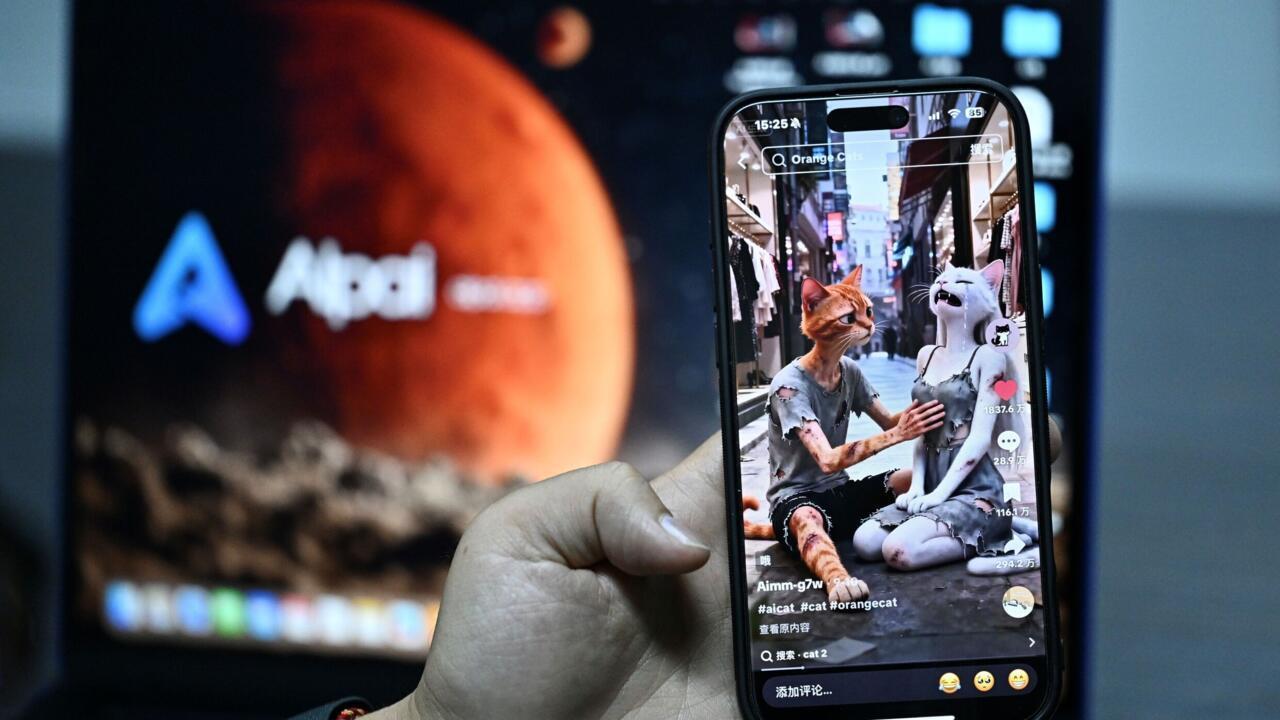
China's entertainment landscape is experiencing a dramatic transformation as artificial intelligence takes center stage in the production of ultra-short video series known as microdramas. The phenomenon is exemplified by "Strange Mirror of Mountains and Seas," an AI-generated series featuring dragon-like monsters, handsome protagonists, and melodramatic storylines that has garnered over 50 million views
1
.
Source: France 24
These soap opera-like productions, with episodes as short as 30 seconds, are specifically designed for mobile consumption, targeting viewers who watch on phone screens during commutes or work breaks. The format's brevity and viewing context make it particularly suitable for AI-generated content, as audiences are more likely to overlook visual discrepancies that current AI technology still produces
2
.The AI Production Pipeline
Creator Chen Kun has pioneered a comprehensive AI-driven production process for his series, utilizing multiple platforms to create nearly every aspect of the show. The production workflow includes ChatGPT for screenplay writing, Midjourney for generating still images, China's Kling platform to convert images into video sequences, and Suno for soundtrack creation. Only editing and voice acting remain human-controlled elements in this largely automated process
1
.The accessibility and cost-effectiveness of AI tools have democratized content creation in ways previously unimaginable. As Odet Abadia, a teacher at Shanghai Vancouver Film School, explains, AI "lowers the cost of production so much, it makes everything so much faster." Her students are learning to integrate AI tools at virtually every stage of filmmaking, from generating storyboard images to creating plot outlines using Alibaba's Qwen software
2
.Industry Impact and Job Displacement Concerns
The rapid adoption of AI in microdrama production has already begun displacing traditional creative roles. Louis Liu, a member of a live-action microdrama crew, reports that AI software has replaced most artists who previously created concept images that define a film's visual style in its earliest stages. This shift mirrors broader concerns that emerged during Hollywood's 2023 writers' and actors' strikes, where AI usage became a major point of contention
1
.Despite these concerns, some industry figures remain optimistic about the future. Chen Kun believes new job categories will emerge, particularly "prompt engineer" roles that specialize in writing instructions for generative AI software. However, educational institutions are taking a balanced approach, with Shanghai Vancouver Film School encouraging students to work with human actors and traditional equipment while also preparing them for an AI-integrated future
2
.Related Stories

Copyright and Creative Authenticity Debates
The rise of AI-generated content has sparked significant debates about copyright infringement and creative authenticity. Artists globally have raised concerns about AI models being trained on copyrighted material without compensation to original creators. Chen acknowledges these concerns, suggesting that creators of large language models should compensate owners of works included in their training datasets, though he argues this responsibility lies beyond secondary users like his production company
1
.Interestingly, even AI-generated content faces traditional plagiarism challenges. Chen is currently involved in legal proceedings against a social media account he alleges stole elements from his series' trailer, demonstrating that intellectual property issues persist regardless of the creation method
2
.References
Summarized by

Navi
Related Stories
China Races to Build AI Film Industry Through Government Subsidies and Cheap Computing Power
25 Sept 2026•Business and Economy

iQiyi launches massive AI overhaul, expects AI to create most content within five years
20 Apr 2026•Technology

ByteDance scrambles to fix Seedance 2.0 after Hollywood erupts over copyright infringement
13 Feb 2026•Policy and Regulation
Recent Highlights
1
Microsoft and Nvidia Launch Surface Laptop Ultra: A $2,599 AI-Ready PC With RTX Spark Chip
Technology

2
Google Unveils Gemini 4 Argon AI Model, Restricts Access to Trusted Cyber Defenders
Technology

3
Trump Consulted Grok AI Before Ordering Venezuela Invasion and Capture of Nicolás Maduro
Policy and Regulation

Recent Highlights
Today's Top Stories






Don’t drown in AI news. We cut through the noise - filtering, ranking and summarizing the most important AI news, breakthroughs and research daily. Follow topics that matter to you and stay ahead.


