4 Sources
4 Sources
[1]
China's Netflix iQiyi Goes All-In on AI Content in Big Overhaul
IQiyi plans to pay AI content creators an additional cut of advertising and membership fees, and will roll out a standalone app letting users interact with characters from its shows in short clips. IQiyi Inc. expects AI to create a big chunk of its films and shows virtually from scratch someday soon, a monumental industry shift that spurred the Netflix-style streaming service to begin the biggest corporate overhaul in its 16-year history. The company plans to convert its video app and website into more of a social media destination that hosts a variety of AI-generated content, founder and Chief Executive Officer Gong Yu said at iQiyi's annual content showcase in Beijing. As part of that transition, iQiyi officially debuted the Nadou Pro tool Monday -- an AI it said can handle almost every aspect of film-making from scriptwriting and storyboards to final video rendering. IQiyi aims to become one of the entertainment industry's biggest adopters of and advocates for artificial intelligence -- part of an internal effort to reverse a years-long sales slump triggered by the rise of short-video platforms like ByteDance Ltd.'s Douyin. Gong promised to keep investing in professionally produced content, but said that kind of show will decrease as a proportion of iQiyi's service over time. The company aims to release a commercially successful AI-generated film as soon as this summer, he added. "It's once in a decade," Gong told the audience in the capital. "We have to take the tide as it comes." iQiyi, Alibaba Group Holding Ltd. and Tencent Holdings Ltd. together dominate video streaming in China, though audiences are more fragmented than in the US because of short video formats. The Baidu company's moves coincide with a debate raging in Hollywood, which is grappling with widespread layoffs and questions over how the technology will reshape the industry. From Netflix Inc. to Amazon.com Inc., major studios are increasingly experimenting with AI technology to cut production costs and improve the quality of their work. Amazon has created an in-house team to deploy AI across its film and TV work. The Chinese company's Nadou software relies on AI models from competitors including Alibaba, ByteDance and Kuaishou Technology. iQiyi is betting its deep ties to professional filmmakers will create a more seamless, industry-specific workflow. Get the Tech Newsletter bundle. Get the Tech Newsletter bundle. Get the Tech Newsletter bundle. Bloomberg's subscriber-only tech newsletters, and full access to all the articles they feature. Bloomberg's subscriber-only tech newsletters, and full access to all the articles they feature. Bloomberg's subscriber-only tech newsletters, and full access to all the articles they feature. Plus Signed UpPlus Sign UpPlus Sign Up By continuing, I agree to the Privacy Policy and Terms of Service. The Nadou suite also features an IP library, allowing creators to tap the streamer's catalog of virtual assets and signed talent to generate new content. To showcase the tech, the Beijing-based company is flooding its platform with AI-generated titles, starting with a debut slate of 16 Nadou-produced films spanning sci-fi and anime. And to encourage more AI content creators, iQiyi plans to pay those producers an additional 20% cut of advertising and membership fees, Gong said. Executives said onstage the company will roll out a standalone app letting users interact with characters from its shows in short clips -- much like the once-viral Sora app that was killed by OpenAI. IQiyi's revenue is projected to slump 13% in the first quarter. The company, which has US stock, filedBloomberg Terminal for a Hong Kong listing last month, joining a wave of Chinese internet peers seeking to tap capital closer to home. To offset the squeeze, iQiyi is also pivoting toward high-growth niches and physical entertainment. Overseas membership revenue surged more than 30% last year, though it remains a sliver of the company's topline. It's also monetizing its library in the real world, having opened an indoor theme park in the Chinese city of Yangzhou.
[2]
China's Biggest Streaming Platform Wants Most of Its New Films to Be AI-Generated
A company dubbed China's Netflix expects a near-complete AI takeover of film and TV within the next five years. The streaming platform IQiyi plans to have AI create most of its new films and TV shows, per Bloomberg. CEO Gong Yu reportedly shared this at an annual content showcase, alongside an AI toolkit called Nadou Pro that can supposedly automate every step of filmmaking from scriptwriting to final rendering, with the help of AI models from Alibaba and ByteDance for its domestic version and Google Veo 3.1 for an international version. The company's goal is to use Nadou Pro to release a fully AI-generated movie that they hope will reach commercial success as early as this summer. IQiyi's debut slate currently includes 16 AI-generated sci-fi and anime movies, Bloomberg reported. Over the past year, AI-generated video content has seeped into every corner of the internet. From eerily realistic animal videos that have viewers question their sanity to viral TikToks on the messy love lives of talking fruits, short-form AI video slop is undeniably popular on the internet. But that popularity has yet to translate into any fully AI-generated, commercially successful, and engaging long-form content like movies and TV shows. Nevertheless, the corporate world is taking notice. Earlier this year, Roku founder and CEO Anthony Wood predicted that "the first 100% AI-generated hit movie" would be released sometime within the next three years. On the road to achieving that objective, Hollywood started spending big bucks on AI. YouTube introduced AI tools for content creation last September. Last summer, Netflix announced that it had officially begun using AI-generated final footage in shows, the first example that we know of being in the Argentine sci-fi show "El Eternauta." Around the same time, Amazon MGM Studios launched an in-house team dedicated to building AI tools for film and TV production, and those tools have now reportedly launched in a closed beta program. While hundreds of industry professionals are alarmed by the rise of AI in Hollywood, some are on board. An upcoming indie movie, "As Deep As The Grave," stars a posthumously AI-generated Val Kilmer. Artists like Matthew McConaughey and Michael Caine have also sold their voices to AI companies for replication, and famous actress Natasha Lyonne co-founded AI production studio Asteria. Darren Aronofsky, the director known for movies like "Black Swan" and "Requiem for a Dream," debuted an AI-generated YouTube series about the Revolutionary War earlier this year. Just last week, producers gave The Wrap a first peek at Bitcoin: Killing Satoshi, directed by Doug Liman of Bourne Identity and Edge of Tomorrow fame. The $70 million film is gunning for the title of Hollywood's first big-budget AI-generated movie. The results of these experiments have been mixed so far. For one thing, AI video generation is incredibly expensive. So much so that OpenAI had to shut down Sora last month, aka its AI video generation tool that really began the internet craze over AI slop, in an effort to reduce the company's towering financial commitments ahead of a rumored IPO later this year. With the demise of Sora, a $1 billion Disney investment in OpenAI's video-generation capabilities was also effectively over. But whether anyone will be willing to pay for AI-generated content is still up in the air. Users on the internet may have decided that AI videos are fun to watch on an infinite scroll feed like TikTok or Instagram Reels, where the cost of commitment for the viewer is virtually zero as they spend mere seconds on each video, but that does not necessarily mean the AI output is or will be good enough for viewers to pay streaming subscriptions or purchase movie tickets to watch slop on bigger screens. People are also increasingly more reactive towards AI and the corporate drive to automate human jobs. In an NBC News poll from last month, roughly half of the respondents said they had negative feelings toward AI.
[3]
AI streaming is going mainstream in China, whether audiences want it or not
IQiyi wants AI to make most of its content someday, and it's already starting. China's Netflix, iQiyi, is making one of the biggest bets in streaming history. The company wants AI to create the bulk of its films and shows someday soon, and it's already restructuring its 16-year-old business to make that happen. At its annual content showcase in Beijing, founder and CEO Gong Yu announced that iQiyi is pivoting its popular streaming platform into a social media destination built around AI-generated content. Recommended Videos Alongside the announcement, the company debuted Nadou Pro, an AI tool, which, according to the company, is capable of handling almost every aspect of filmmaking, from scriptwriting and storyboards to the final video delivery. Can AI actually save a struggling streaming giant? According to Bloomberg, IQiyi has been bleeding revenue for years, thanks to the explosion of short-form video platforms like Douyin eating into its audience. Its revenue is expected to drop 13% in the first quarter alone. Gong sees AI as the antidote, and he's not being subtle about it. "It's once in a decade," he told the audience. "We have to take the tide as it comes." The company wants to release a commercially successful AI-generated film as early as this summer. And to sweeten the deal for independent creators, it is offering an additional 20% cut of ad and membership revenue to those who create AI content on the platform. It's also debuting a standalone app that will let users interact with characters from its shows. What about professionally made content? Gong promised to keep investing in professionally produced shows, but admitted that kind of content will shrink as a share of the platform over time. AI-generated content is clearly the priority. I do not mind the rise of AI content on the internet, but when it starts replacing human talent, that's when I start having problems. AI has become the gravy train everyone wants a ride on, and IQiyi has become the latest company to join the trend. The more I see this, the more I believe that AI is going to be yet another bubble. I mean, even a shoe company recently pivoted from making shoes to creating AI infrastructure, and its stock soared almost 600%. It will be interesting to see which companies survive this AI trend once the bubble bursts and the dust settles.
[4]
China's Netflix expects AI to create bulk of shows in five years - The Economic Times
IQiyi Inc. is set to transform its operations, anticipating AI will generate most films and shows within five years. The company is launching Nadou Pro, an AI toolkit designed for all filmmaking stages. This strategic shift aims to revitalize sales and embrace artificial intelligence as a core component of entertainment production.IQiyi Inc. expects AI to create the bulk of its films and shows in five years, a monumental industry shift that spurred the Netflix-style streaming service to begin the biggest corporate overhaul since its 2010 inception. The Beijing-based company plans to convert its video app and website into more of a social media destination that hosts mainly AI-generated content as video models mature, founder and Chief Executive Officer Gong Yu said in an interview at iQiyi's annual content showcase. As part of that transition, iQiyi officially debuted the Nadou Pro suite Monday -- an AI toolkit it said can handle almost every aspect of filmmaking, from scriptwriting and storyboards to final rendering. IQiyi aims to become one of the entertainment industry's biggest adopters of and advocates for artificial intelligence -- part of an internal effort to reverse a yearslong sales slump triggered by the rise of short-video platforms like ByteDance Ltd.'s Douyin. Gong pledged to maintain investment in professionally produced content but said a portion of the company's capital will be reallocated to bolster iQiyi's AI services in the short term. That includes a new social-video app executives unveiled Monday, designed to capture the mass-market appeal of OpenAI's now-defunct Sora video generator. IQiyi also aims to release a commercially successful AI-generated film as soon as this summer. "It's once in a decade," Gong told an audience of producers and directors in the capital. "We have to take the tide as it comes." IQiyi, Alibaba Group Holding Ltd. and Tencent Holdings Ltd. together dominate video streaming in China, though audiences are more fragmented than in the US because of short video formats. The Baidu Inc. subsidiary's moves coincide with an AI debate raging in Hollywood, which is grappling with widespread layoffs and questions over how the technology will reshape the industry. From Netflix Inc. to Amazon.com Inc., major studios are increasingly experimenting with AI technology to cut production costs. Amazon has created an in-house team to deploy AI across its film and TV work. The Chinese company's Nadou software relies on AI models from competitors including Alibaba, ByteDance and Kuaishou Technology. IQiyi is betting its deep ties to professional filmmakers will create a more seamless, industry-specific workflow. The company also plans to launch an international version of the tool, powered by models including Alphabet Inc.'s Google Veo 3.1, Gong said. The Nadou suite also features an IP library, allowing creators to tap iQiyi's catalog of virtual assets and signed talent to generate new content. To showcase the tech, the Beijing-based streamer is flooding its platform with AI-generated titles, starting with a debut slate of 16 Nadou-produced films spanning sci-fi and anime. And to encourage more AI content creators, iQiyi plans to pay those producers an additional 20% cut of advertising and membership fees, Gong said. IQiyi's revenue is estimated to have slumped 13% in the first quarter of this year. The company, which is listed in the US, filed for a Hong Kong listing last month, joining a wave of Chinese internet peers seeking to tap capital closer to home. To offset the squeeze, iQiyi is also pivoting toward high-growth niches and physical entertainment. Overseas membership revenue surged more than 30% last year, though it remains a sliver of the company's topline. It's also monetizing its library in the real world, having opened an indoor theme park in the Chinese city of Yangzhou. Gong sees China's film industry trapped in a vicious cycle, where ballooning production costs and investment risks are stifling output just as users migrate to rival entertainment formats, he said. He believes AI will break the shackles of this stagnation by powering a surge in new content. "I'm confident this is the right call -- we'll have our answer in a year's time," Gong said.
Share
Share
Copy Link
Chinese streaming service iQiyi announced a major strategic shift toward AI-generated content, expecting artificial intelligence to produce the bulk of its films and shows within five years. The company unveiled Nadou Pro, an AI toolkit handling everything from scriptwriting to final rendering, as it battles a 13% revenue decline and competition from short-video platforms.
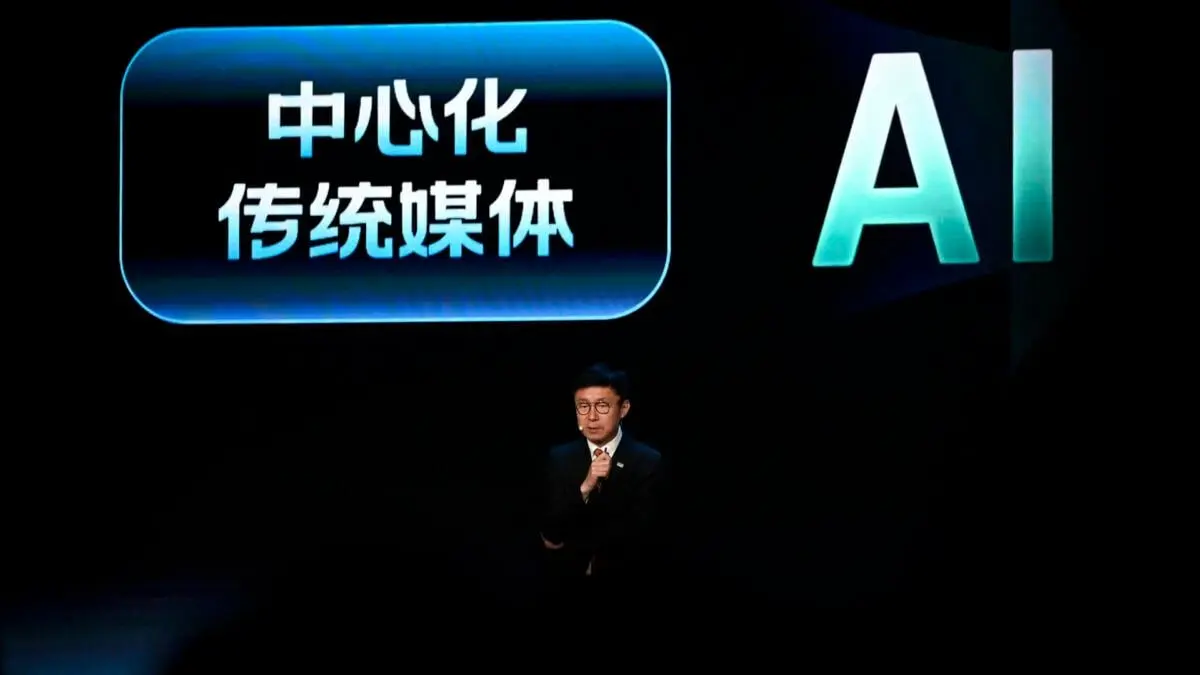
iQiyi Inc., often dubbed China's Netflix, is embarking on the biggest corporate overhaul in its 16-year history, with founder and CEO Gong Yu announcing that the Chinese streaming service expects AI-generated content to dominate its platform within the next five years
1
. At the company's annual content showcase in Beijing, Gong revealed plans to transform iQiyi's video app and website into a social media destination built primarily around AI entertainment4
. This major strategic shift represents a decisive response to years of declining revenue, with first-quarter sales projected to slump 13% as short-video platforms like ByteDance Ltd.'s Douyin continue to fragment audiences1
.
Source: Gizmodo
The centerpiece of iQiyi's transformation is Nadou Pro, an AI toolkit the company claims can handle virtually every aspect of film production, from scriptwriting to final rendering
2
. The Nadou software relies on AI models from competitors including Alibaba Group Holding Ltd., ByteDance, and Kuaishou Technology for its domestic version, while an international version will be powered by models including Google Veo 3.14
. The suite features an IP library that allows content creators to tap iQiyi's catalog of virtual assets and signed talent to generate new material1
. iQiyi is betting its deep ties to professional filmmakers will create a more seamless, industry-specific workflow compared to generic AI tools4
.
Source: Bloomberg
To showcase its technology, iQiyi is flooding its streaming platform with AI-generated titles, starting with a debut slate of 16 Nadou-produced films spanning sci-fi and anime genres
1
. The company aims to release a commercially successful AI-generated film as soon as this summer, marking what could be a pivotal moment for the industry2
. To incentivize AI content creators, iQiyi plans to pay producers an additional 20% cut of advertising and membership fees1
. The company is also rolling out a standalone app letting users interact with characters from its shows in short clips, similar to OpenAI's now-defunct Sora app1
.Related Stories
iQiyi's aggressive push mirrors a debate raging in Hollywood, where major studios from Netflix Inc. to Amazon.com Inc. are experimenting with AI technology to cut production costs
4
. Amazon has created an in-house team to deploy AI across its film and TV work, while Netflix has already begun using AI-generated final footage in shows2
. However, the industry faces significant headwinds, including widespread layoffs and questions about audience acceptance4
. OpenAI shut down Sora last month due to towering financial commitments, effectively ending a $1 billion Disney investment in the technology2
. An NBC News poll found roughly half of respondents had negative feelings toward AI2
.Gong Yu acknowledged that professionally produced content will decrease as a proportion of iQiyi's service over time, though the company pledged to maintain investment in traditional shows

1
. A portion of capital will be reallocated to bolster AI services in the short term4
. The sales slump has been triggered by the rise of short-video platforms that have fragmented China's streaming audience more than in the US1
. To offset revenue pressures, iQiyi is pivoting toward high-growth niches, with overseas membership revenue surging more than 30% last year, though it remains a small fraction of total revenue4
. The company has also opened an indoor theme park in Yangzhou to monetize its library in the real world1
. Gong sees China's film industry trapped in a cycle where ballooning production costs and investment risks are stifling output, and believes AI will break these constraints4
. "It's once in a decade," Gong told the audience. "We have to take the tide as it comes"1
. iQiyi, which competes with Tencent Holdings Ltd. and Alibaba in China's streaming market, filed for a Hong Kong listing last month to tap capital closer to home1
.Summarized by
Navi
18 Jul 2025•Technology

07 Nov 2025•Entertainment and Society

28 Jul 2025•Technology

1
Policy and Regulation

2
Policy and Regulation

3
Technology