AI Decodes Rules of Mysterious Roman Board Game After 1,700 Years of Silence


7 Sources
[1]
An ancient Roman game board's secrets are revealed -- with AI's help
You have full access to this article via Jozef Stefan Institute. A mysterious ancient Roman object found in what is now the southern tip of the Netherlands has long been thought to be some sort of board game. With the help of artificial-intelligence simulations, Walter Crist at Leiden University
[2]
Rules of mysterious ancient Roman board game decoded by AI
It was the summer of 2020, and researcher Walter Crist was wandering around the exhibits inside a Dutch museum dedicated to the presence of the ancient Roman empire in the Netherlands. As a scientist who studies ancient board games, one exhibit stuck out to Crist: a stone game board dating to the
[3]
AI helps archaeologists solve a Roman gaming mystery
The researchers used virtual players to test possible combinations of pieces and moves An old, flattened piece of limestone inscribed with a crisscross of grooves looks like the board for a game, but for nearly a century, no one knew how the game was played. Now, researchers have used artificial
[4]
Scientists solve ancient Roman board game mystery using AI
The limestone rock measures 21 by 14.5 centimetres and was found in the ground in the Dutch city of Heerlen in the late 19th or early 20th century. In Roman times, Heerlen was an important settlement called Coriovallum. The rock has a rectangle carved into it, containing four diagonal lines and
[5]

Dueling AIs Reconstruct Rules of Mysterious Roman-Era Board Game
In the hands of a non-expert, the oval artifact doesn’t look like much of anything. However, geometric patterns on one of its two broad sides, along with other clues, suggest it to be a stone board game. In a study published today in the journal Antiquity, researchers used artificial intelligence
[6]

Rules of mysterious ancient board game decoded by AI, scientists say
A smooth, white stone dating from the Roman era and unearthed in the Netherlands has long baffled researchers. Now, with the help of artificial intelligence, scientists believe they have cracked the mystery: the stone is an ancient board game and they have even guessed the rules. The circular
[7]

AI cracks Roman-era board game
The Hague (AFP) - A smooth, white stone dating from the Roman era and unearthed in the Netherlands has long baffled researchers. Now with the help of artificial intelligence, scientists believe they have cracked the mystery: the stone is an ancient board game and they have even guessed the
Share
Copy Link
A mysterious limestone tablet discovered in the Netherlands has puzzled researchers for over a century. Now, artificial intelligence has cracked the code, revealing it as a blocking game played by Romans—centuries earlier than such games were thought to exist in Europe. The breakthrough demonstrates how AI simulations can unlock secrets of ancient cultures.
AI Helps Archaeologists Unlock Ancient Gaming Secrets
When Walter Crist walked through a Dutch museum in the summer of 2020, he encountered something that stopped him in his tracks. An oval-shaped limestone tablet, measuring about eight inches across, sat in an exhibit dedicated to the Roman Empire in the Netherlands
2
. The ancient Roman game board featured angular lines etched into its surface, forming a pattern that the Leiden University researcher had never seen in archaeological research1
. Dating back 1,500 to 1,700 years to the late Roman Empire, the artifact had been discovered in Heerlen—once the Roman settlement of Coriovallum—sometime in the late 1800s or early 1900s4
. But what game it represented and how people played it remained a complete mystery.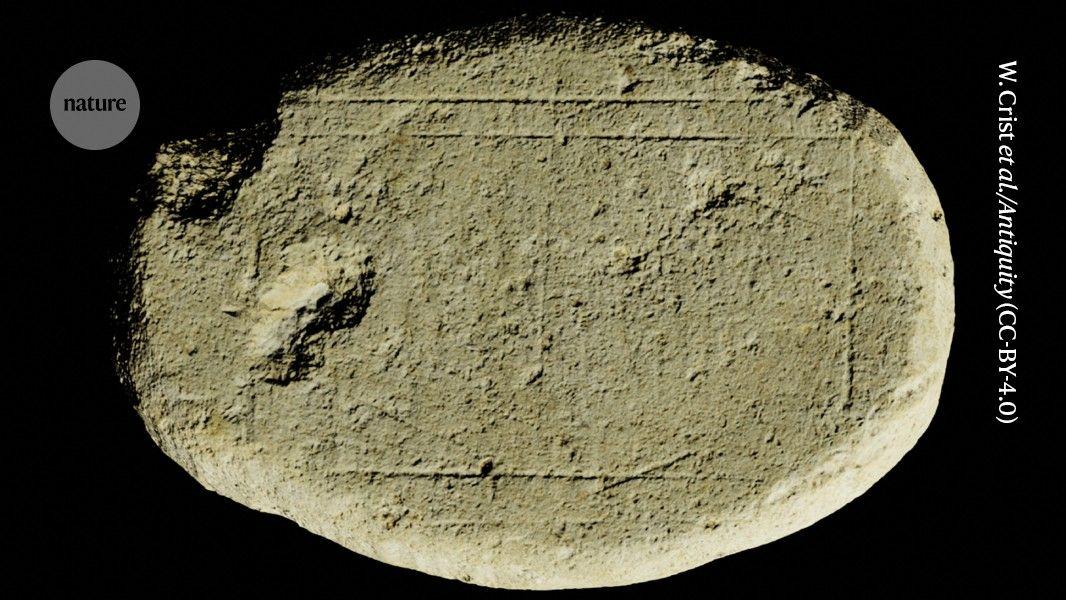
Source: Nature
Microscopic Analysis Reveals Critical Clues
Crist, now a guest lecturer at Leiden University, contacted museum curators for closer examination of the stone
2
. Working with specialists, his team produced highly detailed 3D scans and conducted microscopic analysis of the 21-by-14.5-centimeter limestone tablet4
. The investigation revealed wear patterns consistent with game pieces—such as glass pebbles—being repeatedly dragged along the surface, particularly along one of the carved lines1
. "Some of those traces are a fraction of a millimetre deeper than others, meaning they were used more intensively," Crist explained4
. The neatly finished edges indicated this was a completed product, not an unfinished stone, strengthening the case that it functioned as an actual game board.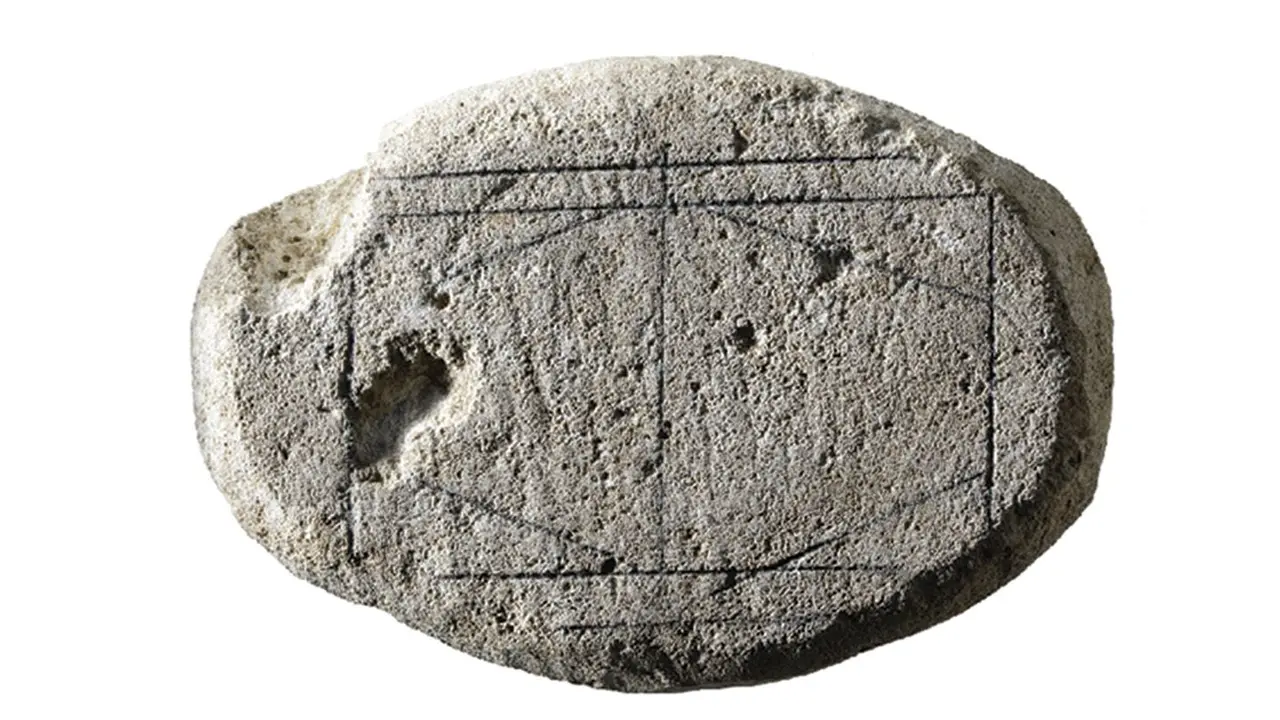
Source: Science News
Digital Modeling and AI Simulations Reconstruct Rules of Board Game
Faced with limited historical documentation—the game appeared in no written texts from Roman times—Crist's team turned to artificial intelligence
2
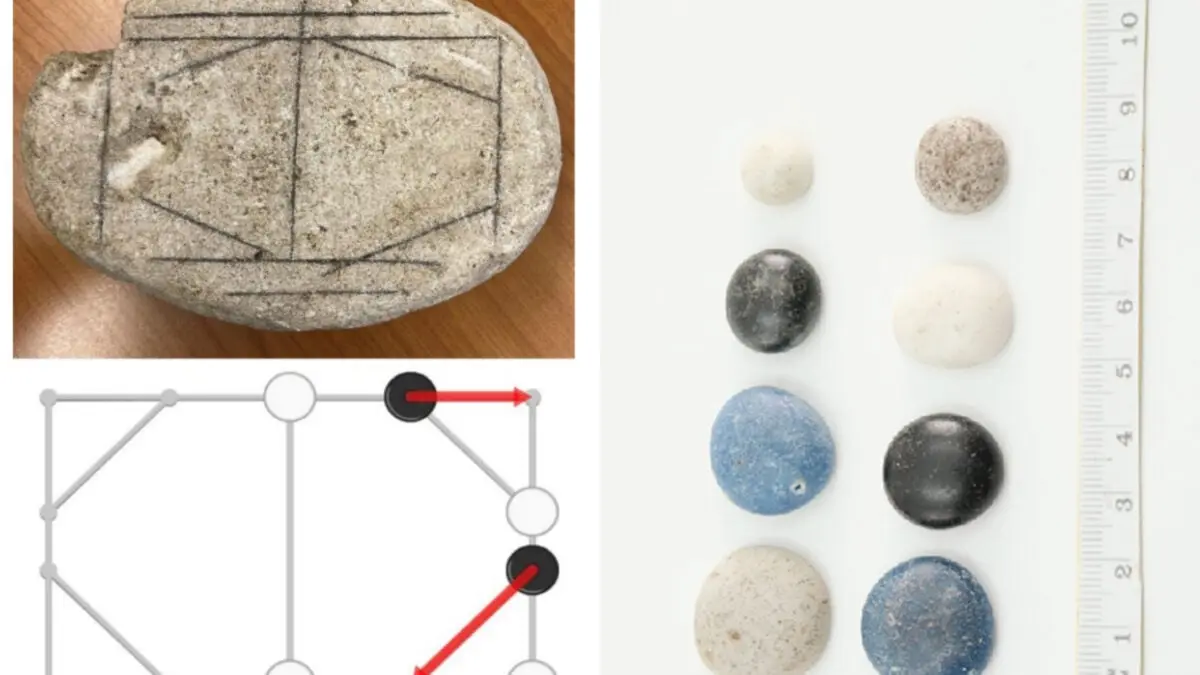
. They created a digital model of the pattern and programmed two AI opponents to play against each other using the Ludii game system3
. The researchers tested more than 100 different sets of rules taken from other known European games, both ancient and modern, including Scandinavia's Haretavl and Italy's Gioco dell'orso5
. As the AI agents played 1,000 games per rule set, the team tracked how pieces moved and compared the gameplay patterns with the levels of wear on areas of the board2
.
Source: Gizmodo
Related Stories

Blocking Game Discovery Rewrites European Gaming History
The AI simulations showed that wear patterns were most consistent with a blocking game—one in which the goal is to prevent the opponent from moving their pieces
1
. The team identified nine rule sets that appeared consistent with the board's wear, and "they were all variations of this same kind of blocking game," Crist noted2
. The results suggest one player took turns placing four pieces in the grooves against an opponent's two, with victory going to whoever avoided being blocked the longest3
. The researchers named it Ludus Coriovalli, Latin for "the game from Coriovallum," and the game can now be played online2
.Groundbreaking Method Opens New Research Possibilities
This Roman board game represents the earliest example of such a blocking game in Europe—a type previously thought to have emerged only during the Middle Ages
1
. "This is the first time that AI-driven simulated play has been used in concert with archaeological methods to identify a board game," Crist stated5
. Véronique Dasen of Switzerland's University of Fribourg called the study "groundbreaking" and noted the technique could investigate other lost games3
. The research results invite archaeologists to reconsider Roman period graffiti that could represent actual boards for similar games not present in texts. Published in the journal Antiquity, this approach provides archaeologists with tools to identify games from ancient cultures that are unusual or uncommonly played, since current identification methods rely on connecting geometric patterns to games known from historical references or artistic representations5
.References
Summarized by

Navi
[2]
[3]
Related Stories
AI Tool 'Aeneas' Revolutionizes Analysis of Ancient Latin Inscriptions
24 Jul 2025•Science and Research
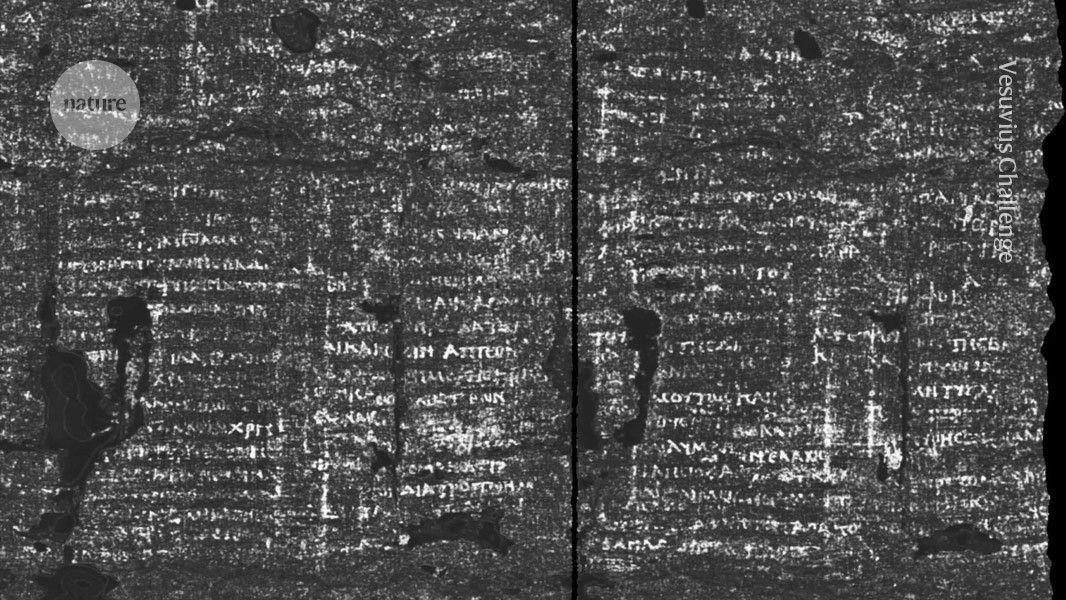
AI reads entire ancient scroll from Herculaneum for first time, revealing lost Stoic philosophy
25 Jun 2026•Science and Research

AI Deciphers 2,000-Year-Old Vesuvius Scroll, Revealing Lost Greek Philosophical Work
07 May 2025•Science and Research
Recent Highlights
1
Microsoft and Nvidia Launch Surface Laptop Ultra: A $2,599 AI-Ready PC With RTX Spark Chip
Technology

2
Trump Consulted Grok AI Before Ordering Venezuela Invasion and Capture of Nicolás Maduro
Policy and Regulation

3
Scientists Build AI Model That Reconstructs Images From Brain Scans in Record Time
Science and Research

Recent Highlights
Today's Top Stories







Don’t drown in AI news. We cut through the noise - filtering, ranking and summarizing the most important AI news, breakthroughs and research daily. Follow topics that matter to you and stay ahead.


