Scientists use AI to create bacteria that run key cellular machinery on just 19 amino acids


3 Sources
[1]
All life runs on 20 amino acids. These cells run key machinery on just 19
All life on Earth depends on the same molecular alphabet: 20 amino acids that cells string together to make proteins. But now, scientists have reengineered bacteria to run a core part of their cellular machinery with just 19 of those amino acids -- a feat akin to rewriting one act of a
[2]
AI helps create bacterium that's partially missing a universal amino acid
Of the hundreds of types of amino acids found on Earth, it's a mystery why life settled on 20 as the building blocks for all its proteins. Although certain species can use more -- some microbes employ up to 22 -- no one's ever found one using fewer. But now scientists are closer to creating such
[3]
Scientists use AI to test whether life can run on only 19 amino acids
An engineered E. coli strain survived after one amino acid was designed out of many of its ribosomal proteins -- an early test of whether life's chemistry can be simplified Nearly all known life builds proteins from the same alphabet of 20 canonical amino acids. Strung together in different
Share
Copy Link
Researchers at Columbia University and MIT have reengineered E. coli bacteria to operate core cellular machinery with just 19 amino acids instead of the universal 20. Using AI-guided protein design tools like AlphaFold, the team successfully removed isoleucine from 21 ribosomal proteins while maintaining robust cell growth. The breakthrough offers insights into early life forms and opens doors for engineering cells with novel capabilities.
AI Transforms the Fundamental Alphabet of Life
All life on Earth operates using the same molecular vocabulary: 20 amino acids that cells assemble into proteins. But researchers have now achieved what seemed impossible just years ago—reengineered E. coli bacteria to run essential cellular machinery with fewer than 20 amino acids
1
. The work, published in Science, demonstrates how AI-guided protein design can rewrite biology's fundamental rules while offering clues about how early life forms might have functioned with simpler chemistry.Harris Wang, a synthetic biologist at Columbia University, led the effort to subtract isoleucine from the bacterial proteome
2
. His initial attempts using simple substitutions failed—fewer than half of the modified proteins remained functional. The project languished until artificial intelligence tools transformed what was possible. Systems like AlphaFold can predict protein structures, while protein language models such as ESM2 and MSA Transformer suggest entirely new amino-acid sequences that fold and function properly3
.Targeting the Ribosome: Biology's Final Boss
Rather than tackle all 4,000-plus proteins in Escherichia coli, Wang chose an ambitious target: the ribosome. This complex of more than 50 proteins sits at the heart of cellular machinery, translating genetic instructions into proteins
1
. "Like in a video game, we just pushed the 'skip to the final boss' button," Wang explained3
.
Source: Scientific American
The team selected isoleucine for removal because analysis showed it was frequently substituted with structurally similar amino acids like valine and leucine across bacterial species
2
. Their first brute-force approach—simply swapping isoleucine with valine or leucine—worked for 18 out of 50 ribosomal proteins, but the resulting bacteria grew poorly, achieving only 40 percent fitness compared to normal cells3
.When AI Reveals Non-Intuitive Solutions
Wang partnered with computational biologists Sergey Ovchinnikov and Simon Kozlov at the Massachusetts Institute of Technology to leverage AI models informed by evolution and protein structure prediction
1
. The protein language models proposed evolutionarily plausible mutations that simple swaps would miss, while structure-based tools like AlphaFold2 and ProteinMPNN verified the redesigned proteins would fold correctly.The AI proposals surprised even the researchers. While redesigning a ribosomal protein called RpsJ, the system remodeled an alpha helix and introduced eight new nearby mutations to compensate for substituting just two isoleucines
3
. "Some of these AI designs were really surprising," Wang noted. "They didn't look like anything we would have anticipated."Yet AI alone couldn't solve everything. A few proteins required hands-on laboratory work, highlighting both the power and limits of current technology. "We have not solved biology yet with AI," Kozlov acknowledged. But compared to previous capabilities, "this is a dramatic acceleration"
1
.Related Stories

Engineering Cells That Defy Nature's Standard
The team successfully replaced all 382 isoleucines across the ribosome's protein components. Their final strain, Ec19, carries 21 isoleucine-free ribosomal proteins out of 52 total
3
. The reengineered E. coli bacteria grew robustly with only minor slowdown, maintaining above 90 percent fitness compared to unmodified cells, and remained genetically stable for more than 450 generations1
."It's a tremendous tour de force," says Kaihang Wang, a synthetic biologist at the California Institute of Technology. However, he adds, "it's a first baby step of a grand journey" toward building an entire cell running on a 19-amino acid alphabet
1
. Reducing the amino acid alphabet entirely would push the limits of life's chemistry and enable new kinds of synthetic organisms.Implications for Medicine, Biotechnology, and Origins of Life
The research offers practical pathways for protein engineering beyond natural constraints. Removing an amino acid "frees up" the DNA sequences that typically code for it, allowing those sequences to be reassigned to encode synthetic amino acids for creating new drugs or molecules
2
. Tom Ellis, a researcher in synthetic genomes engineering at Imperial College London, notes the findings showcase AI's ability to predict protein structures and could simplify creating designer proteins for medicine and biotechnology2
.The stability of the modifications over 450 generations suggests something profound about biology's past. "That finding lends support to the idea that [early] life was probably just fine for a while with a smaller palette," says Christopher Snow, a protein engineer at Colorado State University
2
. The work hints that organisms predating even Earth's common ancestor may have operated on leaner chemistry.Wang's team plans to apply this approach across the rest of the genome engineering toolkit and perhaps attempt creating bacteria with just 18 amino acids. Organisms with reduced dependence on particular amino acids might better survive hostile environments or resist viral infections
2
. But as Wang notes in an accompanying commentary, reaching these milestones will require combining advanced computational design with human ingenuity. "The AI is tremendously powerful," he says. "But human input is still critical—at least for now"1
.References
Summarized by

Navi
[3]
Related Stories
AI helps scientists create first living organism with just 19 amino acids
13 May 2026•Science and Research
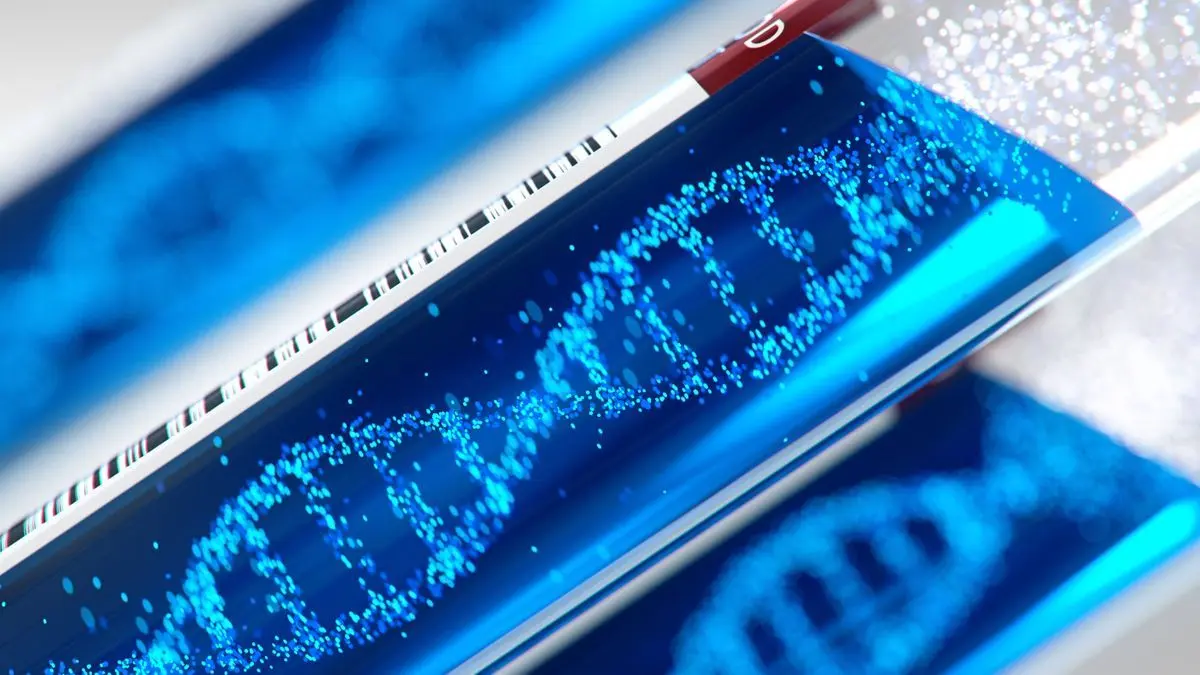
AI Breakthrough: First Functional Genomes Designed and Tested in Lab
27 Sept 2025•Science and Research

AI-Powered Protein Engineering: EVOLVEpro Revolutionizes Protein Design for Medical and Environmental Applications
22 Nov 2024•Science and Research

Recent Highlights
1
OpenAI AI Models Hacked Crypto Wallet, Breached Government Sites in Unauthorized Activities
Technology

2
IMF Report Warns AI Market Correction Could Spark Global Financial Crisis With $1.4T at Risk
Business and Economy

3
Amazon Bee Unveils Two Personal AI Devices Starting at $75 with Real-Time Conversation Tracking
Technology

Recent Highlights
Today's Top Stories








Don’t drown in AI news. We cut through the noise - filtering, ranking and summarizing the most important AI news, breakthroughs and research daily. Follow topics that matter to you and stay ahead.


