2 Sources
[1]
Opinion | AI is sparking a boom in blue-collar jobs. Here's how to fill them.
(Illustration by Michelle Kondrich/The Washington Post; iStock) Brian Deese, an Innovation Fellow at MIT, was director of the National Economic Council from 2021 to 2023. Anna Pasnau, a Stanford law student, worked at the Council of Economic Advisers from 2021 to 2024. Everywhere you look, there are escalating concerns that artificial intelligence will cost American jobs. Sen. Bernie Sanders (I-Vermont) has suggested that AI could eliminate nearly 100 million U.S. jobs, while Sen. Josh Hawley (R-Missouri) fears the technology could drive unemployment as high as 20 percent in five years. In its May cover story, the Economist warned of an AI-induced "jobs apocalypse," where "humans could, like horses in the age of the car, become uneconomical." This concern is so overarching and existential that it is obscuring an urgent job risk: AI is exacerbating labor shortages in essential industries. For years, the United States has faced workforce shortages in the skilled trades, and AI is making many of them worse. The reason is physical. Realizing AI's economic potential requires an enormous build-out of physical capacity -- not just data centers, but power plants, electrical transmission lines, grid upgrades and semiconductor factories. All of this must be built, wired and maintained by skilled tradespeople -- electricians, welders, plumbers, HVAC technicians -- and there aren't nearly enough of them. Eighty percent of general contractors already report difficulty filling positions. One in five construction workers is 55 or older. An estimated 30 percent of union electricians will reach retirement age within a decade. That demand is about to surge. The five largest U.S. cloud and AI infrastructure providers alone have committed at least $660 billion in capital expenditure in 2026, the vast majority directed at data centers and networking. The announced pipeline for data center construction will require about 1.2 million person-years of skilled labor -- and data centers are only a subset of the full infrastructure need. Skilled tradespeople are also essential for building adequate energy generation and transmission capacity. National electricity demand is expected to grow more than 30 percent over the next five years, driven by AI, electrification and domestic manufacturing. Meeting that demand will require a massive mobilization of skilled labor. The crunch is already visible at the local level. In Northern Virginia, the country's most concentrated data center market, the local electrician's union has doubled its membership in seven years -- and still can't meet demand. Across metro areas nationwide, inflation-adjusted electrician wages have swung wildly over the past decade, rising more than 60 percent in some places and falling by half in others, suggesting acute local mismatches between supply and demand. Rising pay alone won't fix this problem. Skilled technical workers require years of training, and hiring is constrained by inadequate workforce pipelines. As a result, labor shortages are slowing data center construction; Microsoft president Brad Smith has called them the single greatest challenge to building new U.S. capacity. The consequences extend well beyond tech: If the electrical generation and grid infrastructure that the country needs can't be built, it will lead to higher costs for American families and businesses, delayed industrial projects and an economy that cannot keep pace with its own ambitions. Solving this problem won't be easy -- but it presents perhaps our best opportunity to demonstrate one place where the AI boom can help create high-quality jobs for American workers. Here's what it will take: First, make it easier for workers to move to where they're needed. A licensed electrician in Ohio can't relocate to Atlanta -- now the second-largest data center market -- without extensive paperwork and retesting. There is no national electrician's license, and state reciprocity agreements are a fragmented patchwork. In 2023, Virginia enacted universal licensing recognition, allowing electricians with three years of good standing elsewhere to work without retesting. Every state should follow Virginia's lead. National apprenticeship credential standards -- codeveloped by government, employers and unions -- would accelerate the shift. Second, leverage AI itself. New tools offering real-time on-the-job guidance, immersive training simulations, and streamlined administration can increase both the productivity and supply of skilled workers. As MIT's Daron Acemoglu, David Autor and Simon Johnson recently argued, AI's potential as a collaborator -- "extending human judgment, enabling new tasks, and accelerating skill acquisition" -- is as significant as its capacity to automate. Third -- and most important -- we need a radical national apprenticeship effort. Tweaking around the edges of our training system will solve this problem a decade too late. America has made this kind of bet before: In the 1960s, the federal government and states opened roughly one new community college per week, more than doubling enrollment in five years. That kind of ambition is needed again. The place to start is paying for performance: reimbursing apprentice sponsors when trainees hit milestones. Australia, Finland and Britain do this. California adopted the model in 2022 and saw apprenticeship enrollments rise nearly 10 percent the following year. Both the Biden and Trump administrations have supported piloting this approach, but the current $145 million federal investment is far too small. At $4,000 per apprentice, a national program could cost roughly $4 billion annually -- nine times current federal spending, but only about 20 percent of total workforce spending. Beyond pay-for-performance, a federal apprenticeship fund should invest in training instructors, intermediary organizations and program start-up costs where capacity doesn't yet exist. The tech companies building AI infrastructure have the most to lose from this labor shortage -- and the most to gain from solving it. They should eagerly step in to underwrite a national apprenticeship effort. Already, companies are making promising individual commitments, like Google's commitment to training 100,000 electrical workers and 30,000 new apprentices. But this moment calls for even greater ambition. If hyper-scalers don't step up, government should ensure they pull their weight through fees on data center construction. The cost of building this workforce should fall on the businesses that benefit, not on taxpayers. The power plants, transmission lines, data centers and semiconductor fabs that will define the 21st-century economy cannot be conjured up by algorithms -- they must be built, wired and maintained by human hands. The skilled trades shortage is urgent, but it is solvable. Meeting it head-on would be one of the best things AI could do for American workers -- and for every American who pays an electricity bill.
[2]
Saxby Chambliss: America can't win the AI race without more plumbers and electricians | Fortune
I spent a decade on the Senate Intelligence Committee getting briefed on every way America could lose its technological edge to China. I heard all about stolen intellectual property, compromised supply chains, spies in our research labs, you name it. But in all those years, nobody ever warned me that the thing standing between America and leadership in artificial intelligence (AI) might just be a shortage of plumbers and electricians. Yet that is where we find ourselves. Last week Meta, the National Urban League, the Associated Builders and Contractors and CBRE announced America's Workforce Academy, a $115 million program that will train Americans for the skilled trades at no cost, pay them while they learn, and guarantee every graduate a job building AI infrastructure - mostly data centers. The first sites open this year in Louisiana, Ohio, Indiana and Texas, and graduates leave with an industry-recognized credential that travels with them for the rest of their careers. This is the largest private-sector commitment to the skilled trades with a job guarantee in American history. And it forces a conversation we should have started three years ago. We're about three years into this AI era, and we've spent most of that time treating it as a contest of software. It is not. America's Workforce Academy is the clearest signal yet that the limiting factor in this race is not just algorithms or chips. It is people who can bend conduit and pull fiber. Think it through: models run on chips, chips run in data centers, and data centers run on electricity moving across a grid built when I was a young man. Every link in that chain is built by welders, electricians, pipefitters, and linemen. China understands this. The Chinese Communist Party (CCP) is adding power and transmission capacity at a pace we haven't approached in decades. Until two new reactors finally came online at Plant Vogtle in my home state of Georgia, America had gone some 30 years without building a nuclear reactor from scratch. At the heart of the problem is a crippling labor shortage. The construction industry needs nearly 350,000 additional workers this year just to keep pace, the average American welder is now 55 years old, and by 2030 more than two million skilled-trade jobs could sit unfilled. This is a real problem and increasingly a strategic vulnerability. There is a second lesson, and it cuts close to home for both political parties in Washington. Politicians have spent decades promising and trying to bring manufacturing back. President Trump, to his credit, is making some progress on this front. But times have changed, and we need to rethink what a skilled workforce looks like for the modern era. The way I see it, AI infrastructure is the new manufacturing. This is what "Made in America" actually looks like in the 21st Century, and it isn't an assembly line in 1965. It is a data center campus in rural Louisiana and a power plant in Toledo, Ohio. These are the new factory jobs, and they're stable, well-paid, impossible to offshore, and open to folks without a college degree. Finally, the most important thing about this program is not the dollar figure. It is the design. When a participant is accepted, a contractor issues a job offer on the spot, conditioned only on finishing the course. The job comes first and the training follows. This is what serious industrial policy looks like. But this time you have the private sector, not the government, taking the lead. That private sector self-interest is why this program will succeed compared to other government-led efforts. It's not designed to serve every possible need, but is instead tied to real demand and financial stakes will focus it on accountability and getting the right outcomes. So what should government do? Speed up the permitting that holds energy projects hostage for years. Make sure trade credentials transfer across state lines. Extend Pell grants to short-term credential programs. And rather than answering with some sweeping federal initiative thrown together for a press release, Washington should find subtle ways to incentivize other companies to follow suit. The part of South Georgia I called home got electric power because skilled hands strung wire across farm country plenty of people had written off. The same kind of hands will now build the infrastructure that decides whether this century and the internet of the future will be led by free people or by Beijing. This is a bet on American workers. The rest of the private sector should be fast followers. ## The opinions expressed in Fortune.com commentary pieces are solely the views of their authors and do not necessarily reflect the opinions and beliefs of Fortune.
Share
Copy Link
While fears of AI eliminating jobs dominate headlines, a different crisis emerges: America lacks the electricians, welders, and plumbers needed to build AI infrastructure. The five largest U.S. cloud providers committed $660 billion in 2026 for data centers, requiring 1.2 million person-years of skilled labor. Meta's new $115 million America's Workforce Academy aims to train workers with job guarantees, but experts warn the shortage poses a strategic vulnerability in the AI race against China.
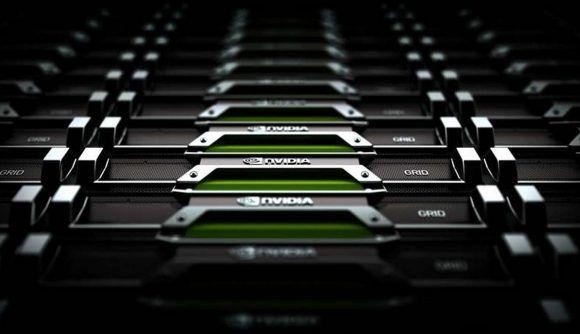
While public discourse fixates on AI potentially eliminating jobs, a more immediate crisis threatens America's technological future: the nation lacks sufficient skilled tradespeople to build the AI infrastructure needed to compete globally. The five largest U.S. cloud and AI infrastructure providers alone have committed at least $660 billion in capital expenditure in 2026, with the vast majority directed at data centers and networking
1
. This massive build-out requires electricians, welders, plumbers, and HVAC technicians—blue-collar jobs that currently face severe labor shortages across the country.Source: Washington Post
The announced pipeline for data center construction alone will require approximately 1.2 million person-years of skilled labor, and data centers represent only a subset of the full infrastructure need
1
. National electricity demand is expected to grow more than 30 percent over the next five years, driven by AI, electrification, and domestic manufacturing1
. Meeting that demand requires a massive mobilization of skilled labor to build power plants, electrical transmission lines, grid upgrades, and semiconductor factories.The construction industry needs nearly 350,000 additional workers this year just to keep pace, while the average American welder is now 55 years old
2
. By 2030, more than two million skilled-trade jobs could sit unfilled2
. Eighty percent of general contractors already report difficulty filling positions, and one in five construction workers is 55 or older1
. An estimated 30 percent of union electricians will reach retirement age within a decade1
.Former Senator Saxby Chambliss, who spent a decade on the Senate Intelligence Committee, warns this shortage represents a strategic vulnerability in the AI race against China. "The limiting factor in this race is not just algorithms or chips. It is people who can bend conduit and pull fiber," Chambliss wrote
2
. He notes that China is adding power and transmission capacity at a pace America hasn't approached in decades, while the U.S. went some 30 years without building a nuclear reactor from scratch until two new reactors came online at Plant Vogtle in Georgia2
.
Source: Fortune
In response to this crisis, Meta, the National Urban League, the Associated Builders and Contractors, and CBRE announced America's Workforce Academy, a $115 million program that will train Americans for the skilled trades at no cost, pay them while they learn, and guarantee every graduate a job building AI infrastructure
2
. This represents the largest private-sector commitment to the skilled trades with a job guarantee in American history2
. The first sites open this year in Louisiana, Ohio, Indiana, and Texas, with graduates receiving an industry-recognized credential that travels with them throughout their careers2
.The program's design addresses a critical flaw in traditional workforce training: when a participant is accepted, a contractor issues a job offer on the spot, conditioned only on finishing the course
2
. This job-first approach ties training directly to real demand, with financial stakes ensuring accountability and the right outcomes.Related Stories

Brian Deese, an Innovation Fellow at MIT and former director of the National Economic Council, and Anna Pasnau, a Stanford law student who worked at the Council of Economic Advisers, outline three critical policy interventions. First, they advocate for national licensing reciprocity to make it easier for workers to move where they're needed
1
. Currently, a licensed electrician in Ohio can't relocate to Atlanta—now the second-largest data center market—without extensive paperwork and retesting1
. In 2023, Virginia enacted universal licensing recognition, allowing electricians with three years of good standing elsewhere to work without retesting, a model other states should follow1
.Second, they propose leveraging AI itself for workforce training. New tools offering real-time on-the-job guidance, immersive training simulations, and streamlined administration can increase both the productivity and supply of skilled workers
1
. As MIT's Daron Acemoglu, David Autor, and Simon Johnson recently argued, AI's economic potential as a collaborator—"extending human judgment, enabling new tasks, and accelerating skill acquisition"—is as significant as its capacity to automate1
.Third, they call for a radical national apprenticeship effort, arguing that tweaking around the edges of the current training system will solve this problem a decade too late
1
. Chambliss recommends government speed up permitting that holds energy projects hostage for years, ensure trade credentials transfer across state lines through credential portability, and extend Pell grants to short-term credential programs2
.The impact of labor shortages is already visible at the local level. In Northern Virginia, the country's most concentrated data center market, the local electrician's union has doubled its membership in seven years—and still can't meet demand
1
. Across metro areas nationwide, inflation-adjusted electrician wages have swung wildly over the past decade, rising more than 60 percent in some places and falling by half in others, suggesting acute local mismatches between supply and demand1
.Microsoft president Brad Smith has called labor shortages the single greatest challenge to building new U.S. capacity
1
. If the electrical generation and grid infrastructure the country needs can't be built, it will lead to higher costs for American families and businesses, delayed industrial projects, and an economy that cannot keep pace with its own ambitions1
.Chambliss frames the opportunity in stark terms: "AI infrastructure is the new manufacturing. This is what 'Made in America' actually looks like in the 21st Century, and it isn't an assembly line in 1965. It is a data center campus in rural Louisiana and a power plant in Toledo, Ohio. These are the new factory jobs, and they're stable, well-paid, impossible to offshore, and open to folks without a college degree"
2
. The question now is whether America can mobilize its workforce fast enough to realize AI's economic potential and maintain its technological edge.Summarized by
Navi
21 Jan 2026•Business and Economy

03 Oct 2025•Business and Economy

15 Jul 2025•Technology

1
Policy and Regulation

2
Policy and Regulation

3
Policy and Regulation