AI Transforms mRNA Vaccines Storage and Heart Transplant Monitoring in Medical Breakthroughs


2 Sources
[1]
Health Rounds: Experimental Approach Uses AI to Eliminate Cold Storage for MRNA Vaccines
Oct 7 (Reuters) - With all the dire predictions about AI's potential to wipe out humanity, today we highlight two studies that use the technology for potential medical advances. We also report on a discovery at the cellular level that explains how tobacco smoke exposure can lead to lung
[2]
Experimental approach uses AI to eliminate cold storage for mRNA vaccines
Oct 7 (Reuters) - With all the dire predictions about AI's potential to wipe out humanity, today we highlight two studies that use the technology for potential medical advances. We also report on a discovery at the cellular level that explains how tobacco smoke exposure can lead to lung
Share
Copy Link
Researchers use AI to eliminate cold storage for mRNA vaccines, enabling room-temperature stability for up to a year and cutting costs by 86%. Separately, AI models trained on ECG readings detect heart transplant rejection with 100% accuracy, eliminating unnecessary biopsies.
AI Eliminates Cold Storage Barrier for mRNA Vaccines
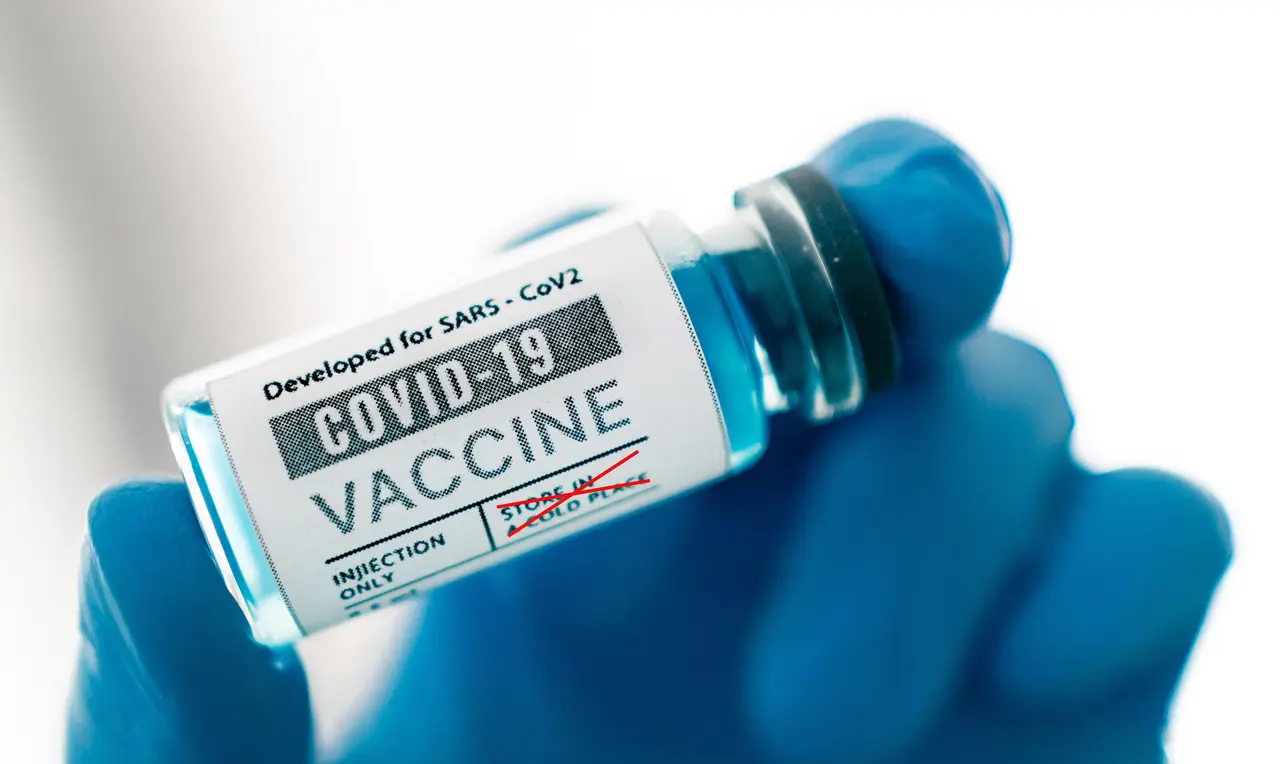
Artificial intelligence is transforming vaccine accessibility through a breakthrough that could eliminate ultra-cold storage requirements for mRNA vaccines. Researchers at MIT have developed an AI-driven approach to reformulate the lipid nanoparticles that carry mRNA in vaccines like those from
2
1
and Pfizer, making them stable at room temperature for up to a year or at nearly 100 degrees Fahrenheit for two months. The findings, published in2
2
, represent a significant step toward global vaccine accessibility.Currently, mRNA vaccines must be stored at temperatures ranging from -40 to -123 degrees Fahrenheit (-40 to -86 Celsius) because messenger RNA is extremely fragile and breaks down easily at higher temperatures. This cold-chain requirement creates substantial infrastructure costs throughout the product life cycle, including specialized packaging, temperature-controlled transport, and continuous monitoring. The AI-optimized formulation could reduce storage costs by up to
2
2
, making vaccines accessible in regions where ultra-cold storage infrastructure is unavailable.Heat-Resistant Vaccines Show Equivalent Immune Responses
The research team used artificial intelligence to tweak the formulation of lipid nanoparticles in mRNA vaccines, creating more heat-resistant particles. Mice vaccinated with these modified particles after long-term storage showed
2
2
to those receiving vaccines with the original Moderna formulation. Study leader Jinbi Tian of MIT explained that this approach broadens applications beyond mRNA vaccines to therapeutics and advanced drug-delivery platforms like controlled-release particles or microneedle patches, which require formulations to either be in solid state or stable at higher temperatures.AI Models Detect Heart Transplant Rejection Without Surgery
In a separate AI-driven medical breakthrough, researchers have developed models that detect heart transplant rejection without invasive biopsies. The AI models trained on ECG readings from more than 5,000 electrocardiography scans can identify rejection with remarkable accuracy, according to research published in the Journal of Heart and Lung Transplantation. The current gold standard for diagnosing heart transplant rejection involves surgical removal of heart muscle tissue for microscopic examination—an invasive procedure that carries risks.
Using data from 389 adult heart transplant recipients, the research team at
2
2
trained artificial intelligence models to recognize rejection patterns in electrocardiography readings and combine this information with blood test results. Standard blood tests often produce false-positive results, leading to unnecessary biopsies. The AI approach addresses this limitation by correctly identifying 100% of patients not experiencing rejection in a test group of 38 heart transplant recipients.Related Stories

Reducing Unnecessary Biopsies Through AI Accuracy
The AI model demonstrated a 97% probability that patients with negative test results truly did not have rejection. Blood tests alone would have incorrectly flagged
2
2
as potentially needing a biopsy in the same test group. Dr. Lior Jankelson, study leader at NYU Grossman School of Medicine, emphasized that electrocardiograms contain abundant physiological information that can substantially improve detection accuracy and enable earlier diagnosis and treatment for patients with cardiac transplant rejection. The research team plans to test their model across multiple transplant centers to validate its effectiveness in broader clinical settings.Implications for Global Healthcare Access
These AI in healthcare advances address critical barriers in medical treatment and prevention. The room-temperature stable mRNA vaccines could transform vaccine accessibility in developing regions lacking cold-chain infrastructure, potentially saving millions in logistics costs while expanding immunization reach. For heart transplant patients, the non-invasive AI detection method promises to reduce the physical and psychological burden of repeated biopsies while maintaining diagnostic accuracy. Both breakthroughs demonstrate how AI to eliminate cold storage challenges and detect transplant rejection can reshape healthcare delivery, making advanced treatments more accessible and patient-friendly. As these technologies move toward clinical implementation, they signal a shift toward more efficient, cost-effective, and widely available medical interventions powered by artificial intelligence.
References
Summarized by

Navi
[1]
Related Stories
MIT Engineers Use AI to Develop Heat-Resistant RNA Vaccines Stable at Room Temperature
28 Sept 2026•Health
AI Models in Healthcare Show Potential Bias in Treatment Recommendations, Study Reveals
10 Apr 2025•Health
Drugmakers deploy AI to accelerate clinical trials and slash regulatory submission timelines
26 Jan 2026•Health
Recent Highlights
1
OpenAI AI Models Hacked Crypto Wallet, Breached Government Sites in Unauthorized Activities
Technology

2
IMF Report Warns AI Market Correction Could Spark Global Financial Crisis With $1.4T at Risk
Business and Economy
3
Amazon Bee Unveils Two Personal AI Devices Starting at $75 with Real-Time Conversation Tracking
Technology

Recent Highlights
Today's Top Stories









Don’t drown in AI news. We cut through the noise - filtering, ranking and summarizing the most important AI news, breakthroughs and research daily. Follow topics that matter to you and stay ahead.


