2 Sources
[1]
AI wealth boom sending San Francisco home prices surging: 'It's ridiculous'
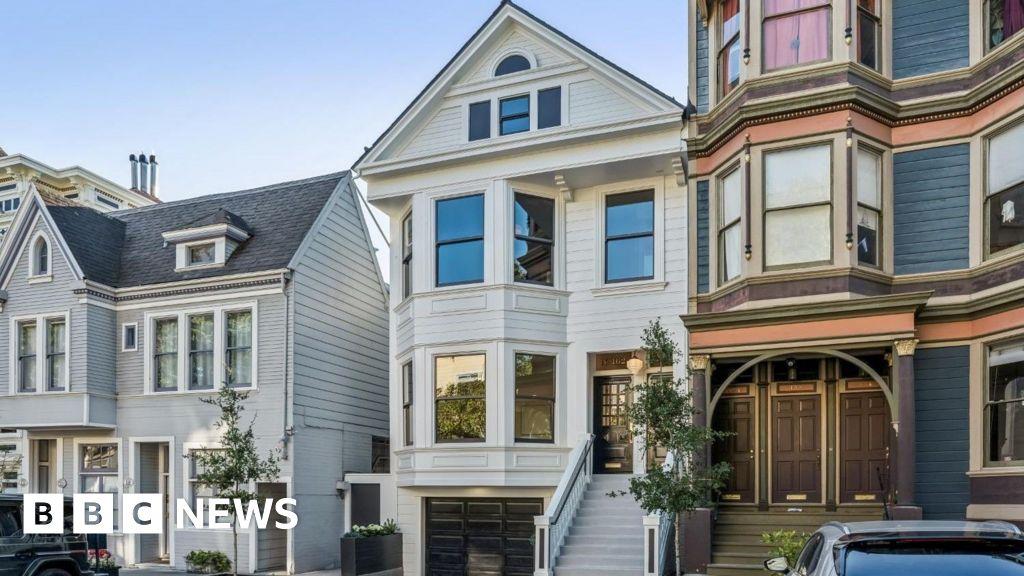
Employees at artificial intelligence companies are coming into gargantuan sums of money amid boom in IPOs Home prices in the San Francisco Bay Area's already expensive market are skyrocketing as employees at leading artificial intelligence companies come into gargantuan sums of money thanks to a boom in initial public offerings. With San Francisco's OpenAI and Anthropic, as well as SpaceX, which operates a major facility in the Los Angeles area, eyeing debuts on the stock market, the hot housing market may not abate soon. If their initial public offering (IPO) is well-received, the companies' multibillion-dollar valuations are poised to produce massive wealth for employees and executives holding shares, which experts say could trigger an uptick in demand for the Bay Area's limited housing stock. As of March 2026, the median home sale price in San Francisco was more than $2m, according to a report from real estate brokerage Compass, an 18% increase from the previous year. That same month, on average, a house spent 29 days on the market before being sold, the fastest sale rate observed since spring 2022, per the report. And experts say demand is likely to further increase, while supply remains low. "My joke is that you have to show up to whatever the open house is. Be there a half-hour early. Have a bag of cash with you. Be willing to pay. It's ridiculous," said Quintin Mecke, executive director of the Council of Community Housing Organizations, a coalition dedicated to affordable housing. The recent flush of capital in the metropolitan area can probably be traced to tender offers - employees given the opportunity to sell their equity - at major AI companies. More than 600 employees at OpenAI, the company behind ChatGPT, cashed out last fall on shares that collectively totalled $6.6bn, the Wall Street Journal reported in May. Of that group, roughly 75 people pocketed $30m each. "If somebody's thinking about it wisely, they'll be thinking: 'Well, I have this large sum of money coming my way. What is a large purchase that I may need to acquire at some point?' And the home is on that very short list," said Drew Wilkerson, a real estate adviser with Sotheby's International Realty. Record-setting IPOs shake up market Wilkerson and real estate agent Spencer Hsu, who estimates about 80% of his clients work in AI, have seen competition become particularly fierce in the higher end of the market where homes sell for $5m and above. "Just this last week, I had five calls from new buyer clients who said: 'I know that OpenAI and Anthropic and SpaceX and these IPOs are going to happen. I want to try to get in the market before that wave of money comes,'" Wilkerson said. Even though home prices are high, some of these potential buyers reason the market will only get more expensive post-IPO. "'I might as well just buy it now,'" Hsu said, describing their mentality. High-earning tech workers influencing the Bay Area's housing market is not a new phenomenon. The dotcom era ushered in a millionaire class plucked from the C-suites of buzzy internet sites. In the ensuing so-called "gold rush" era, "shares went up like crazy ... house prices soared", said Ken Rosen, chair of the University of California, Berkeley's Fisher center for real estate and urban economics. A similar housing dynamic played out again in the early 2010s, when employees at Twitter (now X) and Facebook (now Meta), among other top tech firms, got substantial paydays from those companies' IPOs. Two factors may distinguish those time periods from now. For one, Anthropic, OpenAI and SpaceX are looking at record-setting valuations. While Twitter priced its initial offering at $26 per share and Facebook at $38, SpaceX is looking to sell at $135 per share, at an overall valuation of $1.77tn - making it the largest IPO in history. Additionally, many of the big tech companies that went public in the 2010s are headquartered in Silicon Valley, about 50 miles south of the city. Some employees opt to live nearby, while others commute from San Francisco. But Anthropic and OpenAI are both headquartered in downtown San Francisco, and their employees may be more likely to put down roots near their offices. "The interesting tension ... in San Francisco is you have this extremely high demand, but inventory doesn't really ever rise to meet that," Wilkerson said. The city has long drawn scrutiny for being slow to build new housing. The time it takes for new housing permits to be processed has significantly decreased in recent years, but San Francisco still lags behind other cities in that department. Single-family zoning has also historically hindered new residential construction. San Francisco mayor Daniel Lurie recently signed a rezoning law aimed at expanding the supply of housing with taller, multi-unit buildings. Uncertainty swirls around future of home prices Others are not so keen on joining the flurry of activity. Some current homeowners, according to Wilkerson, contemplated the possible windfalls from selling to eager buyers but may be deterred by being subject themselves to expensive prices. Daryl Fairweather, chief economist at Redfin, also noted that for anyone purchasing a home right now, the price it may fetch in the future may be less than what they paid if the upward trend does not persist. The AI wealth boom has also sent ripples through both the higher end of the market and the lower end, which typically includes renters. Low-income households, which in San Francisco could mean a family of four making six figures - may feel the squeeze, according to Mecke. The average rent for a one-bedroom apartment is at an all-time high for the city at $4,000, according to a May report from Zumper, a rental listings site. The average two-bedroom costs $5,500. Among the neighborhoods facing the biggest increases in rent have been downtown San Francisco, SoMa, Mission Bay, Pacific Heights and Hayes Valley, according to the San Francisco Chronicle. It remains to be seen when the housing market will cool down. Questions linger about the profitability of the AI boom, as companies invest in data infrastructure without significant earnings yet. "Booms are always followed by busts. Always," Rosen said. In the aftermath of the dotcom stock market crash, "house prices corrected downward for the next four years, five years", Rosen said. "Easy come, easy go."
[2]
AI gold rush upends San Francisco housing market
San Francisco (United States) (AFP) - In San Francisco, the longtime hub of the US tech sector, fortunes tied to artificial intelligence startups are inflating home prices and fueling a spike in evictions, splitting the city's population into two different trajectories. The divergence was clear during an open house last Sunday at a renovated three-bedroom apartment in the trendy Duboce Triangle neighborhood. Asking price for the residence, which comes with marble bathrooms and a finished attic? A cool $3 million -- but the seller noted he was willing to be paid in shares of OpenAI, the creator of ChatGPT, or its rival Anthropic. Both AI companies have recently announced plans to go public. One tech employee at the viewing, who asked to remain anonymous, said: "They're really after $3.5, maybe $4 million. The asking price is just there to kick off the bidding." Whether the home could be bought with shares remains to be seen, but the frenzy around it sparked a larger conversation about San Francisco housing. The initial public offerings of OpenAI and Anthropic could generate more than 16,000 new millionaires, according to investment research firm Sacra. That cash influx could drive up a housing market that is already seeing skyrocketing prices. Already, AI employees have been cashing in on the gold rush, with more than 600 current or former OpenAI workers selling nearly $7 billion worth of shares by the end of 2025. "Real estate agents started to notice the surge of activity beginning last fall and winter" -- corresponding to when OpenAI employees could start selling their company shares on private markets, Danielle Lazier, a San Francisco real estate broker, told AFP. The Bay Area's housing market has now split: while prices of luxury real estate have increased 13.6 percent since ChatGPT launched in 2022, prices in more affordable neighborhoods have actually dropped 3.8 percent, according to real estate platform Redfin. Now only six percent of properties on the market are affordable for those with the region's median household income of $162,000. Record sales, record evictions Record-setting transactions are a regular occurrence, with real estate agency Compass reporting the sale in May of a home overlooking the Marina District for $15 million -- nearly double its $8 million asking price. "This has a similar feel to 2000," said real estate agent Nina Hatvany, in reference to the dot-com bubble, adding that about half of offers are all-cash. She described a "bifurcated" market with bidding wars on single-family homes over $3 million, "with very, very high prices being achieved as people 'win' the property." Meanwhile, there isn't much competition for relatively more modest condominiums in San Francisco, she told AFP. Bidding wars are nothing new in San Francisco, agents say, but Hatvany said offers now routinely come in "at 10 to 20 percent over what seemed like a reasonable asking price." The contrast could not be starker at a courthouse a short distance away which holds eviction hearings. Such hearings reached a 10-year high in 2025, according to the San Francisco Standard news outlet, and they continue to rise. "We're at a new peak," Jacqueline Patton, an eviction defense attorney in San Francisco, told the Standard. She said the spike is due to both the AI boom and the winding down of pandemic-era renter protections. Real estate platform Zumper said the median rent for a one-bedroom apartment reached $4,000 for the first time recently, with a two-bedroom averaging $5,500, a national high tied only by New York City. Housing advocates, for their part, criticize the city for not boosting its anti-eviction budget since 2021, even as eviction filings tripled since then, according to the San Francisco Standard.
Share
Copy Link
San Francisco's housing market is experiencing a dramatic surge in home prices as employees at AI companies like OpenAI and Anthropic cash out shares ahead of impending IPOs. The median home price hit $2 million in March 2026, up 18% year-over-year, while evictions reach decade highs. The AI gold rush is creating a stark economic divide in the city.
The San Francisco housing market is experiencing an unprecedented surge in home prices driven by an AI wealth boom that's reshaping the city's economic landscape. As of March 2026, the median home sale price in San Francisco reached more than $2 million, marking an 18% increase from the previous year, according to real estate brokerage Compass
1
. Houses are now spending an average of just 29 days on the market before being sold—the fastest sale rate observed since spring 20221
. The AI startup boom is creating a new class of wealthy tech workers with unprecedented purchasing power, fundamentally altering the real estate dynamics in one of America's most expensive cities.The impending IPOs of OpenAI, Anthropic, and SpaceX are positioned to accelerate this trend dramatically. Investment research firm Sacra estimates that the OpenAI and Anthropic IPOs alone could generate more than 16,000 new millionaires
2
. SpaceX is eyeing a record-setting valuation of $1.77 trillion with shares priced at $135 each, making it potentially the largest IPO in history1
. This dwarfs previous tech booms—Twitter priced its initial offering at $26 per share and Facebook at $381
. The scale of wealth creation from this AI gold rush appears unprecedented, even by Silicon Valley standards.More than 600 employees at OpenAI cashed out last fall on shares that collectively totaled $6.6 billion, with roughly 75 people pocketing $30 million each, the Wall Street Journal reported
1
. By the end of 2025, current or former OpenAI workers had sold nearly $7 billion worth of shares on private markets2
. Real estate agents began noticing the surge of activity beginning last fall and winter, corresponding precisely to when OpenAI employees could start selling their company shares, according to San Francisco real estate broker Danielle Lazier2
.The impact on luxury real estate has been particularly dramatic. Real estate adviser Drew Wilkerson reported receiving five calls in a single week from new buyer clients who said they wanted to enter the market before the wave of IPO money arrives. Bidding wars have become fierce in the higher end of the market where homes sell for $5 million and above
1
. At a recent open house in the trendy Duboce Triangle neighborhood, a renovated three-bedroom apartment carried a $3 million asking price, with the seller willing to accept payment in OpenAI or Anthropic shares2
.Real estate agency Compass reported a record-setting transaction in May: a home overlooking the Marina District sold for $15 million—nearly double its $8 million asking price
2
. Real estate agent Nina Hatvany described the market as having "a similar feel to 2000," referencing the dot-com bubble, with about half of offers being all-cash2
. Offers now routinely come in "at 10 to 20 percent over what seemed like a reasonable asking price," she told AFP2
.Related Stories
The AI-driven economic divide in San Francisco has created a bifurcated housing market with starkly different trajectories. While luxury real estate prices have increased 13.6 percent since ChatGPT launched in 2022, prices in more affordable neighborhoods have actually dropped 3.8 percent, according to real estate platform Redfin
2
. Now only six percent of properties on the market are affordable for those with the region's median household income of $162,0002
.Evictions have reached a 10-year high, with hearings continuing to rise throughout 2025 and into 2026
2
. "We're at a new peak," said Jacqueline Patton, an eviction defense attorney in San Francisco2
. The spike is attributed to both the AI boom and the winding down of pandemic-era renter protections2
. Real estate platform Zumper reported the median rent for a one-bedroom apartment reached $4,000 for the first time, with two-bedrooms averaging $5,500—a national high tied only by New York City2
."The interesting tension in San Francisco is you have this extremely high demand, but inventory doesn't really ever rise to meet that," Wilkerson explained
1
. The city has long faced criticism for being slow to build new housing. While the time for new housing permits to be processed has decreased in recent years, San Francisco still lags behind other cities1
. Single-family zoning has historically hindered new residential construction, though San Francisco mayor Daniel Lurie recently signed a rezoning law aimed at expanding housing supply with taller, multi-unit buildings1
.Quintin Mecke, executive director of the Council of Community Housing Organizations, captured the market's intensity: "My joke is that you have to show up to whatever the open house is. Be there a half-hour early. Have a bag of cash with you. Be willing to pay. It's ridiculous"
1
. Housing advocates criticize the city for not boosting its anti-eviction budget since 2021, even as eviction filings tripled since then2
. The situation is particularly acute because both Anthropic and OpenAI are headquartered in downtown San Francisco, meaning their employees are more likely to seek housing in the city itself rather than commuting from Silicon Valley1
.Summarized by
Navi
[2]
07 May 2026•Business and Economy

26 Jun 2025•Business and Economy

22 Dec 2025•Business and Economy

1
Technology

2
Business and Economy

3
Health