AMD puts tamper protection inside the chip, not around it


3 Sources
[1]
AMD Advances Hardware Security with New Versal Tamper-Resistant Devices
AMD announced AMD Versal™ tamper-resistant ("TR") devices, designed to protect security-critical information against sophisticated physical attacks while delivering the high-performance heterogeneous processing capabilities of AMD Versal™ AI Edge Series Gen 2. Versal TR devices are the industry's
[2]
AMD Advances Built-in Protection from Physical Attacks for Security-Critical Systems
AMD Versal tamper-resistant devices deliver industry-first built-in protection against silicon backside physical attacks without the cost, complexity or time-to-market penalties of custom solutions. What's the News? AMD today announced AMD Versal™ tamper-resistant ("TR") devices, designed to
[3]
AMD is adding tamper-resistant hardware to its chips to protect from physical attacks
* AMD's Versal TR adaptive SoCs bond a sensor die to the silicon backside that detects physical attacks and blocks boot if removed * Post-quantum ML-DSA and SLH-DSA acceleration arrives after rivals Altera and Lattice already shipped post-quantum secure boot * Samples are not due until the second
Share
Copy Link
Advanced Micro Devices has announced a line of chips built to withstand physical attacks on the silicon itself. The Versal tamper-resistant devices, built on the company's Versal AI Edge Series Gen 2, are aimed at systems where the data on the chip is too sensitive to lose: data center networking, fintech, defense and critical industrial infrastructure
1
2
.
Source: DT
The backside problem
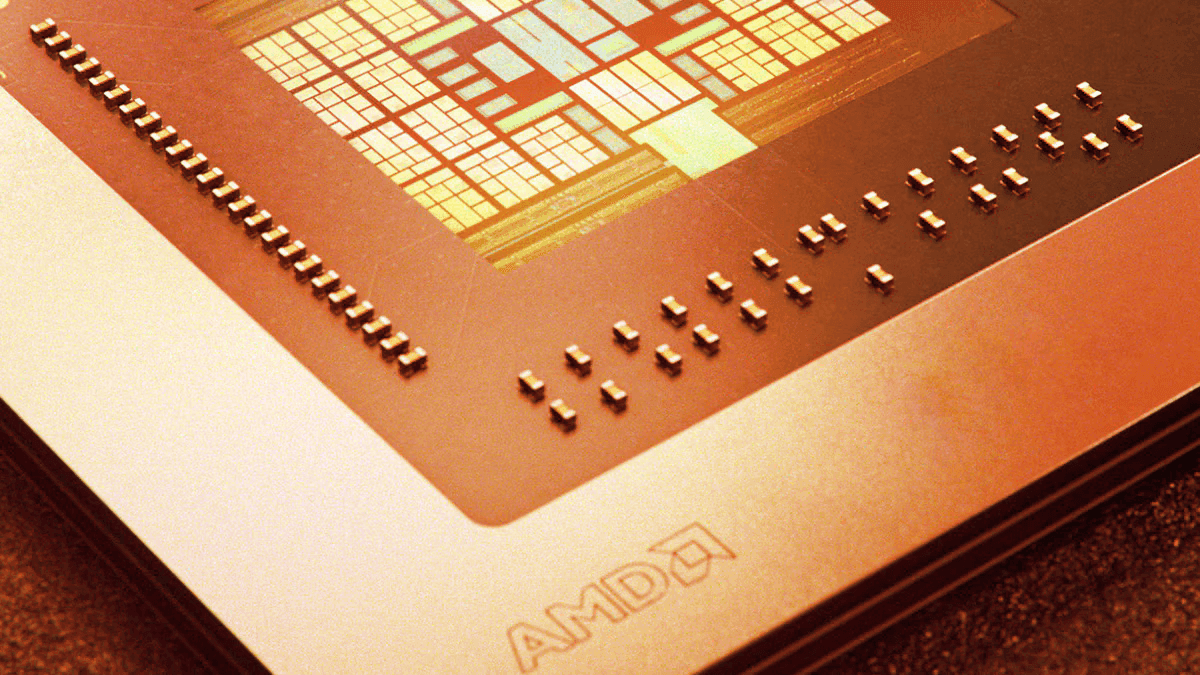
The protection targets attacks that come through the backside of the silicon, the underside of the chip. The company says no other adaptive SoC or FPGA-based device carries built-in protection against that kind of backside attack, a claim rather than an independently verified one
1
2
.
Source: TechRadar
The mechanism is a sensor-based protection die that sits above the main compute die, stacked in a 3D active-on-active arrangement. It covers the entire backside, detects physical attacks, and stops the chip from booting if that protection die is disturbed or pulled off
1
2
.What it replaces
Customers who need this level of security today typically build it themselves: mechanical enclosures paired with custom ASICs. That approach adds cost, specialist staff, verification work and the risk of having to redo the chip
1
2
. The company's pitch is that folding compute and security into one commercial device can save board space and simplify the design1
2
."With Versal tamper-resistant devices, AMD is bringing built-in protection against physical attacks together with high-performance heterogeneous compute in a commercial adaptive SoC, helping customers simplify the development of security-critical systems while maintaining the performance and flexibility their applications demand," said Kirk Saban, corporate vice president of Product, Software and Solutions at AMD Embedded
1
.Beyond the backside shield, the parts add hardware acceleration for post-quantum cryptography, with support for two new post-quantum signature standards. There is also a hybrid boot flow that accepts several signature algorithms, an improved key vault, a new sensor for tracking memory aging, and broader glitch detection spanning two voltage rails. Compute tops out at 369 trillion operations per second of AI processing, per the announcement
1
2
.Related Stories
Getting there
Three devices make up the portfolio, at different performance and cost points. Each has a footprint-compatible standard counterpart available today, so customers can design with the standard part now and switch to the tamper-resistant one later without rerunning synthesis or place and route
1
2
.Sampling is expected in the second half of 2027, with production following in the first half of 2028
1
2
.References
Summarized by

Navi
Related Stories
AMD Ryzen AI Embedded X100 brings Zen 5 power to autonomous robots and physical AI applications
23 Jul 2026•Technology
AMD EPYC Processors Power Google Cloud TPU 8tx for Confidential AI Computing
10 Nov 2026•Technology

AMD launches Ryzen AI Embedded processors for automotive, industrial and physical AI systems
06 Jan 2026•Technology

Recent Highlights


Recent Highlights
Today's Top Stories









Don’t drown in AI news. We cut through the noise - filtering, ranking and summarizing the most important AI news, breakthroughs and research daily. Follow topics that matter to you and stay ahead.


