An AI that dances: what ten months with a digital partner taught its Auckland builders


2 Sources
[1]
We built an AI you can dance with. It taught us about developing the technology responsibly
In recent months, top researchers have quit leading artificial intelligence companies, warning the AI race is moving too quickly, with too little oversight and accountability. When those building this technology sound the alarm, we should pay attention. But more than warnings, what's needed are
[2]
We Built An AI You Can Dance With. It Taught Us About Developing The Technology Responsibly
In recent months, top researchers have quit leading artificial intelligence companies, warning the AI race is moving too quickly, with too little oversight and accountability. When those building this technology sound the alarm, we should pay attention. But more than warnings, what's needed are
Share
Copy Link
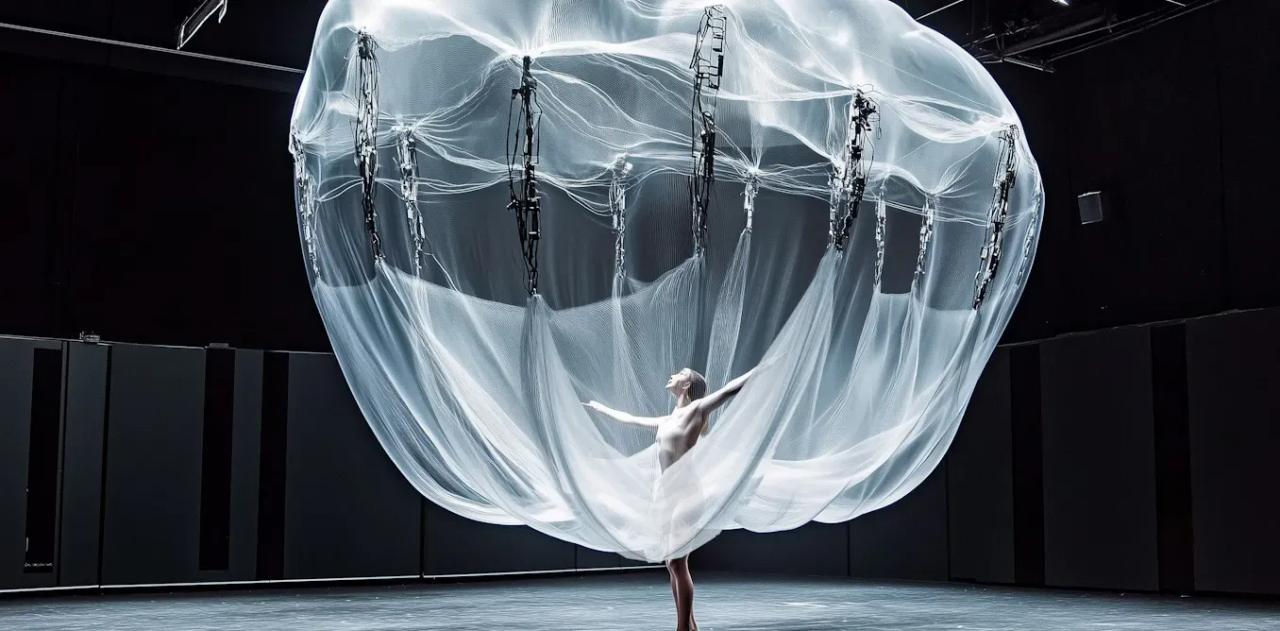
A University of Auckland research team spent ten months building an AI dance partner, a digital architectural avatar in extended reality that moves in response to a dancer
1
. They say the project is a worked example of a different way to build AI, one built around people rather than scale, and they use it to argue New Zealand should govern AI differently2
.
Source: The Conversation
Building a partner rather than a product
The team was a choreographer, an architectural designer and two dancers who perform professionally. Each dancer wore a motion-capture suit, with ten cameras tracking them, and the generative AI learned from those movements rather than from text scraped off the internet
1
. The team wanted to know whether an architectural avatar could improvise as a dance partner, and what a good one would look like2
.The project's central technical finding: a small set of choreographed duets, tango among them, taught it more effectively than a big stock of generic movement, according to the authors. The system had to learn the relationship between two dancers rather than one person's moves
1
.It was not a solved problem. Improvisation confused it. Floor work, which sits at the heart of much contemporary dance in Aotearoa New Zealand, also tripped it up, and mixing dance styles produced bland in-between moves. For most of the ten months it could only follow, never offer movement back
1
. The limits are ones the authors report about their own system2
.What a dance studio says about AI at large
The lesson the authors draw is about AI development as a whole, and it reaches past the studio. When the system no longer answered a dancer's small gestures, the dancer quit making them. The authors warn the same dynamic could reach well beyond dance: if AI routinely ignores what people contribute, they may gradually stop offering movements, judgements or minority views
1
.They frame the project as an answer to a worry they open with: that top researchers have lately quit leading AI companies, warning the pace is too fast and oversight too thin
2
. They contrast this with companies pursuing superintelligence by adding data, compute and scale. Such models, they argue, can favour the views most widely represented at the expense of less common ones, and accountability thins when knowledgeable people are absent1
. The leap from dance studio to AI across society is an analogy the authors themselves draw.In the project itself, recordings stayed on local encrypted drives, dancers kept ownership of their data, and choreography was credited as a joint creation
1
. They borrow Donna Haraway's term "response-able" for the accountability they say mainstream development lacks, meaning responsive to the system and each other, and answerable for what happens2
.Related Stories

What they want New Zealand to do
The authors set out what New Zealand could do instead: give skilled people a say in AI used in health, justice, education and welfare. Companies could be held responsible after release and charged for the data, energy and water they use, and community-built tools funded. The authors describe New Zealand as having favoured a light-touch approach, leaning mostly on existing laws and voluntary guidance
1
.They argue a small country can build AI tailored to its users and reward it, and that model size may not be what matters most
2
. They also point to Te Mana Raraunga, a network advocating Maori rights and interests in data. Maori data sovereignty, they say, points the same way as their study: data should remain tied to, and answerable to, the communities it comes from1
. The open challenge, as they state it themselves, is getting institutions to recognise and reward such alternatives.References
Summarized by

Navi
[1]
Related Stories
Humanoid Robot Masters Waltz and More Through AI-Powered Human Movement Mirroring
17 Jan 2025•Technology

Generative AI Revolutionizes Robot Training: MIT's LucidSim Enhances Real-World Performance
13 Nov 2024•Technology

Czech ice dancers spark controversy using AI-generated music at Olympics rhythm dance event
11 Feb 2026•Entertainment and Society

Recent Highlights



Recent Highlights
Today's Top Stories











Don’t drown in AI news. We cut through the noise - filtering, ranking and summarizing the most important AI news, breakthroughs and research daily. Follow topics that matter to you and stay ahead.


