Apple hikes Mac and iPad prices up to 25% as AI boom sends memory chip costs soaring


2 Sources
[1]
Apple's Macs and iPads and Microsoft's Xbox consoles are getting more expensive, and AI is to blame
Apple's Macs and iPads and Microsoft's Xbox consoles are getting more expensive, and AI is to blame The surging cost of memory chips has translated into a bonanza for companies like Micron Technologies Inc., but for almost everyone else there's going to be a steep price to pay, with both Apple Inc. and Microsoft Corp. raising the price of some of their most popular products today. First came Apple, which announced this morning that it's increasing the prices of its Mac computers and iPad tablet devices, just a week after outgoing Chief Executive Tim Cook said soaring component costs would leave it with no alternative. It was followed hours later by Microsoft, which revealed a significant price hike for the Xbox video game console. The iPhone maker briefly took the Apple Online Store offline in the morning, in a move that normally signifies the launch of a new product. But the only new thing that appeared when it returned was significantly higher prices on some existing devices, with iPad models now costing between 15% and 25% more, and Mac prices rising by between 15% and 20%. Apple said the MacBook Air laptop will now cost $1,299 after receiving a $200 price hike, while its most affordable model, the entry-level MacBook Neo, now costs $699, up $100. The price of the flagship MacBook Pro meanwhile has increased $300 to $1,999. As for the iPads, the heavy-duty iPad Pro model now comes with a $1,199 price tag, up $200, while the iPad Air has a new price of $749, up by $150. For now, Apple has put off increasing prices for its iPhone handsets, though it hinted that it's considering doing so in the not too distant future. "We have reached a point where we need to begin raising prices," a spokesperson for the company said. "We have never seen a component price increase this much, this quickly" Apple's hand was forced by the soaring cost of dynamic random-access memory chips and NAND storage chips, which have become essential components for artificial intelligence servers. The cost of those components has more than quadrupled over the last year, according to data from the research firm TechInsights, and most experts project prices to continue increasing in 2027. Both memory and storage are essential components in everything from smartphones to personal computers, games consoles to cars - basically any "intelligent" device. Cook had warned of an imminent price hike last week when he told the Wall Street Journal in an interview that the higher costs of those products had made such a move "unavoidable." In the wake of Apple's move, Microsoft dropped a bombshell on the video gaming world when it said that its Xbox consoles are getting more expensive. It will also be discontinuing the sale of its 2 terabyte model. Gamers have at least been given an early heads up. Starting August 1, the 512 gigabyte Xbox will cost $100 more, while the 1TB models will see prices rise by $150. In a blog post, Microsoft also blamed the price increases on rising memory and storage costs, saying that these components now cost 2.5-times more than they did at the beginning of the year. The company warned that component costs could double again over the next 12 months. The announcements highlight the growing impact of the AI boom on the lives of everyday consumers, who can now expect to pay significantly more money for almost any electronic device. Microsoft has at least tried to soften the blow somewhat, highlighting various financing options for anyone wanting to buy an Xbox, including its Buy Now, Pay Later options through the Microsoft Store. It also said it's working on creating new programs for anyone that wants to buy "previously played consoles at lower prices." "Players who are ready to upgrade or no longer use their console will be able to trade it in with participating retail partners for cash or store credit," the company said. "Those consoles will then be made available at lower prices for players." Apple's and Microsoft's announcements came less than a day after Micron, America's biggest manufacturer of memory and storage chips, delivered record-breaking revenue and profit in its latest quarterly financial report. The company's stock gained more than 16% after revealing a gross profit margin of more than 86% on its memory chip products, and helped trigger a broader rally among semiconductor stocks today. ' In yesterday's earnings call, Micron CEO Sanjay Mehrotra said that tight supply conditions are set to persist into 2028, having previously only forecast the situation to last into 2027.
[2]
Apple increases prices for Macs and iPads, blaming a shortage of memory chips
Apple on Thursday announced an increase in prices for Macs and iPads, citing a memory chip shortage brought on by the artificial intelligence boom. The Cupertino, California-based company called the demand spike an "unprecedented challenge" for the consumer electronics industry. "The rapid expansion of AI data centers has created an extraordinary surge in demand for memory and storage. We have never seen a component price increase this much, this quickly," the company said in a written statement. The new, entry-level MacBook Neo will now cost US$699, up from US$599. The 512 gigabyte MacBook Air now costs US$1,299, up from US$1,099. The one terabyte MacBook Pro is US$1,999, up from US$1,699. The 128 gigabyte iPad Air is now US$749, up from US$599, while the 256 gigabyte iPad Pro Wifi is now US$1,199, up from US$999. Analysts expect iPhone prices to rise later this year. IDC analyst Nabila Popal said the latest price hikes were higher than she had expected, which suggests the iPhone price hikes may also be higher than expected, perhaps as much as US$200 for the iPhone Pro and Pro Max models. "I think the days of US$50 price increases are over," she said. Apple said that while it has shielded customers from the component price surges so far, "we have now reached a point where we need to begin raising prices on a number of products, including today's increases for iPad and Mac. We know this is not welcome news, and we are working tirelessly to find solutions." Shares of Apple fell US$13.29, or 4.5 per cent, to US$279.88 on Thursday afternoon.
Share
Copy Link
Apple increased prices for Macs and iPads by 15-25%, citing unprecedented memory chip shortages driven by AI data center expansion. The MacBook Air now costs $1,299, up $200, while the iPad Pro jumped to $1,199. Microsoft followed with Xbox price hikes of $100-$150, as component costs have quadrupled over the past year with no relief in sight.
Apple Announces Steep Price Increases Across Mac and iPad Lines
Apple confirmed a significant Apple price increase across its Mac computers and iPad tablets, marking one of the most substantial consumer electronics price hikes in recent memory
1
. The company briefly took the Apple Online Store offline before revealing that iPad models now cost between 15% and 25% more, while Mac prices have risen by 15% to 20%1
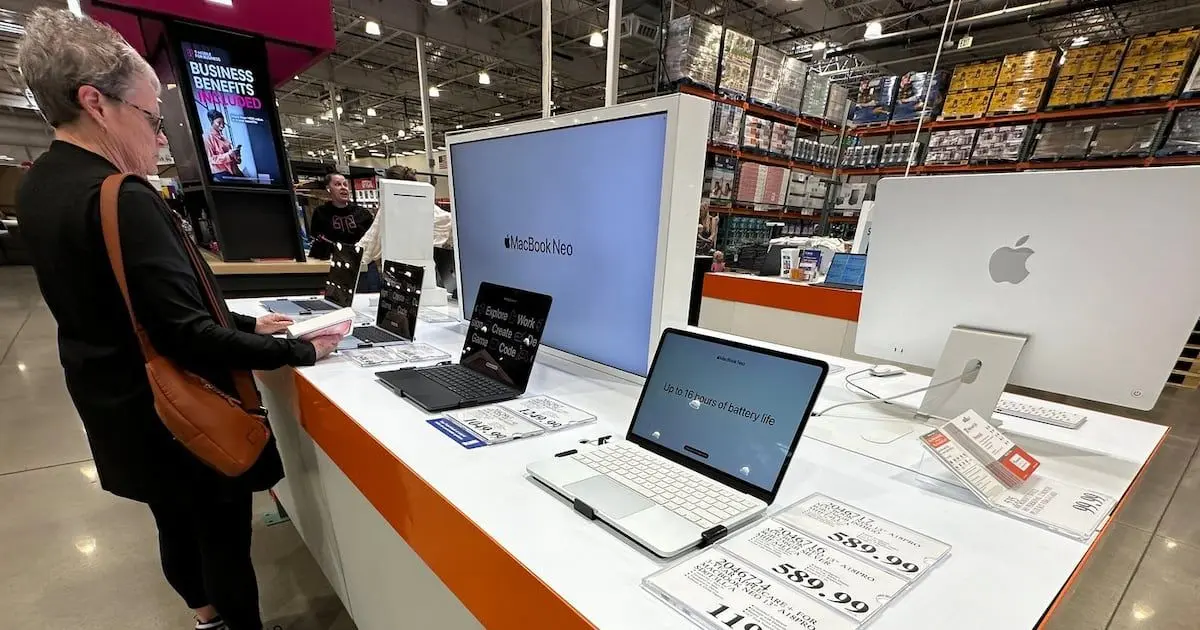
. The entry-level MacBook Neo now carries a $699 price tag, up $100 from its previous cost, while the MacBook Air jumped to $1,299 after a $200 increase2
. The flagship MacBook Pro saw the steepest dollar increase at $300, bringing its price to $1,999. For iPad users, the heavy-duty iPad Pro model now starts at $1,199, up $200, while the iPad Air increased $150 to $7491
.
Source: BNN
AI Boom Drives Unprecedented Memory Chip Costs
The Apple Macs and iPads price increase stems directly from the AI boom's impact on semiconductor supply chains. Apple cited the rapid expansion of AI data centers as creating "an extraordinary surge in demand for memory and storage," calling it an "unprecedented challenge" for the consumer electronics industry
2
. The company stated, "We have never seen a component price increase this much, this quickly"1
. The cost of dynamic random-access memory chips and NAND storage chips has more than quadrupled over the last year, according to data from research firm TechInsights1
. These DRAM and NAND chips have become essential components for AI servers, creating intense competition for supply between AI data center operators and consumer electronics manufacturers. Tim Cook had warned of the imminent price hike just last week during a Wall Street Journal interview, calling the move "unavoidable" due to higher costs1
.Microsoft Xbox Follows with Major Price Adjustments
Hours after Apple's announcement, Microsoft revealed that its Xbox consoles are also getting more expensive, extending the impact of AI-driven demand for chips across the gaming industry
1
. Starting August 1, the 512 gigabyte Microsoft Xbox will cost $100 more, while 1TB models will see prices rise by $150. The company is also discontinuing its 2 terabyte model1
. In a blog post, Microsoft blamed rising component costs, noting that memory and storage components now cost 2.5-times more than at the beginning of the year, with warnings that component costs could double again over the next 12 months1
.Soaring Costs of Memory and Storage Chips Impact Entire Industry
The rising component costs have created a windfall for chip manufacturers while squeezing device makers and consumers. Micron Technologies, America's biggest manufacturer of memory and storage chips, delivered record-breaking revenue and profit in its latest quarterly financial report, with gross profit margins exceeding 86% on memory chip products . Micron's stock gained more than 16% following the announcement
1
. Micron CEO Sanjay Mehrotra indicated that tight supply conditions are set to persist into 2028, extending previous forecasts that only projected shortages through 20271
. Most experts project memory chip costs to continue increasing in 2027, as both memory and storage remain essential components in smartphones, personal computers, games consoles, and cars1
.iPhone Price Hikes Expected as Consumer Electronics Face Broader Impact
While Apple has postponed increasing prices for iPhone handsets, the company hinted it's considering doing so in the near future
1
. IDC analyst Nabila Popal suggested the latest price hikes were higher than expected, indicating iPhone price hikes may also exceed predictions, perhaps reaching as much as $200 for the iPhone Pro and Pro Max models. "I think the days of $50 price increases are over," she noted2
. The announcements highlight the growing impact of the AI boom on everyday consumers, who can now expect to pay significantly more for almost any electronic device. Apple shares fell $13.29, or 4.5%, to $279.88 following the announcement2
. Apple acknowledged the difficulty, stating that while it has shielded customers from component price surges so far, "we have now reached a point where we need to begin raising prices on a number of products"2
.References
Summarized by

Navi
[1]
Recent Highlights
1
OpenAI and Broadcom unveil Jalapeño chip to power next-generation AI inference at scale
Technology

2
Anthropic faces AI export ban as Mythos reportedly breached NSA systems in hours
Policy and Regulation

3
Meta launches AI-powered glasses at $299, ditching Ray-Ban to expand smart glasses market
Technology

Recent Highlights
Today's Top Stories









Don’t drown in AI news. We cut through the noise - filtering, ranking and summarizing the most important AI news, breakthroughs and research daily. Follow topics that matter to you and stay ahead.


