AI helps researchers read a 2,000-year-old Vesuvius scroll charred by Mount Vesuvius eruption


2 Sources
[1]
They read the scroll thing! AI helps decipher ancient document charred by Vesuvius
A sealed scroll from the Roman town of Herculaneum, which was destroyed by Mount Vesuvius' eruption nearly 2,000 years ago, has finally given up its secrets, thanks to a combination of machine learning and high-resolution CT scans. In 2023, researchers managed to decipher a few words from among the char and ash that make up the bulk of the scrolls. Some of those same prize-winning researchers recovered more passages from one of the scrolls, PHerc.Paris.4, netting them the $700,000 grand prize from the Vesuvius Challenge contest in early 2024. Fast forward two more years, and those grand prize winners are now part of the Vesuvius Challenge team that managed to read the surviving portion of a rolled scroll end-to-end, as the VC team shared in a Thursday announcement and detailed in an accompanying paper [PDF]. According to the research paper, the ability to make out the entirety of the scroll was thanks to high-resolution phase-contrast X-ray microtomography performed at the European Synchrotron Radiation Facility in France - an improved imaging technique over prior methods used to capture prior images that were analyzed in the prize competition. That wasn't all, though: They say that much of their work succeeded because of a new "workflow" they developed to scan scrolls, detect ink on charred papyrus, virtually "unroll" the scrolls by modeling their deformed surfaces, and preserve those surfaces digitally, allowing machine learning models to identify letters across an entire scroll rather than just isolated patches. "The key transition marked by the present work is therefore from exceptional local recovery to systematic scroll-scale recovery," the team wrote. In other words, provided they can account for the particularities of the hundreds of sealed scrolls recovered from Herculaneum's Villa of the Papyri, the world's only surviving intact library from antiquity, this could mark the beginning of an explosion in new material for historians. So, what did it say? PHerc.Paris.4 wasn't at the center of this breakthrough either, though they did have some exciting news to share on that front that we'll get to. Instead, the breakthrough centered on PHerc. 1667, a previously unread rolled scroll whose preserved text was read continuously from end to end for the first time. The work appears to be a treatise on Stoic philosophy focused on ethics - a favorite subject of Zeno, Marcus Aurelius, Epictetus, and their intellectual fellows. "Having certainly strained ourselves to the utmost through research and learning, we will no longer be inferior to them in any respect," a passage from the latter part of the scroll reads, "accomplishing in like manner the things that befit them and possessing the same practical wisdom as they." Quite a fitting bit of ancient wisdom to be the first to see the light of the modern world. While the team digitally unrolled the scroll, detected its ink, and transcribed the preserved text from end to end, portions of the original PHerc. 1667 were lost long ago during earlier attempts to physically open the scroll, before archaeologists had access to sophisticated X-ray imaging and AI-assisted analysis. "Earlier attempts to open it by hand -- in the nineteenth century, and again in 1969 and the 1980s -- destroyed its outer layers," the Vesuvius Challenge team said, noting that only an 8 cm-high core remains of the original scroll, which originally measured between 19 and 24 cm in height when standing upright. Nonetheless, "it is the first time the preserved text of a rolled Herculaneum scroll has been read continuously, end to end, rather than in isolated words or patches," the team said. In addition to the full reveal of what's left of PHerc.1667, the team also managed to pick out some information from a couple of other scrolls using their new workflow. One, PHerc.139, was determined to be a copy of book eight of epicurean philosopher Philodemus' treatise On Gods, meaning scholars can expect to know what they're looking at once the scroll is fully digitally unrolled. The second concerns, as mentioned above, PHerc.Paris.4. The new higher-resolution images taken for this latest experiment make the words on the scroll directly visible for the first time, meaning that there's no need to rely on algorithmic detection of individual words and phrases from CT scans. Most crucially, the new scans of Paris.4 perfectly matched what the grand prize team made out several years ago, providing independent confirmation that the prize went to the right team. There are still challenges to meet in unwrapping and deciphering the rest of the ancient library, with the team calling out geometric challenges in surface prediction that can render an unrolled scan unreadable, and radiometric challenges that make ink identification difficult, as ancient recipes were inconsistent. Still, it's a massive leap forward and the team believes the X-ray and machine learning workflow they've developed is ready to scale. "The thoughts of the ancient world, sealed in darkness for two millennia, are coming back into the light -- a whole scroll at a time," the Vesuvius Challenge team said. I, for one, can't wait to see what ancient secrets they discover next. ®
[2]
AI just helped researchers read a 2,000-year-old Mount Vesuvius scroll that's too charred to ever be opened -- as X-ray images reveal ancient stoic philosophy
* The Vesuvius Challenge is decoding scrolls hit by the 79 AD eruption * Another scroll has just been partially read by AI * This is despite the scroll being rolled up and severely burned Look at the ancient PHerc 1667 scroll, recovered from the ancient Roman town of Herculaneum that was smothered by the Mount Vesuvius eruption of 79 AD, and you'd think there wasn't much chance of finding out what was written on it. It's rolled up, burned and blackened, and impossible to open up without destroying most of it. However, using the latest AI techniques, researchers from the Vesuvius Challenge project (via The Guardian) have now been able to read 20 columns of sealed-off text, describing the stoic philosophy that was much discussed at the time -- and how it relates to ethics, art, and human behavior. Here's how it works: without needing to open up this scroll and others like it, a combination of X-rays and AI algorithms can be used to recognize subtle differences between papyrus fibers locked away in the charred manuscript. That tells researchers where the ink is. Further AI processing can identify and fill out fragments of lettering, and suggest possibilities for what might be missing. It's then left to human researchers to read through and interpret what the writing actually means -- an approach that has seen multiple successes since the Vesuvius Challenge launched in 2023. Digging into the texts Experts think that PHerc 1667 may actually date from two or three centuries before Mount Vesuvius erupted, making it an intriguing look into the ancient past. The same cloud of fire and ash that enveloped Herculaneum also (and more famously) covered Pompeii, though the two towns were preserved in quite different ways. Researchers working on the project say the scroll is one of many thought to be housed inside a library, and part of a luxury Roman villa. Before now, the scroll has already been broken in half -- it now measures just 8 cm (3.15 inches) in length -- and part of it has disintegrated from previous attempts to tease it open. Each new discovery reveals more about the scroll collection as a whole, including how these texts relate to each other and who authored them. An initial analysis suggests this particular scroll may have been written by the Greek philosopher Chrysippus, a prominent member of the stoic school. "People now know that this can be done and now we're exploring what [the texts] actually mean," one of the research team, computer scientist Professor Brent Seales from the University of Kentucky, told The Guardian. "For me that's the World Cup. I just won the World Cup: that's my victory." Follow TechRadar on Google News and add us as a preferred source to get our expert news, reviews, and opinion in your feeds.
Share
Copy Link
Researchers from the Vesuvius Challenge have successfully read an entire sealed scroll from Herculaneum for the first time, using AI and advanced X-ray imaging. The breakthrough reveals ancient stoic philosophy written on PHerc. 1667, a scroll too charred to physically open after Mount Vesuvius' 79 AD eruption destroyed the Roman town.
AI Unlocks Ancient Wisdom From Herculaneum's Sealed Library
A sealed Vesuvius scroll from the Roman town of Herculaneum has been read end-to-end for the first time, marking a significant breakthrough in recovering texts from the world's only surviving intact library from antiquity. The Vesuvius Challenge team announced they successfully deciphered PHerc. 1667, a rolled scroll charred by Vesuvius during the catastrophic 79 AD eruption that destroyed both Herculaneum and Pompeii
1
. Using AI combined with high-resolution X-ray microtomography, researchers managed to read a 2000-year-old scroll that remains too damaged to physically open without destroying what little remains of its text.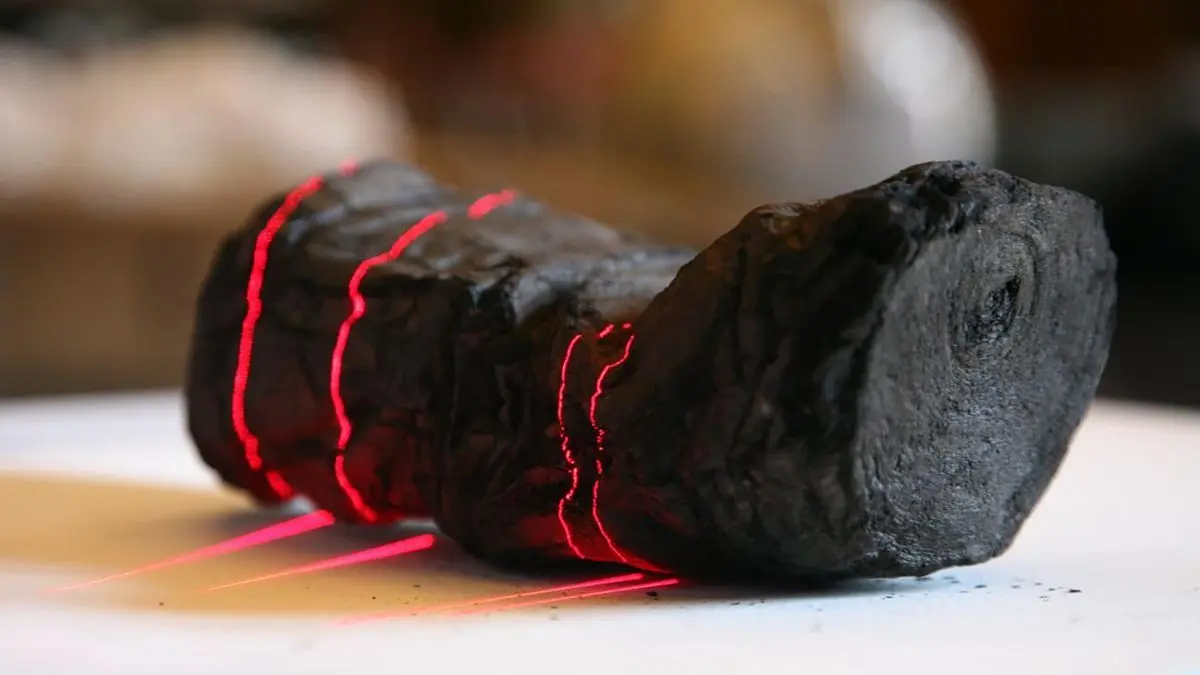
Source: TechRadar
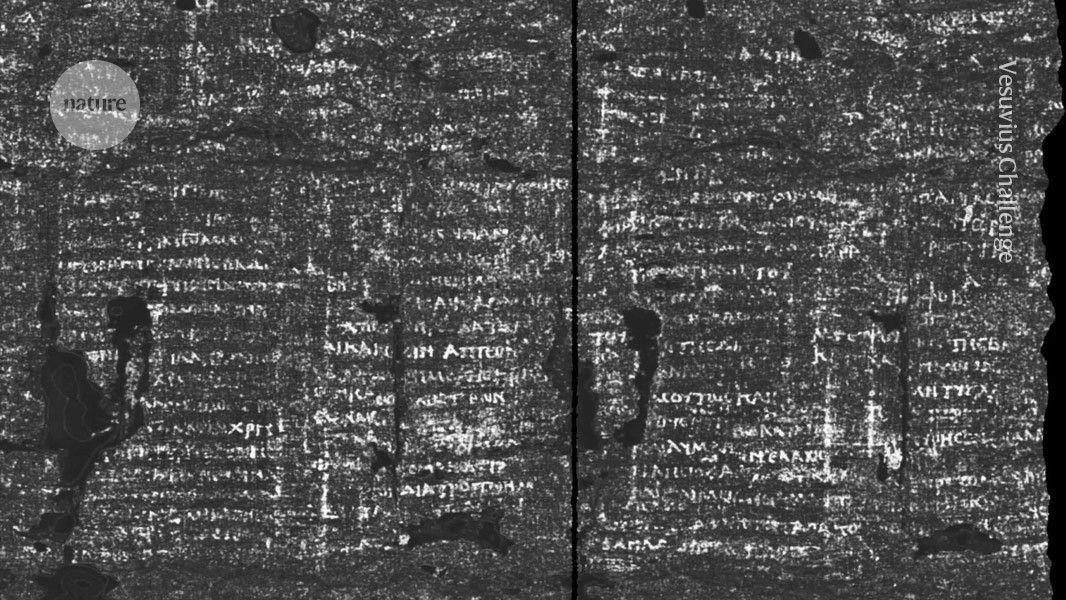
The breakthrough centered on a treatise focused on ancient stoic philosophy and ethics. One passage reads: "Having certainly strained ourselves to the utmost through research and learning, we will no longer be inferior to them in any respect, accomplishing in like manner the things that befit them and possessing the same practical wisdom as they"
1
. Experts believe the scroll may have been authored by Greek philosopher Chrysippus and could date from two or three centuries before Mount Vesuvius erupted .How Machine Learning and X-ray Images Decipher Ancient Document
The ability to read the entire scroll relied on high-resolution phase-contrast X-ray microtomography performed at the European Synchrotron Radiation Facility in France, representing a significant improvement over imaging techniques used in earlier prize competitions
1
. The team developed a new workflow that scans scrolls, detects ink on charred papyrus, virtually unrolls the scrolls by modeling their deformed surfaces, and preserves those surfaces digitally. This allows machine learning models to identify letters across an entire scroll rather than isolated patches.The X-ray images reveal subtle differences between papyrus fibers locked inside the blackened manuscript, indicating where ink remains present . AI processing then identifies and fills out fragments of lettering, suggesting possibilities for missing text. Human researchers subsequently interpret the actual meaning of the writing. "The key transition marked by the present work is therefore from exceptional local recovery to systematic scroll-scale recovery," the team wrote in their research paper
1
.Progress on Multiple Scrolls From Villa of the Papyri
Beyond PHerc. 1667, which researchers successfully read 20 columns of sealed text from , the team made progress on other scrolls using their new workflow. They determined that PHerc.139 is a copy of book eight of Epicurean philosopher Philodemus' treatise On Gods, allowing scholars to know what to expect once the scroll is fully digitally unrolled
1
.The team also achieved a major validation with PHerc.Paris.4, the scroll that won researchers the $700,000 grand prize from the Vesuvius Challenge contest in early 2024. New higher-resolution images make words directly visible for the first time, eliminating the need to rely solely on algorithmic detection. Crucially, these new scans perfectly matched what the grand prize team deciphered years ago, providing independent confirmation of their work
1
.Related Stories


What This Means for Digital Preservation and Historical Research
Only an 8 cm-high core remains of PHerc. 1667, which originally measured between 19 and 24 cm in height. Earlier attempts to physically open it in the nineteenth century, 1969, and the 1980s destroyed its outer layers
1
. The non-invasive text recovery method now prevents further damage while extracting maximum information from what survives.
Source: The Register
Professor Brent Seales from the University of Kentucky, a member of the research team, told The Guardian: "People now know that this can be done and now we're exploring what [the texts] actually mean. For me that's the World Cup. I just won the World Cup: that's my victory" .
The Villa of the Papyri in Herculaneum holds hundreds of sealed scrolls, and this breakthrough suggests the workflow is ready to scale for systematic recovery across the collection. The team acknowledges remaining challenges, including geometric issues in surface prediction that can render unrolled scans unreadable, and radiometric challenges stemming from inconsistent ancient ink recipes
1
. Still, provided researchers can account for the particularities of each scroll, this could mark the beginning of an explosion in new material for historians studying antiquity.References
Summarized by

Navi
Related Stories
Recent Highlights
1
Anthropic faces AI export ban as Mythos reportedly breached NSA systems in hours
Policy and Regulation

2
Five Eyes Alliance Warns AI Cyber Risks Could Trigger Crises Within Months, Not Years
Policy and Regulation

3
UN launches transparency initiative demanding AI firms reveal full environmental impact by 2030
Policy and Regulation
Recent Highlights
Today's Top Stories





Don’t drown in AI news. We cut through the noise - filtering, ranking and summarizing the most important AI news, breakthroughs and research daily. Follow topics that matter to you and stay ahead.


