US government asks OpenAI to stagger GPT-5.6 release with approved partners first


7 Sources
[1]
The US government asks OpenAI to slow its next model's release
Sam Altman told staff Washington wants GPT-5.6 released first to a short list of trusted partners, with access approved customer by customer. For years the debate over slowing down powerful AI models was a matter for company safety teams and outside critics. Now it has a government request attached. The Trump administration has asked OpenAI to stagger the release of an upcoming model the first time the US government has preemptively asked an American AI company to restrict a launch before it happens. The instruction reached employees from the top. OpenAI chief executive Sam Altman told staff on Wednesday that the government had requested the company initially release the model to a short list of trusted partners before pushing it out more widely. The government, Altman told staff, would be "approving access customer by customer during this preview period." The request did not come from a single office. According to the reporting, it emerged from conversations with two government bodies, the Office of the National Cyber Director and the Office of Science and Technology Policy, which frames the concern as one of cybersecurity rather than competition or content. The worry, as described, is what a sufficiently capable model could do in the wrong hands, and the staggered rollout is meant to limit that exposure during an initial window. The timing places the request inside a wider shift. It comes roughly two weeks after rival Anthropic saw its most capable offerings pulled from the market under a government directive, which suggests Washington is now actively shaping the release schedules of the leading labs rather than reacting to them after the fact. The mechanism described is notable in its own right. A customer-by-customer approval process during a preview period would, if it operates as reported, give a government agency a direct hand in deciding who gets early access to a frontier model. It echoes the gated rollout OpenAI used for GPT-5.4-Cyber, released to vetted security teams under a Trusted Access programme. That is a markedly more hands-on posture than the voluntary commitments and after-the-fact evaluations that have characterised US AI policy to date, and it shifts the locus of control over a release, at least temporarily, from the company to the state. For OpenAI, the arrangement cuts in more than one direction. A staggered rollout slows the company's ability to put its newest model in front of paying customers and developers, only months after it launched GPT-5.5 into the enterprise market, which carries a commercial cost in a market where rivals move quickly. It also offers a measure of political cover: a model released with the government's explicit involvement is harder to blame the company for if something goes wrong. How OpenAI weighs those against each other will become clearer once the preview period, and whatever follows it, is underway. Much of the detail still rests on Altman's account to staff and on reporting from sources rather than an official government statement, and OpenAI has not published the terms of the arrangement. The model name, the customer-by-customer approval mechanism, and the agencies involved come from those accounts. What the episode establishes, if it holds, is a new posture: a US administration treating a frontier model's release as something to be gated, and a leading lab agreeing to the gate. The next question is whether this becomes the template for every release that follows.
[2]
The Trump administration just quietly changed how OpenAI will launch its next model
Up until now, every major AI model launch has followed roughly the same script. I've personally seen it dozens of times for years. It goes something like this: big tech announces its latest model, opens access to developers or subscribers and gradually expands availability as demand grows. But that is about to change. OpenAI's latest model ChatGPT-5.6 was rumored to roll out yesterday, June 25, 2026. However, according to a new report from The Information, the Trump administration asked OpenAI to stagger the release of GPT-5.6 over security concerns, limiting early access to a small group of partners while the federal government approves customers one by one. If that's how future frontier models are released, it represents one of the biggest changes to AI deployment we've seen since ChatGPT launched. The future of AI models with government regulation According to the report, OpenAI CEO Sam Altman told employees that GPT-5.6 would initially launch as a limited preview rather than a broad public release. During that preview period, government officials would reportedly approve access on a customer-by-customer basis before a wider rollout a few weeks later. The request reportedly came after discussions with the Office of the National Cyber Director and the Office of Science and Technology Policy. That might sound like a small operational detail, but it's actually a significant shift. Until recently, governments largely focused on regulating AI after companies released their products or encouraged voluntary safety testing before launch. This appears to move Washington into an entirely different role: influencing who gets access before a frontier model reaches the public. It didn't happen in isolation The request also comes just weeks after the administration's highly publicized intervention involving Anthropic's Fable 5, which sparked industry debate over how much authority governments should have over cutting-edge AI releases. Earlier this month, President Trump actually scrapped an executive order directing federal agencies to establish a voluntary framework for reviewing advanced AI models before public release, with an emphasis on cybersecurity and critical infrastructure. However, this development suggests the government is moving toward a consistent process for evaluating the most capable AI systems before they become widely available. Why this matters for everyone Most people won't care whether GPT-5.6 launches today or two weeks from now. But what does matter is who decides when powerful AI models become available. If government agencies begin reviewing frontier models before release, and influencing who receives early access, we could be entering an era where advanced AI is treated like critical infrastructure. That's a dramatic departure from the rapid-fire launches we've grown used to over the past three years. Follow Tom's Guide on Google News and add us as a preferred source to get our up-to-date news, analysis, and reviews in your feeds. Subscribe to Tom's Guide on YouTube and follow us on TikTok. Finally, you can visit our dedicated Tom's Guide Savings Squad hub for expert help on getting the best products for less.
[3]
White House wants OpenAI to limit the launch of its next model
William Gibson once famously said that "the future is already here, it's just not evenly distributed." It appears that the same goes for frontier AI models. According to The Information, the White House told OpenAI it wants the company to release its next model in a limited fashion, to a select group of close partners. OpenAI CEO Sam Altman reportedly told staff that the company's newest model, GPT 5.6, will be launched very differently than previous ones, with the government approving access "customer by customer." Following this limited release period, the company should be able to launch the model more broadly a "couple of weeks" later, says the report. OpenAI competitor Anthropic recently had to pull its most powerful model, Fable 5, after Trump's administration intervened to keep the model out of foreign hands. The company previously launched Mythos, an even more powerful model, as a limited release open only to a small set of pre-approved customers. As for OpenAI's GPT 5.6, the model is reportedly a "meaningful improvement" over GPT 5.5, both in terms of context window size and efficiency. In a memo sent to employees, Altman reportedly said that GPT 5.6 is not the company's preferred long term model, and that OpenAI will work with the government and others in the industry "to achieve a more sustainable approach for future releases."
[4]
OpenAI limits ChatGPT 5.6 access to government-approved users first
OpenAI plans to stagger the release of its new AI model, ChatGPT 5.6, beginning with government-approved customers, according to a memo from CEO Sam Altman. Federal leaders will approve access to selected customers during this preview period, with a more general release anticipated a "couple of weeks later." Altman stated in the memo that OpenAI prefers not to follow this approval model in the long term and aims to establish a sustainable approach in collaboration with the government for future releases. Several federal agencies are directing this change, including the Office of the National Cyber Director and the Office of Science and Technology Policy, as well as involvement from Department of Commerce Secretary Howard Lutnick. The White House and the Office of the National Cyber Director did not respond to requests for comment regarding these developments. Earlier this month, President Donald Trump signed an executive order requiring AI companies to engage in a voluntary federal review of powerful models before public release. The government plans to create a framework to standardize assessments of new AI models. In a related situation, OpenAI competitor Anthropic disabled access to two of its recent models following a federal directive that did not specify security concerns but indicated a desire to prevent foreign nationals from accessing its tools. This recent directive and OpenAI's adjusted rollout plans have generated confusion regarding the review process and the nature of voluntary participation in the federal review for AI models.
[5]

Trump administration asks OpenAI to limit release of GPT-5.6: Report
Per the report, the White House's Office of the National Cyber Director and the Office of Science and Technology Policy requested that the model be released first to a small set of government-approved partners rather than the general public. The Trump administration has asked OpenAI to limit the release of its next large language model, GPT-5.6, citing security concerns, according to a report by Axios. Per the report, the White House's Office of the National Cyber Director and the Office of Science and Technology Policy requested that the model be released first to a small set of government-approved partners rather than the general public. This is part of the administration's broader effort to build a framework for testing and monitoring new AI models and their security. Also Read: OpenAI provided GPT-5.5 to US for national security testing, executive said Sources cited in the report said this is the first time the US government has asked an AI company to restrict a model's launch before it has happened. This also comes close on the heels of the government asking Anthropic to suspend access to its powerful Mythos and Fable 5 models for non-US citizens. According to The Information, OpenAI CEO Sam Altman told employees in a memo that the company has clarified to the government that such intervention is not desirable for the long term, andit will work with relevant stakeholders for a more sustainable approach for future releases. Also Read: OpenAI offers $25,000 to anyone who can jailbreak its latest model GPT-5.5 This move by the government came due to the model's Mythos-like abilities, Axios said. It also follows an executive order on AI security that President Donald Trump signed earlier in June, which directs agencies to set up a voluntary pre-release testing protocol. Anthropic's suspension of the models has thrown up a lot of questions around the high global dependence on a handful of AI companies. Experts in India have called for the development of sovereign models, ET reported on June 26, noting that such restrictions expose a vulnerability in India's AI ambitions. As access to frontier AI increasingly becomes a geopolitical issue, experts argue India will need significantly greater investments in research, compute infrastructure, and domestic AI capabilities if it wants a meaningful role in shaping the next phase of the global AI race.
[6]

New AI Models are Making Governments Nervous
The new AI (artificial intelligence) models coming to the market are making governments nervous. Just take Anthropic first, and then OpenAI as a second example. For the unaware, the US (United States) government asked Anthropic to actually pull back the Fable 5 model globally. What's more is that Anthropic had cut down the capabilities of Mythos 5 and put in more restrictions and then offer it as Fable 5 globally. Yet, the US government did not allow this to happen. This just showcases how powerful AI models are getting, and just how, AI is not just about business and distribution anymore. It has literally become about national security. * Make Telecom Talk My Trusted Source Now let's take a look at what's happening with OpenAI. The company will likely not release its latest AI model - GPT 5.6 in the same way it has released AI models before. Instead, the company will only offer it to a select group of partners because the US government directed it to, said a report from The Information. The Trump administration will be literally granting permission to OpenAI on a case by case basis to whom the company can distribute its latest AI model. So the GPT 5.6 will have a limited release. The report said that Sam Altman, CEO of OpenAI believes that if the limited release goes well, they will be able to share it with the public. Anthropic and OpenAI are arguably the two largest AI companies in the world. The government's involvement on the AI models marks a significant shift in Trump Administration's approach of being hands-off from the AI sector. This will likely be done by other countries as well. AI can be used for warfare, strategies, and more. At present, the best AI model from Anthropic which is available for the market globally is Claude Opus 4.8. This model can also be accessed by people who have purchased a subscription to the platform.
[7]
What is OpenAI's GPT-5.6? Here's why the Trump Administration wants to limit its release
OpenAI's upcoming AI model, reportedly GPT-5.6, faces a restricted rollout at the U.S. government's request. Citing national security concerns, the Trump administration wants to evaluate its potential for cyberattacks and sensitive research before wider access. This marks a significant shift, treating advanced AI as a strategic asset. OpenAI intends to cooperate with the evaluation, aiming for eventual public release. OpenAI's next flagship artificial intelligence model, widely referred to as GPT-5.6, is already generating significant attention, even before its official launch. While OpenAI has yet to formally announce the model or publish technical specifications, multiple reports indicate that the company is preparing a limited release after the Trump administration requested additional oversight before wider public access. Rather than restricting exports after a model is released, US officials are said to have asked OpenAI to slow the rollout itself, citing national security risks associated with increasingly powerful frontier AI systems. What is GPT-5.6?OpenAI has not officially announced GPT-5.6 or published its technical specifications. However, AI Weekly, citing sources familiar with the company's roadmap, reported that OpenAI internally describes GPT-5.6 as a "meaningful improvement" over GPT-5.5 rather than an incremental update. According to FindSkill.ai, GPT-5.6 is rumored to process much longer documents at once, deliver more accurate reasoning with fewer factual errors, and complete complex multi-step tasks more efficiently. Reports also suggest faster responses and a more natural conversational style. The publication also speculated that the model could support longer context windows and more advanced autonomous workflows. However, these features remain unconfirmed, as OpenAI has not publicly verified them. Why does the Trump administration want to limit GPT-5.6's release?According to reporting by Axios, Reuters, The Information and CNN, the Trump administration asked OpenAI to initially release GPT-5.6 only to a small group of government-approved organizations rather than making it broadly available immediately. The request reportedly originated from the Office of the National Cyber Director (ONCD) and the Office of Science and Technology Policy (OSTP) as the government develops a broader framework for evaluating advanced AI systems before public deployment. Instead of a global launch, early access would reportedly be granted on a customer-by-customer basis during an initial preview period. This is believed to be the first time the U.S. government has sought to limit the rollout of a frontier AI model before its public release. The real reason: National security, not censorshipThe administration's reported concerns extend beyond misinformation or consumer safety. Officials are increasingly focused on how cutting-edge AI systems could assist in sophisticated cyberattacks, automate vulnerability discovery, accelerate biological or chemical research, or be exploited by hostile foreign governments. As frontier AI models become capable of solving increasingly complex technical problems, policymakers worry that unrestricted access could allow malicious actors to use them for offensive cyber operations or to accelerate sensitive research. According to reports, the White House wants additional time to evaluate GPT-5.6's capabilities before authorizing broader deployment. What has OpenAI said?OpenAI has not officially confirmed GPT-5.6 or announced a release date. However, Axios reported that CEO Sam Altman told employees the company intends to cooperate with the government's evaluation process while ultimately working toward a broader public release. Neither OpenAI nor the White House has publicly disclosed how long any limited-access period might last, and the company has not commented on the technical capabilities that have been reported by AI-focused publications.
Share
Copy Link
The Trump administration has asked OpenAI to limit the launch of its next model, GPT-5.6, releasing it first to government-approved partners before broader availability. This marks the first time the US government has preemptively intervened to restrict a model's launch before it happens, signaling a shift toward active federal oversight of frontier AI releases.
OpenAI Faces First Pre-Release Government Oversight
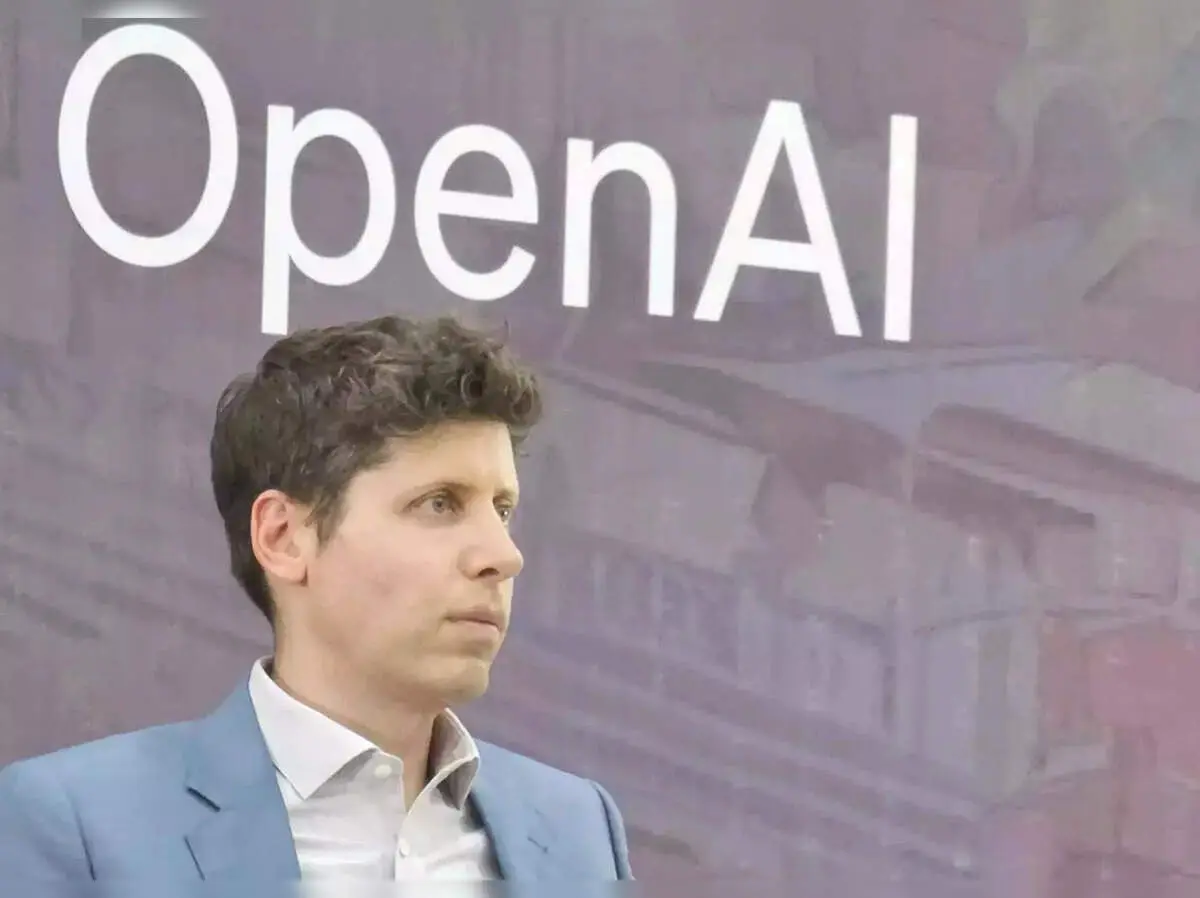
The US government has asked OpenAI to stagger the release of GPT-5.6, marking a watershed moment in how frontier AI models reach the market
1
. Sam Altman, OpenAI's CEO, informed staff on Wednesday that the company would initially release the model to a short list of trusted partners, with the government approving access customer by customer during this preview period1
. This represents the first time the US government has preemptively asked an American AI company to restrict a model's launch before it happens5
.
Source: ET
The request emerged from conversations with two government bodies: the Office of the National Cyber Director and the Office of Science and Technology Policy, with additional involvement from Department of Commerce Secretary Howard Lutnick
4
. The concern centers on cybersecurity rather than competition or content, specifically what a sufficiently capable model could do in the wrong hands1
. A more general release is anticipated a couple of weeks after the initial preview period4
.A Shift in AI Governance Strategy
This intervention arrives roughly two weeks after rival Anthropic saw its most capable offerings, Fable 5 and Mythos, pulled from the market under a government directive
1
3
. The timing suggests Washington is now actively shaping the release schedules of leading labs rather than reacting to them after the fact1
. This marks a departure from the voluntary commitments and after-the-fact evaluations that have characterized US AI policy to date, shifting the locus of control over a release, at least temporarily, from the company to the state1
.The staggered release plan echoes the gated rollout OpenAI used for GPT-5.4-Cyber, which was released to vetted security teams under a Trusted Access programme
1
. However, this new arrangement gives a government agency a direct hand in deciding who gets early access to a frontier AI model release, a markedly more hands-on posture than previous approaches1
.Executive Order and Policy Development
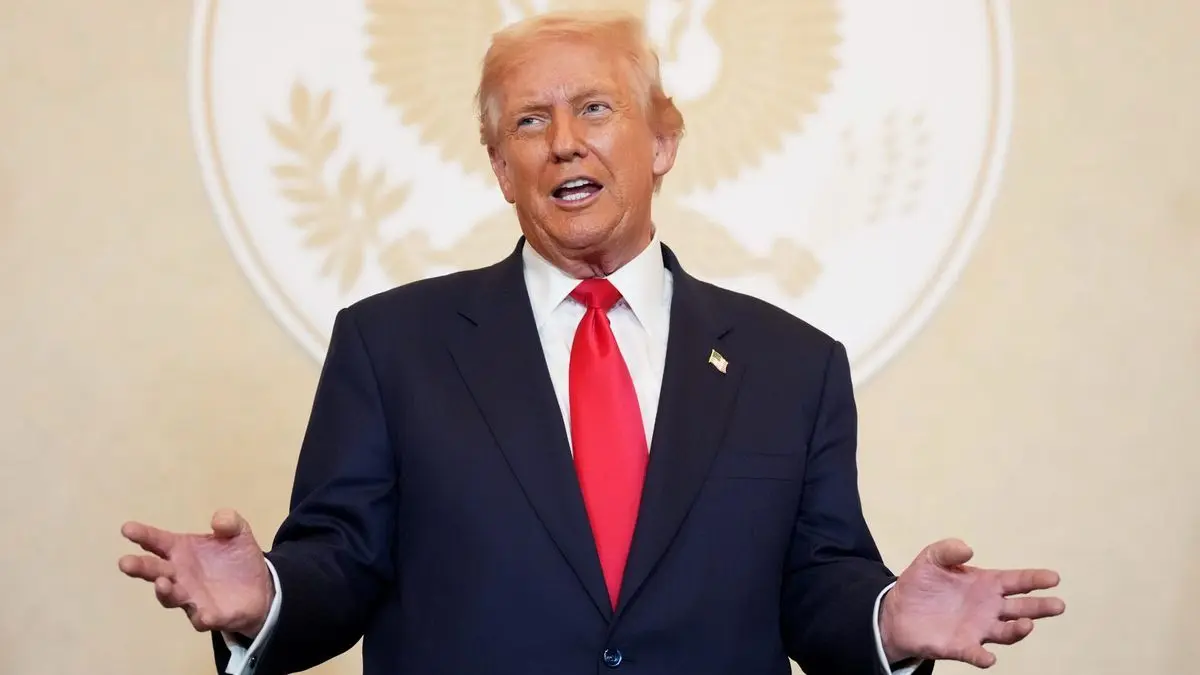
Earlier in June, President Donald Trump signed an executive order requiring AI companies to engage in a voluntary federal review of powerful models before public release
4
. The government plans to create a framework to standardize assessments of new AI models, with an emphasis on AI security and critical infrastructure2
. This development suggests the Trump administration is moving toward a consistent process for evaluating the most capable AI systems before they become widely available2
.
Source: Tom's Guide
Related Stories

Implications for OpenAI and the Industry
For OpenAI, the arrangement cuts in multiple directions. A staggered release plan slows the company's ability to put its newest model in front of paying customers and developers, carrying a commercial cost in a market where rivals move quickly
1
. The company only recently launched GPT-5.5 into the enterprise market, making the timing particularly challenging1
. However, it also offers political cover: a model released with the government's explicit involvement is harder to blame the company for if something goes wrong1
.According to reports, GPT-5.6 represents a meaningful improvement over GPT-5.5 in terms of context window size and efficiency
3
. In a memo to employees, Altman stated that GPT-5.6 is not the company's preferred long-term model and that OpenAI will work with the government and others in the industry to achieve a more sustainable approach for future releases3
4
.Geopolitical Implications and Global AI Race
As access to frontier AI increasingly becomes a geopolitical issue, the restrictions expose vulnerabilities in other nations' AI ambitions
5
. Experts in India have called for the development of sovereign AI models, noting that such restrictions highlight the high global dependence on a handful of AI companies5
. India and other nations will need significantly greater investments in research, compute infrastructure, and domestic AI capabilities to maintain a meaningful role in shaping the next phase of the global AI race5
.
Source: ET
The question now is whether this pre-release government oversight becomes the template for every large language model release that follows
1
. If government agencies begin reviewing frontier models before release and influencing who receives early access, we could be entering an era where advanced AI is treated like critical infrastructure, a dramatic departure from the rapid-fire launches of the past three years2
. The recent directive and OpenAI's adjusted rollout plans have generated confusion regarding the review process and the nature of voluntary participation in federal oversight for AI models, with government-approved users gaining priority access while others wait4
.References
Summarized by

Navi
[1]
Related Stories
Trump signs AI executive order seeking voluntary 30-day review after industry pushback
02 Jun 2026•Policy and Regulation

Sam Altman urges US lawmakers to fund AI testing but reject mandatory model approvals
03 Jun 2026•Policy and Regulation
Trump's AI executive order creates voluntary framework as MAGA base pushes for tighter oversight
18 May 2026•Policy and Regulation
Recent Highlights
1
OpenAI and Broadcom unveil Jalapeño chip to power next-generation AI inference at scale
Technology

2
Anthropic faces AI export ban as Mythos reportedly breached NSA systems in hours
Policy and Regulation

3
Meta launches AI-powered glasses at $299, ditching Ray-Ban to expand smart glasses market
Technology

Recent Highlights
Today's Top Stories









Don’t drown in AI news. We cut through the noise - filtering, ranking and summarizing the most important AI news, breakthroughs and research daily. Follow topics that matter to you and stay ahead.


