Argentina Courts AI Data Centers With Regulation-Free Haven and Tax Breaks in Patagonia


6 Sources
[1]
Argentina's Milei dreams of data centres on the Patagonian steppe
Libertarian seeks to turn vast land and energy resources into the foundation of his 'unregulated' AI hub On a remote patch of Patagonian steppe at the foot of a volcano, the roaring wind was drowned out by the whirr of computer servers. A 12MW data centre, coated in terracotta dust and framed by
[2]
Argentina's Milei pitches a regulation-free AI haven at the end of the world
TRELEW, Argentina (AP) -- Data centers have become one of the most polarizing issues in the world. Argentina's president wants to lure as many of them as he can get. As residents and policymakers in the United States and Europe fight the facilities that power artificial intelligence, President
[3]
Argentina's Milei pitches a regulation-free AI haven at the end of the world
Data centers are facing a growing backlash in the United States and Europe TRELEW, Argentina -- Data centers have become one of the most polarizing issues in the world. Argentina's president wants to lure as many of them as he can get. As residents and policymakers in the United States and Europe
[4]
Argentina courts AI data centres with no regulation and tax breaks
Argentina's president, Javier Milei, is courting AI data centre investment in Patagonia, promising light regulation and tax breaks. Argentina's cool southern region of Patagonia is becoming a hotspot for data centres, and the country's president is on a mission to lure them in. While some
[5]

How AI data centers could find a regulation-free haven at the end of the world
Representatives from Big Tech have been meeting with Argentina's President Milei as he promises a hands-off approach to AI. Data centers have become one of the most polarizing issues in the world. Argentina's president wants to lure as many of them as he can get. As residents and policymakers in
[6]

Argentina's Milei pitches a regulation-free AI haven at the end of the world
TRELEW, Argentina (AP) -- Data centers have become one of the most polarizing issues in the world. Argentina's president wants to lure as many of them as he can get. As residents and policymakers in the United States and Europe fight the facilities that power artificial intelligence, President
Share
Copy Link
President Javier Milei is pitching Argentina as a regulation-free AI haven, promising no oversight and slashing corporate tax rates from 25% to 15% for AI data center investment exceeding $1 billion. While tech giants including OpenAI, Amazon, and Google explore Patagonia's vast lands and energy resources, critics warn the approach could turn the country into an unregulated laboratory with unclear benefits for Argentines.
Argentina Positions Itself as Global AI Data Center Hub
President Javier Milei is aggressively positioning Argentina as a regulation-free AI haven, promising tech companies an unregulated environment at a time when the United States and Europe face growing backlash against AI data centers
1
2
. The libertarian leader has declared his country will not regulate artificial intelligence, telling the U.S. Chamber of Commerce last month, "We are going to leave it free"3
. Visitor logs obtained by The Associated Press reveal a steady stream of tech figures meeting with Milei and his aides in recent months, including venture capitalist Peter Thiel and representatives from OpenAI, Amazon, Google, Oracle, and multiple data center companies2
. Foreign Ministry records show that Crusoe, the data center developer that helped build OpenAI's flagship campus in Texas, sought discussions with Argentine energy officials about U.S. government-backed investments4
.
Source: AP
Tax Breaks for AI Projects Exceeding $1 Billion
To attract foreign investment in AI despite Argentina's chronic economic instability, Milei is advancing an incentive scheme that would slash the corporate tax rate to 15% from 25% for projects of at least $1 billion in AI and other emerging industries
5
. The measure has passed the lower house and awaits Senate approval1
. Milei has also proposed creating "nonhuman corporations" run entirely by AI agents, mirroring his ally U.S. President Donald Trump's enthusiasm for AI-generated content on social media3
. The president has repeatedly emphasized Argentina's "abundant energy" and "extensive, inhospitable land" as competitive advantages, stating in September that he wants companies "to see Argentina as the most competitive place in the world to set up shop"1
.Patagonia's Geographic and Energy Advantages
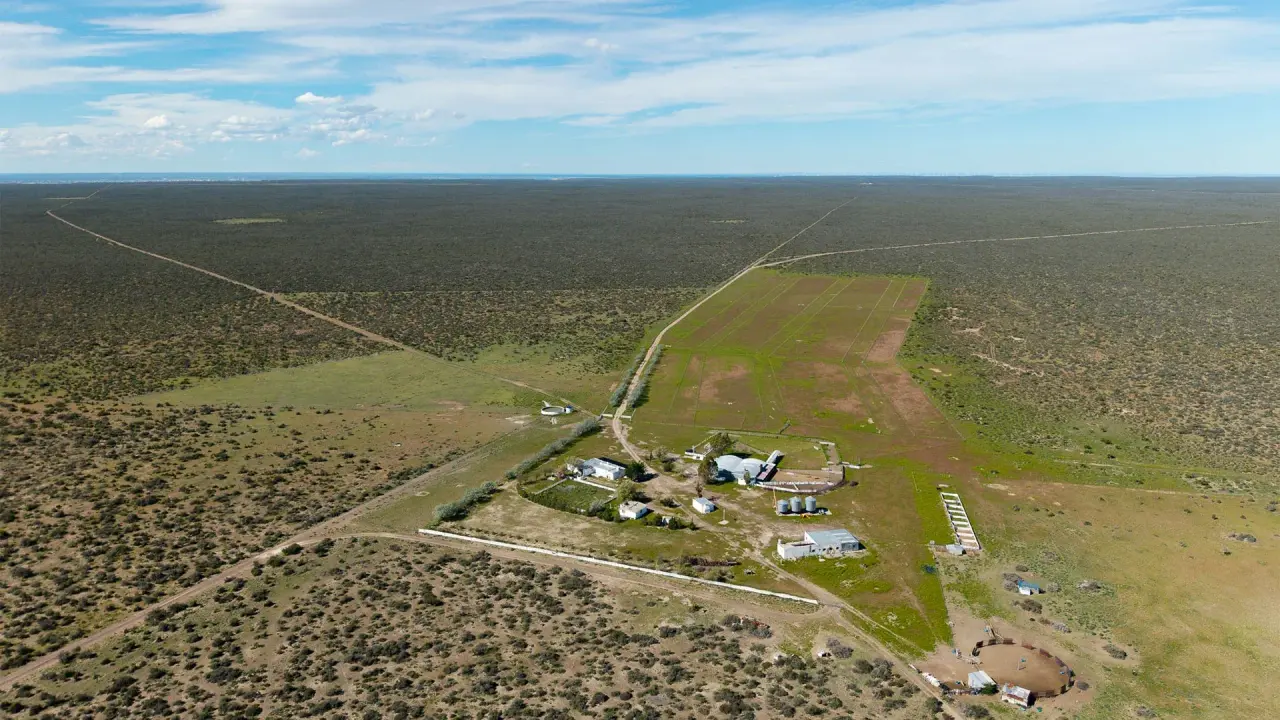
Patagonia data centers offer compelling practical advantages that address key challenges facing AI infrastructure development globally. The region provides vast, open plains where noisy server farms can be built far from population centers, a chilly climate to cool machines, powerful winds to generate renewable energy, and access to one of the world's largest shale deposits in Vaca Muerta to fuel power plants
2
. Marta Zlotkowska, head of international development at Green Capital, explained that "in densely populated parts of the U.S. and Europe, there's a lot of fighting over access to the grid and who should get the electricity"4
. The Polish renewable energy company plans to build a $3 billion data center in Patagonia to lease to big tech firms for AI computing, though it has yet to secure a customer3
. Oil production has more than doubled since 2024 at Vaca Muerta, a Patagonian shale field the size of Belgium, with drillers wasting approximately 600MW of potential electricity generation through flaring unwanted shale gas1
.
Source: Fast Company
Major Energy Companies Signal Readiness
Argentina's energy industry views AI data centre investment as a significant new market opportunity. Pampa Energía, one of the country's biggest power companies, announced in October that it has 800MW of energy capacity available in Neuquén province should a data center require it
1
. The company has announced plans to supply immense amounts of gas-fired power to a data center near Vaca Muerta and is actively seeking developers5
. Rubén Etcheverry, a top official in Neuquén, noted that "being at the end of the world used to be a disadvantage, but today, faced with energy shortages and rising costs, investors are looking at us"2
. Tomás Ocampo, founder of Unblock Energy, which operates a 12MW data center in rural Argentina and is planning a facility of several hundred MW, reported receiving a rush of calls from potential U.S. investors after recent Democratic victories and ballot measures targeting data centers sent tech stocks tumbling1
.Questions About Benefits and Environmental Concerns
The payoff for Argentines remains unclear as minimal AI regulation raises concerns about technological sovereignty and resource allocation. AI data centers employ relatively few people, and Milei's proposed incentives don't require companies to reserve computing capacity for local consumption or to disclose their energy and water use
4
. Alan Rocha Varsanyi, a researcher at Observatorio Petrolero Sur, an Argentine environmental group, stated: "We're not talking about data centers designed to strengthen Argentine technological sovereignty. The computing capacity will be exported wherever OpenAI or the other companies need it"3
. Civil society groups warn that data centers would worsen water stress in Patagonia and generate few jobs, while the incentive scheme would severely restrict the state's ability to intervene over concerns around resource scarcity1
. Environmental activist Oscar Soria argued that "the benefits are really excessive" and questioned what companies give in return1
.Related Stories

Regulatory Vacuum Sparks Laboratory Concerns
Critics warn that pushing to deploy AI in Argentina without safeguards creates risks ranging from mass surveillance to cyberattacks. Nicolás Wolovick, a computer science professor at the National University of Córdoba, cautioned: "Without rules, Argentina will become a laboratory—like when companies go to developing countries to test strange drugs they can't test in major developed countries"
5
. Milei insists his calls for unfettered AI give Argentina an edge at a time when the European Union and a growing number of U.S. states have adopted new regulations2
. However, even some in Milei's own government acknowledge that his anti-regulation stance complicates efforts to build a clear legal framework, with one senior official saying companies are waiting for Argentina to settle rules on training AI with copyrighted works and sending personal data abroad4
. The opposition has held a Congressional hearing over Peter Thiel's links to Argentina after he bought a mansion in Buenos Aires, took closed-door meetings with Milei's team, and acquired a stake in a local oil company1
.Argentina Lags Behind Regional Competitors
Despite Milei's ambitions for an Argentina AI hub, the country faces significant hurdles. Decades of economic volatility and under-investment in the electric grid have left Argentina with less than 40MW of data center capacity, far behind Chile's 400MW
1
. U.S. tech giants have opted for Uruguay, Mexico, and Brazil to host their first data centers in Latin America1
. Argentina's most prominent project may have stalled—Milei announced plans last October for a 500MW data center to serve OpenAI, but no further developments have been released. Sur Energy, the Argentine infrastructure company leading the project, told local media in August that "the ball" was "in OpenAI's court," while an OpenAI spokesperson clarified it was only "a potential offtaker" and that "any eventual purchase would depend" on Sur Energy developing the data center1
. Some investors are holding back until next year's potentially tight presidential election, worried that if Milei loses, the next government could unravel his free-market reforms2
. Watch whether Senate approval of the tax incentive scheme unlocks investment, and whether tech companies commit to concrete projects beyond exploratory meetings.References
Summarized by

Navi
[3]
Related Stories
Argentina's AI Ambitions: Can President Milei Transform the Nation into an AI Powerhouse?
21 Sept 2024

OpenAI and Big Tech Eye Patagonia's 17,300 Glaciers for $25 Billion AI Data Center Expansion
10 Sept 2026•Business and Economy
Argentina's AI-run companies bill still requires human oversight despite bold pitch
03 Jul 2026•Policy and Regulation

Recent Highlights



Recent Highlights
Today's Top Stories




Don’t drown in AI news. We cut through the noise - filtering, ranking and summarizing the most important AI news, breakthroughs and research daily. Follow topics that matter to you and stay ahead.


