6 Sources
[1]
BofA extends first $520 million loan to OpenAI ahead of IPO, source says
July 8 (Reuters) - Bank of America (BAC.N), opens new tab has extended a $520 million credit line to OpenAI, its first loan to the AI company that is preparing for an initial public offering, a person familiar with the matter told Reuters on Wednesday. The loan makes BofA one of OpenAI's largest lenders and bolsters its credentials as a market leader in AI-related capital markets financing, the source said, requesting anonymity to discuss confidential information. BofA has helped raise nearly $500 billion in capital for AI-related companies since 2025, accounting for 60% of such fundraising across investment-grade debt, leveraged finance and equity capital markets, according to internal data seen by Reuters. The second-largest American lender is also eyeing advisory roles on the planned IPOs of OpenAI and Anthropic, according to a second source familiar with the matter. The move follows its role in SpaceX's blockbuster IPO, where it was a joint bookrunner and led the U.S. retail distribution effort. The rockets-to-AI company led by Elon Musk debuted in June at a valuation of more than $2 trillion after pulling off the world's largest IPO. OpenAI confidentially filed for a U.S. IPO last month. Reuters has reported that the ChatGPT maker, a key player in the AI race, is targeting a valuation of more than $1 trillion in a listing that could come as soon as this year. Mega IPOs are typically very lucrative for Wall Street banks, generating hundreds of millions of dollars in fees while opening the door to years of follow-on business. OpenAI did not immediately respond to Reuters' request for comment. The news of BofA handing the company a credit line was first reported by Bloomberg earlier on Wednesday. The AI company was founded in 2015 as a research-focused nonprofit, but created a for-profit arm four years later to help fund the soaring costs of developing AI systems. Reporting by Saeed Azhar in New York and Manya Saini in Bengaluru; Editing by Diti Pujara Our Standards: The Thomson Reuters Trust Principles., opens new tab
[2]
BofA's $520 Million OpenAI Loan Signals Wall Street's Race For AI IPOs - Bank of America (NYSE:BAC)
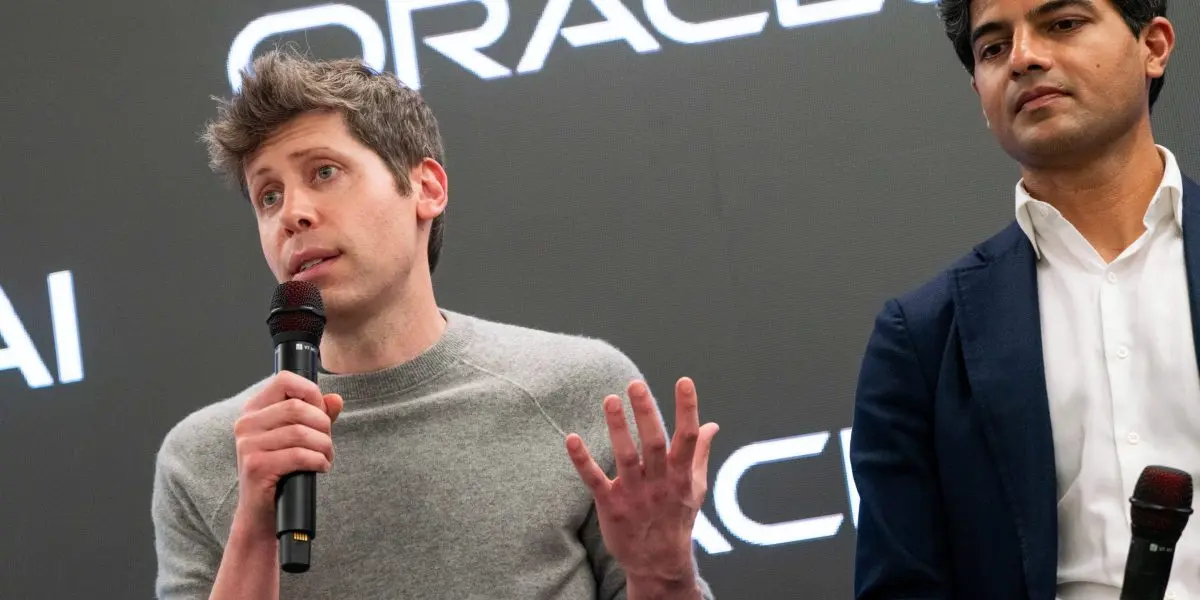
The credit line is BofA's first loan to OpenAI. The bank's internal figures reviewed by Reuters show it has participated in raising close to $500 billion for AI-linked issuers since 2025, spanning investment-grade debt, leveraged finance and equity deals. OpenAI quietly submitted paperwork for a U.S. IPO in June, after starting in 2015 as a nonprofit research group and later setting up a profit-seeking unit to help pay for increasingly expensive AI development. The company is chasing a trillion-dollar IPO, but new reporting has suggested that the listing may now slip to 2027 as the company burns through cash at a record pace. The ChatGPT maker is leaning toward holding off until next year, according to a New York Times report citing three people involved in the deliberations. Advisers reportedly presented Altman with two options: wait until 2027 to reach the trillion-dollar mark, or settle for a smaller number and list in 2026. Altman reportedly called any reduction a "non-starter." The bank's push into marquee offerings comes after it worked on SpaceX's IPO as a joint bookrunner and ran distribution to U.S. retail investors. SpaceX began trading in June at a valuation topping $2 trillion in what is described as the largest IPO globally. This content was partially produced with the help of AI tools and was reviewed and published by Benzinga editors. Market News and Data brought to you by Benzinga APIs To add Benzinga News as your preferred source on Google, click here.
[3]
OpenAI Lands $520 Million Line of Credit From Bank of America | PYMNTS.com
That's according to a report Wednesday (July 8) by Bloomberg News, citing sources with knowledge of the matter. The report calls the deal a "notable pivot" by the banking giant, which as recently as last year had shown skepticism about the ability of companies known for heavy capital spending to sustain their business models. However, OpenAI's preparations for an initial public offering (IPO) have colored Bank of America's decision, the source said, as missing out on such a large stock market listing would be viewed as an embarrassment. PYMNTS has reached out to both OpenAI and Bank of America for comment but has not yet gotten a reply. According to one of Bloomberg's sources, Bank of America grew more comfortable with investing in artificial intelligence and AI-adjacent companies once it felt confident the market would back their business models, even for unprofitable firms. The bank also noted investors' willingness to support these companies at valuations not tied to their earnings. In 2024, OpenAI approached a group of nine global banks to arrange a $4 billion line of credit, the report noted. At the time, the company said its "partnership with an exceptional group of financial institutions" would offer it flexibility to invest in new initiatives. However, Bloomberg said, Bank of America was not part of that group of lenders -- a lineup that included its top U.S. rivals -- a sign of its more conservative philosophy. In other artificial intelligence news, new PYMNTS Intelligence research with Splitit suggests that if AI shopping assistants become responsible for suggesting financing options, providers will increasingly compete to satisfy algorithms that consider cost, credit impact and consumer preferences before offering a recommendation. According to the research, 61% of U.S. consumers would consider letting an AI shopping assistant recommend a pay later option for at least one purchase category. The appeal of pay later, the report said, shows why consumers are ready to make AI part of the buy now, pay later (BNPL) process. "Financing choices have become increasingly complicated as traditional credit cards, card-linked installment plans and BNPL products often coexist at checkout," the report said. "Comparing interest costs, repayment schedules, rewards, credit implications and promotional offers requires time that many consumers would rather spend completing a purchase. AI promises to reduce that burden by evaluating available options almost instantly."
[4]
BofA extends first US$520 million loan to OpenAI ahead of IPO, Reuters source says
Bank of America has extended a US$520 million credit line to OpenAI, its first loan to the AI company that is preparing for an initial public offering, a person familiar with the matter told Reuters on Wednesday. The loan makes BofA one of OpenAI's largest lenders and bolsters its credentials as a market leader in AI-related capital markets financing, the source said, requesting anonymity to discuss confidential information. BofA has helped raise nearly $500 billion in capital for AI-related companies since 2025, accounting for 60 per cent of such fundraising across investment-grade debt, leveraged finance and equity capital markets, according to internal data seen by Reuters. The second-largest American lender is also eyeing advisory roles on the planned IPOs of OpenAI and Anthropic, according to a second source familiar with the matter. The move follows its role in SpaceX's blockbuster IPO, where it was a joint bookrunner and led the U.S. retail distribution effort. The rockets-to-AI company led by Elon Musk debuted in June at a valuation of more than $2 trillion after pulling off the world's largest IPO. OpenAI confidentially filed for a U.S. IPO last month. Reuters has reported that the ChatGPT maker, a key player in the AI race, is targeting a valuation of more than $1 trillion in a listing that could come as soon as this year. Mega IPOs are typically very lucrative for Wall Street banks, generating hundreds of millions of dollars in fees while opening the door to years of follow-on business. OpenAI did not immediately respond to Reuters' request for comment. The news of BofA handing the company a credit line was first reported by Bloomberg earlier on Wednesday. The AI company was founded in 2015 as a research-focused nonprofit, but created a for-profit arm four years later to help fund the soaring costs of developing AI systems.
[5]
Bank of America extends credit to OpenAI ahead of planned IPO - Bloomberg By Investing.com
Investing.com - Bank of America Corp. (NYSE:BAC) extended a $520 million credit line to OpenAI in recent weeks after previously declining the artificial intelligence company's request, according to reporting from Bloomberg, citing people with knowledge of the matter. The bank rejected OpenAI's earlier approach as recently as last year, when executives expressed skepticism about ventures with high capital spending and unproven business models. Chief Executive Officer Brian Moynihan has emphasized a "responsible growth" strategy that discourages speculative risk-taking for corporate clients. OpenAI's preparations for an initial public offering influenced the bank's decision to provide financing, the people said. Bank of America, the second-largest U.S. lender, views participation in a major stock listing as important for its Merrill Lynch wealth advisory business. The commitment adds to an existing undrawn facility established by competing banks, bringing total capital available to OpenAI above $5 billion. Bank of America became more comfortable financing AI companies after determining the market would support their business models despite lack of profitability, one person said. The bank's management also noted investors' willingness to back AI companies at valuations not tied to underlying earnings. This shift in market sentiment contributed to the firm's increased confidence in extending credit to the sector. This article was generated with the support of AI and reviewed by an editor. For more information see our T&C.
[6]
BofA extends first $520 million loan to OpenAI ahead of IPO, source says
July 8 (Reuters) - Bank of America has extended a $520 million credit line to OpenAI, its first loan to the AI company that is preparing for an initial public offering, a person familiar with the matter told Reuters on Wednesday. The loan makes BofA one of OpenAI's largest lenders and bolsters its credentials as a market leader in AI-related capital markets financing, the source said, requesting anonymity to discuss confidential information. BofA has helped raise nearly $500 billion in capital for AI-related companies since 2025, accounting for 60% of such fundraising across investment-grade debt, leveraged finance and equity capital markets, according to internal data seen by Reuters. The second-largest American lender is also eyeing advisory roles on the planned IPOs of OpenAI and Anthropic, according to a second source familiar with the matter. The move follows its role in SpaceX's blockbuster IPO, where it was a joint bookrunner and led the U.S. retail distribution effort. The rockets-to-AI company led by Elon Musk debuted in June at a valuation of more than $2 trillion after pulling off the world's largest IPO. OpenAI confidentially filed for a U.S. IPO last month. Reuters has reported that the ChatGPT maker, a key player in the AI race, is targeting a valuation of more than $1 trillion in a listing that could come as soon as this year. Mega IPOs are typically very lucrative for Wall Street banks, generating hundreds of millions of dollars in fees while opening the door to years of follow-on business. OpenAI did not immediately respond to Reuters' request for comment. The news of BofA handing the company a credit line was first reported by Bloomberg earlier on Wednesday. The AI company was founded in 2015 as a research-focused nonprofit, but created a for-profit arm four years later to help fund the soaring costs of developing AI systems. (Reporting by Saeed Azhar in New York and Manya Saini in Bengaluru; Editing by Diti Pujara)
Share
Copy Link
Bank of America has extended a $520 million credit line to OpenAI, marking its first loan to the ChatGPT maker ahead of its highly anticipated IPO. The move signals a strategic shift for the bank, which previously declined OpenAI's funding requests, and positions BofA to compete for advisory roles on what could become a trillion-dollar public offering.
Bank of America has extended a $520 million credit line to OpenAI in recent weeks, marking the bank's first loan to the artificial intelligence company as it prepares for what could become one of the most significant public offerings in tech history
1
. The OpenAI loan represents a notable shift for the second-largest American lender, which had previously declined the company's funding requests as recently as last year due to concerns about ventures with high capital expenditures and unprofitable business models5
.
Source: PYMNTS
The credit facility adds to an existing undrawn facility established by competing banks, bringing OpenAI's total available capital above $5 billion
5
. In 2024, OpenAI approached a group of nine global banks to arrange a $4 billion line of credit, but Bank of America was notably absent from that lineup, which included its top U.S. rivals—a reflection of its more conservative lending philosophy at the time3
.The $520 million credit line positions Bank of America as one of OpenAI's largest lenders and strengthens its credentials in AI-related capital markets financing
1
. BofA has helped raise nearly $500 billion in capital for AI-related companies since 2025, accounting for 60% of such fundraising across investment-grade debt, leveraged finance and equity capital markets1
. The bank is now eyeing advisory roles on the planned IPOs of both OpenAI and Anthropic, according to sources familiar with the matter4
.
Source: Reuters
OpenAI's preparations for an initial public offering heavily influenced Bank of America's decision to provide financing, with sources indicating that missing out on such high-profile stock market listings would be viewed as an embarrassment for the banking giant
3
. The move follows BofA's role in SpaceX's blockbuster IPO, where it served as a joint bookrunner and led the U.S. retail distribution effort. SpaceX debuted in June at a valuation of more than $2 trillion after pulling off the world's largest IPO1
.OpenAI confidentially filed for a U.S. IPO last month, with the ChatGPT maker targeting a trillion-dollar valuation in a listing that could come as soon as this year
1
. However, recent reporting suggests the timeline may shift to 2027 as the company burns through cash at a record pace2
. The ChatGPT maker is reportedly leaning toward holding off until next year, with advisers presenting Sam Altman with two options: wait until 2027 to reach the trillion-dollar mark, or settle for a smaller valuation and list in 2026. Altman reportedly called any reduction a "non-starter"2
.
Source: BNN
Mega IPOs are typically very lucrative for Wall Street banks, generating hundreds of millions of dollars in fees while opening the door to years of follow-on business
1
. This explains Wall Street's race for AI IPOs and why financing AI companies has become a strategic priority for major lenders.Related Stories
Bank of America's decision to extend credit marks a departure from Chief Executive Officer Brian Moynihan's "responsible growth" strategy that has historically discouraged speculative risk-taking for corporate clients
5
. The bank grew more comfortable financing AI companies once it determined the market would support their business models despite lack of profitability, according to sources5
. Bank of America's management also noted investor confidence in backing AI companies at valuations not tied to underlying earnings, a shift in market sentiment that contributed to the firm's increased confidence in extending credit to the sector5
.Participation in a major stock listing is viewed as important for Bank of America's wealth advisory business, particularly its Merrill Lynch division
5
. OpenAI's strategic financial moves, including securing diverse funding sources, reflect the company's evolution from its 2015 founding as a research-focused nonprofit to creating a for-profit arm four years later to help fund the soaring costs of developing AI systems4
. As the AI race intensifies and capital requirements continue to grow, OpenAI's ability to secure funding from major financial institutions signals broader market acceptance of AI companies' long-term viability, even amid questions about profitability timelines and sustainable business models.Summarized by
Navi
[2]
03 Oct 2024

30 Jan 2026•Business and Economy

23 Apr 2026•Business and Economy

1
Technology

2
Business and Economy

3
Technology