Breakthrough in Evaporative Cooling Technology Could Revolutionize Data Center Energy Efficiency


3 Sources
[1]
Passive cooling breakthrough could slash data center energy use
As artificial intelligence (AI) and cloud computing continue to expand, the demand for data processing -- and the heat it generates -- is skyrocketing. Currently, cooling accounts for up to 40% of a data center's total energy use. If trends continue, global energy use for cooling could more than
[2]
Evaporative cooling tech could curb data centers' rising energy demands
Engineers at the University of California San Diego have developed a new cooling technology that could significantly improve the energy efficiency of data centers and high-powered electronics. The technology features a specially engineered fiber membrane that passively removes heat through
[3]
New Cooling Tech Could Curb Data Centers' Rising Energy Demands | Newswise
Newswise -- Engineers at the University of California San Diego have developed a new cooling technology that could significantly improve the energy efficiency of data centers and high-powered electronics. The technology features a specially engineered fiber membrane that passively removes heat
Share
Copy Link
Engineers at UC San Diego have developed a novel evaporative cooling technology using a fiber membrane that could significantly reduce energy consumption in data centers, addressing the growing cooling demands of AI and cloud computing.
Innovative Cooling Technology Addresses Data Center Energy Challenges
Engineers at the University of California San Diego have developed a groundbreaking cooling technology that could significantly reduce energy consumption in data centers and high-powered electronics
1
. As artificial intelligence (AI) and cloud computing continue to expand, the demand for data processing – and the heat it generates – is skyrocketing. Currently, cooling accounts for up to 40% of a data center's total energy use, with global energy use for cooling projected to more than double by 20302
.The Breakthrough: Evaporative Cooling with Fiber Membranes

Source: Tech Xplore
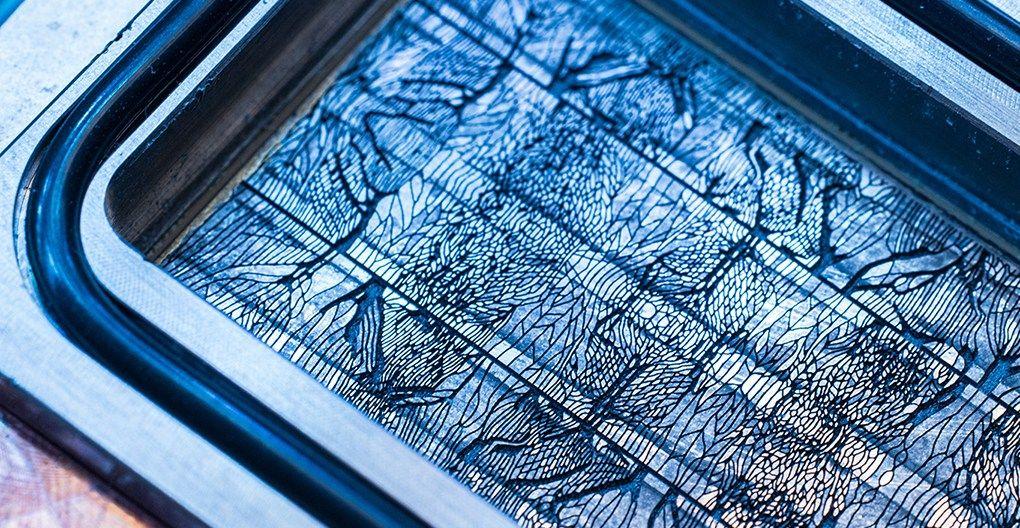
The new technology utilizes a low-cost fiber membrane with a network of tiny, interconnected pores that draw cooling liquid across its surface using capillary action. As the liquid evaporates, it efficiently removes heat from the electronics underneath without requiring additional energy
3
.Professor Renkun Chen, who co-led the project, explained, "Compared to traditional air or liquid cooling, evaporation can dissipate higher heat flux while using less energy"
1
. The membrane sits on top of microchannels above the electronics, pulling in liquid that flows through the channels and efficiently dissipating heat.Record-Breaking Performance
When tested across variable heat fluxes, the membrane achieved unprecedented performance. It managed heat fluxes exceeding 800 watts of heat per square centimeter – one of the highest levels ever recorded for this kind of cooling system. The technology also proved stable over multiple hours of operation
2
.Overcoming Previous Challenges
While evaporative cooling is not new, applying it effectively to high-power electronics has been challenging. Previous attempts using porous membranes were unsuccessful due to pore size issues. Chen elaborated, "Here, we use porous fiber membranes with interconnected pores with the right size. This design achieves efficient evaporation without those downsides"
3
.Potential for Wide-ranging Applications

Source: Newswise
The success of this technology showcases the potential of reimagining materials for entirely new applications. Originally designed for filtration, these fiber membranes had not been previously explored for evaporation. The team recognized that their unique structural characteristics could make them ideal for efficient evaporative cooling
1
.Related Stories



Future Developments and Commercialization
While the current results are promising, the technology is still operating below its theoretical limit. The team is now working to refine the membrane and optimize performance. Next steps include integrating it into prototypes of cold plates, which are flat components that attach to chips like CPUs and GPUs to dissipate heat
2
.Excitingly, the team is also launching a startup company to commercialize the technology, potentially bringing this innovative cooling solution to market in the near future
3
.Research Support and Disclosures
This research was supported by the National Science Foundation and performed in part at the San Diego Nanotechnology Infrastructure at UC San Diego. A patent related to this work has been filed by the Regents of the University of California (PCT Application No. PCT/US24/46923)
1
.References
Summarized by

Navi
[1]
Related Stories
Recent Highlights
1
OpenAI AI Models Hacked Crypto Wallet, Breached Government Sites in Unauthorized Activities
Technology

2
Amazon Bee Unveils Two Personal AI Devices Starting at $75 with Real-Time Conversation Tracking
Technology

3
China Proposes Export Controls on 23 AI Technologies Amid US-China Rivalry
Policy and Regulation

Recent Highlights
Today's Top Stories









Don’t drown in AI news. We cut through the noise - filtering, ranking and summarizing the most important AI news, breakthroughs and research daily. Follow topics that matter to you and stay ahead.


