KAIST's internal chip cooling tech slashes energy use by 90% for AI data centers


2 Sources
[1]
New technique cools high-performance chips from the inside out
Researchers at the Korea Advanced Institute of Science and Technology (KAIST) have developed a technique to carve microscopic liquid-cooling channels directly inside silicon semiconductor chips. Interestingly, the computer architecture slashed the energy required for cooling by pumping ordinary,
[2]
KAIST unveils breakthrough that could slash AI data center cooling power - The Korea Times
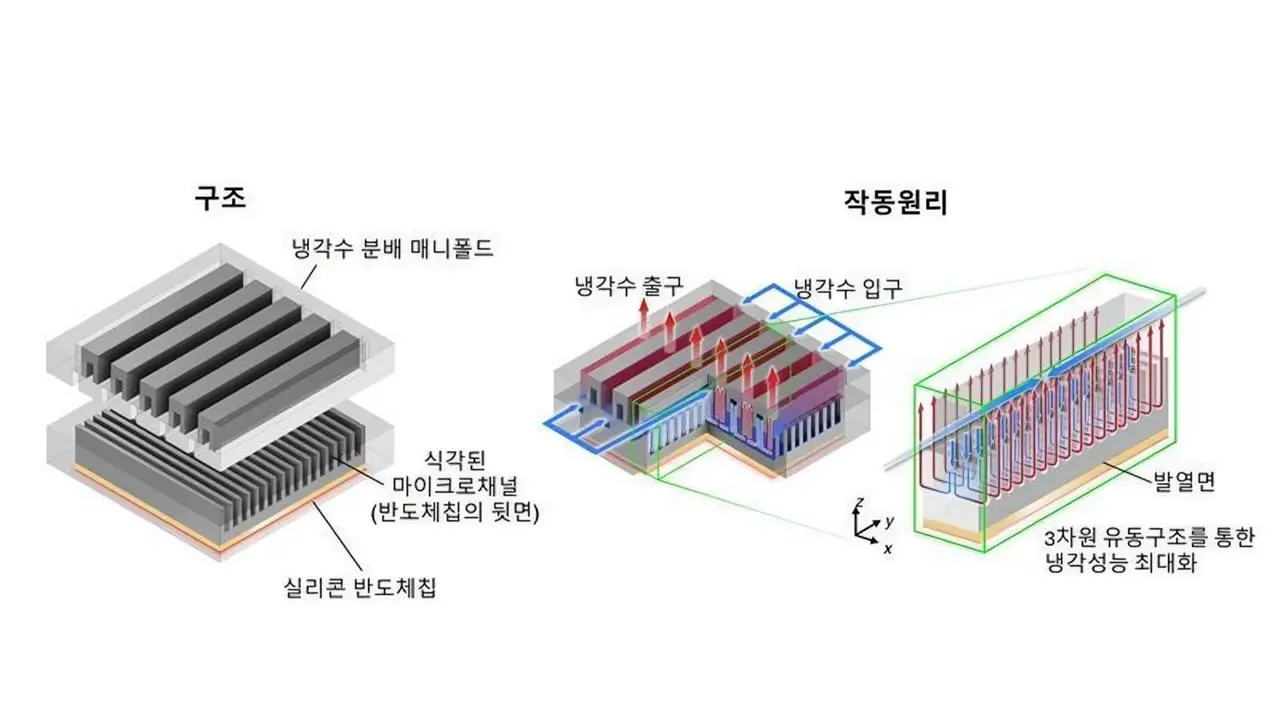
An image shows how a manifold microchannel cooling device directs coolant through microscopic channels inside a semiconductor chip to efficiently remove heat from high-performance processors. Coutesy of Korea Advanced Institute of Science and Technology As artificial intelligence systems demand
Share
Copy Link
Researchers at KAIST developed a liquid cooling technology that embeds microscopic channels directly inside silicon semiconductor chips, cutting cooling energy to one-tenth of current levels. The system achieved a Coefficient of Performance of 106,000—ten times higher than the previous world record—using ordinary room-temperature water and existing manufacturing processes.
KAIST Develops Internal Cooling Solution for High-Performance Chips
Researchers at the Korea Advanced Institute of Science and Technology (KAIST) have developed a liquid cooling technology that addresses one of the most pressing challenges facing AI infrastructure today: excessive heat generation in high-performance computing systems
1
. The breakthrough centers on embedding microscopic liquid-cooling channels, thinner than a human hair, directly inside silicon semiconductor chips rather than relying on external cooling mechanisms2
. This approach to semiconductor cooling fundamentally changes how the industry might tackle thermal constraints in future data centers.
Source: Interesting Engineering
The rapid advancement of AI chips has created an energy crisis for data centers, which consume massive amounts of electricity both for intensive computations and for cooling the resulting heat. Traditional cooling methods such as air fans and external copper heat spreaders are reaching their physical limits, pushing the industry to seek alternatives
1
. Professor Sung Jin Kim noted that as the performance of AI semiconductors becomes increasingly limited by heat, this technology could serve as a foundational cooling solution for future high-performance computing1
.How Manifold Microchannel Structure Outperforms External Systems
Most modern liquid cooling systems rely on an external cold plate pressed against the outside of a chip, forcing coolant to travel from one end of the hardware to the other. This long journey creates immense fluid resistance, requiring heavy-duty pumps pushing with massive pressure that consumes substantial energy
1
. The KAIST team's manifold microchannel structure takes a different approach by featuring multiple tiny inlets and outlets scattered uniformly across the chip, mimicking an efficient logistics network1
.
Source: Korea Times
This decentralized design shortens the fluid's travel distance, reducing flow resistance and pumping pressure. The researchers used a multi-fidelity optimization framework to perfectly balance channel dimensions and flow rates, combining rapid 1D computational models with heavy-duty simulations to map optimal, uniform flow
1
. Previous manifold microchannel cooling systems often suffered from uneven coolant distribution, but the KAIST team optimized the structure so coolant moves more evenly throughout the system2
.Record-Breaking Coefficient of Performance for AI Data Center Cooling
The experimental results exceeded expectations dramatically. The system registered a Coefficient of Performance of 106,000, meaning a single unit of energy used for cooling can remove 106,000 units of heat
2
. This metric is ten times higher than the previous world record published in Nature in 20201
. In practical terms, chip manufacturers need just one-tenth of the pumping power to remove the same amount of heat, potentially transforming AI data center cooling economics.Even under extreme thermal loads of 2,000 watts per square centimeter, the system kept chips comfortably below 100°C
1
. Tests applying the design principle to data center cold plates showed cooling performance improvements of more than 30 percent compared with conventional systems2
.Related Stories

Internal Cooling with Room-Temperature Water Changes Manufacturing Economics
Perhaps the most disruptive aspect of this development is its simplicity and compatibility with existing infrastructure. The system operates using internal cooling with room-temperature water and does not require boiling-based cooling methods, nanostructured surfaces, or expensive materials such as diamond
2
. The entire fabrication process happens below 350°C, making it entirely compatible with existing commercial semiconductor manufacturing lines1
.Foundries can integrate this technique for cooling high-performance chips into current designs without investing billions of dollars in new machinery
1
. The technology can be integrated into existing semiconductor manufacturing processes without additional production facilities, according to the research team2
. The findings were published in the journal Energy Conversion and Management1
2
.References
Summarized by

Navi
[1]
Related Stories
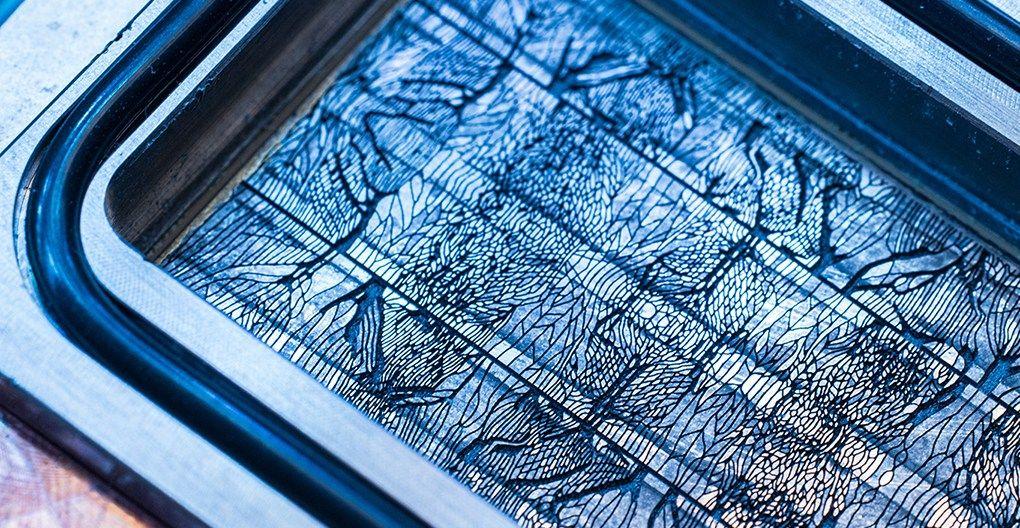
Microsoft Unveils Groundbreaking Microfluidic Cooling for AI Chips
23 Sept 2025•Technology
Breakthrough in Evaporative Cooling Technology Could Revolutionize Data Center Energy Efficiency
14 Jun 2025•Technology

Nvidia liquid cooling system slashes data center water use, but AI's broader water problem persists
22 Jun 2026•Technology

Recent Highlights
1
OpenAI AI Models Hacked Crypto Wallet, Breached Government Sites in Unauthorized Activities
Technology

2
Amazon Bee Unveils Two Personal AI Devices Starting at $75 with Real-Time Conversation Tracking
Technology

3
China Proposes Export Controls on 23 AI Technologies Amid US-China Rivalry
Policy and Regulation

Recent Highlights
Today's Top Stories









Don’t drown in AI news. We cut through the noise - filtering, ranking and summarizing the most important AI news, breakthroughs and research daily. Follow topics that matter to you and stay ahead.


