4 Sources
[1]
Cate Blanchett Launches 'Human Consent Registry' to Help Protect Your Likeness From AI Industry Scraping
Is it a little ironic that someone who plays other people professionally is leading the charge in protecting people's identities in the age of artificial intelligence? Sure, but it's not like anyone else is doing anything about it. On Tuesday, multi-time Academy Award winner Cate Blanchett announced the release of the Human Consent Registry, a new tool designed to help people control their likeness and how it can be used by AI systems. The tool, which is being released by Blanchett's non-profit RSL Media, allows people in the United States and the European Union to create a record of themselves that can be used to dictate how their identity can be interacted with by AI. "Your identity is your intellectual property, and every person should have a clear way to say what is, and is not, allowed to be used by AI systems," the organization said in a press release. How the registry works Upon creating an account, users will be presented with a form that asks them for biographical information like name and profession, as well as ways to mark their identity like a website or social media account. They then choose an "AI use consent" level, which is set up like a stoplight: Prohibited (red light), Permitted with Terms (yellow), or Permitted (green). Once completed, the person will have a Human Consent ID, which AI systems are able to check before including any part of a person's likeness in their training data. "Your identity is your IP in the age of AI, and every person deserves the right to decide how AI can or cannot use it," Blanchett said. "RSL Media's free Human Consent Registry gives everyone a voice and a way to take action on AI permissions, helping to preserve and protect trust across the evolving AI landscape." According to RSL Media, this first tool will cover name, image, likeness, voice, movement and other signature or personal attributes for those who register through its platform. The organization plans to follow up the Human Consent Registry with similar simple registries for "Work," "Characters," and "Marks." Now, it should be noted that there does not appear to be any sort of enforcement method in place for making AI firms actually comply with this at this time, and you are turning over a lot of personal data to a third-party, so uploader beware. That said, it does build on the Really Simple Licensing (RSL) standard, which has become a popular open protocol that was designed to establish AI usage rights and licensing terms for content. RSL has become a popular option for digital publishers, and with this new effort, RSL Media aims to extend that approach to human likeness.
[2]
Javier Bardem and Cate Blanchett launch anti-AI website
A new free tool allows artists to decide whether or not to give the green light for their image to be used by artificial intelligence. Every major technological revolution brings unpredictable consequences that are hard to absorb, often when it is already too late to act. In the case of unstoppable artificial intelligence, the debate among artists no longer revolves around whether it should exist or be used, but around how to protect themselves from it. Javier Bardem has publicly voiced his rejection of this technology on several occasions because of what the actor describes as its vast ability to manipulate reality. He has therefore joined forces with Cate Blanchett and other Hollywood stars, including Meryl Streep, Emma Thompson, Helen Mirren, Kristen Stewart, George Clooney, Viola Davis and Tom Hanks, in a new online tool where any artist can register their level of consent for their face, voice, movements or even ideas to be transformed through AI. The platform, of which Blanchett is a co-founder alongside Nikki Hexum, Doug Leeds and Eckart Walther, is called rslmedia.org and acts as a human consent identifier. The artist or content creator simply has to register to verify their identity and state their level of consent, organised into three colour-coded levels: green, permitted; yellow, use allowed under certain conditions, such as payment; or red, prohibited. The result is a database of practical information that can be used by machines at large scale. Identity as intellectual property Ultimately, this non-profit website is based on the principle that human identity is also a form of intellectual property and therefore there must be an infrastructure where it can be recorded in a concrete and transparent way. In this way, AI companies can rely on a tool that complements emerging regulatory frameworks. This is how Australian actor Cate Blanchett presented the initiative on Tuesday at the European Parliament, where the European Union's Artificial Intelligence Act was adopted in 2024 as the world's first comprehensive regulatory framework for AI. "To find a path between unbridled enthusiasm and the dangers of AI, we need safeguards based on consent. Not to hold back technological progress - heaven forbid - but safeguards that can evolve at scale and at the same pace as the technology itself. Safeguards that protect our human rights," Blanchett said. She attended the event together with film director Steven Soderbergh, known as the creator of films such as the 'Ocean's Eleven' saga (2001), 'Erin Brockovich' (2000) and 'Presence' (2004). A persuasive mechanism Both the actor and the filmmaker joined MEP Eva Maydell for a discussion with legal advisers, film-makers, musicians, lawmakers and business leaders from the corporate sector, where some representatives of the technology industry voiced misgivings, fearing that projects of this kind could undermine Europe's technology sector in relation to industries in competing countries. Director Steven Soderbergh was clear on this point. "This is not a law, it's not a restriction; it's a persuasive mechanism to do the right thing in a simple, elegant way," he said. On the dangers of AI, Soderbergh added: "There are a lot of things that AI can't do and never will, and that's why I'm not scared, but people need some sort of direction." A path opened up by these major stars that now looks clearer for millions of creators.
[3]
Hollywood powerhouses bring AI fight to Europe
Brussels (Belgium) (AFP) - Cate Blanchett brought Hollywood starpower to Brussels on Tuesday as she launched a free tool to give people the right to decide how their image can be used by AI firms. Blanchett announced the Human Consent Registry was live at the European Parliament also attended by Hollywood directing heavyweight Steven Soderbergh. The public tool available online will allow anyone to register how they want their identity -- name, image, voice, likeness, movement and/or other personal attributes -- to be used by artificial intelligence systems. They will have three options: allowed, allowed with terms, or prohibited. "Human consent is not an impediment to progress. Human consent does not diminish the struggles and the joys of technological innovation or inhuman creativity," Blanchett said at the event in the parliament's library. She insisted the issue did not just affect public figures like herself, but for anyone who has been photographed "or simply lived some part of their life online". The registry has been launched by RSL Media, co-founded by Blanchett, a non-profit organisation focused on ensuring consent in AI use. RSL Media hopes AI companies will voluntarily consult the registry. Blanchett has been a staunch proponent of protecting rights in the age of generative artificial intelligence. She was among over 800 creatives including fellow actor Scarlett Johansson as well as director Guillermo Del Toro, who published an open letter accusing AI giants of "theft" in January this year. Hosting Tuesday's event was EU lawmaker Eva Maydell who hailed the new tool. The registry "represents an ambitious attempt to turn the principles into practice and make consent more accessible and feasible, to make rights more transparent, and to make trust more scalable", Maydell said. Soderbergh hailed "a template that we think really works for both the companies and the creative community". Storytelling The European Parliament has garnered international attention after the EU became the first in the world to regulate AI so comprehensively. Maydell had been one of the key EU negotiators of the landmark AI Act. Top parliament official Sabine Verheyen said the EU needed "robust concept mechanisms so creators retain control over their own image, voice" and more. Blanchett and Soderbergh weren't the only Hollywood figures in town to talk AI. Acclaimed American film-maker Darren Aronofsky told an audience of creatives at the EU parliament in another event hosted by MEP Maydell how his AI studio Primordial Soup was using the technology for storytelling. Aronofsky felt that, while the models often created "incredible" images, they lacked the "power of emotion and the power of our humanity". With that discovery, he said he realised "we need to figure out how to use this incredible technology" and "turn them into storytelling machines".
[4]
Cate Blanchett launches free tool to protect identity from AI
The acclaimed Australian actor presented her Human Consent Registry at the European Parliament. The tool allows people to protect their likeness from being used by AII. Cate Blanchett is pursuing her crusade against unregulated usage of artificial intelligence. On Tuesday, the Australian actor and producer launched a free website allowing anyone to protect their identity from being used by AI systems. The star presented the Human Consent Registry at an event hosted at the European Parliament in Brussels by Bulgarian MEP Eva Maydell, also attended by director Steven Soderbergh. "Your identity is your IP in the age of AI, and every person deserves the right to decide how AI can or cannot use it," said Blanchett, who co-founded RSL Media, a nonprofit working to build consent tools related to AI use. The organisation's new registry provides users with the possibility to allow - with or without terms - or prohibit AI use of their name, image, voice, likeness and movement among other personal attributes. The tool is available to all individuals as well as third parties like agents and managers. It should eventually allow people to protect their works of arts, characters or brands, RSL media said in a statement. European People's Party lawmaker Eva Maydell described the Human Consent Registry as "a tool that makes rights transparent, scales trust, and keeps human creativity at the centre of technological progress." Cate Blanchett's registry is just the latest step in the actor's battle to address consent issue in AI usage. In March 2025, the star joined Paul McCartney, Ben Stiller and more than 400 celebrities and artists who sent an open letter to Donald Trump, urging his administration to not roll back copyright protections. The letter challenged arguments from tech giants like OpenAI and Google that US copyright law should allow AI companies to train their systems on copyrighted works without permission or compensation to rights holders. Many artists have since spoken out against unlicenced AI use of their work and likeness. On Monday, singer SZA slammed musicians supporting "this degenerate shit," after having discovered that more than 200 of her songs had been used to train AI. Some even took drastic action, like actor Matthew McConaughey, who trademarked his image and voice, including his iconic "alright, alright, alright" catchphrase. Cate Blanchett's launch of RSL media in May received wide support from Hollywood powerhouses including Javier Bardem, Viola Davis, Tom Hanks, Helen Mirren and Meryl Streep. "AI technologies are expanding rampantly, essentially unchecked and unregulated," Blanchett said in a statement presenting her organisation. "In order for humans to remain in front of these technologies, consent must be the first consideration."
Share
Copy Link
Academy Award winner Cate Blanchett unveiled the Human Consent Registry at the European Parliament, a free tool allowing anyone to control how AI systems use their name, image, voice, and likeness. Backed by Hollywood stars including Javier Bardem, Meryl Streep, and Tom Hanks, the registry offers three consent levels and aims to establish identity as intellectual property in the AI age.
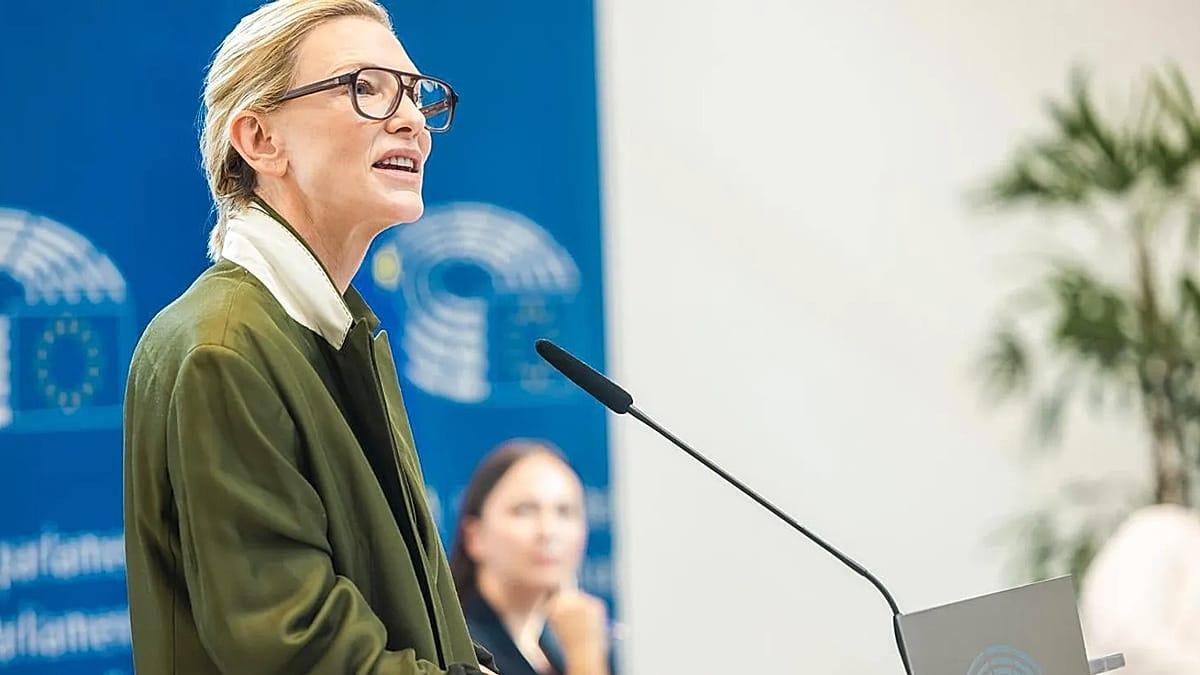
Academy Award winner Cate Blanchett brought Hollywood influence to Brussels on Tuesday, launching the Human Consent Registry at the European Parliament in an event that signals a major push to protect identity from AI
3
.
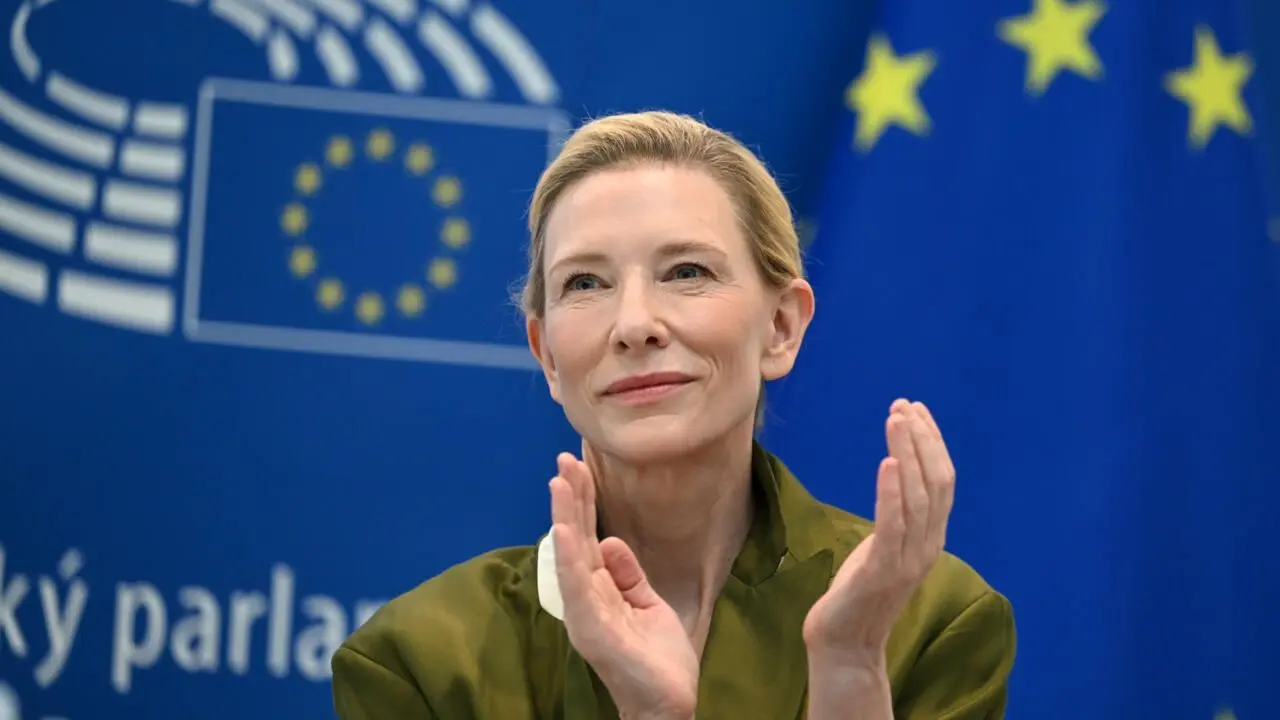
Source: France 24
The free online tool, developed by RSL Media—a nonprofit co-founded by Blanchett alongside Nikki Hexum, Doug Leeds, and Eckart Walther—allows individuals to control how AI systems use their name, image, voice, AI likeness, movement, and other personal attributes
1
. Director Steven Soderbergh joined Blanchett at the parliament's library, where Bulgarian MEP Eva Maydell hosted the launch event4
.The Human Consent Registry operates on a straightforward principle: identity functions as intellectual property rights in the age of artificial intelligence
2
. Users create an account and provide biographical information including name, profession, website, or social media accounts. They then select from three AI usage consent levels organized like a traffic light system: Prohibited (red), Permitted with Terms (yellow), or Permitted (green) . Upon completion, each person receives a Human Consent ID that AI systems can check before including any part of a person's likeness in training data. The tool is available to individuals in the United States and European Union, as well as third parties like agents and managers4
.RSL Media designed the registry to complement the Really Simple Licensing (RSL) standard, an open protocol that has gained traction among digital publishers for establishing AI usage rights and licensing terms for content
1
. The organization plans to expand beyond this initial tool with similar registries covering "Work," "Characters," and "Marks," creating a comprehensive infrastructure for managing unauthorized use by AI1
. Soderbergh emphasized that the initiative functions as "a persuasive mechanism to do the right thing in a simple, elegant way," clarifying it is not a law or restriction2
. RSL Media hopes AI companies will voluntarily consult the registry, though no formal enforcement mechanism currently exists3
.
Source: Euronews
The launch received substantial support from entertainment industry figures including Javier Bardem, Meryl Streep, Emma Thompson, Helen Mirren, Kristen Stewart, George Clooney, Viola Davis, and Tom Hanks
2
. Bardem has publicly voiced rejection of AI technology due to what he describes as its vast ability to manipulate reality2
. The European Parliament venue proved strategic, as the EU AI Act adopted in 2024 established the world's first comprehensive AI regulation framework2
. Eva Maydell, who served as a key EU negotiator of the landmark legislation, described the registry as "a tool that makes rights transparent, scales trust, and keeps human creativity at the centre of technological progress"4
.Related Stories

Blanchett's initiative extends her ongoing advocacy work. In March 2025, she joined Paul McCartney, Ben Stiller, and over 400 celebrities who sent an open letter to Donald Trump urging his administration not to roll back copyright protections
4
. That letter challenged arguments from tech giants like OpenAI and Google that copyright law should permit data scraping of copyrighted works without permission or compensation. Earlier, Blanchett was among over 800 creatives including Scarlett Johansson and Guillermo Del Toro who published an open letter in January accusing AI giants of "theft"3
. The issue has prompted drastic action from some artists, with Matthew McConaughey trademarking his image, voice, and iconic catchphrase, while singer SZA recently slammed musicians after discovering over 200 of her songs were used to train AI systems4
.
Source: Euronews
Blanchett stated that "human consent is not an impediment to progress" and emphasized the issue affects anyone who has been photographed or "simply lived some part of their life online," not just public figures
3
. The registry represents an attempt to establish consent mechanisms that can evolve at the same pace as technology itself, providing safeguards that protect human rights without holding back technological progress2
. Some technology industry representatives at the European Parliament event voiced concerns that such projects could undermine Europe's tech sector relative to competing countries2
. The voluntary nature of the system means its effectiveness depends on whether major AI companies choose to participate, making the coming months critical for observing industry response and whether additional regulatory measures become necessary to enforce consent standards.Summarized by
Navi
[3]
12 May 2026•Technology

22 Jan 2026•Entertainment and Society

18 Mar 2025•Policy and Regulation

1
Policy and Regulation

2
Policy and Regulation

3
Policy and Regulation