Celonis Acquires Ikigai Labs to Solve Enterprise AI's Operational Context Problem


4 Sources
[1]
Celonis Buys Igikai Labs To Provide The Context Engine For Enterprise-Wide AI Adoption
Celonis just announced its intention to acquire Ikigai Labs, a San Francisco-based start-up focusing on AI-powered decision intelligence. Igikai Labs specializes in software for complex forecasting scenarios based on Large Graphical Models, working closely also with the Massachusetts Institute of
[2]
Celonis turns its platform on its head with Context Model and Ikigai Labs deal - pitching itself as enterprise AI's 'voice of reason'
Celonis, the process intelligence vendor, today announced the launch of the Celonis Context Model (CCM) and a definitive agreement to acquire Ikigai Labs, an MIT-founded AI decision intelligence company. The deal brings Ikigai's Large Graphical Model technology - patented MIT research focused on
[3]
Celonis buys decision-intelligence startup Ikigai Labs to provide operational context for enterprise AI - SiliconANGLE
Celonis buys decision-intelligence startup Ikigai Labs to provide operational context for enterprise AI Process mining software company Celonis SE said today it has snapped up the Massachusetts Institute of Technology-linked decision intelligence startup Ikigai Labs Inc. The startup's technology
[4]
Celonis Launches Context Model and Acquires Ikigai Labs to Solve AI's "Blind Spot" Problem
Celonis launched the Celonis Context Model (CCM) and announced it has signed a definitive agreement to acquire Ikigai Labs, a leader in AI-powered Decision Intelligence. As organizations around the world attempt to deploy Enterprise AI, they face a critical challenge: ensuring AI does not have
Share
Copy Link
Celonis has announced the acquisition of MIT-founded Ikigai Labs and launched the Celonis Context Model to address a critical challenge in enterprise AI deployment. The deal brings large graphical model technology for forecasting and scenario planning into Celonis' process intelligence platform, with MIT becoming a shareholder and Ikigai co-founder joining as Chief Scientist.
Celonis Acquires Ikigai Labs to Power New Context Layer for Enterprise AI
Celonis has signed a definitive agreement to acquire Ikigai Labs, a San Francisco-based startup specializing in AI-powered decision intelligence, while simultaneously launching the Celonis Context Model (CCM)
1
2
. The acquisition addresses what Celonis identifies as a fundamental barrier to AI adoption: the absence of operational context for enterprise AI systems to understand how businesses actually operate. Founded on nearly two decades of MIT research, Ikigai Labs brings large graphical models focused on tabular and time-series data, enabling sophisticated forecasting and scenario planning capabilities3
.
Source: CXOToday
The deal carries significant strategic implications beyond the technology itself. Celonis will gain exclusive rights to MIT-owned patents that Ikigai Labs had licensed, and MIT will become a shareholder in Celonis . Ikigai co-founder Devavrat Shah, who holds a professorial chair of AI at MIT, will join Celonis as Chief Scientist for Enterprise AI, bringing world-class expertise in machine learning, causal inference, and large-scale simulation to the combined entity
3
.The Celonis Context Model Redefines Process Intelligence Architecture
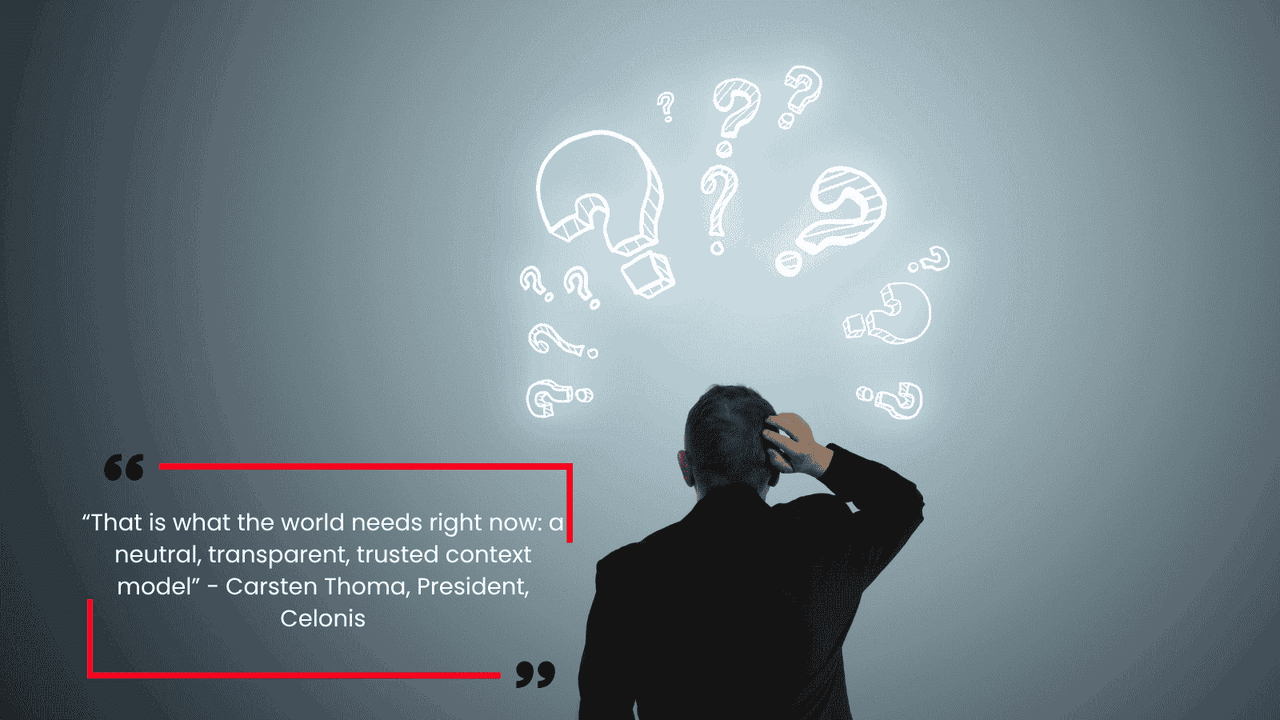
The newly launched Celonis Context Model represents what President Carsten Thoma describes as turning the company's platform "on its head"
2
. After two years of development, Celonis has recomposed its entire stack—including process mining, object-centric mining, and the Process Intelligence Graph—under a full operational ontology2
. Process mining, once the core product, now functions as one feature consuming this ontology. The Context Model operates as a dynamic, real-time digital twin of operations, translating business processes into a language AI systems can interpret3
.
Source: diginomica
This architectural shift means the ontology can now feed anything downstream—whether analytics, AI agents, human workflows, or automation systems. According to Thoma, the operational ontology provides "the how, the why, and how good," giving AI agents a single source to understand what optimal performance looks like
2
. Celonis positions this as a new critical layer in the enterprise technology stack, arguing that AI agents cannot deliver value unless they understand operational reality beyond fragmented data lakes and application silos3
.Addressing the AI Blind Spot Through Decision Intelligence
The integration of Ikigai Labs directly tackles what enterprises describe as AI's "blind spot problem." Chief Product Officer Dan Brown explains that AI models lack understanding of how specific invoices relate to shipping records because proprietary data remains fragmented across systems
3
. Without deterministic foundation in operational reality, AI agents cannot make reliable real-time decisions that drive business outcomes. The Ikigai acquisition adds the critical "what if" capability to Celonis' existing hindsight and insight functions2
.Ikigai's technology has demonstrated the ability to reduce planning and forecasting cycles from months to minutes for complex enterprises
4
. This capability enables what-if simulations that predict and prevent process breakdowns before they occur. In volatile economic environments where scenario planning has become essential, most companies lack the comprehensive data and operating model insights needed to leverage these capabilities1
. The combined platform addresses this gap by enabling companies to predict likely outcomes, simulate scenarios, and receive recommendations grounded in actual operational context.Related Stories

Early Adopters Signal Trust Requirements for Enterprise AI Deployment
Cardinal Health LLC, an early adopter of the Context Model, illustrates the precision requirements driving adoption. Jerome Revish, the company's Chief Technology Officer, stated that healthcare "cannot accept AI that's only right most of the time"
3
. Process context enables AI agents to support teams with precision, while defined guardrails provide confidence to act. Revish emphasized that context differentiates between AI impressive in demonstrations versus AI trusted enough for deployment4
.Cosentino's CIO Rafael Domene articulated the shift from experimentation to trust, noting that agents become tools you trust to act rather than merely recommend when provided with real process understanding
4
. Mondelez International's Chief Information and Digital Officer Filippo Catalano highlighted that deploying trusted AI agents across complex, varied landscapes requires agents to understand how processes actually run across every market, system, and function—not theoretical designs4
. He characterized operational context as assurance that AI investments generate real value rather than adding complexity layers.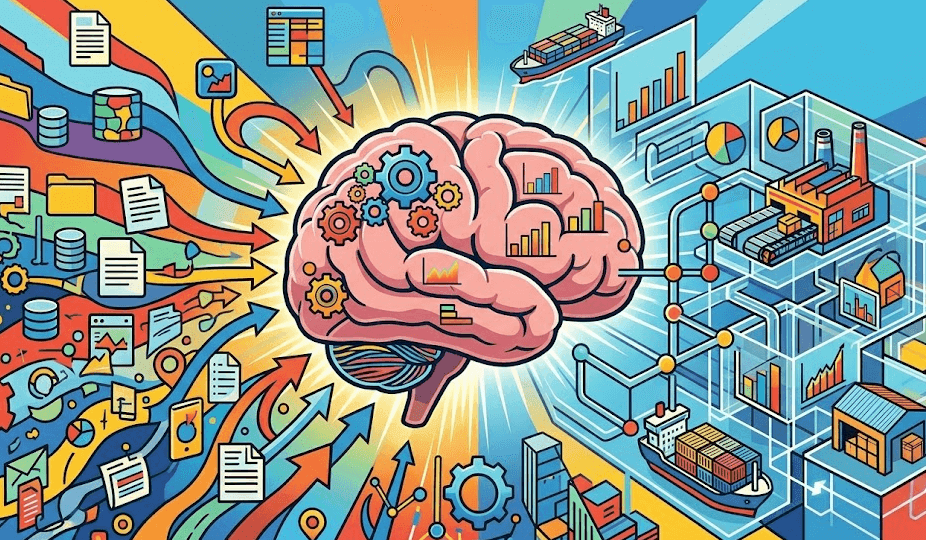
Source: SiliconANGLE
Platform Integration Positions Celonis for Agentic Era
The combined platform features zero-copy integrations with Amazon Web Services, data lakes including Databricks and Microsoft Fabric, Oracle databases, and other enterprise platforms
3
. Critically, it connects with agentic development platforms including Amazon Bedrock, Anthropic's Claude Cowork, IBM Watsonx Orchestrate, Microsoft Copilot and Agent365, and Oracle Cloud Infrastructure Enterprise AI. This positions Celonis to serve as what Thoma describes as a "control tower and platform for operational context and intelligence" that remains domain-agnostic and system-agnostic3
.The cultural fit between Celonis and Ikigai Labs strengthens the strategic rationale. Both companies share strong academic heritage and scientific aspiration, which analysts view as essential for retaining talent and maintaining innovation leadership
1
. Shah emphasized that AI needs to understand enterprise data peculiarities, stating that Ikigai's proven foundation model technology for structured data at scale combined with Celonis' encoded enterprise processes provides the fullest operational representation of business reality3
. As organizations navigate the shift from hindsight analytics to infrastructure supporting agentic AI, the acquisition positions process intelligence as an enabler rather than obstacle to enterprise-wide AI adoption.References
Summarized by

Navi
[3]
Related Stories
Celonis Unveils Process Intelligence Graph to Transform Enterprise AI Operations
04 Nov 2025•Technology

Celonis Leads AI-Driven Process Intelligence Revolution for Enterprise Efficiency
24 Oct 2024•Business and Economy

AI agents give confident wrong answers without enterprise context layer, Snowflake responds
02 Jun 2026•Technology

Recent Highlights



Recent Highlights
Today's Top Stories









Don’t drown in AI news. We cut through the noise - filtering, ranking and summarizing the most important AI news, breakthroughs and research daily. Follow topics that matter to you and stay ahead.


