5 Sources
[1]
China banned RTX 5090D V2 while Nvidia CEO Jensen Huang was visiting
Beijing banned an Nvidia gaming chip while the company's chief executive Jensen Huang was visiting China with Donald Trump last week, the latest salvo in the superpowers' battle to dominate AI. The chip was added to a list of banned goods at China's customs checkpoints last Friday, according to a copy of the document seen by the FT and two people with knowledge of the matter. The move highlights Beijing's determination to keep out Nvidia's chips, especially the degraded versions made to comply with US export controls. The Chinese government wants to support domestic chipmakers such as Huawei and Cambricon as they catch up to their US rivals. The Nvidia chip, known as the RTX 5090D V2, was introduced last August to comply with US export controls. It was aimed at Chinese gamers and 3D animators but it has also been bought by AI developers, cut off from the most sophisticated Nvidia products. Nvidia's Huang said on Monday that he believed China's market would become accessible to US chip suppliers. "My sense is that over time, the market will open," he told Bloomberg TV. Sales of other Nvidia chips including the H200 and the H20, another China-specific product that Nvidia sold earlier in the market, have been blocked by Beijing even though the Trump administration has approved sales to Chinese tech groups such as Alibaba and Tencent. Huang joined Trump at the last minute to be part of a US delegation to Beijing, where he was seen eating local delicacies and touring the Chinese capital outside the official summit. Trump said on Air Force One after visiting Beijing that China "chose not to" approve the purchases of Nvidia's H200 chips because "they want to develop their own." Huawei is set to capture the largest share of China's AI chip market this year, with sales jumping by at least 60 percent amid strong demand from Chinese companies seeking domestic alternatives to Nvidia, the FT reported earlier this month. Morgan Stanley forecasts that China's AI chip market will reach $67 billion in 2030, with 86 per cent expected to be supplied by Chinese groups. The US bank estimates the market to be worth about $21bn this year from domestic suppliers. China's AI chip sector was previously dominated by Nvidia, which sold products worth just over $17 billion -- mostly H20 chips -- in the Chinese market in the 2025 financial year. China's customs agency and Nvidia did not immediately respond to requests for comment. The chipmaker and world's most valuable company is scheduled to report earnings on Wednesday afternoon in results regarded as a bellwether for the state of the AI infrastructure boom. Additional contributions by Tina Hu in Beijing and Wenjie Ding in Shanghai
[2]
China banned Nvidia 5090D V2 while CEO Jensen Huang was in town, report claims -- move comes as Beijing pushes its AI tech companies to use homegrown chips
China reportedly banned Nvidia's RTX 5090D V2, an export-friendly version of its top-end RTX 5090 GPU, while CEO Jensen Huang was visiting the country as part of President Donald Trump's state visit last week, the Financial Times reports. The report claims the chip has been added to a list of banned goods at Chinese customs. Huang was a late addition to Trump's entourage last week, boarding Air Force One in Alaska after he was initially not included on the President's guest list. FT cites a document confirming the chip was added to the list, as well as two people "with knowledge of the matter," stating that the card was added to the list on Friday, May 15. The Nvidia RTX 5090D V2 is a version of the company's top-of-the-line gaming GPU designed to comply with U.S. export controls. This graphics card, which has less VRAM and lower bandwidth compared to the vanilla 5090, is designed for Chinese gamers and 3D artists. However, AI developers have also been taking advantage of this relatively powerful GPU, especially as they've been cut off from Nvidia's more potent Blackwell-powered AI GPUs. The most powerful Nvidia AI processors available to Chinese firms at the moment are H200 chips, which Trump approved for export to China in a surprise move in late 2025. But despite that, Beijing refuses to give its AI companies the green light to purchase these GPUs. Instead, the central government wants them to buy domestically manufactured chips, allowing Huawei to leapfrog Nvidia's market share position in the country. China's alleged move to ban the RTX 5090D V2 while Trump and Jensen were still in town, paired with the continuing restriction on H200s, may be Beijing's signal to the U.S. that it does not need its de-fanged AI chips. This is what the Nvidia chief is worried about -- that if Chinese AI firms start ditching the American tech stack, the U.S. will lose its hardware advantage in the AI race. Still, others argue that the United States' rivals shouldn't have access to its latest technologies, as they can potentially be used to close America's technological edge when it comes to defense and the military. Tom's Hardware has reached out to Nvidia for comment on this report, and we'll update this story accordingly if it responds. Both those for exporting American AI chips to China and those against giving them access to this advanced hardware have valid points, but we can only know which side is right years, if not decades, from now. The Nvidia chief remains hopeful, though, saying on Bloomberg TV, "My sense is that over time, the market will open." Follow Tom's Hardware on Google News, or add us as a preferred source, to get our latest news, analysis, & reviews in your feeds.
[2]
China banned Nvidia 5090D V2 while CEO Jensen Huang was in town, report claims -- move comes as Beijing pushes its AI tech companies to use homegrown chips
China reportedly banned Nvidia's RTX 5090D V2, an export-friendly version of its top-end RTX 5090 GPU, while CEO Jensen Huang was visiting the country as part of President Donald Trump's state visit last week, the Financial Times reports. The report claims the chip has been added to a list of banned goods at Chinese customs. Huang was a late addition to Trump's entourage last week, boarding Air Force One in Alaska after he was initially not included on the President's guest list. FT cites a document confirming the chip was added to the list, as well as two people "with knowledge of the matter," stating that the card was added to the list on Friday, May 15. The Nvidia RTX 5090D V2 is a version of the company's top-of-the-line gaming GPU designed to comply with U.S. export controls. This graphics card, which has less VRAM and lower bandwidth compared to the vanilla 5090, is designed for Chinese gamers and 3D artists. However, AI developers have also been taking advantage of this relatively powerful GPU, especially as they've been cut off from Nvidia's more potent Blackwell-powered AI GPUs. The most powerful Nvidia AI processors available to Chinese firms at the moment are H200 chips, which Trump approved for export to China in a surprise move in late 2025. But despite that, Beijing refuses to give its AI companies the green light to purchase these GPUs. Instead, the central government wants them to buy domestically manufactured chips, allowing Huawei to leapfrog Nvidia's market share position in the country. China's alleged move to ban the RTX 5090D V2 while Trump and Jensen were still in town, paired with the continuing restriction on H200s, may be Beijing's signal to the U.S. that it does not need its de-fanged AI chips. This is what the Nvidia chief is worried about -- that if Chinese AI firms start ditching the American tech stack, the U.S. will lose its hardware advantage in the AI race. Still, others argue that the United States' rivals shouldn't have access to its latest technologies, as they can potentially be used to close America's technological edge when it comes to defense and the military. Tom's Hardware has reached out to Nvidia for comment on this report, and we'll update this story accordingly if it responds. Both those for exporting American AI chips to China and those against giving them access to this advanced hardware have valid points, but we can only know which side is right years, if not decades, from now. The Nvidia chief remains hopeful, though, saying on Bloomberg TV, "My sense is that over time, the market will open." Follow Tom's Hardware on Google News, or add us as a preferred source, to get our latest news, analysis, & reviews in your feeds.
[4]
China blocks NVIDIA's RTX 5090D V2 imports while Jensen Huang was in Beijing
The ban on the China-only Blackwell card landed during the Trump delegation's state visit, on which the Nvidia CEO was a late addition. Chinese AI buyers had been using the 5090D V2 as a workaround for the H200 procurement vacuum. China stopped granting import permits for Nvidia's RTX 5090D V2 gaming card on 15 May, the same week Jensen Huang was in Beijing alongside Donald Trump's state-visit delegation, Financial Times reports. The ban applies to the China-only Blackwell-architecture card NVIDIA introduced last August specifically to comply with US export controls. The 5090D V2 had been marketed in China to gamers and 3D animators on the published-spec sheet. In practice, Chinese AI buyers cut off from the more advanced H100, H200 and Blackwell-class data-centre lines had been using the card as a workaround, because it retained the Blackwell architecture and could be racked at scale for training and inference workloads outside the explicit export-control framework. Huang's presence in Beijing during the ban window was itself a late addition to the Trump delegation. On 13 May Huang joined the China trip after a phone call from the president, picked up in Alaska as Air Force One refuelled. The NVIDIA CEO sat alongside Tim Cook, Elon Musk and other US tech leaders for the formal state-visit programme. The wider Chinese-domestic chip-procurement directive the ban sits inside has been in escalation across the spring. Beijing's instructions to its largest AI companies is to stop acquiring NVIDIA processors, including the H20 and the RTX Pro 6000D, on the framing that Huawei's Ascend line and Cambricon's Siyuan accelerators now match those products on the relevant workloads. Alibaba's T-Head Zhenwu M890 launch is the same procurement-directive context expressed on the chip-design side, with the company's executive claiming 'scaled mass production' for the domestic alternative. The US-side framing is sharper. Trump's own comments earlier this month stated that China is blocking H200 purchases despite the US having approved the export licences in question. The framing positions Beijing's procurement policy as the active constraint on Nvidia's China revenue line, rather than US export controls, an unusual diplomatic position for a US administration to take publicly. The Trump-Xi Beijing summit on AI guardrails left the procurement and licensing questions on the same agenda. The 5090D V2 ban is the first visible enforcement step Beijing has taken since the summit ended. On the commercial impact, NVIDIA guided to $91bn of Q2 revenue yesterday against a $86.84bn consensus, with the prepared remarks framing the China line as 'small but material' and the broader data-centre demand picture as still in early innings. The 5090D V2 is, on the published unit-economics, a low-single-digit percentage of Nvidia's quarterly revenue base. The signalling value is the more consequential read. The RTX 5090 itself, the global card, has separately climbed to $5,300 on the Korean grey market on procurement-pressure-driven demand. NVIDIA has not issued a public statement on the 5090D V2 ban beyond confirming Huang's participation in the delegation. China's customs administration has not yet published a formal notice describing the permit decision in writing, and the underlying basis (national-security review, anti-competition framing, or simple procurement-policy enforcement) has not been disclosed. The next visible proof point will be the Q2 earnings disclosure of China-specific revenue, scheduled inside Nvidia's August reporting cycle, when the V2 ban's contribution to the China line becomes formally visible.
[5]
China Reportedly Blocks NVIDIA GeForce RTX 5090 D v2 Imports
New reports from Chinese hardware industry sources suggest NVIDIA's GeForce RTX 5090 D v2 may have been blocked from entering the Chinese market. According to motherboard manufacturers and logistics partners inside China, customs authorities have allegedly informed companies that import permits for the graphics card will not be approved, effectively preventing official shipments from entering the country. What makes the situation unusual is that the reported restriction appears to originate from China rather than from new US export controls. NVIDIA developed the RTX 5090 D v2 specifically for the Chinese market following earlier restrictions surrounding advanced GPUs and AI hardware exports. Like previous D-series products, the card was reportedly designed with reduced AI-related compute capability while maintaining gaming-focused performance levels intended to comply with US regulations. Industry sources claim the sudden customs decision has caught NVIDIA off guard. Since the RTX 5090 D v2 was created specifically for China, the product reportedly cannot easily be redirected to other markets without further modification or re-positioning. According to reports from Chinese motherboard manufacturers, logistics firms recently received notices stating that import processing approvals for the RTX 5090 D v2 would not be issued. No official public explanation has yet been provided by Chinese authorities regarding the alleged restriction. Speculation surrounding the reasoning varies. Some local hardware industry participants reportedly believe Chinese regulators may see the RTX 5090 D v2 as a deliberately downgraded product designed primarily around US export limitations rather than the needs of the domestic Chinese market. Others note that the card's AI compute capabilities were already restricted, meaning a ban would likely have minimal effect on the development of China's own AI accelerator ecosystem. The timing is also notable. Recent discussions between US and Chinese officials, including meetings involving NVIDIA CEO Jensen Huang, had led some observers to expect a possible easing of tensions surrounding semiconductor exports and AI hardware restrictions. Instead, reports indicate that restrictions affecting advanced GPU products remain highly sensitive. At present, the situation remains based on supply-chain leaks and reports from Chinese hardware partners rather than official confirmation from NVIDIA or Chinese regulators. Additional verification from multiple industry sources is reportedly still ongoing.
Share
Copy Link
Beijing added Nvidia's RTX 5090D V2 to its banned imports list on May 15 while CEO Jensen Huang was visiting China alongside President Trump. The gaming chip, designed to comply with US export controls, had become a workaround for Chinese AI developers cut off from advanced processors. The move signals China's determination to support domestic chipmakers like Huawei as the US-China AI race intensifies.
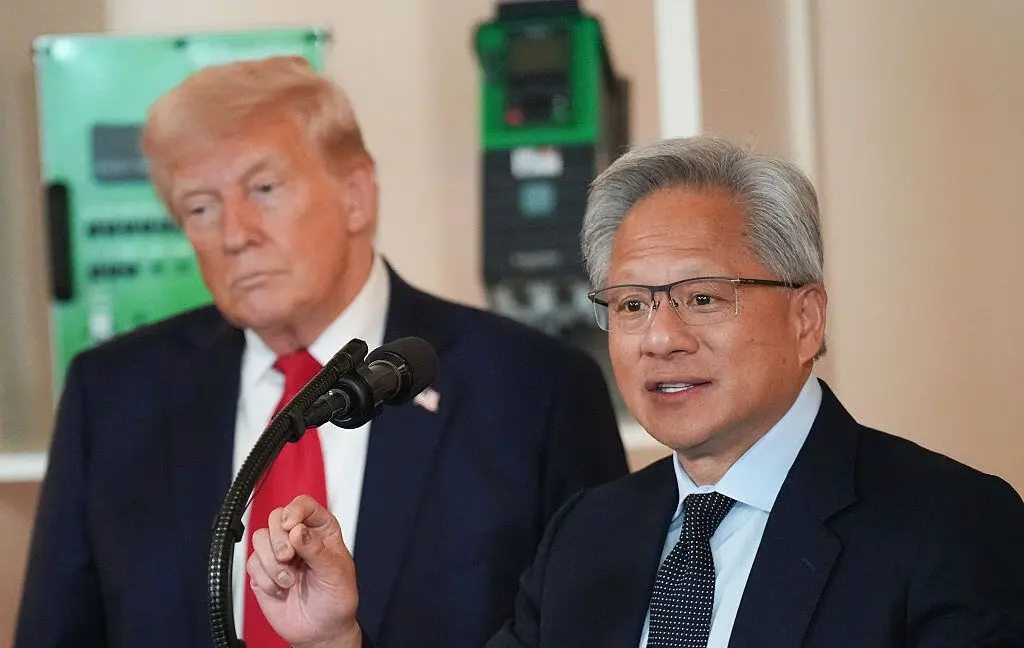
Beijing banned Nvidia's RTX 5090D V2 gaming chip on Friday, May 15, while the company's CEO Jensen Huang was in town as part of President Donald Trump's state visit to China
1
. The chip was added to a list of banned goods at China's customs checkpoints, according to a document seen by the Financial Times and confirmed by two sources with knowledge of the matter2
. Huang had joined the delegation at the last minute, boarding Air Force One in Alaska after initially not being included on the President's guest list4
.
Source: Ars Technica
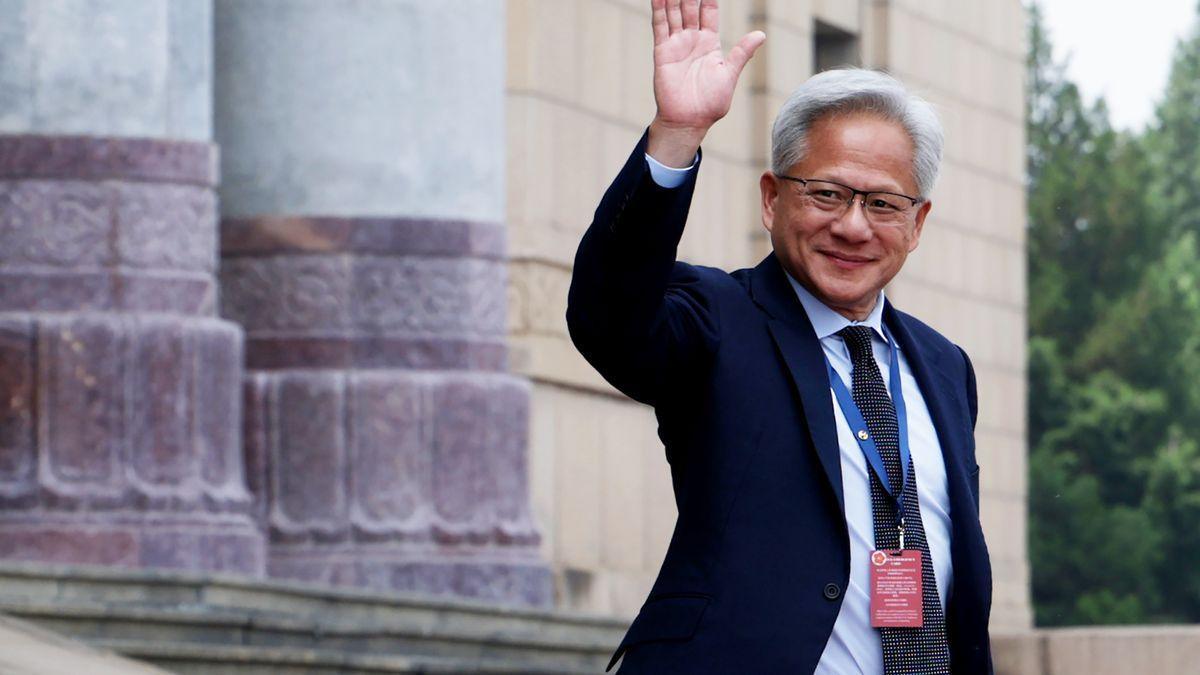
The timing of the China ban appears calculated to send a clear message during the diplomatic summit. Huang was seen touring the Chinese capital and eating local delicacies outside the official proceedings, yet the restriction landed while he remained in Beijing
1
. The move highlights Beijing's determination to keep out Nvidia's chips, especially degraded versions made to comply with US export controls1
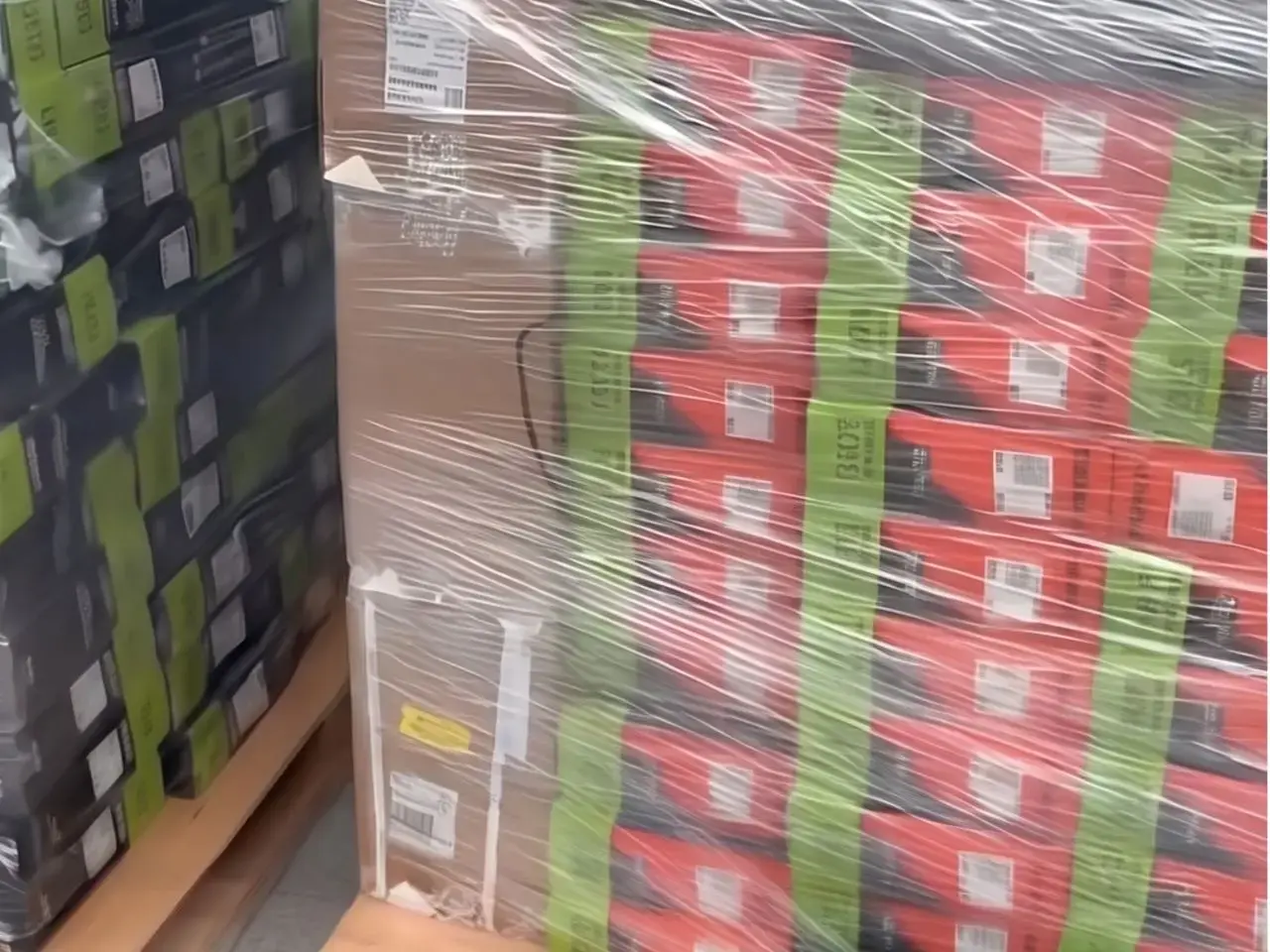
.The Nvidia RTX 5090D V2, introduced last August, was specifically designed to comply with US export controls
1
. This export-friendly GPU features less VRAM and lower bandwidth compared to the standard RTX 5090, targeting Chinese gamers and 3D artists2
. However, AI developers cut off from Nvidia's more potent Blackwell-powered AI GPUs and advanced processors like the H100 had been using the gaming chip as a workaround for training and inference workloads4
.
Source: Guru3D
According to industry sources, customs authorities informed companies that import permits for the graphics card would not be approved, effectively preventing official shipments from entering the country
5
. The sudden customs decision reportedly caught Nvidia off guard, as the RTX 5090D V2 was created specifically for China and cannot easily be redirected to other markets without modification5
.The China ban on Nvidia's gaming chip reflects Beijing's broader strategy to support domestic chipmakers as they compete with US rivals in the US-China AI race
1
. The Chinese government wants to bolster companies like Huawei and Cambricon as part of China's domestic AI chip industry1
. Sales of other Nvidia chips including the H200 and the H20, another China-specific product, have been blocked by Beijing even though the Trump administration approved sales to Chinese tech groups such as Alibaba and Tencent1
.Huawei is set to capture the largest share of China's AI chip market this year, with sales jumping by at least 60 percent amid strong demand from Chinese companies seeking domestic alternatives to Nvidia
1
. Beijing's instructions to its largest AI companies direct them to stop acquiring Nvidia processors, including the H20 and RTX Pro 6000D, claiming that Huawei's Ascend line and Cambricon's Siyuan AI accelerators now match those products on relevant workloads4
.Related Stories
Morgan Stanley forecasts that China's AI chip market will reach $67 billion in 2030, with 86 percent expected to be supplied by Chinese groups
1
. The US bank estimates the market to be worth about $21 billion this year from domestic suppliers1
. China's AI chip sector was previously dominated by Nvidia, which sold products worth just over $17 billion—mostly H20 chips—in the Chinese market in the 2025 financial year1
.The 5090D V2 ban represents the first visible enforcement step Beijing has taken since the Trump-Xi summit on AI guardrails ended
4
. On the commercial impact, Nvidia guided to $91 billion of Q2 revenue against an $86.84 billion consensus, with prepared remarks framing the China line as "small but material"4
. The RTX 5090D V2 represents a low-single-digit percentage of Nvidia's quarterly revenue base, but the signaling value carries more weight in semiconductor trade dynamics4
.China blocks NVIDIA's RTX 5090D V2 imports while Trump and Jensen Huang were still in town, paired with continuing restrictions on H200 chips, may signal to the US that Beijing doesn't need degraded AI chips
2
. This concerns the Nvidia chief, who worries that if Chinese AI firms abandon the American tech stack, the US will lose its hardware advantage in the AI race2
.
Source: Tom's Hardware
Others argue that US rivals shouldn't access latest technologies that could close America's technological edge in defense and military applications
2
. Despite the tensions, Jensen Huang remains optimistic about future market access. "My sense is that over time, the market will open," he told Bloomberg TV1
. Trump stated on Air Force One that China "chose not to" approve H200 chip purchases because "they want to develop their own"1
. The next proof point will be Nvidia's Q2 earnings disclosure of China-specific revenue, scheduled for August, when the ban's contribution becomes formally visible4
.Summarized by
Navi
[2]
[2]