China's Hygon and Sugon Merge to Create Supercomputing Powerhouse Amid US Sanctions


2 Sources
[1]
China's Hygon and Sugon merge to form a vertically integrated supercomputing giant as they fend off US sanctions
Hygon's processor know-how reinforces Sugon's supercomputer smarts. A highly significant China tech industry merger looks set to go ahead, reports the South China Morning Post (SCMP). The Hong Kong-based organ says that the merger plan between chip designer Hygon Information Technology and
[2]
China spawns an x86 supercomputing monster, via AMD
Chipmaker Hygon, which recently teased a 128-core, 512-thread CPU, merges with server-maker Sugon This story starts in 2016 when AMD licensed its first-generation Zen CPU design and the x86-64 architecture it used to a Chinese outfit called Tianjin Haiguang Advanced Technology Investment Co - aka
Share
Copy Link
Chinese chip designer Hygon and supercomputer maker Sugon are merging to form a vertically integrated supercomputing giant, potentially reshaping China's high-performance computing landscape in response to US trade restrictions.
Merger Announcement and Strategic Implications
In a significant move for China's tech industry, chip designer Hygon Information Technology and supercomputer maker Sugon have announced plans to merge, forming a vertically integrated supercomputing powerhouse
1
. This consolidation marks a major step in strengthening China's computing supply chain, particularly in the face of U.S. sanctions1
2
.The merger involves Hygon absorbing Sugon shares through a stock-swap agreement, with the resulting entity to be listed on the Shanghai stock exchange
1
. This strategic move is seen as a direct response to both companies being placed on the U.S. Entity List, which restricts their access to chips from major U.S. suppliers like AMD, Intel, and Nvidia1
.Technological Advancements and Capabilities
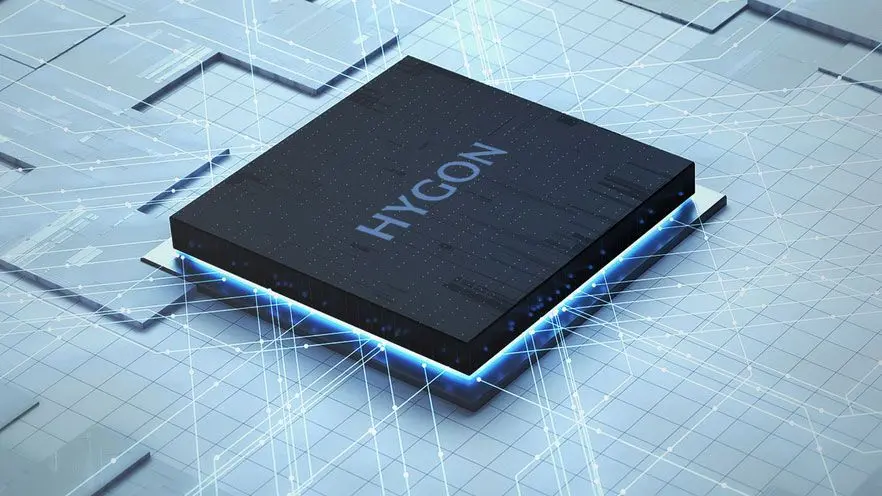
Source: Tom's Hardware
Hygon, known for leveraging AMD's Zen processor architecture in the past, has recently claimed to have developed a "new self-developed microarchitecture"
1
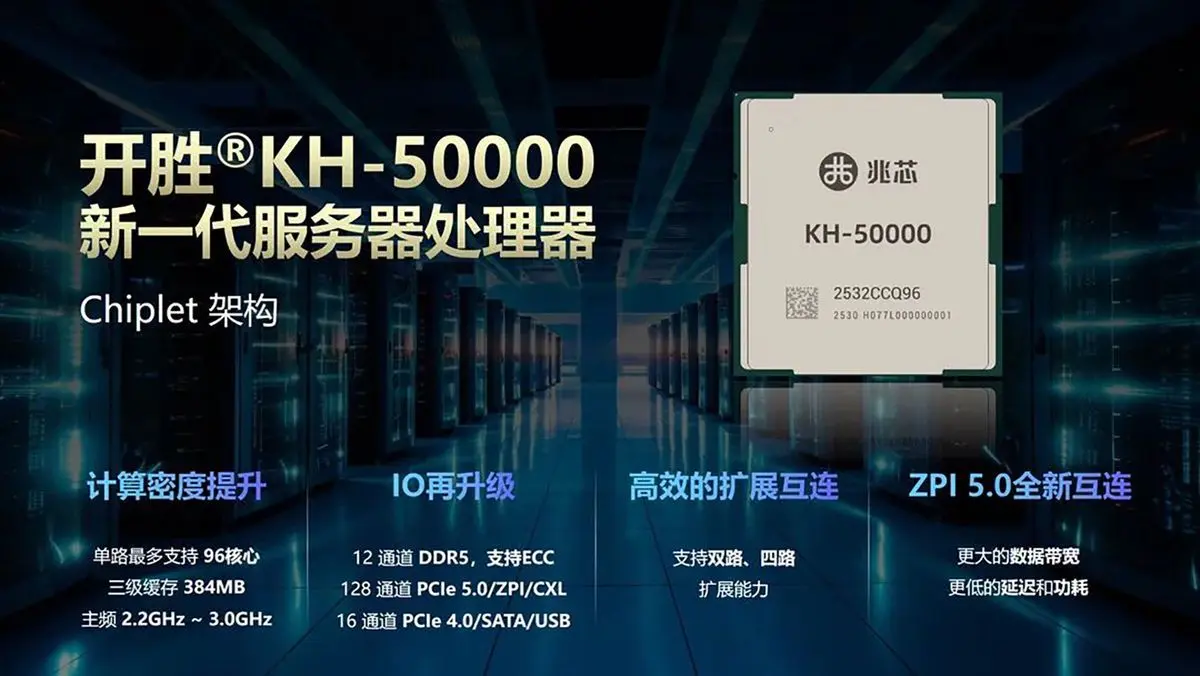
. This assertion is backed by reports of an extraordinary Hygon C86-5G CPU, boasting 128 cores and 512 threads, with support for AVX-512 and 16-channel DDR5-5600 memory1
2
.Sugon, backed by the Chinese Academy of Sciences, has been instrumental in pushing China into the "global top three for supercomputing"
1
. The company has previously utilized Hygon's x86 chips, known as Dhyana, in its high-performance platforms, including a machine that ranked 38th on the Top 500 list of the world's most powerful supercomputers2
.Historical Context and Future Prospects

Source: The Register
The roots of this merger can be traced back to 2016 when AMD licensed its first-generation Zen CPU design and x86-64 architecture to Tianjin Haiguang Advanced Technology Investment Co (Hygon)
2
. This partnership aimed to develop server-grade SoCs for the Chinese market, resulting in the Dhyana series of CPUs2
.The newly formed entity is poised to become a formidable player in the high-performance computing sector. With Hygon's processor expertise and Sugon's supercomputer manufacturing capabilities, the merged company is well-positioned to drive China's domestic AI and big data projects
1
2
.Related Stories


Implications for Global Tech Landscape
This merger reflects a broader trend of consolidation in the Chinese semiconductor and computing sectors, as predicted by analysts
1
. It aligns with China's policy of encouraging the use of home-grown products, with major Chinese companies like Tencent already supporting Hygon's chips2
.The formation of this integrated server-and-CPU-maker capable of producing substantial supercomputers may raise concerns in the global tech community, particularly in the United States
2
. The merger is likely to be viewed as part of China's strategic plan to use AI and big data for societal improvements, including potential military applications2
.As the newly merged company emerges as a key player in China's high-performance computing landscape, it will undoubtedly attract attention from Chinese buyers while potentially facing scrutiny from the international community
2
. This development marks a significant shift in the global supercomputing industry, highlighting China's determination to achieve technological self-sufficiency in the face of international trade restrictions.References
Summarized by

Navi
[1]
[2]
Related Stories
Recent Highlights



Recent Highlights
Today's Top Stories



Don’t drown in AI news. We cut through the noise - filtering, ranking and summarizing the most important AI news, breakthroughs and research daily. Follow topics that matter to you and stay ahead.


