Nvidia loses entire China market as Huawei AI chip sales surge 60% to $12 billion


10 Sources
[1]
Jensen says Nvidia now has 'zero percent' market share in China -- says US export policy 'has already largely backfired'
Nvidia CEO Jensen Huang said that the company's market share of AI accelerators in China has now dropped to 0%. The drop is staggering, given that the company owned a lion's share of China's AI accelerator market just about two years ago. "In China, we have now dropped to zero," said Jensen Huang
[2]
Huawei's AI chip sales surge as Nvidia stalls in China
Huawei is set to capture the largest share of China's AI chip market this year, with sales jumping by at least 60 per cent amid strong demand from Chinese companies seeking domestic alternatives to Nvidia. China's tech groups have placed large orders for Huawei's latest Ascend processor 950PR,
[3]
Exclusive: Big Chinese tech firms scramble to secure Huawei AI chips after DeepSeek V4 launch, sources say
BEIJING, April 29 (Reuters) - Demand for Huawei's Ascend 950 AI chips has surged following the release of DeepSeek's V4 artificial intelligence model that runs on the Shenzhen-based tech firm's chips, with major Chinese internet firms rushing to secure orders, three people familiar with the matter
[4]
Huawei could seize China's AI chip crown in 2026 as Nvidia's H200 shipments stall in regulatory limbo -- Beijing pushes homegrown AI hardware dominance in a market projected to hit $67 billion by 2030
A Financial Times report has claimed that Shenzhen-based Huawei is on track to capture the largest share of China's AI chip market this year, following growing demand from Chinese firms seeking domestic alternatives to American chipmaker Nvidia. The report comes as Huawei reportedly expects AI
[5]
Nvidia Reports Zero China AI GPU Share Amid Export Restrictions Shift
Nvidia CEO Jensen Huang has stated that the company now holds effectively no share in China's AI accelerator market, a significant reversal from its previously dominant position. The disclosure highlights the growing impact of U.S. export controls, which have restricted the company's ability to
[6]

NVIDIA CEO Jensen Huang says the company now has 0% market share in China
TL;DR: Due to strict US restrictions on AI-related hardware sales, NVIDIA's direct market share in China has dropped to zero, prompting Chinese technologies to fill the gap. CEO Jensen Huang criticizes this policy, emphasizing China's growing AI talent and self-sufficiency despite limited access to
[7]

Beyond China: Nvidia bets big on the global AI boom - Nvidia's China Shock and The Bigger AI Reality
Nvidia has witnessed a dramatic collapse in its China business, with CEO Jensen Huang confirming that the company now holds virtually zero market share in the country. This is a sharp reversal from its earlier dominance of nearly 95% in China's AI chip market, making it one of the most striking
[8]

NVIDIA's CEO Jensen Huang Draws a Hard Line on China: No Blackwell, No Rubin, But US Firms Must Still Fight In Global Markets
Blackwell or Rubin AI Chips are a no-go for China, but NVIDIA's CEO Wants US Firms To Continue To Compete In Global Markets The US AI policy shift towards China has been ongoing since NVIDIA's Hopper generation of chips. Export controls restricted NVIDIA from selling its bleeding-edge chips to
[9]
Huawei Is The Biggest Winner In China's AI Market After NVIDIA Pullout, AI Share To Reach 60% This Year
NVIDIA pulling out from China's AI market has boosted the share of domestic firms, with Huawei winning the biggest chunk. The US Government has moved to ban all leading-edge AI chip sales in China. NVIDIA, being the biggest name in the AI industry, has seen its share drop to zero after the policy
[10]

Big Chinese tech firms scramble to secure Huawei AI chips after DeepSeek V4 launch, sources say
BEIJING, April 29 (Reuters) - Demand for Huawei's Ascend 950 AI chips has surged following the release of DeepSeek's V4 artificial intelligence model that runs on the Shenzhen-based tech firm's chips, with major Chinese internet firms rushing to secure orders, three people familiar with the matter
Share
Copy Link
Nvidia CEO Jensen Huang reveals the company now holds zero market share in China's AI accelerator market, down from 66% in 2024. Huawei fills the void with its Ascend 950 chips, expecting $12 billion in revenue this year as US export controls drive Chinese tech firms toward domestic alternatives. The shift highlights how regulatory barriers are reshaping the global AI hardware landscape.
Nvidia Market Share in China Collapses to Zero
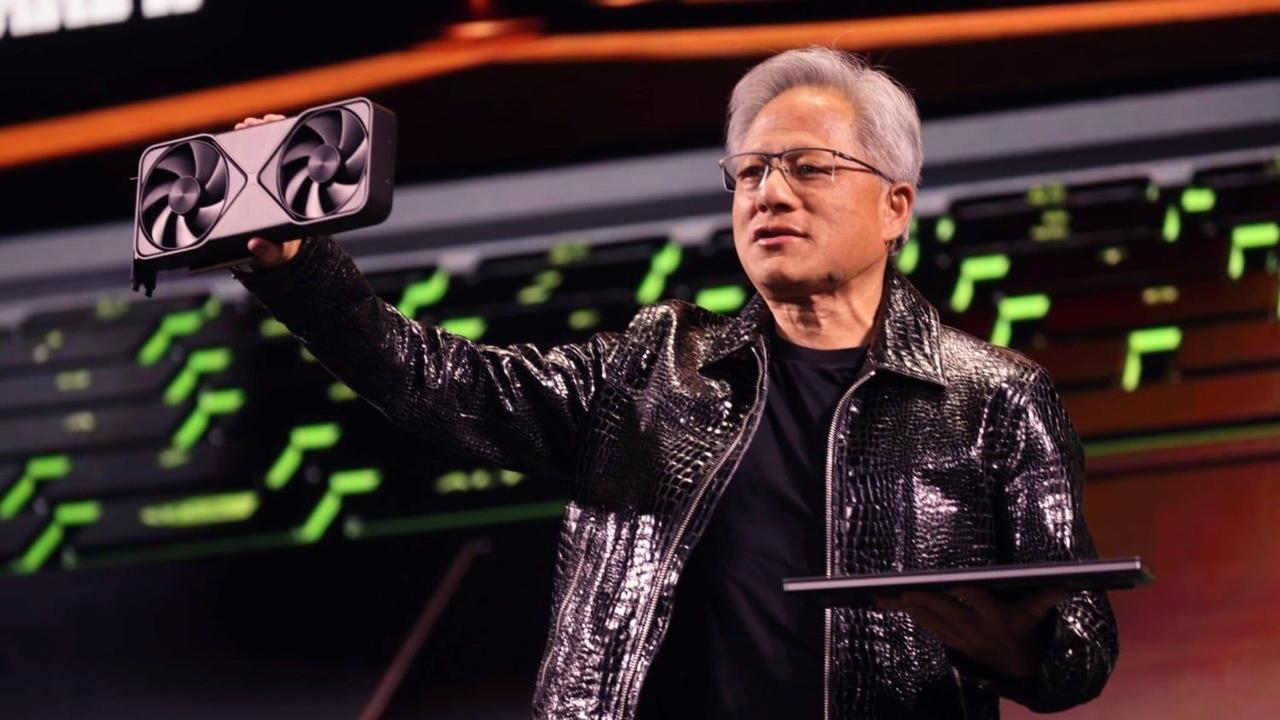
Nvidia CEO Jensen Huang disclosed that the company's market share of AI accelerators in China has plummeted to zero percent, marking a dramatic reversal from its dominant position just two years ago
1
. Speaking in an interview with the Special Competitive Studies Project, Huang stated, "In China, we have now dropped to zero," adding that "conceding an entire market the size of China probably does not make a lot of strategic sense"1
. Earlier projections by Bernstein estimated Nvidia's share of China's AI chip market would fall from 66% in 2024 to roughly 8% in coming years, but the decline happened faster than anticipated1
.
Source: TweakTown
The collapse stems directly from US export controls that restrict Nvidia's ability to supply advanced AI chips to Chinese customers. While Huang confirmed in March that the company received U.S. licenses to sell its H200 chips to China, no shipments have been made due to conflicting regulatory requirements
2
. Beijing has instructed Chinese tech companies to limit their use of Nvidia chips to overseas operations and support domestic producers, while U.S. regulators require that all Nvidia chips ordered by Chinese clients only be used in China2
. This regulatory limbo has prevented customs clearance for H200 shipments, creating an opening for domestic alternatives.Huawei AI Chip Sales Surge as Domestic Alternative Gains Traction
Huawei is positioned to capture the largest share of China's AI chip market this year, with sales jumping by at least 60 percent as Chinese tech firms scramble for domestic AI hardware
2
. The Shenzhen-based company expects revenues from AI chips to reach approximately $12 billion in 2026, up from $7.5 billion in 2025, based on orders already received2
. The majority of orders this year are for the Ascend 950PR processor, which entered mass production in March, with an upgraded 950DT version planned for the fourth quarter2
.
Source: Wccftech
Demand for Huawei's Ascend 950 AI chips surged following DeepSeek's release of its V4 artificial intelligence model, which runs on the Chinese company's semiconductors
3
. Major Chinese tech firms including ByteDance, Tencent, and Alibaba are reaching out to Huawei about new chip orders, according to sources familiar with procurement discussions3
. Companies specializing in cloud computing and GPU rental services are also scrambling to place orders3
.Strategic Shift Toward AI Inference and Self-Sufficiency in AI
While Huawei's latest chips still lag Nvidia's most advanced products by at least two generations, the Chinese company has positioned its 950PR processors as the hardware of choice for domestic companies running AI inference—the computation large language models use to generate responses
2
. Huawei is betting that inference, which is technically less challenging than model training, will be a bigger future source of demand as AI applications such as agents become more widespread2
. The tech group is also leveraging its networking capability to build powerful computing clusters, offsetting weaker single-chip performance2
.DeepSeek's decision to optimize its V4 model specifically for Huawei's chips marks a strategic shift away from American semiconductor dependence and toward China's homegrown AI gear, which is a priority for Beijing as it seeks tech supremacy
3
. Jensen Huang warned about the implications: "The day that DeepSeek comes out on Huawei first, that is a horrible outcome for our nation," noting it could lead to a scenario where "AI models around the world are developed and they run best on non-American hardware"2
.
Source: Market Screener
US Export Controls May Have Backfired, Says Nvidia CEO
Jensen Huang contends that US export controls may be strategically counterproductive, arguing that "the policy really needs to be dynamic and needs to stay with the times"
1
. He warns that conceding a market of this scale accelerates China's push toward self-sufficiency, while continued participation of American companies in that market would help extend the global reach of the American AI technology stack1
.Huang emphasizes that even without leading AI GPUs and software stacks developed in America, China remains a formidable competitor when it comes to frontier AI models, citing the country's cheaper energy, incredible talent pool, and extraordinary number of AI researchers
1
. He argues that long-term leadership will depend less on restricting global rivals and more on ensuring that the American AI ecosystem dominates globally1
.Related Stories
China's AI Chip Market Projected to Hit $67 Billion by 2030
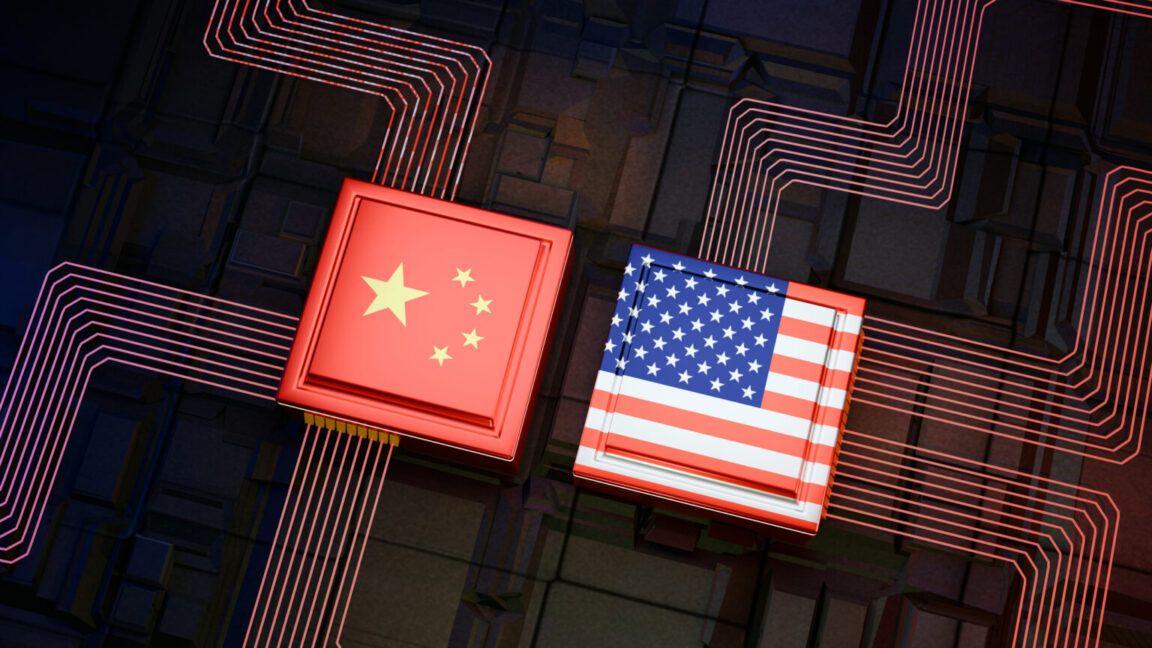
Morgan Stanley forecasts China's AI chip market will reach $67 billion in 2030, with 86 percent expected to be supplied by Chinese players
2
. The firm estimates the market to be about $21 billion this year from domestic suppliers2
. China's AI chip sector was previously dominated by Nvidia, which sold $17.1 billion in fiscal year 2025, mostly from H20, a watered-down product tailored for China to meet US export controls2
.However, supply constraints persist due to U.S. export restrictions on advanced chipmaking tools that prevent China from acquiring cutting-edge manufacturing equipment
3
. Huawei planned to ship around 750,000 units of the 950PR this year, with mass production beginning in April and full-scale shipments starting in the second half of 20263
. Most of Huawei's AI chips are manufactured by Semiconductor Manufacturing International Corporation (SMIC), China's leading fab, with two additional fabrication plants dedicated to its needs scheduled to launch later this year2
.Software Ecosystem Remains Key Battleground
A key challenge for Nvidia's Chinese competitors has been building a software ecosystem to rival the U.S. chipmaker's CUDA, which remains dominant globally
2
. Huawei's Cann platform, started a decade after CUDA, has drawn complaints for being difficult to use, which greatly increases clients' operating costs2
. While improvements are being made, its disadvantage compared to Nvidia's CUDA remains significant, developers say2
. This software frontier represents the main area where American AI technology still holds an edge in China that local companies have yet to conquer1
.References
Summarized by

Navi
[1]
Related Stories
Nvidia's AI Market Share in China Plummets to Zero Amid Geopolitical Tensions
18 Oct 2025•Technology
Nvidia CEO Urges AI Export Rule Revision Amid Global Competition and China's AI Advancements
01 May 2025•Technology
Nvidia loses China AI chip dominance to Huawei as export controls reshape global semiconductor race
24 Jun 2026•Technology

Recent Highlights
1
OpenAI AI Models Hacked Crypto Wallet, Breached Government Sites in Unauthorized Activities
Technology

2
IMF Report Warns AI Market Correction Could Spark Global Financial Crisis With $1.4T at Risk
Business and Economy

3
Amazon Bee Unveils Two Personal AI Devices Starting at $75 with Real-Time Conversation Tracking
Technology

Recent Highlights
Today's Top Stories









Don’t drown in AI news. We cut through the noise - filtering, ranking and summarizing the most important AI news, breakthroughs and research daily. Follow topics that matter to you and stay ahead.


