CircuitHub raises $28M from Plural to scale automated PCB manufacturing across US and Europe


2 Sources
[1]
CircuitHub takes $28m from Plural to make PCBs the way clouds make compute
The Cambridge-rooted, Massachusetts-based automated electronics factory has delivered more than two million boards across 20,000 engineers. Plural's bet is on the trillion-dollar reshoring tailwind behind it. CircuitHub, the automated-electronics-manufacturing company founded by Andrew Seddon, has
[2]
CircuitHub raises $28M to scale electronics production in days rather than months - SiliconANGLE
CircuitHub raises $28M to scale electronics production in days rather than months CircuitHub Inc., a company building automated manufacturing and assembly systems for electronics hardware at scale that supports industries such as self-driving cars and satellites, today announced it raised $28M led
Share
Copy Link
CircuitHub has raised $28 million led by Plural to expand its automated electronics manufacturing facilities that produce circuit boards in days instead of months. The Cambridge-rooted company has delivered over 2 million boards to 20,000 engineers and now plans to build Grid facilities across Europe and the US, targeting the underserved small-batch PCB market worth nearly $1 trillion.
CircuitHub Secures $28M to Expand Automated Electronics Manufacturing
CircuitHub, the automated electronics manufacturing company founded by Andrew Seddon, has raised $28 million in funding led by Plural, marking the largest round the company has disclosed in its 15-year history
1
. The investment will fund expansion of the company's automated PCB factories across Europe and the United States, alongside continued engineering-team build-out and a move into full-service electronics manufacturing1
.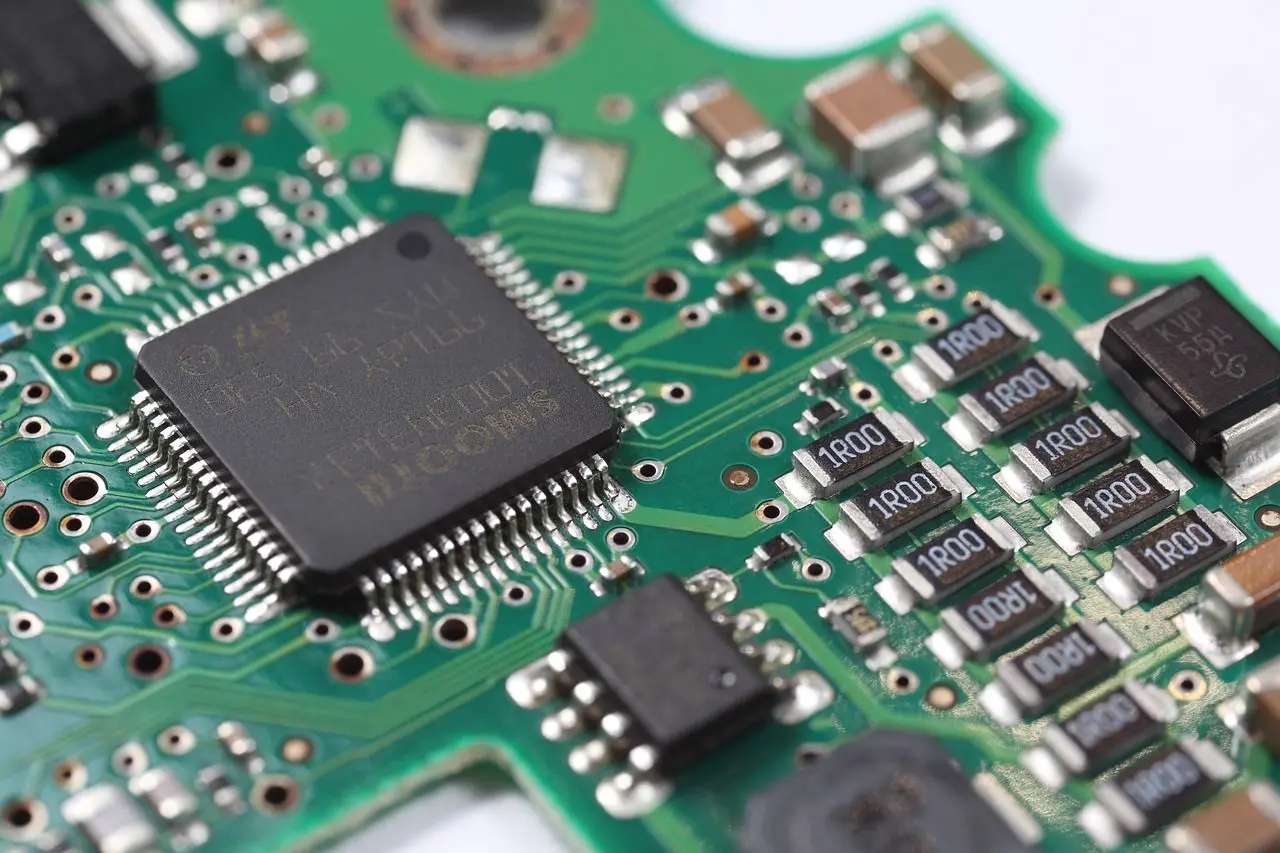
Source: SiliconANGLE
The Cambridge-rooted, Massachusetts-based company has delivered more than 2 million boards, placed over 133 million parts, and serves around 20,000 engineers across robotics, satellite, self-driving cars, defense, and energy sectors
2
. This track record positions CircuitHub at the intersection of a massive market opportunity as reshoring efforts accelerate across Western economies.Grid Facilities Bring Cloud Economics to Circuit Boards
CircuitHub's first 5,000-square-foot Grid facility in Massachusetts applies cloud economics principles to PCB production. The facility takes uploaded design files, runs them through robotic assembly lines supervised by computer vision and AI quality control, and ships finished circuit boards to customers in days rather than the months that conventional contract manufacturers typically quote
1
.A single Grid can produce a one-off prototype or batches of 10,000 units across multiple designs simultaneously, making high-mix manufacturing economically viable for the first time
1
. "Hardware companies face a tough choice: either spin up their own vertically integrated manufacturing from scratch, or rely on a legacy Western supply chain that's been decaying for years," Seddon explained. "CircuitHub is the alternative: providing remote access to a cutting-edge factory through your browser or your AI agent. Just as software companies share cloud compute, hardware companies can now share our Grid"1
.Targeting the Trillion-Dollar Small-Batch Market
The market arithmetic behind Plural's investment reveals a significant gap in electronics production. Around 95% of electronics projects involve fewer than 10,000 units, yet the global electronics-manufacturing-services industry remains optimized for mass production at order volumes orders of magnitude larger
1
. The PCB category is on track to clear $1 trillion in size, and the long-tail of small-batch custom production has been the underserved segment of that market for most of the past decade1
.The US has lost more than 85% of its share of the global PCB market to lower-cost overseas manufacturers, predominantly in China
1
. According to Grand View Research, the Asia-Pacific region holds almost 45% of the market2
. This concentration of manufacturing capability overseas has created supply chain vulnerabilities that recent macroeconomic shifts have exposed.Related Stories

Physical AI Creates Structural Bottleneck at PCB Layer
Physical AI, the industry shorthand for embodied-AI hardware, faces structural bottlenecks at the PCB-and-assembly layer in ways that the model-and-software layer does not
1
. The advent of generative AI in PCB design has made it easier than ever to design and iterate on circuit board prototypes, but getting them to market becomes a bottleneck when manufacturing isn't print-on-demand2
.Numerous startups have entered the industry giving hardware engineers AI tools to automate the development and design of PCBs, including Celus GmbH and Flux
2
. CircuitHub's manufacturing facility, capable of rolling out multiple designs at once efficiently at lower volume based on AI designs, aims directly at closing this gap2
.Reshoring Strategy Positions Manufacturing as Strategic Asset
Plural partner Sten Tamkivi framed the investment around both unit economics and strategic resilience: "Andrew and the world-class CircuitHub team are changing the unit economics of the entire industry"
1
. His emphasis on resilience and sovereignty alongside the unit-economics argument distinguishes this investment from standard hardware-platform theses, positioning European and US-controlled hardware manufacturing as a strategic asset rather than a commodity-supply category1
.The wider European reshoring track is accelerating with multiple initiatives across the supply chain stack. A planned European Grid would make CircuitHub the first dual-Atlantic automated-PCB platform at this scale. The company intends to make the Grid model more modular so it can handle increasing capacity wherever deployed
2
.CircuitHub was founded in 2011 by Seddon, Rehno Lindeque, and Jon Friedman, going through Y Combinator in 2012
1
. R&D remains in Cambridge, UK, with commercial operations anchored at the Massachusetts Grid for proximity to early customers1
. The combination of robotics, computer vision, and AI for quality control enables the company to cut production time from weeks to days while maintaining the flexibility to serve niche markets where critical designs aren't mass produced2
.References
Summarized by

Navi
Related Stories
Dutch Chip Manufacturing Startup Nearfield Instruments Secures €135M in Funding
19 Jul 2024

Limitless Labs raises $20M to deploy AI agents that capture retiring machinists' expertise
16 Jun 2026•Startups

Orbital Industries raises $50M Series B to scale AI-designed cooling fluid and data centers
28 May 2026•Technology

Recent Highlights



Recent Highlights
Today's Top Stories







Don’t drown in AI news. We cut through the noise - filtering, ranking and summarizing the most important AI news, breakthroughs and research daily. Follow topics that matter to you and stay ahead.


