Data Centers Hit Power Grid Limits as Tech Giants Turn to Off-Grid Natural Gas Solutions


2 Sources
[1]
Why Tech Giants Are Ditching the Power Grid
Sources: Satellite images from 2020 and 2025 by Vexcel. Boundaries from the Licking County Tax Parcel Viewer and the Ohio Power Siting Board. It is the industrial version of what homeowners might do to get through a hurricane. Only in this case, some technology companies are planning to rely on
[2]
"A bend in the trajectory": U.S. data center development has hit snags because the power grid is approaching its limits to support them | Fortune
Despite concerns over how data centers may hurt your wallet, don't expect a new data center to open near you anytime soon. Data center development is slowing down, according to a new report from energy analytics firm Wood Mackenzie. In Q4 2025, developers only added 25 gigawatts of electricity
Share
Copy Link
U.S. data center development is slowing as power grid capacity reaches its limits, forcing tech companies to adopt alternative power solutions. By the end of 2025, 39% of gas power capacity in development was designed to serve data centers on-site, up from just 5% in 2024. The shift highlights growing tensions between AI's massive energy requirements and aging electrical infrastructure.
Tech Giants Face Power Grid Capacity Limits
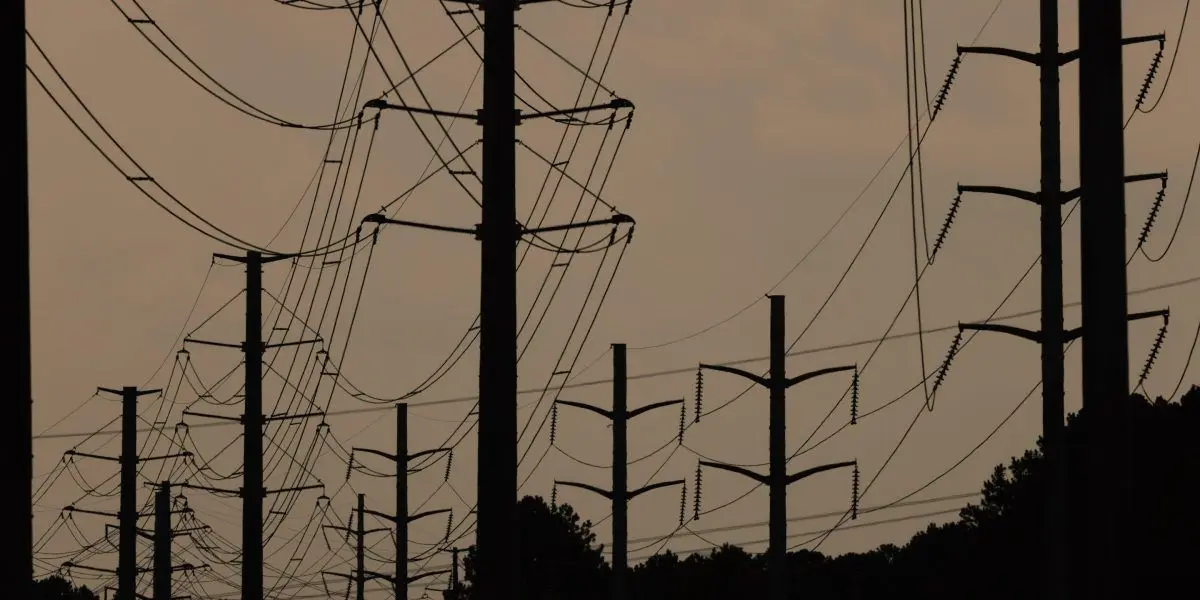
The race to build artificial intelligence infrastructure has hit a critical bottleneck. U.S. data center development is experiencing a development slowdown as the power grid struggles to keep pace with tech giants energy procurement demands
2
. In Q4 2025, developers added only 25 gigawatts of electricity capacity to their project pipeline, half of what was added the previous quarter, according to energy analytics firm Wood Mackenzie2
.The bottleneck stems from a simple reality: utilities lack the grid capacity and electricity generation capabilities to build fast enough for these massive energy demand centers. Wait times for grid connection now average four years or more, according to real estate services firm JLL
1
. "Utilities just don't necessarily have either the grid capacity or the generating capacity to be able to build it fast enough to accommodate these new large energy demand centers," Wood Mackenzie analyst Ben Hertz-Shargel explained2
.
Source: Fortune
Off-Grid Natural Gas Power Plants Become Alternative Power Solutions
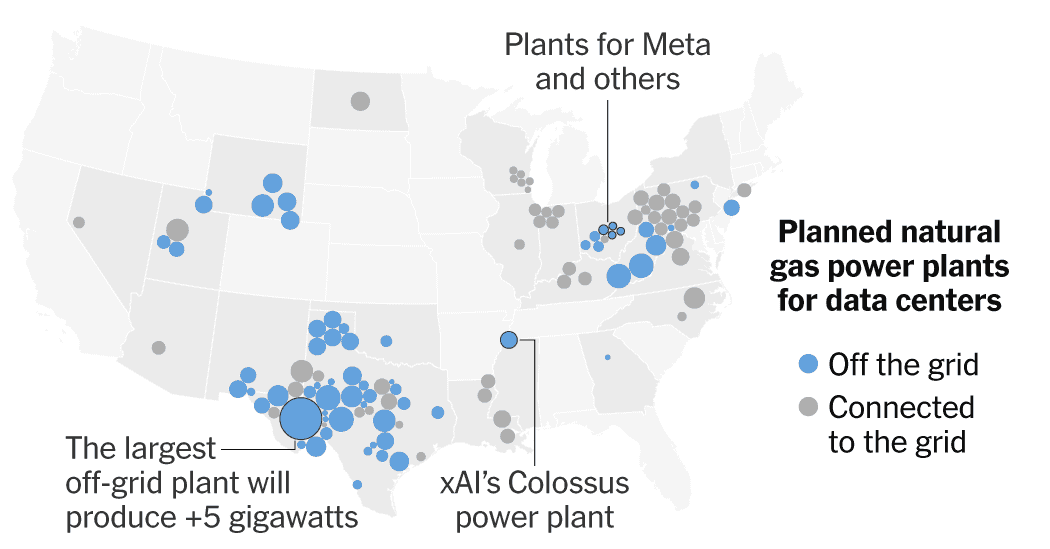
Faced with grid connection challenges, tech companies are increasingly turning to off-grid natural gas solutions. By the end of 2025, an estimated 39 percent of gas power capacity being developed in the United States was designed to serve data centers on-site, according to the Global Energy Monitor. That represents a dramatic jump from just 5 percent at the end of 2024
1
.
Source: NYT
"Necessity is the mother of invention," said Joe Kava, a consultant who previously led global data center development for Google. "The hyperscalers are not going to be curtailed because they can't get power"
1
. This shift comes despite off-grid power costing significantly more, partly because developers must install redundant equipment and use less efficient machinery than the large turbines found at conventional power plants.New Albany, Ohio Becomes Testing Ground for AI Energy Requirements
The transformation is visible in New Albany, Ohio, near Columbus, where three gas-fired power plants are under construction to exclusively power data centers, with at least one more planned
1
. Together, these facilities will rely on about 61 engines, 30 small gas turbines, and 16 other generators burning natural gas, plus battery storage systems and diesel generators for backup. Were they connected to the power grid, these machines could potentially power around 600,000 homes1
."For better or for worse, we are the pioneers in this process," said Mayor Sloan Spalding. "There's not a lot we can do to stop it"
1
. Meta has partnered with Williams Companies, an Oklahoma pipeline operator, to build at least two power plants in the area, with Meta agreeing to purchase the power for at least a decade1
.Related Stories
AI Infrastructure Spending Faces Economic Reality
Alphabet, Amazon, Meta, Microsoft, and Oracle—the five major hyperscalers—have committed $969 billion to AI infrastructure, with more than two-thirds ($662 billion) planned for data center-related leases yet to start, according to Moody's analysis
2
. However, capital expenditures growth from the largest data center developers will decelerate for the first time since 2023, matching only 58% of last year's growth2
.One notable exception is Oracle, which has taken on debt to fund its Stargate data center campuses powered by behind-the-meter natural gas
2
. This approach allows the company to bring new facilities online without driving up energy prices for surrounding communities, though it raises environmental implications regarding greenhouse-gas emissions.Elon Musk's xAI pioneered this approach when it opened a data center in Memphis in 2024, powering it with more than a dozen gas turbines rolled in on flatbed trucks. The Southern Environmental Law Center later claimed the company violated the federal Clean Air Act
1
.What This Means for Infrastructure Development
At the end of 2025, data centers requiring 241 gigawatts of electricity were in the pipeline, an increase of 159% from the beginning of the year. Yet only a third of projects are under active development, and many will never get built
2
. "It's a bend in the trajectory that we're now seeing companies realizing that they need to focus on projects at hand, rather than just endlessly adding new ones," Hertz-Shargel noted2
.The shift toward behind-the-meter solutions represents a fundamental change in how tech companies approach power procurement, with implications for electricity markets, environmental regulations, and local communities nationwide. As utilities struggle to expand capacity quickly enough, the question remains whether endless AI growth projections will materialize or if power constraints will force a recalibration of the industry's ambitions.
References
Summarized by

Navi
Related Stories
US Gas Power Expansion for AI Data Centers Doubles in Six Months, Overtaking China
25 Aug 2026•Business and Economy

AI data centers push Big Tech toward natural gas as climate commitments fade into background
27 Mar 2026•Business and Economy

Trump Expands Ratepayer Protection Pledge as AI Data Centers Drive Electricity Costs Higher
22 Jul 2026•Policy and Regulation

Recent Highlights



Recent Highlights
Today's Top Stories










Don’t drown in AI news. We cut through the noise - filtering, ranking and summarizing the most important AI news, breakthroughs and research daily. Follow topics that matter to you and stay ahead.


