Elice IPO Crashes 32% on Debut as AI Infrastructure Stocks Face Growing Investor Skepticism


8 Sources
[1]
South Korea's Elice plunges 30% in market debut as data centre stocks shunned
SEOUL, Oct 20 (Reuters) - Shares in South Korean AI services firm Elice Group (0158S0.KQ), opens new tab plummeted 30% in their market debut on Tuesday, amid a sharp retreat in sentiment towards the sector that has also derailed other planned listings. Elice, which raised 201.1 billion won ($150
[2]
South Korea's Elice plunges 30% in market debut as investors reassess AI sector
Follow your favorite stocksCREATE FREE ACCOUNT Golden Brown | Getty Images Shares in South Korean AI services firm Elice Group plummeted 30% in their market debut on Tuesday, amid a sharp retreat in sentiment towards the sector that has also derailed other planned listings. Elice, which raised
[3]
Elice IPO: Korean AI cloud firm falls 32% on its first trading day
The Elice IPO raised $151m at the top of its range, with retail demand 400 times the shares on offer. It is the latest AI infrastructure listing to stumble. Shares in Elice, a South Korean AI data centre company, fell 32% on their first day of trading in Seoul on Tuesday. It was the worst debut on
[4]
Global Market: South Korea's Elice shares plunge 28% in market debut as data centre stocks shunned
SEOUL, - Shares in South Korean AI services firm Elice Group plummeted 28% in their market debut on Tuesday, amid a sharp retreat in sentiment towards the sector that has also derailed other planned listings. Elice, which raised 201.1 billion won ($150 million) in its IPO, provides AI cloud
[5]

Little-known Korean AI firm grabs spotlight as Wall Street's AI litmus test - The Korea Times
Elice priced its IPO at the top of its indicative range after institutional bookbuilding was 388.84 times oversubscribed. Until this week, few on Wall Street had heard of Elice, a small Korean artificial intelligence (AI) neocloud company. Then its shares plunged 32 percent in their Kosdaq debut
[6]
S. Korean firm's debut plunge adds to investor concerns about AI spending - The Korea Times
The KOSPI fell to its lowest closing level since April 7, while shares of neocloud firms CoreWeave and Nebius Group each fell more than 5 percent. A 32 percent drop in shares of South Korea's Elice Group on Tuesday renewed investor concerns about the sustainability and the payoff cycle for the
[7]

Elice's IPO collapse puts AI infrastructure stocks under fresh pressure By Investing.com
Investing.com -- Shares of CoreWeave and Nebius fell in premarket trading Tuesday as South Korean AI infrastructure provider Elice's disastrous market debut added to concerns that investors are becoming more selective about the companies supplying computing power for the artificial intelligence
[8]

South Korea's Elice plunges 30% in market debut as data centre stocks shunned
SEOUL, Oct 20 (Reuters) - Shares in South Korean AI services firm Elice Group plummeted 30% in their market debut on Tuesday, amid a sharp retreat in sentiment towards the sector that has also derailed other planned listings. Elice, which raised 201.1 billion won ($150 million) in its IPO,
Share
Copy Link
South Korean AI services firm Elice plummeted 32% in its market debut despite raising $150 million and being 388 times oversubscribed. The collapse signals a dramatic shift in investor sentiment toward AI infrastructure as concerns mount over massive AI spending, elevated borrowing costs, and uncertain returns on AI cloud services investments.
South Korean AI Services Firm Faces Historic Debut Collapse
Shares in South Korean AI services firm Elice Group crashed 32% during their market debut on Tuesday, marking the worst opening for a Korean IPO of $100 million or more on record
3
. The Elice IPO, which raised 201.1 billion won ($150 million), opened at 75,700 won on the Kosdaq, fell as low as 58,000 won, and closed at 61,500 won—far below its IPO pricing of 90,500 won1
3
. The company provides AI cloud services, AI-based education and business software, and plans to spend most of its IPO proceeds on launching portable modular data centers and related infrastructure2
.Despite the disastrous market debut, demand had initially appeared robust. The retail tranche was 400 times oversubscribed, with individual investors depositing about 10.3 trillion won into subscription accounts
3
. The institutional bookbuilding process was 388.84 times oversubscribed, leading Elice to price its offering at the top of its indicative range5
. However, when trading began, foreign and institutional investors quickly sold off their positions, offloading a net 9.05 billion won and 35.36 billion won worth of shares, respectively5
.Investor Sentiment Toward AI Infrastructure Turns Sharply Negative
The collapse of the Elice IPO reflects a dramatic shift in how investors view AI infrastructure stocks and data centre stocks. "Elice's debut shows the AI infrastructure trade has moved from 'build at any cost' to 'who is paying and for how long'," said Ke Yan, head of research at Singapore-based Shenton Research
1
. Investors are increasingly questioning whether massive AI spending can pay off anytime soon as elevated inflation keeps borrowing costs high2
.
Source: The Next Web
Analysts noted that the Elice IPO had been priced on October 6, before the recent sell-off in AI-related stocks
1
. "Until the AI labs that rent capacity show they can fund their compute commitments, new listings across the region will likely be priced in that risk premium," Yan added2
. Kim Hak-joon, an analyst at Seoul-based Kiwoom Securities, explained: "Everyone is not sure how much demand for AI there will be and it is hard to estimate current demand"4
.Wave of Cancelled IPOs Signals Broader Market Concerns
Elice is caught in a broader neocloud selloff that has derailed multiple planned listings across the region. This month, data center firms that shelved their IPO plans include Australia's Firmus, which is backed by Nvidia, Blackstone-backed AirTrunk, which postponed a Singapore REIT IPO, and SB Energy, a unit of Japanese tech investment conglomerate SoftBank, which had filed paperwork for a US IPO
1
2
.The deterioration in sentiment toward AI infrastructure stocks has been particularly acute following concerns about CoreWeave, a US-listed neocloud provider that raised alarms about hefty capital spending and associated debt burdens
5
. Jim Cramer, host of CNBC's "Mad Money," posted on X: "You can always tell a weak group when some company in its cohort you never heard of, Elice, flops in its Korean IPO and it brings down the stocks of other companies simply because it was a terrible deal"5
.Related Stories
From KAIST Startup to AI Infrastructure Provider
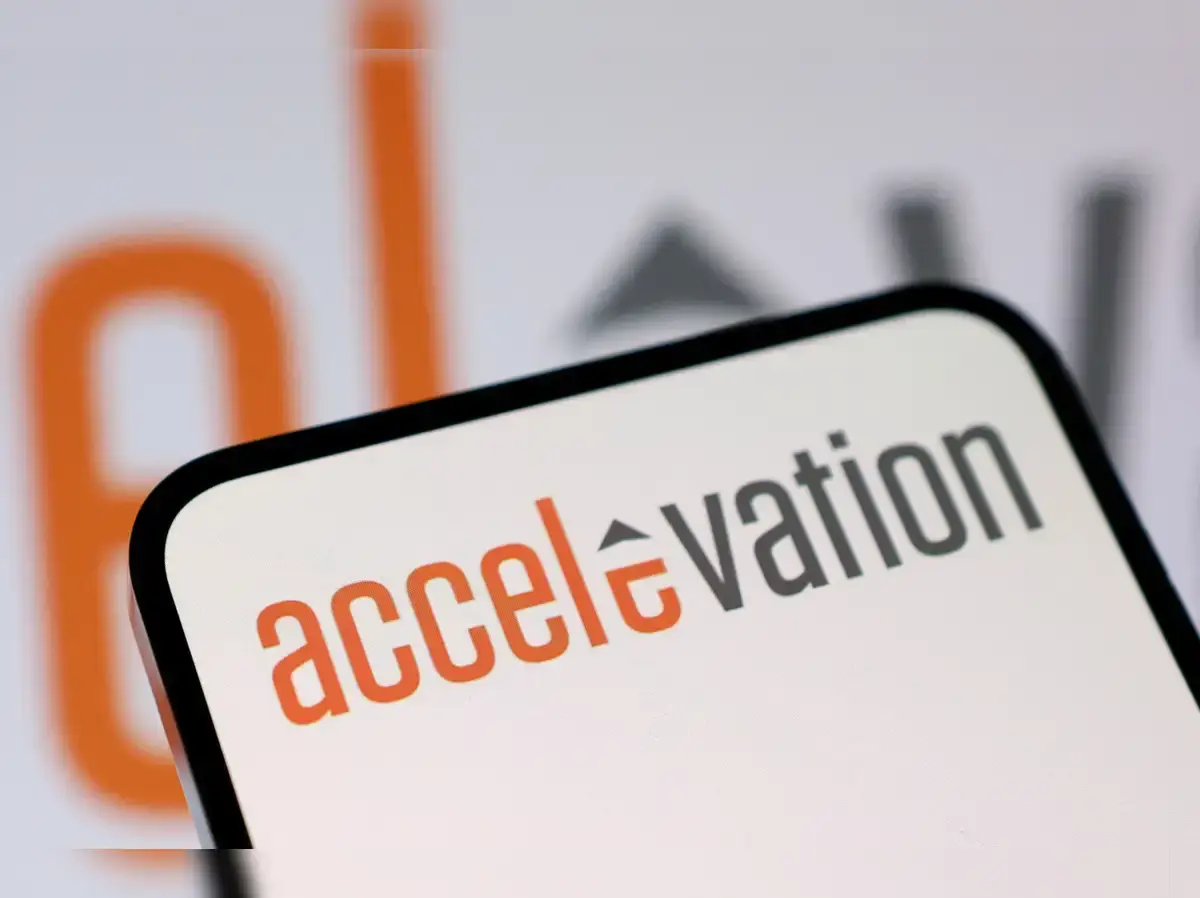
Founded in 2015 by three doctoral students at KAIST (Korea Advanced Institute of Science and Technology), Elice started as a coding education platform
3
5
. The company later moved into AI cloud infrastructure, selling servers, liquid cooling, networking and software, and now builds modular data centers for dense clusters of AI chips3
. Chief executive Jae Won Kim told Bloomberg: "We're going all-in on becoming a full-stack AI infrastructure leader globally. This IPO is about giving ourselves the financial firepower to execute"3
.
Source: Korea Times
Despite the market debut disaster, Elice's financial performance has been strong. The company reported that revenue for the first half of the year tripled to 34 billion won and that it swung to an operating profit of 10 billion won compared with a 3.5 billion won loss for the same period a year earlier
1
. For the full year 2025, Elice reported revenue of 39.5 billion won and an operating profit of 5.2 billion won5
.Dramatic Rebound Highlights Market Volatility
In a stunning reversal, Elice shares surged 29.92% the following day to close at 79,900 won, followed by another 17.15% gain on Thursday to reach 93,600 won
5
. The rebound came as investor sentiment improved following strong third-quarter earnings from SpaceX5
. Despite the two-day rally, shares were still trading just 3.4% above their IPO price of 90,500 won5
.
Source: Korea Times
The wild swings underscore the heightened volatility surrounding AI infrastructure investments. "Sentiment toward AI infrastructure has been highly volatile and often disconnected from underlying fundamentals," Albert Yong, chief investment officer at Petra Capital Management, told Bloomberg
3
. Park Soo-hyun, a strategist at KB Securities, noted: "Investors are increasingly looking for tangible returns on AI investments, keeping markets in a period of heightened volatility"5
. Watch for how other neocloud providers navigate this uncertain environment and whether they can demonstrate sustainable profitability amid rising borrowing costs and questions about long-term AI spending commitments.References
Summarized by

Navi
[4]
Related Stories
Tech Sell-Off Shakes Markets as Investors Question AI Spending and Profitability
23 Jun 2026•Business and Economy
SK Hynix raises $26.5B in largest foreign US IPO as AI boom fuels memory chip demand
06 Jul 2026•Business and Economy

SpaceX Locks in $40 Billion GPU Financing Deal with Apollo to Power AI Infrastructure Expansion
21 Oct 2026•Business and Economy
Recent Highlights



Recent Highlights
Today's Top Stories








Don’t drown in AI news. We cut through the noise - filtering, ranking and summarizing the most important AI news, breakthroughs and research daily. Follow topics that matter to you and stay ahead.


