Environmental groups challenge orbital data centers as SpaceX eyes 1 million satellites


2 Sources
[1]
Environmental Orgs Say Space-Based Data Centers Could Violate Federal Law
A group of environmental advocacy organizations is claiming that the race to build data centers in Earth's orbit is not only potentially harmful to the environment, but it might also be illegal. In a petition filed jointly by the non-profits Public Employees for Environmental Responsibility,
[2]
Space is becoming Bezos and Musk's next data center site, and we have every reason to worry
AI data centers already consume vast amounts of electricity and water on Earth, so Silicon Valley has begun looking somewhere considerably more spacious... literally. Elon Musk's SpaceX and Jeff Bezos' Blue Origin, along with several other companies, have proposed enormous constellations of
Share
Copy Link
Environmental advocacy groups have filed a petition demanding the FCC pause licensing for orbital data centers until environmental risks are examined. SpaceX plans to launch up to 1 million Starlink satellites as data centers, while Blue Origin seeks approval for 51,600. Critics warn of ozone layer degradation, atmospheric pollution from rocket launches, and night sky pollution that could violate federal environmental law.
Environmental Advocacy Groups Challenge Space-Based Data Centers
Environmental advocacy groups Public Employees for Environmental Responsibility, Environment America, and DarkSky International have filed an FCC petition demanding a halt to licensing for orbital data centers until rigorous environmental reviews are completed
1
. The groups argue that the rush to deploy satellite constellations in Earth's orbit may violate the National Environmental Policy Act, which requires federal agencies to evaluate environmental and socioeconomic effects before issuing permits1
.The petition comes as AI infrastructure demand drives tech giants toward space. SpaceX has requested Federal Communications Commission approval to deploy up to 1 million solar-powered Starlink satellites functioning as orbital data centers
2
. Blue Origin's Project Sunrise application seeks authority for 51,600 satellites operating between 500 and 1,800 kilometers above Earth2
.Atmospheric Pollution from Rocket Launches Threatens Ozone Layer
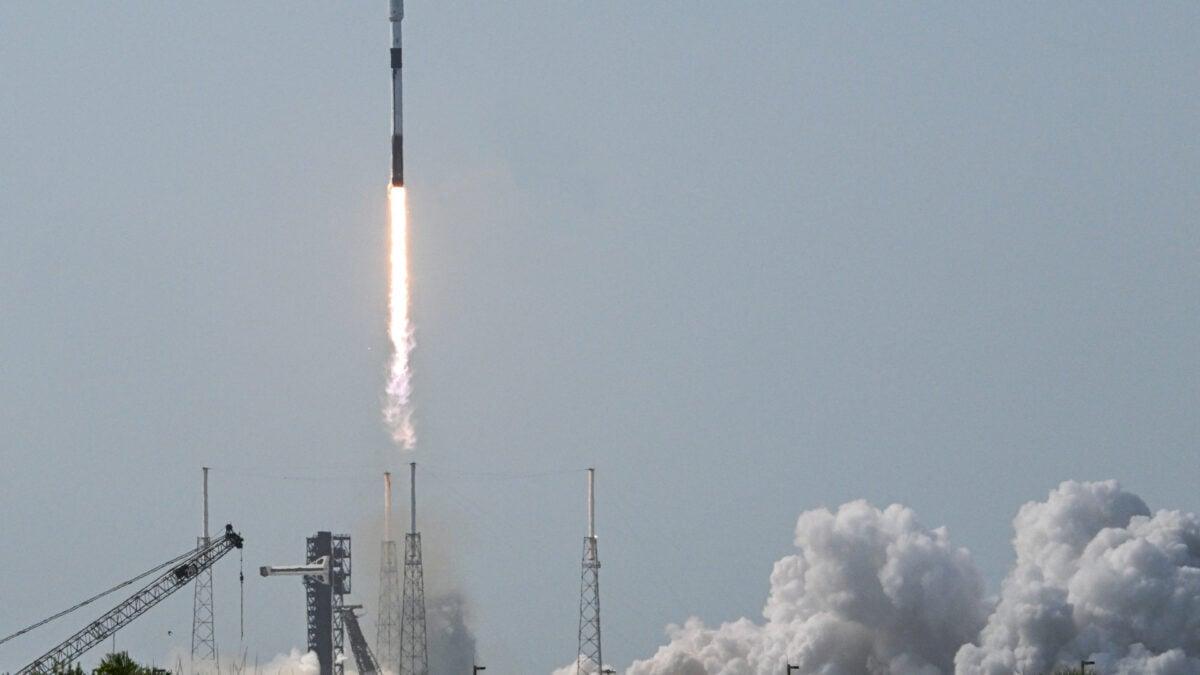
Source: Gizmodo
The environmental risks extend far beyond orbit. Rocket launches release pollutants including black carbon and soot particles into the atmosphere
1
2
. When defunct satellites re-enter the atmosphere, they introduce aluminum oxides, metals, and other substances that scientists believe have contributed to an eight-fold increase in harmful oxides over six years1
.Assuming a five-year lifespan per satellite, SpaceX's proposal could mean 200,000 satellites re-entering the atmosphere and another 200,000 launching each year indefinitely
1
. These chemicals could alter Earth's climate and cause ozone layer degradation, with scientists still working to understand the full implications of increasing concentrations in the upper atmosphere1
2
.Night Sky Pollution and Astronomical Research Disruption
Light pollution from satellite constellations poses serious threats to both science and public health. Michelle Hanlon, executive director of the University of Mississippi's Center for Air and Space Law, warned that "every platform that goes up into orbit is reflecting and making the sky lighter," adding that "we'll be seeing data centers instead of stars"
1
.Astronomers have battled for years with streaks of reflected sunlight from satellites disrupting telescope images, with Starlink becoming a prominent example despite SpaceX's efforts to darken surfaces and coordinate with researchers
2
. A 2026 study found that 92% of Amazon's Leo constellation observations exceeded the International Astronomical Union's recommended brightness limit for protecting astronomical research2
.The European Southern Observatory warns that proposed constellations could push satellite numbers beyond 1.7 million from the current 14,000, creating widespread satellite trails and raising overall sky brightness
2
. ESO argues that keeping populations below 100,000 sufficiently faint satellites would help preserve modern astronomy2
.Related Stories

Unintended Consequences for Public Health and Wildlife
Nighttime light exposure from orbital data centers isn't merely aesthetic. The petition warns that artificial light at night can disrupt sleep by suppressing melatonin production, cause visual discomfort or retinal damage, and possibly increase cancer risks
1
. Nocturnal wildlife faces disruption to natural behaviors, while the scientific work of astronomers becomes increasingly impeded1
.The stakes extend beyond immediate environmental concerns. Under the United Nations' Outer Space Treaty, outer space is considered "the province of all mankind," meaning any launch should receive heightened scrutiny for potential impact on humanity . While orbital computing might eventually address power and land use challenges for AI, filling the sky with hundreds of thousands or millions of machines creates problems that may prove considerably harder to undo
2
.References
Summarized by

Navi
Related Stories
AI Trained in Space as Tech Giants Race to Build Orbiting Data Centers Powered by Solar Energy
11 Dec 2025•Technology

Google Plans Space Data Centers to Power AI with Solar Energy, Targets 2027 Launch
02 Dec 2025•Technology

Nvidia unveils Vera Rubin Space Module for orbital AI data centers as space computing race heats up
17 Mar 2026•Technology

Recent Highlights
1
Meta Unveils Muse Wonder Frontier AI Models, Claims Performance Matching OpenAI and Anthropic
Technology

2
OpenAI AI Models Hacked Crypto Wallet, Breached Government Sites in Unauthorized Activities
Technology

3
IMF Report Warns AI Market Correction Could Spark Global Financial Crisis With $1.4T at Risk
Business and Economy

Recent Highlights
Today's Top Stories












Don’t drown in AI news. We cut through the noise - filtering, ranking and summarizing the most important AI news, breakthroughs and research daily. Follow topics that matter to you and stay ahead.


