AI Chip Startup Etched Doubles Valuation to $21 Billion in Under a Month


6 Sources
[1]
Etched's valuation doubles to $21B in a month
Etched on Tuesday announced that it has raised another $700 million at a $21 billion valuation, led by Jane Street after the famed quant fund tested and bought the startup's AI hardware. Even by AI standards, this valuation step-up is jaw-droppingly fast. Etched was valued at $5 billion in
[2]
AI chip startup Etched valued at $21 billion in latest funding round
Aug 18 (Reuters) - Artificial intelligence hardware startup Etched said on Tuesday it raised $700 million in a funding round that valued it at $21 billion. The funding round was led by Jane Street, with participation from Kleiner Perkins, Sequoia, Andreessen Horowitz, Tiger Global, among others.
[3]
AI chip start-up Etched raises $700m at $21bn valuation
Etched was founded in 2022 by Gavin Uberti, Robert Wachen and Chris Zhu, and emerged from stealth in June of this year. AI hardware start-up Etched has raised $700m in a new funding round led by US trading firm Jane Street, which the start-up said boosted its valuation to $21bn - doubling its
[4]
Inference chip startup Etched raises another $700M at $21B valuation
Inference chip startup Etched raises another $700M at $21B valuation A few weeks after closing a $300 million round backed by Nvidia Corp., Etched Inc. today announced that it has raised another $700 million in funding. Investment firm Jane Street led the deal. It was joined by Kleiner Perkins,
[5]

AI chip startup Etched doubles valuation to $21 billion in under a month
The San Jose, California-based company raised $700 million, with trading firm Jane Street continuing its backing by leading the round, joined by Kleiner Perkins, Sequoia, Andreessen Horowitz and Tiger Global, among others. Jane Street-backed Etched said on Tuesday its valuation more than doubled
[6]

Etched secures $700M at doubled valuation to scale AI inference hardware By Investing.com
Investing.com -- AI hardware startup Etched has secured $700 million in new funding at a $21 billion valuation, doubling its implied market capitalization from a previous capital raise finalized just weeks earlier. The investment round was led by quantitative trading firm Jane Street, which
Share
Copy Link
Etched raised $700 million in a funding round led by Jane Street, doubling its valuation to $21 billion in less than a month. The AI inference hardware startup has secured over $1 billion in customer contracts and shipped its first data center rack to Jane Street after successful testing.
Etched Raises $700 Million, Valuation Soars to $21 Billion
AI chip startup Etched announced a $700 million funding round led by Jane Street, doubling its valuation to $21 billion in under a month
1
5
. This marks a staggering trajectory for the San Jose-based company, which was valued at $5 billion in December and $10.3 billion just last month during its Series C round1
. The funding round drew participation from Kleiner Perkins, Sequoia, Andreessen Horowitz, Tiger Global, Bain Capital Ventures, and other prominent investors2
. Etched has now raised $1.9 billion to date2
.Jane Street Becomes First Customer After Testing AI Inference Hardware
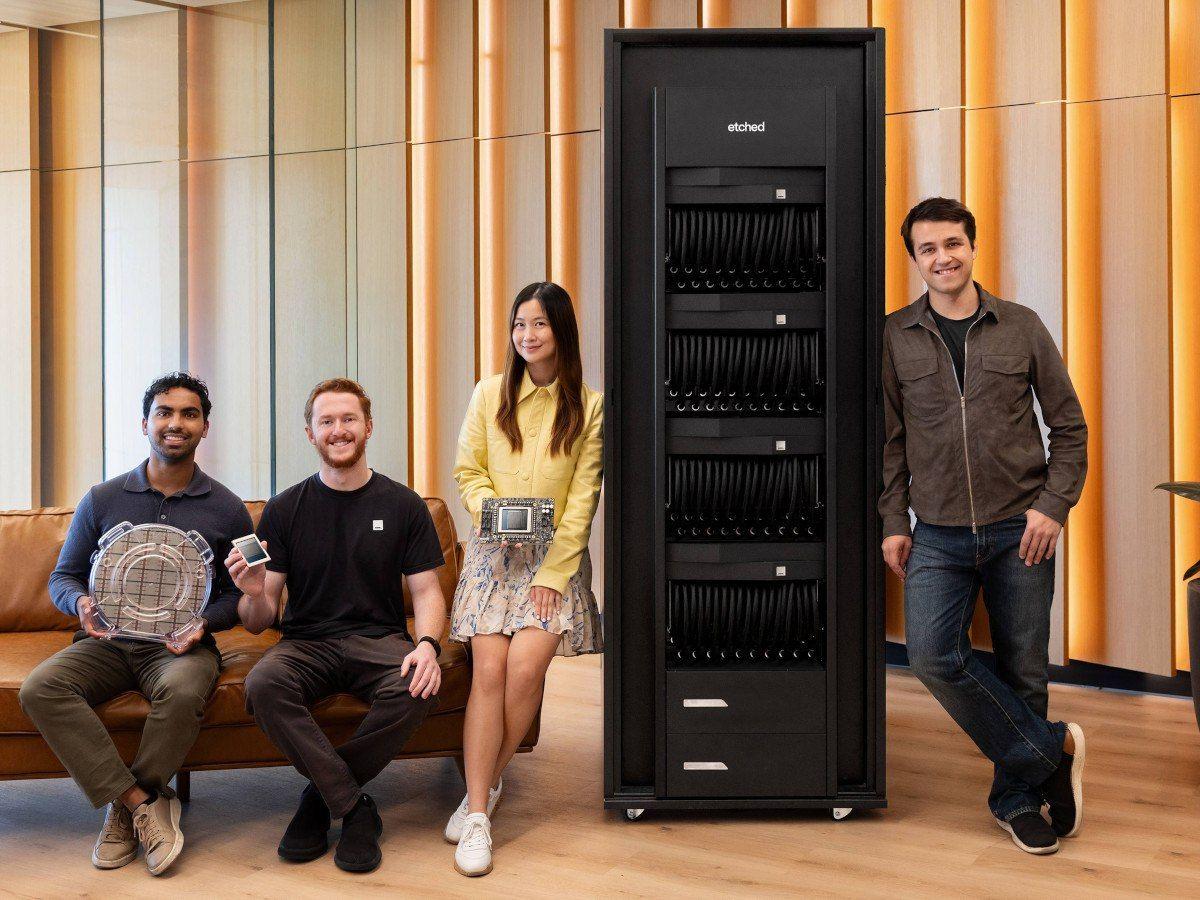
Jane Street's decision to lead the funding round came after the trading firm tested and deployed Etched's AI inference systems in its own data center
1
. The company received its first rack last month and is now running production workloads on the hardware3
5
. In a blog post announcing the investment, Jane Street stated: "We tested the chip and are pleased with the early results. Etched's unique approach to inference delivers the precision we will need to support our most demanding workloads"1
. This validation from a major financial institution demonstrates real-world performance of Etched's technology. The startup has secured more than $1 billion in customer contracts across public and private AI companies and cloud providers2
5
.How Etched's Technology Tackles AI Inference Challenges
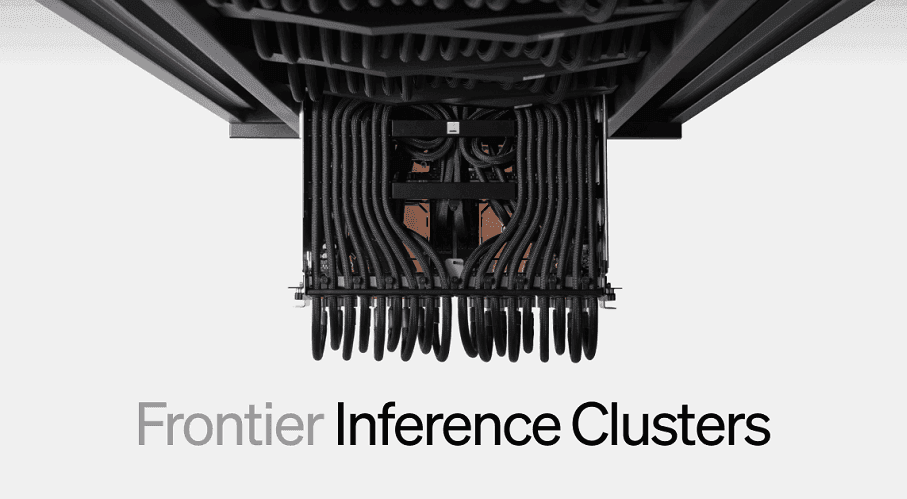
Etched builds frontier inference clusters designed to make AI models faster and cheaper to run
1
2
. Co-founder and COO Robert Wachen explained that the company developed two novel components from scratch to accelerate inference. The first is a low-voltage prefill chip that operates at under half the voltage of most AI accelerators, allowing it to pack in more transistors without typical heat problems1
4
. This enables faster token processing during the compute-intensive prefill phase, where AI models must understand prompts and context1
. The second innovation is cluster-scale memory, a hybrid memory subsystem that creates a massive shared memory pool across an entire cluster rather than a single chip3
. According to the Wall Street Journal, this interconnect can complete communications tasks in 700 milliseconds that take rival chips 4,000 milliseconds4
.
Source: SiliconANGLE
Related Stories

Challenging Nvidia's Dominance in the AI Chip Market
Etched joins a growing group of startups seeking to challenge Nvidia's dominance in the AI chip market
3
5
. The company has reportedly been recruiting aggressively from Nvidia, with around 15% of its 400-person team previously working at the tech giant3
. Founded in 2022 by Harvard Thiel fellows Gavin Uberti, Robert Wachen, and Chris Zhu, Etched emerged from stealth in June this year3
. The startup's first prototype chip rolled off a TSMC production line earlier this year4
. Kleiner Perkins Managing Partner Mamoon Hamid noted: "Inference is becoming one of the most important infrastructure markets in AI, and the winners will be measured by tokens per dollar and per watt"5
.
Source: Silicon Republic
What This Means for AI Infrastructure and Future Growth
The rapid valuation increase reflects surging demand for specialized AI inference hardware as more organizations deploy large language models and transformer architectures at scale
5
. However, skepticism remains about whether technical prowess will translate into business success. Michael Ashley Schulman, partner at Cerity Partners, cautioned: "Etched has impressive technology and serious customer interest, but semiconductor history is littered with brilliant chips that never became great businesses"5
. CEO Gavin Uberti acknowledged the challenges ahead, stating: "It took us three years to deliver our first rack from scratch. Our next one will be much faster"4
. As Etched scales to gigawatt-scale operations, the company faces new hurdles including building factories, establishing global supply chains, and developing fleet software3
. The startup's ability to execute on production and maintain its technological edge will determine whether it can sustain its meteoric rise in the competitive semiconductor market.References
Summarized by

Navi
[1]
[3]
Related Stories
AI chip startup Etched doubles valuation to $10.3B, raises $300M to challenge Nvidia
18 Jul 2026•Startups

Etched raises $800M, hits $5B valuation with $1B in sales for AI inference chips
30 Jun 2026•Startups
Etched Secures $500 Million to Challenge Nvidia's AI Chip Dominance with Sohu Processor
14 Jan 2026•Startups

Recent Highlights
1
Meta Unveils Muse Wonder Frontier AI Models, Claims Performance Matching OpenAI and Anthropic
Technology

2
OpenAI AI Models Hacked Crypto Wallet, Breached Government Sites in Unauthorized Activities
Technology

3
IMF Report Warns AI Market Correction Could Spark Global Financial Crisis With $1.4T at Risk
Business and Economy

Recent Highlights
Today's Top Stories






Don’t drown in AI news. We cut through the noise - filtering, ranking and summarizing the most important AI news, breakthroughs and research daily. Follow topics that matter to you and stay ahead.


