Global firms bring more work in-house at India hubs as AI reshapes workflows and hiring


5 Sources
[1]
Global firms bring more work in-house at India hubs on AI boost
BENGALURU, May 26 (Reuters) - Global companies are bringing more work in-house at their India cost centres as AI boosts productivity and reduces reliance on outsourcing partners, executives at a Reuters summit in Bengaluru said. The shift reflects a structural change in how multinationals use
[2]
Global centres in India slow hiring as AI reshapes work, ANSR CEO says
BENGALURU, May 18 (Reuters) - Global capability centres in India are taking a measured approach to hiring as companies are wary about the impact of geopolitical uncertainties and growing AI adoption, the CEO of ANSR, which helps firms build and run global centres, said. India is home to more than
[3]
GCCs switching to smart workflows as AI gobbles up procedural grunt work
Industry experts said AI is shrinking junior-level workflows, reducing standalone procedural functions and pushing multinational companies to redesign the kind of work handled by their India centres. Early industry estimates suggest nearly 18% of India's GCC work still sits in commoditised,
[4]
From diapers to drugs: How India's global corporate hubs are putting AI to work
May 28 (Reuters) - Whether they are recruiting the ideal "momfluencer" to sell diapers or trawling through reams of data to fast-track drug launches, global centers of multinational firms in India are increasingly putting AI to work in creative ways. Heads of several Global Capability Centres
[5]
India's GCC model shifts from cost to capability as AI, talent strains bite
BENGALURU, May 27 (Reuters) - For two decades, India's dominance in global capability centres rested on a simple formula: skilled talent at scale, at low cost. India is now the world's largest GCC hub, with more than 2,100 centres employing 2.36 million people and generating nearly $100 billion in
Share
Copy Link
Global capability centers in India are experiencing a structural shift as artificial intelligence enables companies to handle more work internally while slowing hiring by 30-50%. Multinationals like Daimler Truck, Novo Nordisk, and IBM are moving core functions in-house, reducing reliance on outsourcing. But the AI boost in productivity comes with challenges—rising wage inflation of 40-50% annually in tech roles and talent shortages are testing India's cost advantage.

Global Firms Bring More Work In-House as AI Transforms India's Hubs
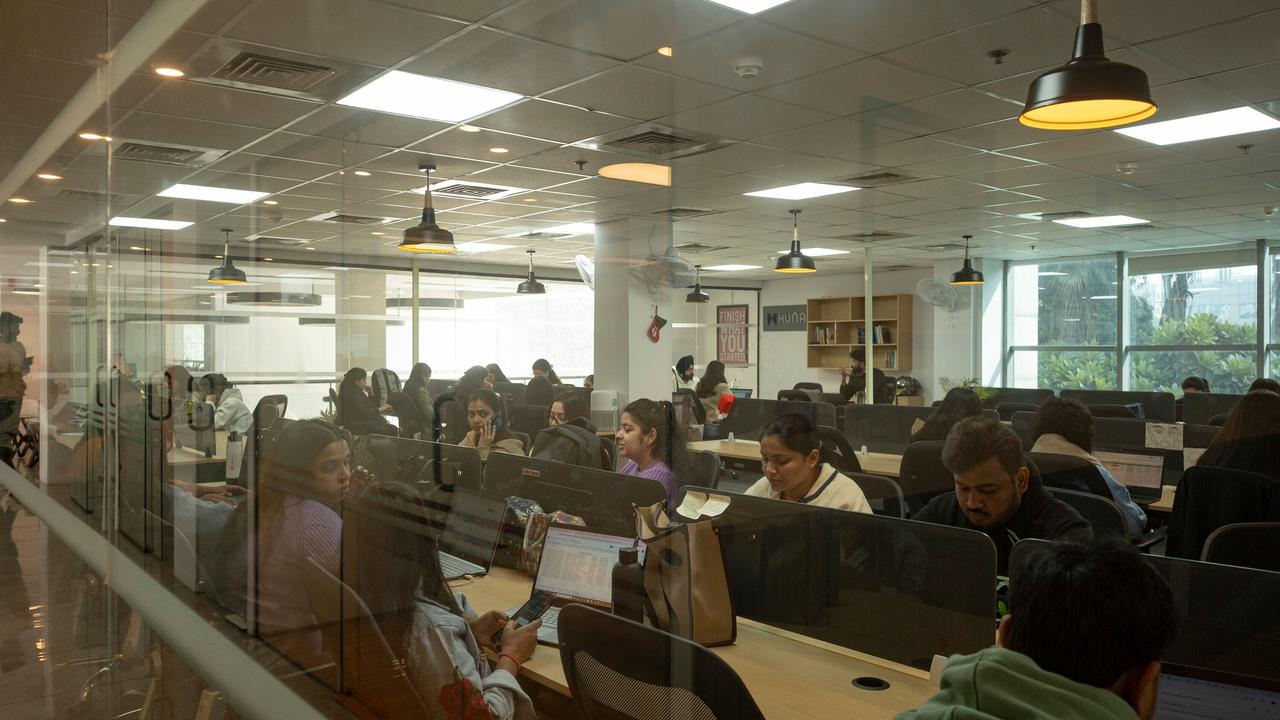
Global capability centers in India are undergoing a fundamental transformation as artificial intelligence enables multinational companies to bring more work in-house while dramatically slowing hiring. Executives at a Reuters summit in Bengaluru revealed that AI adoption in India is allowing firms to handle significantly more work internally without proportional headcount increases, marking a shift from the cost-focused outsourcing model that defined the sector for two decades
1
.At Daimler Truck's Bengaluru hub, the company is bringing development of core software and performance-critical algorithms in-house, prioritizing internal control over areas that provide a competitive edge, according to Radhakrishnan Kodakkal, head of its innovation center
1
. U.S. retailer Target, which employs more than 5,000 people in India, already does the vast majority of its tech work in-house, with external partners mostly providing flexibility1
.Hiring Slowdown as AI Boosts Productivity Without Adding Headcount
Lalit Ahuja, CEO and founder of ANSR, which helps firms build and run global centers, told Reuters that hiring is being slashed by 30% to 50%, with some firms that had planned global capability centers with more than 5,000 employees scaling those ambitions back to about 2,000
2
. This hiring slowdown in India reflects growing caution about geopolitical uncertainties and the impact of AI on workforce requirements.At IBM, automation has allowed the company "to do a lot more with the same complementary people," according to India head Sandip Patel
1
. Epsilon India Managing Director Pratik Nath echoed this sentiment: "Essentially, we are able to do significantly more with the same set of people that we have because of the power that AI brings in"1
.GCCs Switching to Smart Workflows as AI Eliminates Procedural Grunt Work
India's nearly $100-billion global capability center industry is experiencing what experts call "portfolio hollowing," where artificial intelligence is compressing repetitive functions across customer support, finance, human resources, analytics, and software operations
3
. Early industry estimates suggest nearly 18% of India's GCC work still sits in commoditized, process-heavy functions that are increasingly being automated or embedded into AI-driven workflows3
.The shift is most visible in finance and HR operations. Invoice processing cycle times have fallen from seven days to one day, financial closing processes from 12 days to five days, and headcount requirements for these functions by 75%. HR self-service now resolves 70-80% of queries without human intervention, while in software development, output per developer has improved 40-80%
3
.India's Global Corporate Hubs Deploy AI Across Critical Functions
Global firms are deploying AI across diverse functions at their India operations. Novo Nordisk's Bengaluru center is playing a growing role in global drug launches, handling preparatory work including for its recently launched oral obesity pill in the United States. "A good proportion of the work for any market (launch) would be done out of the India center. There's probably not a medicine launched anywhere in the world that hasn't had a thumbprint of Bengaluru on it," said John Dawber, managing director for global business services
1
.Workday said its India teams are increasingly responsible for end-to-end product delivery rather than supporting individual modules, signaling a move away from fragmented, outsourced work models
1
. Kimberly-Clark is using AI to speed up marketing processes, including an internal tool that helps identify and evaluate social media influencers to promote its products4
.Related Stories

Talent Shortage and Wage Inflation Threaten India's Cost Advantage
As global capability centers move up the value chain, rising costs and talent shortages are testing India's traditional advantages. Demand for AI and machine learning skills is outstripping supply, fueling wage inflation. Novo Nordisk executive John Dawber said salaries in some tech roles are rising 40% to 50% annually, threatening to erode India's cost advantage
5
.Target executive Andrea Zimmerman described the battle for talent as "unreal"
5
. Companies are responding with reskilling workers and shifting employees into higher-value roles as hiring slows. Some are also hedging risk through an "India plus" strategy, expanding into Poland, the Philippines, Brazil, and Costa Rica5
.In-Sourcing Becomes the New Strategic Priority
The trend toward in-sourcing reflects a structural change in how multinationals use their India operations, moving beyond cost-focused support roles to centers that own core functions such as engineering, product development, and analytics
1
. Instead of long-term outsourcing contracts, partners are increasingly engaged for specialized skills or faster execution, while strategic ownership remains internal.Companies setting up new GCCs today are planning for 20-40% fewer employees than they would have three years ago, while expecting more output
3
. India is home to more than 2,100 centers employing 2.36 million people and generating nearly $100 billion in revenue, according to a Nasscom-Zinnov report5
.Lalit Ahuja of ANSR noted that companies are building a core workforce alongside a larger flexible pool that can be scaled up or down based on business needs, reflecting growing fatigue with a "wait-and-watch" approach
2
. "In six to 12 months, we are nearing that inflection point," Ahuja said, pointing to the rapid pace of AI-driven transformation5
.References
Summarized by

Navi
[5]
Related Stories
India's GCCs Transform Into AI Innovation Hubs as Internal Upskilling Drives Agentic AI Adoption
25 Nov 2025•Business and Economy

India's back office built the world's tech hub. Artificial intelligence is now shrinking it.
27 Feb 2026•Business and Economy
AI job shock threatens India's economy as IT jobs face automation and real estate slumps
29 Apr 2026•Business and Economy

Recent Highlights
1
Microsoft and Nvidia Launch Surface Laptop Ultra: A $2,599 AI-Ready PC With RTX Spark Chip
Technology

2
OpenAI Releases 722 AI-Generated Math Papers on GitHub, Igniting Fury Among Mathematicians
Science and Research

3
Trump Consulted Grok AI Before Ordering Venezuela Invasion and Capture of Nicolás Maduro
Policy and Regulation

Recent Highlights
Today's Top Stories









Don’t drown in AI news. We cut through the noise - filtering, ranking and summarizing the most important AI news, breakthroughs and research daily. Follow topics that matter to you and stay ahead.


