3 Sources
[1]
Opendoor's India exit is fueling a bigger conversation about AI and outsourcing
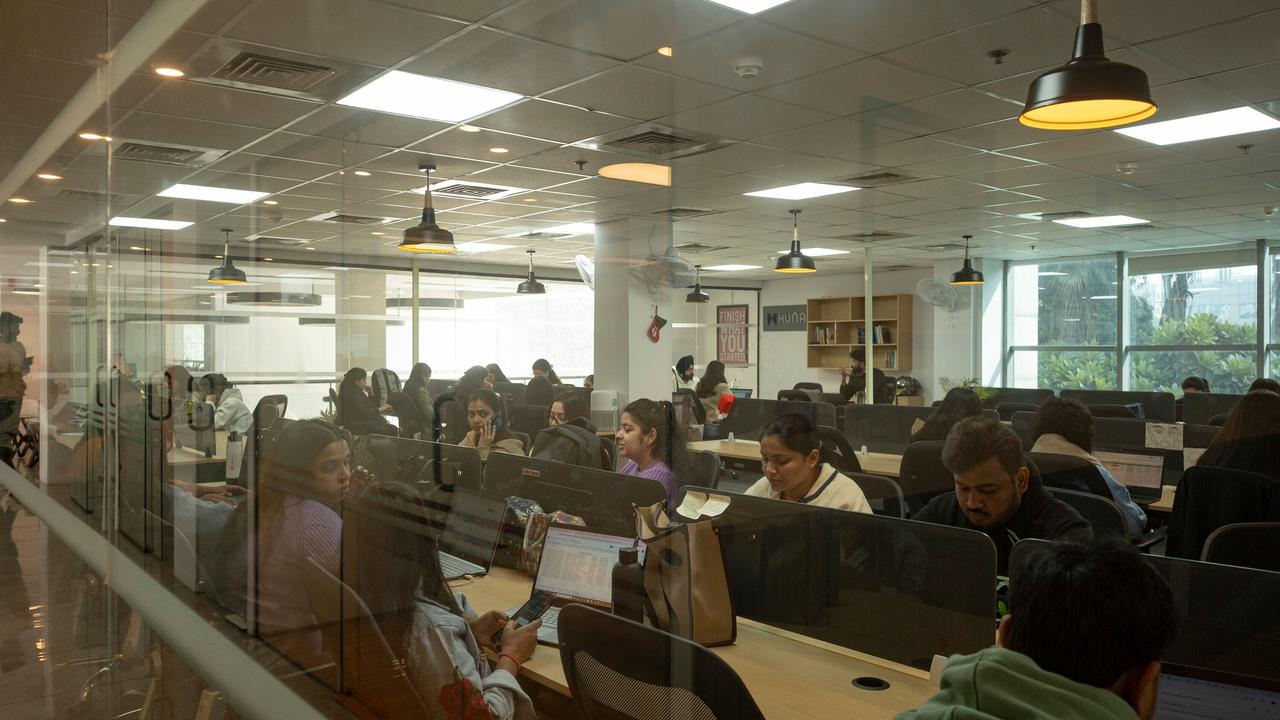
Opendoor, the San Francisco-based online home-buying platform, is shutting down its India operations less than two years after expanding its presence in the country. The decision has become a flashpoint in the debate over whether AI is starting to alter the economics of offshore work. In announcing the decision on Wednesday, CEO Kaz Nejatian cited a push to bring operational work back to the U.S., where Opendoor's customers are, and a shift toward smaller AI-native teams. The company did not respond to requests for comment on how many employees were affected or how much of the decision was driven by AI efficiency. But the announcement quickly gained traction across Silicon Valley, where founders, investors, and outsourcing experts see it as an early example of how AI is reshaping the economics that made India a global hub for back-office operations. To understand why they care, it helps to know what's at stake for India. It has evolved far beyond its roots as a destination for outsourced back-office work. The country is now the world's largest Global Capability Center market -- a term for dedicated offshore units multinationals set up to handle everything from IT and finance to R&D -- with more than 2,100 centers employing about 2.36 million people and generating nearly $100 billion in annual revenue. Opendoor itself had built a large team in India to handle manual workflows across fragmented systems, Nejatian said. The company had nearly 250 employees in India when it opened offices in Chennai and Bengaluru in 2024. But the entire company has been scaling back in recent years. Securities filings show Opendoor employed 1,042 people globally at the end of last year, compared with 1,470 a year earlier. Similarly, its non-U.S. workforce declined to 184 employees at the end of last year, compared with 342 employees at the end of 2024. Those broader workforce reductions make it difficult to view the India closure solely through the lens of outsourcing. Opendoor has been cutting costs across the business after a difficult period for the U.S. housing market that hit online home-buying companies especially hard. Still, the language Nejatian used to explain the move resonated with investors and outsourcing analysts who see AI reshaping how companies organize operational work. Some investors viewed the decision as a sign of what AI could mean for India's vast outsourcing workforce. "As manual work gets replaced by AI, a lot of jobs will be lost in India," wrote Sheel Mohnot, co-founder of Better Tomorrow Ventures. Others viewed Opendoor as evidence of a larger shift in how companies are organized. Keshav Lohia, a venture capitalist at Emergent Ventures, described the decision as a "watershed moment" for AI-driven operations, arguing that advances in AI are beginning to challenge the cost-arbitrage model that made India a popular offshoring destination. Phil Fersht, chief executive of HFS Research, an advisory firm that tracks the global outsourcing and business services industry, told TechCrunch that the development should not be viewed simply as jobs moving from India to the U.S. The more important shift, he said, is that AI is reducing the amount of operational labor companies require in the first place, allowing firms to run leaner organizations regardless of location. "This is not an isolated restructuring," Fersht said. "It is part of a much broader pattern we are starting to see as companies redesign operations around AI, automation, and much leaner workflows." Fersht argued that the winners would be companies that combine AI, software and human expertise to deliver outcomes without continually adding headcount, a model he described as "Services-as-Software." While Opendoor may be one of the first high-profile examples, he said it is unlikely to be the last. Some investors are already extrapolating beyond individual companies. Varun Rekhi, a venture capitalist at Speedinvest, argued that if AI reduces demand for labor-intensive services, it could eventually pressure one of India's most important export industries, which is built around supplying talent and expertise to global corporations. For now, Opendoor remains a complicated case study -- a company that has been cutting headcount broadly for years, and whose India exit may say as much about its own struggles as it does about the future of AI and offshore work.
[2]
AI shift drives Opendoor's India exit: Here's all you need to know
US real estate firm Opendoor is closing its India operations. Nearly 250 employees in Bengaluru and Chennai will be laid off. This move is part of a major restructuring. The company is integrating artificial intelligence to streamline operations. This shift aims to improve efficiency by consolidating systems and creating smaller, AI-native teams in the United States. US-based real estate technology company Opendoor is shutting down its India operations and laying off nearly 250 employees as part of a major restructuring effort. The move reflects a broader trend across the technology industry, where artificial intelligence (AI) is being increasingly deployed to streamline operations and reduce workforce requirements. What is Opendoor? Founded in 2014, Opendoor built its business around simplifying home sales. The company allows homeowners to sell directly to Opendoor, which purchases properties, carries out renovations when necessary, and then resells them. By digitising large parts of the home-buying and selling process, Opendoor positioned itself as a technology-driven alternative to the traditional real estate market. According to market intelligence platform Tracxn, Opendoor has raised $1.35 billion across 11 funding rounds since its inception. The company went public in December 2020, with its largest funding round coming after the listing -- a $850 million post-IPO raise in August 2021. Why is Opendoor reducing its workforce now? The latest workforce reduction is tied to what CEO Kaz Nejatian calls "Opendoor 2.0", a company-wide transformation aimed at embedding AI more deeply into operations while simplifying internal systems. Opendoor had nearly 250 employees in its Bengaluru and Chennai offices. Since the launch of its Opendoor 2.0 initiative earlier this year, some of these roles have been relocated to the United States, with the company now completing the process by winding down its India operations entirely. In an internal memo later posted on X, the company said the move reflects the fact that its customers are primarily based in the United States and that operations are more effective when carried out closer to those customers. Nejatian noted that Opendoor had previously built a sizeable India-based workforce to manage manual workflows across multiple fragmented systems. However, the company has since consolidated many of these systems and created smaller, AI-native teams in the United States capable of handling customer-facing operations more efficiently. The layoffs will affect almost all India-based employees, although a small number will remain temporarily to support the transition of critical workstreams. Nejatian also said the decision was not a reflection of employee performance, describing the India team as key contributors to the company's growth and encouraging other employers to consider hiring them. What happens to the laid-off employees? Opendoor said affected employees will receive severance packages, outplacement support, and other transition resources. The move is significant not only because of the number of jobs affected but also because it highlights how AI is reshaping corporate workforce strategies. The layoffs follow several years of workforce reductions at Opendoor. The company ended 2025 with 1,042 employees globally, down from 1,470 a year earlier. Its international workforce also declined significantly during that period, falling from 342 employees to 184. Opendoor's decision comes amid a wider wave of AI-driven restructuring across the technology sector. More than 92,000 technology workers have reportedly lost their jobs globally in the first five months of 2026, as companies increasingly cite automation, AI efficiencies, and post-pandemic workforce recalibration as reasons for layoffs.
[3]
Opendoor India Exit: Is AI Taking a Toll on Global Outsourcing?
The statement from the company does not clearly say so and the downsizing has been on for nearly two years now US-based home-buying platform Opendoor announced recently that it was shutting down India operations and letting go 250 employees while relocating key operational roles back to base. Concerned GCC ecosystem members had only one question: How much does the growing AI use by enterprises have on this move? The note that CEO Kaz Nejatian shared detailing this event said little and left a lot unsaid, which is probably the reason the question popped up in the first place. He claimed it was the final phase of a restructuring effort under what he termed the "Opendoor 2.0" strategy. One of its key elements was to bring customer-facing functions closer to its core US market. Then came the kicker that every company has been using since 2023 to downsize. Nejatian claimed that his company relied on India-based teams to manage "manual processes" and as these became more integrated and AI-enabled, the company decided to take all operational work back to the base. For those who didn't know, Opendoor is backed by investors that include the likes of Sam Altman and Khosla Ventures, Andreessen Horowitz, and SoftBank Vision Fund - all ardent supporters of the current AI craze among US investors. The company had gone public in 2020 through a merger with a special purpose acquisition company. That such a move comes barely days after India was designated as the world's largest GCC hub by a Nasscom-Zinnov survey, is rather ironical. The country has more than 2,100 such centres employing over 2.36 million people and generating more than $100 billion in revenues. The workforce has been India's greatest strength. Which is exactly what Opendoor had claimed while expanding operations at its GCC in India barely two years ago. "The space will support team members focused on innovating the customer experience, strengthening our infrastructure, and managing our security posture," Opendoor had said in a press release dated June 24, 2024. What exactly happened over the past 18 to 20 months that caused this sudden exit? For starters, we are aware that Opendoor has been on a cost-cutting plan following the tough period for the US housing market that hit online home-buying companies hard. So, it is not as if the company suddenly found a magic wand waved by some AI czar that resulted in a large swathe of the work being automated and then moved back to base. Data available from securities filings indicate that Opendoor had 1,042 employees globally, down from 1,470 a year ago. And its non-US workforce dropped to 184 on end-2025 compared to 342 in end-2024. So the shift out of India has been happening over a period of time and Nejatian's statement that their decision to move had nothing to do with the quality of the Indian workforce is targeted to ensure that those that were left out in the cold with a severance package do not feel bad. That AI had actually taken their jobs is more inferred than stated out clearly. Having said so, it is interesting that the company faced a lawsuit six years ago over its inflated claims of AI use in the algorithms that Opendoor purportedly used to deliver better results to home buyers in the United States. In fact, back then it was pointed out that such stories were created to pump up investor interest in company stocks. This process was called "AI-washing and refers to exaggerating or misrepresenting a company's AI capabilities or the role that AI plays in the company's products or services. This practice can mislead -- and ultimately harm -- investors who reasonably rely on a company's AI representations when making investment decisions," says Corporate Compliance Insights. In a detailed article, the authors noted that "public companies now have a strong incentive to portray themselves as AI leaders, but when the promised AI-driven benefits fail to materialise, stock prices fall and investors bring securities fraud claims." The article goes on to mention that a litigation against Opendoor back in 2020 saw plaintiffs allege that the company made misleading statements that its AI-powered pricing algorithm was superior to traditional ways of buying and selling real estate. However, it turned out that the algorithm wasn't working as well and that the company relied on human-driven processes. Maybe, what Opendoor did now is once again aimed at AI washing in some form or the other. While it is true that AI can and has automated several low-end jobs at the enterprise level, it is also equally true that research after research has called out AI slop as a major challenge while pointing out that most CXOs are finding it tough to justify their AI spends and its ROI. That doesn't mean the GCCs are in a comfortable spot. Time and again, industry observers have called out that India's GCC business could see troubled times unless these operations shift from being cost centers to profit centers.
Share
Copy Link
Opendoor is shutting down its India operations and laying off nearly 250 employees, less than two years after expanding there. CEO Kaz Nejatian cited a shift toward AI-native teams and bringing work closer to U.S. customers. The decision has become a flashpoint in discussions about whether AI is starting to alter the economics of offshore work and India's $100 billion Global Capability Centers market.
Opendoor, the San Francisco-based online home-buying platform, is shutting down its India operations less than two two years after expanding its presence in the country. The Opendoor India exit affects nearly 250 employees in Bengaluru and Chennai, marking what some industry observers view as an early signal of how AI and outsourcing economics are evolving
1
. CEO Kaz Nejatian announced the decision on Wednesday, framing it as part of a broader "Opendoor 2.0 restructuring" aimed at consolidating operations closer to the company's U.S. customer base while building smaller AI-native teams2
.
Source: TechCrunch
The company had previously relied on its India-based workforce to manage manual processes across fragmented systems. However, Nejatian explained that as these systems became more integrated and AI-enabled, the operational rationale for maintaining offshore work shifted
1
. Affected employees will receive severance packages, outplacement support, and other transition resources, with a small number remaining temporarily to support critical workstreams2
.The timing of this move carries particular significance for India's outsourcing industry. The country now hosts the world's largest Global Capability Centers market, with more than 2,100 centers employing about 2.36 million people and generating nearly $100 billion in annual revenue
1
. These dedicated offshore units handle everything from IT and finance to R&D for multinational corporations, representing a dramatic evolution from India's roots in back-office operations.

Source: CXOToday
Phil Fersht, chief executive of HFS Research, told TechCrunch that the development should not be viewed simply as jobs moving from India to the U.S. The more fundamental shift involves AI reducing the amount of operational labor companies require in the first place, allowing firms to run leaner organizations regardless of location
1
. Fersht described this as part of a broader pattern as companies redesign operations around AI, automation, and much leaner workflows.Opendoor's broader cost-cutting context complicates the narrative. Securities filings show the company employed 1,042 people globally at the end of 2025, down from 1,470 a year earlier. Its non-U.S. workforce declined to 184 employees at year-end 2025, compared with 342 employees at the end of 2024
1
. These reductions followed a difficult period for the U.S. housing market that hit online home-buying companies especially hard.Yet the language Nejatian used resonated with investors and outsourcing analysts tracking AI-driven operational changes. Sheel Mohnot, co-founder of Better Tomorrow Ventures, wrote that "as manual work gets replaced by AI, a lot of jobs will be lost in India"
1
. Keshav Lohia of Emergent Ventures described the decision as a "watershed moment" for AI-driven operations, arguing that advances in AI are beginning to challenge the cost-arbitrage model that made India a popular offshoring destination1
.Related Stories
The move has also revived questions about AI-washing—the practice of exaggerating or misrepresenting a company's AI capabilities. Opendoor faced a lawsuit six years ago over inflated claims of AI use in algorithms that purportedly delivered better results to home buyers
3
. Plaintiffs alleged the company made misleading statements that its AI-powered pricing algorithm was superior to traditional methods, when the algorithm wasn't working as well and the company relied on human-driven processes3
.Some observers suggest the current narrative may involve similar dynamics. While AI has automated several enterprise-level tasks, research continues to highlight challenges with AI implementation and questions about return on investment
3
. The company's decision comes as more than 92,000 technology workers have reportedly lost jobs globally in the first five months of 2026, with companies citing automation, AI efficiencies, and post-pandemic workforce recalibration2
.

Source: ET
Varun Rekhi, a venture capitalist at Speedinvest, argued that if AI reduces demand for labor-intensive services, it could eventually pressure one of India's most important export industries, built around supplying talent and expertise to global corporations
1
. Fersht suggested the winners would be companies that combine AI, software and human expertise to deliver outcomes without continually adding headcount, a model he described as "Services-as-Software"1
.Industry observers have repeatedly noted that India's GCC business could face challenges unless these operations shift from being cost centers to profit centers
3
. For now, Opendoor remains a complicated case study—a company that has been implementing cost-cutting measures for years, where the India exit may reflect both its own operational struggles and emerging patterns in how AI is reshaping workforce strategies across the technology sector.Summarized by
Navi
27 Feb 2026•Business and Economy

27 May 2026•Business and Economy

29 Apr 2026•Business and Economy

1
Technology

2
Business and Economy

3
Health