Hadrian Automation denies $7.5B valuation report, but signals hot physical AI market


2 Sources
[1]
Hadrian $7.5bn valuation: physical-AI bet, denied
Bloomberg says defense-factory startup Hadrian is in talks to raise as much as $1bn at a $7.5bn valuation. Hadrian calls that "inaccurate". Either way, the rumour shows how hot physical AI and US reindustrialisation have become. Bloomberg says defense-factory startup Hadrian is in talks to raise
[2]
AI Factory Startup Hadrian Denies Reported $1 Billion Funding Round | PYMNTS.com
Bloomberg reported these figures Tuesday (June 23), citing unnamed sources, and added that a Hadrian spokesperson said the information is "inaccurate" and declined to say more. The reported valuation would more than quadruple the $1.6 billion valuation the company achieved after receiving funding
Share
Copy Link
Bloomberg reported that AI factory startup Hadrian Automation is in talks to raise $1 billion at a $7.5 billion valuation, more than quadrupling its January valuation of $1.6 billion. The company called the information "inaccurate," but the rumor highlights surging investor interest in physical AI and US reindustrialization as the startup operates four AI-powered factories producing aerospace and defense components.
Disputed Valuation Highlights Market Momentum
Hadrian Automation has denied reports that it is raising $1 billion at a $7.5 billion valuation, calling the information "inaccurate" without providing further details
1
. Bloomberg reported that the AI-driven manufacturing startup discussed a funding round with several existing investors that would more than quadruple its $1.6 billion valuation from January2
. While the exact figures remain unconfirmed, the speculation itself reveals how aggressively investors are pursuing companies at the intersection of physical AI and US reindustrialization.From $1.6B to $7.5B in Five Months
The reported jump from $1.6 billion to $7.5 billion in barely five months would represent one of the fastest valuation increases in recent startup history. In January, Hadrian Automation raised funding in a round led by T. Rowe Price, attracting participation from Founders Fund, Andreessen Horowitz, Lux Capital, Altimeter, D1 Capital, StepStone and RTX Ventures
1
. Valuations only travel this fast when an entire investment theme gains momentum, and investors fear missing the opportunity. The theme driving this interest centers on AI applied to factories rather than software alone, combined with the push for revitalizing domestic manufacturing.AI-Powered Factories Producing Real Revenue
Founded in 2020 by Chris Power, Hadrian Automation builds AI-powered factories that manufacture mission-critical parts for aerospace and defense manufacturing. The company operates four plants across the United States, including facilities in Torrance, California, Mesa, Arizona, and Cherokee, Alabama
2
. The Alabama facility, which opened in March, produces submarine components under a $2.4 billion US Navy contract. This marquee government contract separates Hadrian from competitors by turning the physical AI pitch into a business with substantial revenue backing it.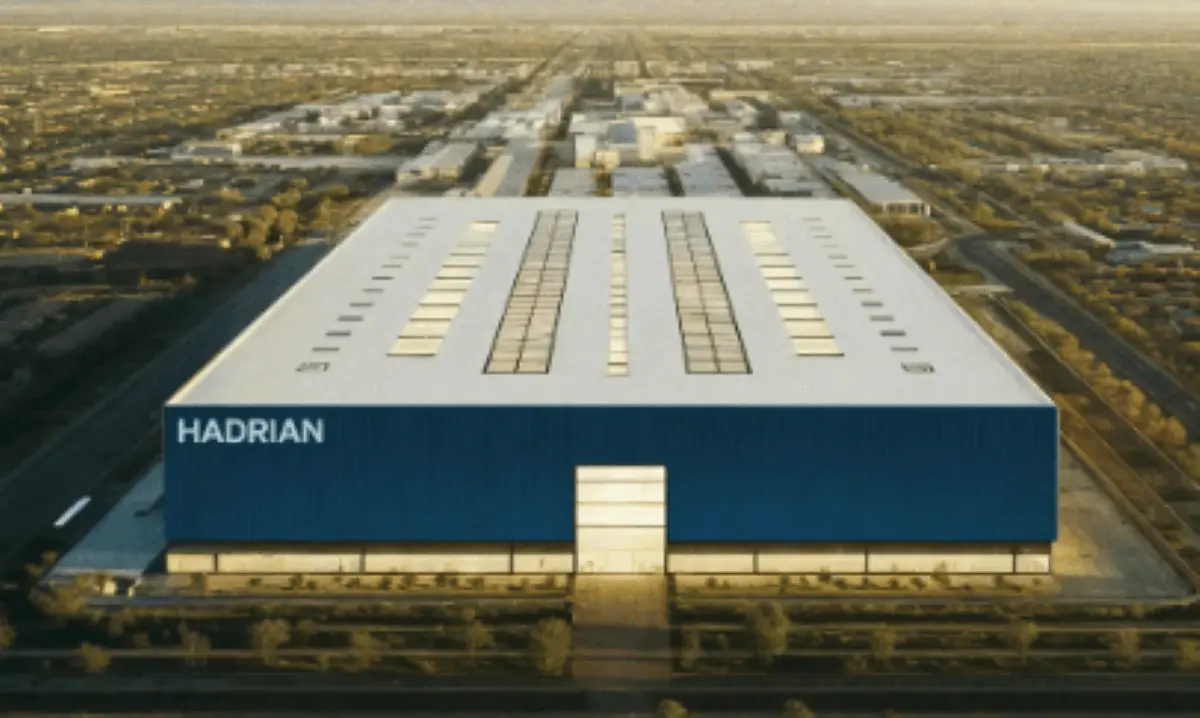
Source: PYMNTS
Opus Software Drives Factory Autonomy
At the core of Hadrian's operations sits Opus software, which the company describes as an operating system for factory autonomy. Opus reads legacy part designs and automates manufacturing and inspection processes around them . The aim is to run plants at world-class speed and quality while requiring far fewer specialist workers than traditional defense industrial operations. The company sells production through three models: precision components built to specification, dedicated manufacturing capacity, and entire factories it designs and operates for customers under a "Factories as a Service" model.
Addressing a Measurable Crisis in Defense Manufacturing
American defense manufacturing faces a genuine workforce crisis that has developed over decades. The Virginia and Columbia-class submarine programmes alone face a shortfall of approximately 50 million workforce hours annually, according to Hadrian backer Altimeter . Hadrian tackles this skills gap by hiring workers with no prior factory experience from sectors like hospitality, retail and nursing, training them in approximately 30 days, and paying above local rates in regions that have lost manufacturing investment. Close to 100% of its factory workers had never worked in manufacturing before joining the company.
Related Stories

Economics That Resemble Software, Not Heavy Industry
The financial model driving investor interest relies on utilization rates that far exceed industry norms. Altimeter reports that Hadrian runs its AI factory operations at 65% to 80% utilization, compared to an industry baseline closer to 10% . Keep machines running at these levels and the returns start to look less like traditional heavy industry and more like software economics. This math allows investors to discuss valuing a defense supplier at multiples typically reserved for technology companies. The company achieved 10x year-over-year growth before its July 2025 Series C financing of $260 million
2
.What to Watch: Physical AI Beyond Chatbots
The speculation around Hadrian Automation, whether accurate or not, signals where capital is flowing. Investors are betting that the next wave of artificial intelligence will manifest in robotics, factories and machines rather than chatbots alone. Chris Power stated that "America cannot afford to lose another generation of industrial capacity" when announcing the company's Series C round . The combination of collaborative robotics, AI-driven optimization and sophisticated safety systems is creating conditions that make domestic manufacturing more competitive than it has been in decades. As other startups like Prometheus raise billions for AI tools helping engineers design and manufacture physical products, the race to rebuild American factory capacity is accelerating.
References
Summarized by

Navi
[1]
Related Stories
Hadrian Valued at Nearly $8 Billion After $1.37B Funding as Defense Tech Boom Accelerates
06 Aug 2026•Startups

Hadrian Secures $260 Million to Expand AI-Powered Defense Manufacturing
18 Jul 2025•Business and Economy
FieldAI Raises $700M at $10B Valuation, Quintupling Worth in Just Over a Year
03 Oct 2026•Startups

Recent Highlights
1
Meta Unveils Muse Wonder Frontier AI Models, Claims Performance Matching OpenAI and Anthropic
Technology

2
IMF Report Warns AI Market Correction Could Spark Global Financial Crisis With $1.4T at Risk
Business and Economy

3
OpenAI Releases 722 AI-Generated Math Solutions, Triggering Existential Crisis in Mathematics
Technology

Recent Highlights
Today's Top Stories









Don’t drown in AI news. We cut through the noise - filtering, ranking and summarizing the most important AI news, breakthroughs and research daily. Follow topics that matter to you and stay ahead.


