Independent test finds Google's AI hurricane model lowballs the strongest storms


2 Sources
[1]
Putting Google's AI hurricane model to the test
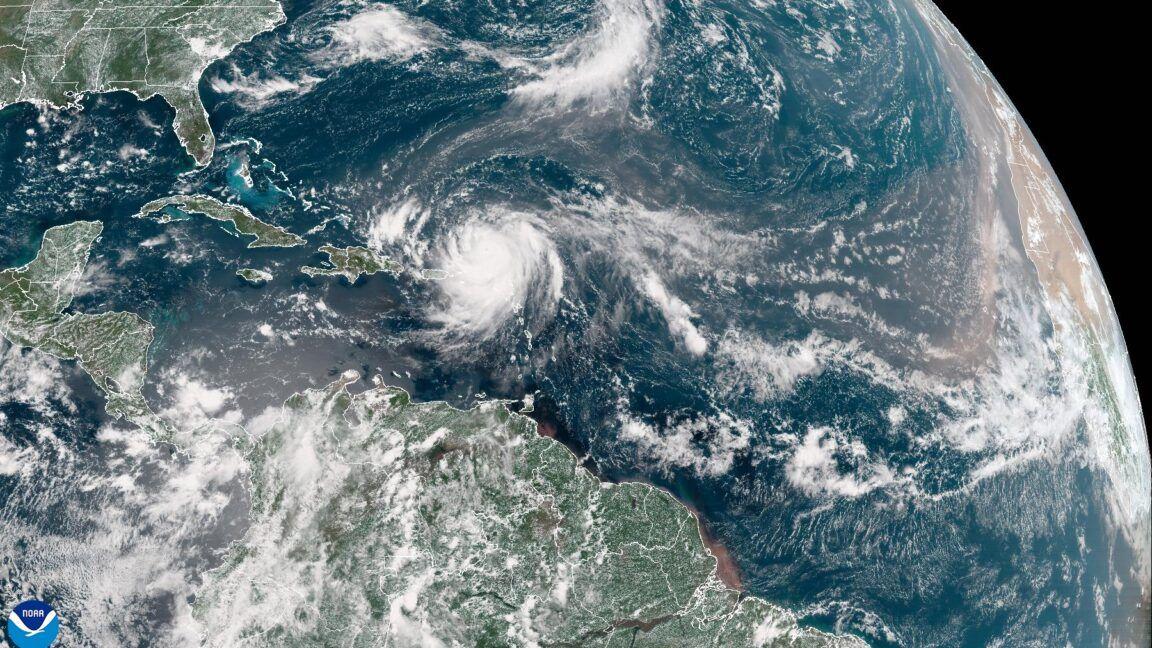
A week before Hurricane Melissa slammed into Jamaica last fall, the forecast models couldn't agree on where it was headed or how strong it would get. One got it right -- an AI model from Google DeepMind, which called both the storm's path and its Category 5 strength. A new study published by
[2]
UAlbany Study Puts Google's AI Hurricane Model to the Test | Newswise
ALBANY, N.Y. (Nov. 19, 2026) -- A week before Hurricane Melissa slammed into Jamaica last fall, the forecast models couldn't agree on where it was headed or how strong it would get. One got it right -- an AI model from Google DeepMind, which called both the storm's path and its Category 5
Share
Copy Link
An independent test of Google's AI hurricane model found it more accurate than the US government's top hurricane model at each lead time from one to five days, yet it tends to undershoot how strong storms get. The study, from University at Albany researchers, is one of the first independent evaluations of the model, and it appears in the peer-reviewed journal Geophysical Research Letters
2
1
.
Source: Phys.org
Google DeepMind's WeatherNext Cyclone has rapidly become one of the most discussed tools in weather forecasting, according to Brian Tang, the University at Albany professor who co-led the study
2
1
. Until now, the main published testing of the model came from Google itself, appearing in the journal Nature over the summer2
1
. He said independent checks give the public more reason to trust a developer's improvement claims, and a clear view of a model's strengths and weaknesses2
1
.What the test covered
The researchers evaluated intensity forecasts for every tropical cyclone worldwide over four years, from June 2022 to May 2026, a sample of 385 storms
2
1
. On intensity, the AI model outperformed the National Oceanic and Atmospheric Administration's top hurricane model at each lead time from one to five days out2
1
. It matched human forecasters only beyond day one2
1
.The study also looked at rapid intensification, when a storm's winds rise by at least 35 mph within 24 hours. That jump is what drives evacuation decisions. Rapid intensification is also hard to predict, because it depends on factors that are not fully understood or observed, per Tang
2
1
. For the next 24 hours it was about as reliable as the leading existing tool, but it raised fewer false alarms2
1
. "In particular, we found Google's model is less likely to predict rapid intensification that never happens," Tang said2
.Where it falls short
The study also documents weak spots, though the researchers do not treat them as disqualifying
2
1
. The model tends to understate how strong storms become, and the gap grows at longer lead times2
1
. It performed best in the North Atlantic and poorest in the eastern North Pacific2
1
. Its uncertainty ranges are often too narrow, with real intensity frequently falling outside them, which could mislead a forecaster who leans on the model2
1
.Tang offered a possible explanation. "The model was trained on fairly big-picture weather data and basic storm information, so it may be missing some of the finer details needed to predict the strongest, fastest-strengthening storms," he said
2
.The model has its showcase moments. A week before Hurricane Melissa hit Jamaica last fall, forecast models disagreed on its path and strength; Google's model correctly predicted both the track and its Category 5 intensity
2
1
.Related Stories

A version behind the model
Google released a newer version of the model this year, and it was not part of the study; the findings apply only to the version studied
2
1
. "AI is a powerful new tool, but it doesn't replace forecasters," Tang said2
. Other AI weather models are in development, and he favors a shared, transparent way to compare them, so forecasters know when to rely on each one2
1
.References
Summarized by

Navi
[1]
Related Stories
DeepMind's AI weather model gives forecasters an extra day to prepare for deadly tropical cyclones
06 Aug 2026•Science and Research

Google's AI Weather Model Outperforms Traditional Forecasts in Hurricane Erin Prediction
27 Aug 2025•Technology
Google DeepMind Unveils AI-Powered Weather Lab for Advanced Cyclone Predictions
13 Jun 2025•Technology

Recent Highlights



Recent Highlights
Today's Top Stories




Don’t drown in AI news. We cut through the noise - filtering, ranking and summarizing the most important AI news, breakthroughs and research daily. Follow topics that matter to you and stay ahead.


