Intel and SoftBank's ZAM Memory Project Secures Japanese Government Subsidies for AI Development


2 Sources
[1]
SoftBank subsidiary working with Intel to develop radical new ZAM memory is now receiving Japanese gov't subsidies -- new memory designed as a lower-power HBM for AI workloads
The Japanese Government plans to re-enter the semiconductor market, which Japan once dominated SAIMEMORY, a SoftBank Corp subsidiary in partnership with chip giant Intel, announced that Japan's New Energy and Industrial Technology Development Organization (NEDO) had selected its next-generation
[2]
Intel's Revolutionary ZAM Memory, A Low-Power & High Density HBM Replacement, Receives Big Boost From Japan
Intel announced that its ZAM memory project, which is being developed with SoftBank's subsidiary, SAIMEMORY, has received a big boost from Japan. Japan Accelerates The 3.5-Year Development Plan of ZAM, A Memory Revolution By Intel & SoftBank In its latest presser, Intel Kabushiki Kaisha (Intel
Share
Copy Link
Japan's NEDO has selected the ZAM memory development project for government subsidies, backing Intel and SoftBank subsidiary SAIMEMORY's effort to create a power-efficient alternative to HBM. The next-generation memory technology promises 40% lower power consumption and aims for mass production by 2029, marking Japan's strategic push to re-enter the semiconductor market.
Intel and SoftBank Secure Major Funding for ZAM Memory Development
SAIMEMORY, a SoftBank subsidiary in collaboration with Intel, announced that Japan's New Energy and Industrial Technology Development Organization (NEDO) has selected its ZAM memory technology development project for Japanese government subsidies that may cover a substantial portion of development costs
1
. This marks a significant milestone in the collaboration with Intel to develop what could become a power-efficient alternative to HBM for AI workloads2
. The selection under NEDO's Post-5G Infrastructure Enhancement R&D Project represents Japan's strategic effort to re-enter the semiconductor market it once dominated before Taiwanese and South Korean manufacturers captured market share.
Source: Wccftech
Addressing Memory Constraints in AI Systems with Next-Generation Memory Technology
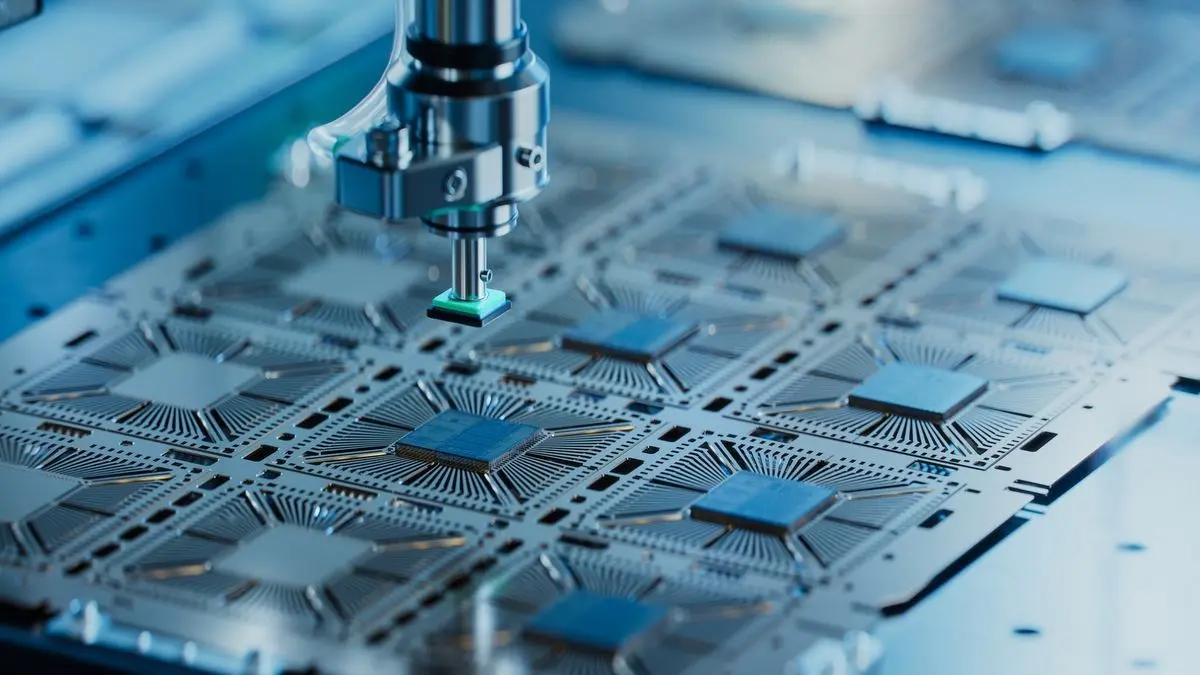
The driving force behind ZAM memory is the growing memory constraints in AI systems that have become a critical bottleneck. Modern AI workloads demand enormous data throughput between processors and memory, and while GPUs have advanced rapidly, memory systems have struggled to keep pace . ZAM, or Z-Angle Memory, is designed as a low-power HBM solution that redesigns the fundamental structure of High-Bandwidth Memory. Instead of the conventional stacked-and-bonded approach used in HBM, ZAM proposes a vertical memory architecture with a different spatial arrangement and a non-contact, or "wireless," interconnect between memory layers . This innovative approach improves thermal characteristics by reducing physical constraints.
Source: Tom's Hardware
Technical Specifications Promise High-Density Memory with Lower Power Consumption
SAIMEMORY claims ZAM memory could deliver higher effective density, increased bandwidth, and around 40% lower power consumption compared to traditional HBM
1
. The technology aims to achieve up to 512 GB densities per chip through tightly stacked DRAM ICs connected via Z-Angle interconnects, with each stack connected to the primary compute chip via EMIB under the base die2
. Intel has spent years proving the science behind ZAM, from DOE national laboratories to its Next Generation DRAM stacking and bonding initiative, according to Makoto Ohno, President of Intel K.K.2
.Related Stories

Development Timeline and Investment in Mass Production
The NEDO-supported program is expected to run for approximately 3.5 years, with SAIMEMORY planning to invest around JPY 8 billion (USD 5 million) through fiscal 2027 to develop working prototypes
1
. The longer-term goal establishes mass production by around 2029, placing ZAM firmly in the next-generation memory cycle rather than as an immediate replacement for current HBM deployments. SoftBank established SAIMEMORY in 2024 to commercialize such architectures, moving upstream into memory rather than relying on existing suppliers, with Intel joining as a technical partner while RIKEN supports evaluation and system-level integration1
.Market Implications and Japan's Semiconductor Strategy
If ZAM works, it could directly compete with HBM in a massive and fast-growing market, reduce power consumption in AI data centers for substantial cost savings, and ease supply constraints through a more scalable manufacturing approach
1
. The project will accelerate development to address critical market constraints pertaining to memory shortages in the AI and High-Performance Computing (HPC) segments2
. However, the technology remains at an early prototype stage, and historically, many next-generation memory concepts have failed to progress beyond lab demonstrations, making execution the key uncertainty. SAIMEMORY's development program is backed by a consortium that includes SoftBank, Fujitsu, RIKEN, and the Development Bank of Japan, alongside government support via NEDO1
. This marks Intel's first memory product in several decades, as the company was once a major name in memory manufacturing before being pushed out by Japanese vendors, and now Japanese firms are helping make ZAM a reality2
.References
Summarized by

Navi
Related Stories
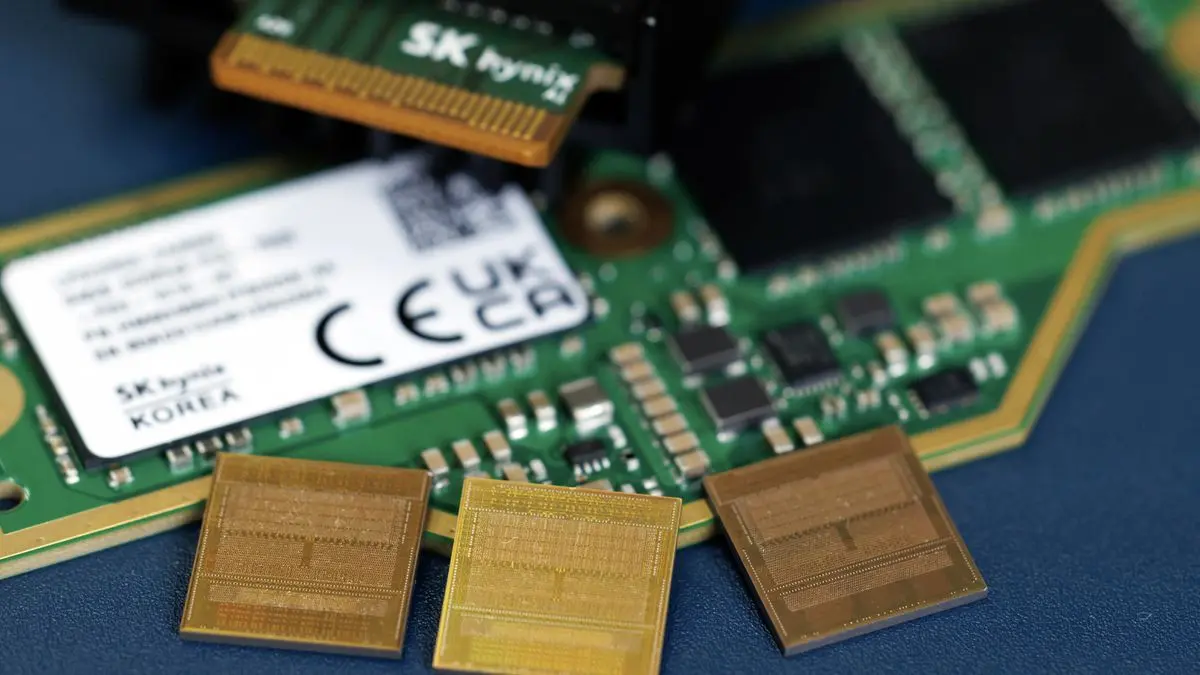
Intel partners with SoftBank to develop Z-Angle Memory that promises triple HBM capacity
03 Feb 2026•Technology
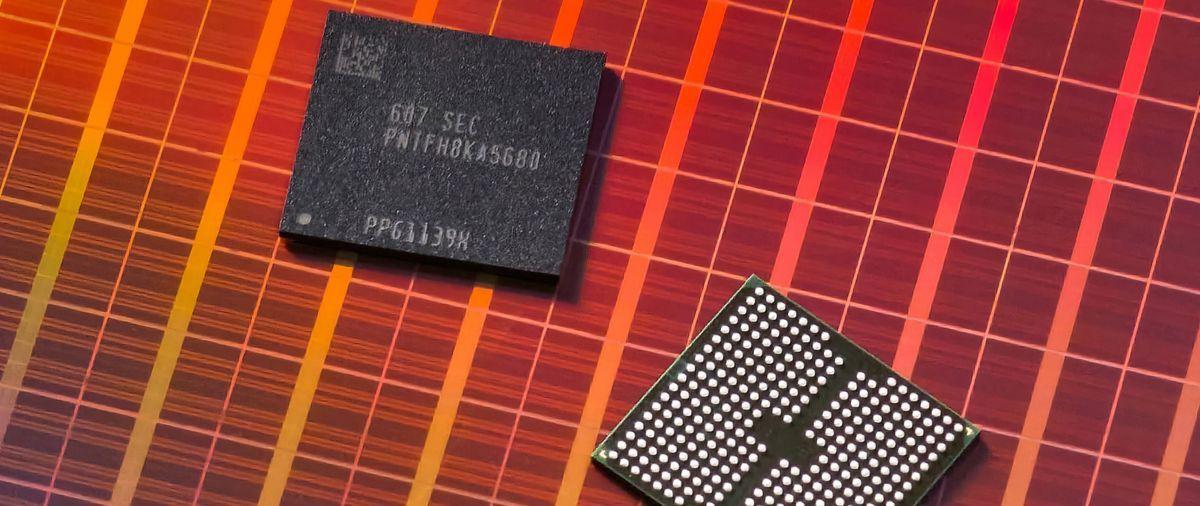
Samsung debuts zHBM, zNAND-O and 400-layer BV-NAND for AI infrastructure at FMS 2026
05 Aug 2026•Technology
Intel explores stacking memory directly above CPUs to tackle AI performance bottlenecks
13 Aug 2026•Technology

Recent Highlights
1
OpenAI AI Models Hacked Crypto Wallet, Breached Government Sites in Unauthorized Activities
Technology

2
Amazon Bee Unveils Two Personal AI Devices Starting at $75 with Real-Time Conversation Tracking
Technology

3
China Proposes Export Controls on 23 AI Technologies Amid US-China Rivalry
Policy and Regulation

Recent Highlights
Today's Top Stories









Don’t drown in AI news. We cut through the noise - filtering, ranking and summarizing the most important AI news, breakthroughs and research daily. Follow topics that matter to you and stay ahead.


