Nvidia CEO Jensen Huang calls robots 'AI immigrants' to solve global labor shortages


3 Sources
[1]
Nvidia CEO Jensen Huang says robots are 'AI immigrants' that can address labor shortages -- can 'do the type of work that maybe we decided not to do anymore'
The Nvidia CEO says robots will be the only way to sustain economies. Nvidia chief executive Jensen Huang referred to AI-controlled robots as "AI immigrants" at a question and answer session with reporters at CES 2026 that Tom's Hardware attended. Huang's comment related to how robotics may do
[2]
Nvidia CEO praises robots as 'AI immigrants'
Las Vegas (AFP) - Nvidia chief executive Jensen Huang described robots as "AI immigrants" on Tuesday, arguing they could solve a global labor shortage that is hampering manufacturing. Addressing concerns about machines replacing human workers, the leader of the world's dominant AI chip company
[3]
Nvidia CEO praises robots as 'AI immigrants'
AMD CEO Lisa Su says 'AI is not replacing people', but hints at a quiet shift reshaping who gets hiredNvidia chief executive Jensen Huang described robots as "AI immigrants" on Tuesday, arguing they could solve a global labor shortage that is hampering manufacturing. Addressing concerns about
Share
Copy Link
Nvidia CEO Jensen Huang sparked debate at CES 2026 by describing robots as 'AI immigrants' that can address a global labor shortage affecting tens of millions of workers. Speaking to 200 journalists, Huang argued the robotics revolution will create jobs rather than eliminate them, compensating for aging populations and demographic decline while driving economic growth.
Nvidia CEO Introduces Controversial 'AI Immigrants' Concept at CES
Nvidia CEO Jensen Huang introduced a provocative new term at CES 2026, describing AI-controlled robots as "AI immigrants" during a 90-minute question and answer session with 200 journalists and analysts at a Las Vegas hotel
1
2
. The leader of the world's most valuable company at roughly $3.5 trillion argued that robots could solve a global labor shortage that is hampering manufacturing and other industries2
. His off-the-cuff remarks, which have become a popular CES tradition, directly addressed concerns about machines replacing human workers by taking the opposite stance3
.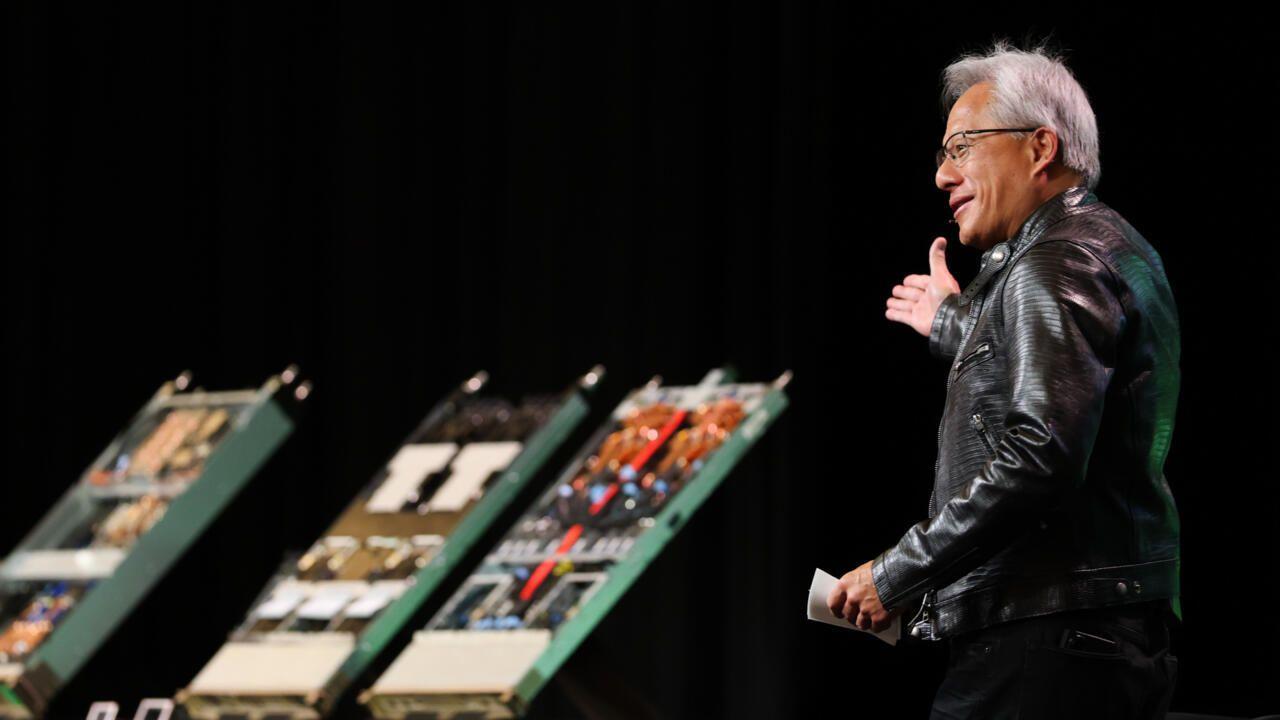
Source: France 24
Labor Shortage Reaches Tens of Millions Worldwide
Huang painted a stark picture of the current workforce situation, estimating that the labor shortage reaches "tens of millions" of people, not thousands, due to demographic shifts
2
. "We no longer, as a population, will be able to sustain the economies that we would like to have," Huang explained1
. He argued that the solution lies in deploying more robots to "help us on manufacturing floors and do work that maybe we've decided not to do anymore"2
. The Nvidia CEO's comments align with other Silicon Valley leaders, particularly Tesla and SpaceX's Elon Musk, who frequently cite population decline and workforce aging as reasons to embrace automation3
.Robotics Revolution Will Create More Jobs, Not Eliminate Them
Contrary to widespread fears about job displacement, Huang insisted that "having robots will create jobs"
1
. He argued that a robotics revolution will compensate for labor losses from aging populations and demographic decline while helping to boost the economy2
. "When the economy grows, we hire more people," Huang said, sporting his signature black leather jacket3
. The CEO emphasized that economic growth driven by the robotics revolution would allow for more jobs and make living more affordable, with AI helping to keep inflation low1
.Related Stories

Nvidia Invests in Foundational Software for Multi-Industry Robotics
Nvidia is investing heavily in providing the foundational software that can make robots work across multiple industries, including manufacturing, retail, and healthcare
3
. Huang expects to see robots with human-level skills "this year," with ongoing work on locomotion, articulation, and fine motor skills1
. "We don't just use our eyes, we also use touch," he explained. "And the robot only has eyes, so it needs to have touch and so those fine motor skills are hard, hard to develop, but we're developing technology in that area"1
. Like every year, robotics were a major presence at CES, with some 130,000 attendees and companies hoping robots will break into the mainstream as useful devices instead of novelties2
.
Source: ET
Blue-Collar Workers Face Uncertain Future Despite Reassurances
While Huang stated that "there are a lot of jobs that won't be replaced by AI for a very long time," his suggestion that physical, blue-collar labor in manufacturing or other areas could be automated may concern workers who thought their woodworking skills, HVAC certification, or determination would keep them employed
1
. The comment drew no gasps or reactions from the crowd of press at the event, though many will find the comparison of AI robots to human immigrants an oversimplification of complex social and economic issues1
. The debate continues as automation advances, with workers watching closely to see whether the promised job creation materializes or whether the transition leaves many behind.References
Summarized by

Navi
[1]
[2]
Related Stories
Jensen Huang Warns AI Leaders Against Fearmongering as Nvidia Pushes Optimistic Vision
16 Mar 2026•Technology

Nvidia CEO Jensen Huang Envisions AI-Driven Future, Emphasizes US Manufacturing and Skilled Trades
01 May 2025•Technology
Jensen Huang says AI job displacement fears miss the point: You'll lose to coworkers who use AI
20 Apr 2026•Business and Economy
Recent Highlights
1
Microsoft and Nvidia Launch Surface Laptop Ultra: A $2,599 AI-Ready PC With RTX Spark Chip
Technology

2
OpenAI Releases 722 AI-Generated Math Papers on GitHub, Igniting Fury Among Mathematicians
Science and Research

3
Trump Consulted Grok AI Before Ordering Venezuela Invasion and Capture of Nicolás Maduro
Policy and Regulation

Recent Highlights
Today's Top Stories












Don’t drown in AI news. We cut through the noise - filtering, ranking and summarizing the most important AI news, breakthroughs and research daily. Follow topics that matter to you and stay ahead.


