Jensen Huang Challenges Bill Gates on AI Jobs: Predicts Massive Growth in Skilled Trades


5 Sources
[1]
Nvidia CEO Jensen Huang says AI will create 'hundreds of thousands' of new jobs -- including for people who want to 'make things with their hands' | Fortune
As executives race to boost productivity and automate work with AI, workers have been left to ponder an existential question: How much work will actually be left for humans? But if you ask Jensen Huang -- the CEO of the world's most valuable company, Nvidia -- the answer is plenty. "Don't forget
[2]
'I'm in favor of taxes,' says Nvidia's Jensen Huang -- but he doesn't agree with Bill Gates on his plan to slow an AI fallout | Fortune
The entrepreneur-turned-philanthropist also suggested that governments will need the funds. Gates figures that if AI takes the jobs of humans, then state revenues from income tax will drop. "A tax would slow the rush away from human labor a little and raise money for retraining and a stronger
[3]
Jensen Huang Rejects Bill Gates' AI Jobs Warning: 'I Don't See What He Sees' - NVIDIA (NASDAQ:NVDA)
Nvidia Corp. (NASDAQ:NVDA) CEO Jensen Huang is pushing back on Bill Gates' warning that artificial intelligence could permanently wipe out huge numbers of jobs, arguing the technology will instead be a net job creator "at a scale that we've never seen." "I love the heck out of Bill," Huang told
[4]
Jensen Huang vs Bill Gates: Two Diverging Views on AI and the Future of Jobs
Jensen Huang, CEO of NVIDIA, recently responded to fears about artificial intelligence leaving millions unemployed. His statement came after Microsoft's co-founder, Bill Gates, expressed concern about the exponential rise of AI that may cause mass unemployment. Talking to Fox Business, the
[5]
Jensen Huang Rejects Bill Gates Plan to Tax AI, Workplace Robots
Huang said higher productivity allows companies to invest, expand and hire. He expects AI to create jobs on a scale that previous technology shifts did not reach. He acknowledged that automation will disrupt some workers and said affected people will need support. Gates renewed his robot tax
Share
Copy Link
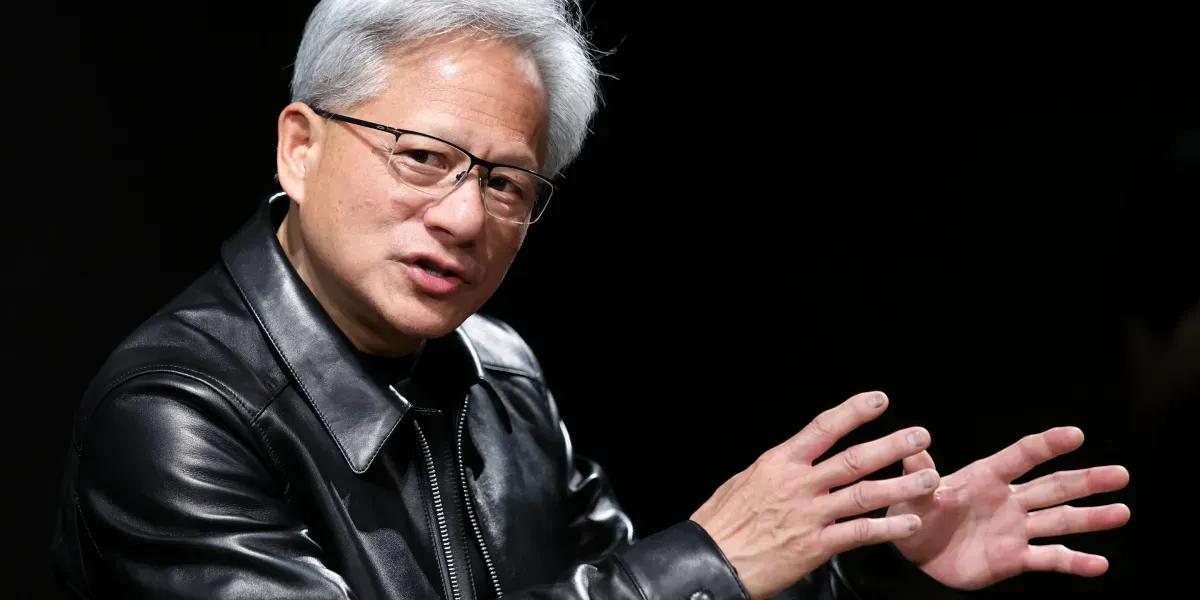
Nvidia CEO Jensen Huang directly counters Microsoft co-founder Bill Gates' warnings about AI-driven mass unemployment. While Gates proposes taxing AI and robots to slow job displacement, Huang argues AI will create hundreds of thousands of jobs, particularly in skilled trades like electricians and plumbers needed for the massive data center buildout.
Jensen Huang Rejects Bill Gates' AI Unemployment Warnings
Nvidia CEO Jensen Huang has publicly disagreed with Microsoft co-founder Bill Gates over the economic impact of artificial intelligence on employment
1
. Speaking on Fox Business, Huang responded to Gates' recent warning that AI could lead to massive unemployment, stating: "I love the heck out of Bill, but I don't see what he sees"2
. The debate highlights two fundamentally different perspectives on AI and the future of jobs as the technology reshapes the global economy.Gates argued in a recent essay that AI differs from past technological revolutions because it can replace human cognitive labor itself rather than simply making workers more productive
3
. He expects entry-level and mid-level roles to be hit first, including customer support, software engineering, and paralegal work, before increasingly capable robots threaten physical jobs. To address this AI impact on employment, Gates has proposed taxing AI tokens and robots, using the revenue to fund retraining programs and strengthen social safety nets5
.
Source: Fortune
Nvidia CEO Predicts Hundreds of Thousands of New AI Jobs
Huang counters with a dramatically different vision of AI job creation. "Don't forget the chip plants that are being created—packaging, computer plants, and all of the AI factories being created—hundreds of thousands of jobs are being created as we speak," Huang said
1
. The billionaire CEO, whose net worth stands at approximately $180 billion, believes AI-driven job losses will be offset by new opportunities emerging from the massive AI infrastructure buildout underway globally.Huang's economic theory runs opposite to Gates' concerns. According to the Nvidia chief, AI makes workers more productive, higher productivity boosts profits, and ambitious companies reinvest those profits to expand and hire more people
2
. "When companies are more productive, they don't lay off people, they hire more people," Huang explained. He acknowledged that "everybody's job changes" and "some jobs will be eliminated," but maintained that "many new jobs will be created" as revolutionary technology advances4
.Skilled Trades See Major Boom from Data Center Construction
A key area Huang believes will benefit significantly from AI and the future of jobs is skilled trades. The massive infrastructure buildout fueling the AI boom is already driving demand for electricians, plumbers, technicians, and other six-figure earning workers needed to build and maintain data centers
1
. "Having a large population of skilled labor and people who build things, that make things with their hands, is tremendous for the United States," the 63-year-old CEO said.Huang has been calling attention to skilled trades opportunities for months. Speaking to Channel 4 News in September 2025, he stated: "If you're an electrician, you're a plumber, a carpenter—we're going to need hundreds of thousands of them to build all of these factories. The skilled craft segment of every economy is going to see a boom"
1
. At the World Economic Forum in Davos this past January, Huang described the situation as "the largest infrastructure build-out in human history," which will create "a lot of jobs."The numbers support Huang's claims. In early August, Nvidia committed up to $105 billion for a new OpenAI data center in Piketon, Ohio, billed as one of the world's largest data centers
1
. SB Energy is hiring for various roles, including a power-generation project manager position paying $140,000 to $170,000—more than twice the median household income of roughly $55,000 in the area with fewer than 27,000 residents.Talent Gap Threatens AI Infrastructure Expansion
Despite the optimism around AI job creation, the United States faces a significant challenge in filling these positions. An estimated 2.1 million skilled trades jobs could go unfilled nationally by 2030, ranging from 130,000 additional electrical workers needed by 2030 to more than 350,000 new auto technicians needed by 2029
1
. This talent shortage threatens to slow the very reindustrialization Huang envisions.Jon Gray, president and chief operating officer at Blackstone, echoed Huang's perspective, predicting a "huge boom in blue-collar employment certainly over the next five years." One of Blackstone's portfolio companies, QTS, which operates or is developing more than 75 data centers worldwide, had roughly 10,000 workers on job sites a year ago. By the end of 2026, that number is expected to quadruple to 40,000—a 300% increase
1
.
Source: Fortune
To address these job market disruptions and workforce needs, leaders at BlackRock, Carhartt, Ford Motor Company, and Google recently announced the Alliance for America's Skilled Trades, a partnership aimed at expanding skilled-trades training across 30 states, with plans to eventually reach workers nationwide
1
.Related Stories
Mixed Evidence on AI's Current Employment Impact
The labor market data presents a nuanced picture that gives both tech leaders some validation. AI was cited in 112,713 announced U.S. job cuts through July, roughly 24% of all cuts, and has ranked as the leading stated reason for layoffs for five consecutive months
3
. Yet total announced cuts are down 41% from the same period last year, and July's tally was the lowest monthly total in two years.More concerning evidence comes from Stanford researchers who found that employment among 22-to-25-year-olds in highly AI-exposed occupations is 19% below where it would be had it kept pace with less-exposed peers
3
. The adjustment appears to be coming mainly through reduced hiring rather than firings, suggesting the first sign of AI displacement may not be mass layoffs but companies simply hiring fewer people at entry levels.Prediction markets aren't pricing a broad employment shock for now. Polymarket traders price only an 11% chance the U.S. unemployment rate, which stood at 4.1% in July, reaches 5% this year
3
.Huang Opposes Gates' Robot Tax Proposal
On the question of whether to tax AI and workplace robots, Huang and Gates also diverge sharply. Gates renewed his robot tax proposal in an essay published on August 26, comparing current payroll taxes with rules for business equipment. "Right now, if you're an employer and you hire someone, you pay payroll taxes on their earnings. But if you buy a robot, you can usually write it off right away as a business expense," Gates wrote, arguing this difference encourages companies to replace workers with machines
5
.Huang rejected this approach while expressing support for taxation in principle. "I'm in favor of taxes. And I think that for anybody who is productive, it's a great way for us to contribute back to society and the economy. But the fact of the matter is, there are probably lots of different ways to approach this," he said
2
. Huang believes higher productivity from automation allows companies to invest, expand and hire, expecting AI to create jobs on a scale that previous technology shifts did not reach.
Source: Benzinga
Gates first raised the robot tax idea in 2017, and many economists opposed it, describing the proposal as a tax on productivity
5
. Its return now extends the debate to AI systems and public policy responses to automation.For now, the evidence sits somewhere between the two billionaires: AI is already eliminating some jobs and appears to be squeezing entry-level hiring, but the economy-wide employment destruction Gates fears has yet to materialize
3
. Watch for continued data on youth employment trends, skilled trades hiring rates, and whether the infrastructure boom Huang predicts materializes at the scale needed to offset white-collar displacement.References
Summarized by

Navi
[3]
[4]
[5]
Related Stories
Jensen Huang Warns AI Leaders Against Fearmongering as Nvidia Pushes Optimistic Vision
16 Mar 2026•Technology

Nvidia CEO Jensen Huang Weighs In on AI's Impact on Jobs and Innovation
14 Jul 2025•Technology
Jensen Huang says AI infrastructure buildout will create more jobs for skilled trades workers
21 Jan 2026•Business and Economy
Recent Highlights
1
Microsoft and Nvidia Launch Surface Laptop Ultra: A $2,599 AI-Ready PC With RTX Spark Chip
Technology

2
OpenAI Releases 722 AI-Generated Math Papers on GitHub, Igniting Fury Among Mathematicians
Science and Research

3
Trump Consulted Grok AI Before Ordering Venezuela Invasion and Capture of Nicolás Maduro
Policy and Regulation

Recent Highlights
Today's Top Stories









Don’t drown in AI news. We cut through the noise - filtering, ranking and summarizing the most important AI news, breakthroughs and research daily. Follow topics that matter to you and stay ahead.


