6 Sources
[1]
Lenovo Shares Images of New Googlebook and 2-in-1 Tablet - CNET
Ever since being admittedly fascinated by the Cambridge coffee webcam from the 1990s, I've written about VPNs, the NFL, smartphones, living wages, over/unders and everything in between. Read full bio The Googlebook is coming, and we now have a first look at what one of the upcoming devices may look like. Lenovo provided tech news site Digital Citizen with a sneak peek at the new laptop, and it's quite an evolution from its predecessor, the Chromebook. Android Headlines also previewed a two-in-one tablet that Lenovo is developing, using the same new operating system as the Googlebook. The Lenovo Googlebook 15, so named for its 15.6-inch screen, includes Google branding, a thin bezel and a stylish back cover, along with a revamped operating system and AI capabilities, according to images shared by Digital Citizen. Representatives for Google and Lenovo didn't immediately respond to requests for comment. Lenovo, Acer, ASUS, Dell and HP will be the first companies to produce Googlebooks. Google announced the new device at The Android Show in May and said it would go on sale this fall. What is a Googlebook? The rumored Googlebook appears to be a Google-branded laptop that combines Android, Gemini AI and ChromeOS technologies. Android powers many of the world's smartphones, while Gemini AI is Google's flagship family of artificial intelligence models. ChromeOS has served as the operating system for Chromebooks since their introduction in 2011. As explained by CNET managing editor Joshua Goldman, the rumored Googlebook, unlike the existing Chromebook lineup, is expected to provide access to the full range of Android apps users rely on on their phones, along with built-in Gemini AI features. Digital Citizen also reported that Googlebooks may be able to access files stored on users' Android devices Chromebooks, considered a cheaper alternative to iPads, MacBooks and Windows laptops, run on ChromeOS. Customers who want to run Android apps have to download them from the Google Play Store. With Googlebooks, those apps will be available natively. Big on branding Lenovo's Googlebook images shared with Digital Citizen confirm what CNET learned in May -- Google is placing a strong emphasis on branding. "Googlebook" appears at the bottom left of the keyboard, and there is a G key between the function and alt keys just above the name. Tapping the G key will power up the Gemini AI assistant. The images also reveal a top row of function keys, F1 through F14, a departure from the ChromeOS-style shortcut keys typically found on Chromebooks. These function keys retain some of the same controls found on the top row of Chromebook keyboards, including brightness and volume adjustments. The new layout also introduces additional keys, such as dedicated shortcuts for accessibility features and profile or account switching. The accessibility key can be utilized to help customers with vision, hearing and mobility needs, such as screen readers, live captions and mobility controls. The profile/account switch key enables customers to navigate between their different accounts and profiles. More differences Lenovo's Googlebook has other features not previously seen on Chromebooks, according to Digital Citizen. The display features a status bar similar to those found on Android smartphones, with icons for Gemini AI, notifications, Wi-Fi connectivity, and battery status. A taskbar at the bottom of the screen provides quick access to frequently used apps and features, including a G button for searching files and applications, along with shortcuts for Gemini AI, Chrome, YouTube, Canva, and Adobe Premiere Pro. Google and Adobe maintain a partnership that integrates Adobe Photoshop and Premiere Pro into Gemini AI. On the hardware side, the Lenovo Googlebook features an ultra-thin bezel surrounding the display, along with a top-mounted notch that houses the webcam and its integrated privacy shutter. The laptop's bottom cover features a horizontal fluted texture, giving it a distinctive design compared with the flat surfaces typically found on other devices. 2-in-1 Googlebook tablet Also on Monday, Android Headlines shared an exclusive look at Lenovo's two-in-one tablet. The tablet has the Googlebook branding and also includes the G key on the keyboard. The device will have Dolby Atmos speakers, a quad-speaker setup and stylus input support, according to the report. What's still unknown Google said in May that the Googlebooks would launch this fall, but Lenovo did not specify the month or exact date. We also don't know the price, although PCMag reported in May that customers should expect to pay at least $800 and possibly more than $1,000. Several key details about the device remain unknown, including the processor, display resolution and refresh rate, memory and storage configurations, battery capacity, and overall weight. Digital Citizen said Lenovo will likely announce Google Books at IFA Berlin, one of the world's largest consumer electronics trade shows, scheduled for Sept. 4-8.
[2]
Lenovo Googlebook 15 Renders Give First Look at Style and Substance
Leaked renders of Lenovo's rumored Googlebook 15 have appeared online, giving us our first glimpse of the new laptop. Digital Citizen claims to have obtained press images of the laptop that reveal key details about its keyboard layout, app design, and connectivity. The Googlebook is a spiritual successor to the Chromebook. They will be more powerful than budget-focused ChromeOS PCs and offer deeper AI integration. That's the pitch at least, and we're cautiously optimistic about it. Details remain scarce as we approach the launch of the first iterations of these designs, possibly at IFA, but with these Lenovo images, we're learning more. It's a 15-inch laptop with a silver-white chassis and a deliberately small keyboard. There's no numpad, but we do have arrow keys and a full function row with secondary capabilities. There's a Google key where the Windows key sits on Windows laptops. Caps Lock doubles as an app launcher. The Googlebook features a streamlined port selection: a single USB-A, two USB-C (on opposite sides), an HDMI output, and a 3.5mm audio jack. There may also be a card reader slot or a SIM card slot. Although we don't know the speed of these ports, there's enough there to handle external displays, headphones, and USB-C charging. It will be easily expandable with a dock or adapter, too. The display uses ultra-thin and modern-looking bezels, forcing the camera into its own little notch at the top. It goes above the bezel, rather than below it, as Apple does with its MacBooks. There's what appears to be a physical privacy shutter on the webcam, as is common on Lenovo laptops. Considering this laptop will lean heavily into its AI features, that physical barrier could help improve trust in a new platform. The display also hints at what the operating system might look like and how it might work. It has a top status bar similar to Android, containing battery life, network status, date, time, notifications, and a Gemini button. There's a more typical taskbar along the bottom with rounded app shortcuts. That includes classic Google services, a casting app, and Adobe Premiere Pro, which signals that Googlebooks will launch with a robust software suite, and that the underlying hardware will be powerful enough to handle demanding tasks like video editing. The press kit reportedly didn't include any specifications, so we don't know what this laptop will run on, nor what storage and memory configurations it will launch with. Depending on how lightweight the operating system ends up being, it's possible Googlebooks will be able to get away with less than traditional x86 platforms. Last week, Android Headlines also tipped a Lenovo Googlebook 2-in-1.
[3]
The first Googlebook shows us what Google's Android-ChromeOS merger actually looks like
Serving tech enthusiasts for over 25 years. TechSpot means tech analysis and advice you can trust. Laptop Intelligence: Google finally announced the much-talked-about project to blend Android and ChromeOS into a new, AI-driven "computing" experience earlier this year. Now, the first OEM Googlebook design has leaked ahead of the machine's expected - and still unconfirmed - release date. Google unveiled the Googlebook laptop in May, explaining that several OEMs would be joining in with their own take on the AI-ready machine. Thanks to Digital Citizen, we now have a closer look at the Googlebook Lenovo is building for a late-2026 release. The Lenovo Googlebook 15 carries some design choices expected to become standard across the new platform, while other hardware decisions set minimalism aside in favor of better connectivity. The leak shows what seems to be a full press image set for Lenovo's Googlebook 15. The PC giant has apparently built one of the very first Googlebook laptops to reach the market, a notable milestone that could help shape the early commercial fortunes of Google's latest hardware push. The Lenovo Googlebook 15 features some of the platform's most distinctive design choices, starting with a Google "G" key at the bottom left of the keyboard. Much like Microsoft's much-maligned Copilot key, the new G key is expected to serve as a shortcut to launch the Gemini chatbot. The keyboard also includes 14 Function keys, with a dedicated accessibility key on the upper right that's rarely seen in laptop designs. According to the leaked press images, the Lenovo Googlebook 15 comes packed with connectivity on both sides. Options include a full-sized HDMI port, a USB-C port, a 3.5mm headphone jack, and what appears to be a full-sized USB-A port alongside a second USB-C port. The leaked images provide a rendered mockup of what should be Googlebook's UI, with a rather standard desktop offering and a status bar taken straight from a modern Android iteration. Googlebooks use Aluminium OS, a new operating system Google has been working on for a while to bridge Android app compatibility with ChromeOS' always-on environment. The one thing the images don't reveal is any hint of actual hardware specifications. Google has called the Googlebook its most advanced laptop yet, built to get the most out of the Gemini chatbot, with the company framing intelligence as the new spec that matters most. As PCWorld has noted, the heavy reliance on automation and agentic AI could make Googlebooks the first wave of "anti-personal computers," devices designed to act on a user's intent, leaving them no longer solely in control of the machine.
[4]
Leaked images reveal the first Googlebook. It's a Lenovo
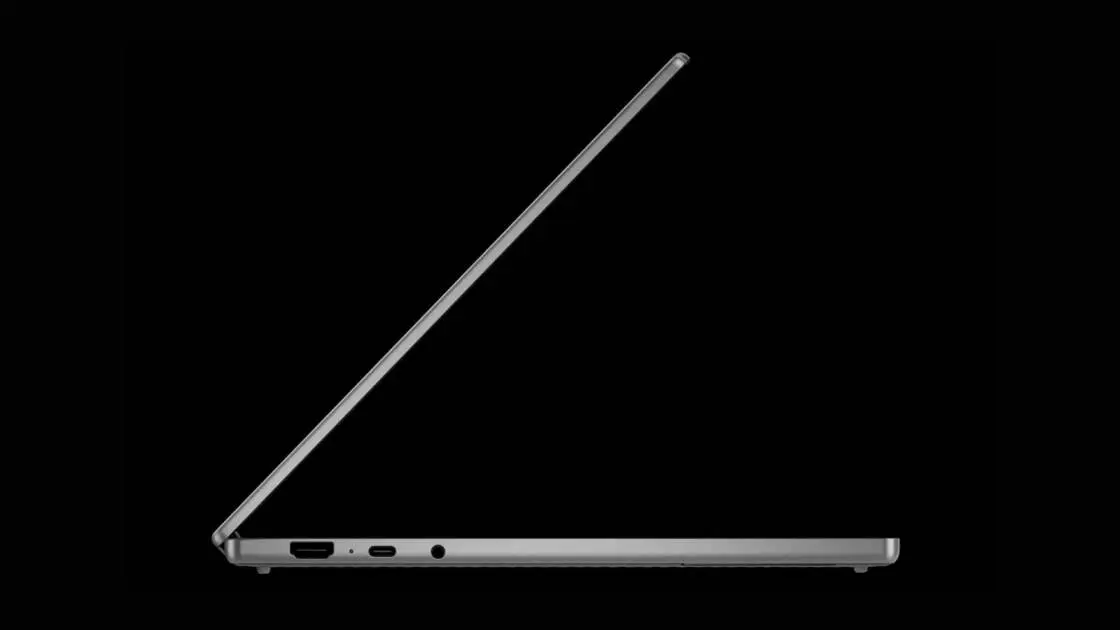
In the images, you can see that the laptop has a dedicated Google key for Gemini as well as a Googlebook logo. Lenovo also appears to be including numerous ports, such as HDMI, USB-C, USB-A, and a headphone jack, as well as Dolby Atmos sound and sleek, narrow bezels. The leak only involves images and doesn't contain any hard details regarding technical specifications, expected price, or expected launch date. All we really know is an anticipated launch some time in fall 2026. Neither Lenovo nor Google have commented on the matter. What are Googlebooks? Googlebooks are Google's upcoming laptop platform, designed to replace Chromebooks. They run on a new operating system called Aluminium OS, which combines Chrome OS and Android into one native system that's deeply integrated with AI assistant Gemini. Earlier this year, we saw a leaked video of Aluminium OS in action. With a new feature called Magic Pointer, you can use Gemini Intelligence to infuse AI anywhere as you work. This magical cursor works contextually, and you only need to wiggle it briefly for the AI to take action. For example, moving the Magic Pointer over a date in an email causes Gemini Intelligence to suggest adding that date to your calendar. Meanwhile, selecting two photos with the Magic Pointer will combine them. In a sense, Googlebooks are laptops that run on Gemini. Googlebooks will be manufactured by companies including Acer, ASUS, Dell, HP, and Lenovo. The first Googlebooks are expected to go on sale in fall 2026. However, general reception has been mixed. Because Googlebooks are designed to recognize a user's intent and act accordingly, they're semi-autonomous and no longer solely under your control. We call them the first anti-personal computers.
[5]
Lenovo's full-size Googlebook leak offers a closer look at hardware [Gallery]
Just a couple of days after images of Lenovo's Googlebooks appeared, a wave of incredibly detailed images has surfaced with the 15-inch laptop in full view. The Googlebook form factor is part of a new laptop line from Google. It echoes aspects of Chromebooks, but relies heavily on Gemini Intelligence combined with the best parts of Android, rather than ChromeOS. We've seen glimpses of how the software will work in conjunction with Google's AI, but any tangible release has yet to become available. Courtesy of Digital Citizen, we get a closer look at one of the two laptops Lenovo plans to produce in partnership with Google - the 15-inch model, reportedly. The Lenovo Googlebooks leaked once, though image references were limited. This new batch pulls back the curtain even further on the larger version for those who love the laptop experience. We know the Lenovo Googlebook 15 will bear the Lenovo logo on the lid, instead of Google's branding. But on the inside, the Googlebook logo will be printed underneath left keyboard. The keyboard itself tells a fun story. The Google "G" is printed where the traditional start button would be, but generally left out on Chromebook keyboards. It could be a sort of start menu with Gemini flair. We know Googlebooks will offer contextual suggestions and device integration at every turn. The caps lock key has a new logo, too. It looks like a launcher, but it's unclear what its function might be. On Chromebooks, that key acted as the search function. But the Gemini key between function and alt on the Lenovo Googlebook 15 might take the place of that. Another cute addition is the return of the Android navigation keys. They take up the three slots next to escape, near the screenshot buttons and brightness keys. There are two more unknowns near the end of that row. It looks like one could be an accessibility or profile toggle next to a voice-to-text button. The main desktop has run-of-the-mill Android features. There are the usual suspects in a clock, date, and battery status indicator. That sits along not a notification tray, but a notification launcher displayed as a bell icon. The Gemini star sits right next to it. We've seen most of the software aspects before. If you want a closer look, we suggest checking out our previous coverage of Google's Googlebook teasers. There's more detail stuffed in those videos than these images can show off. Hardware is a different story. Lenovo's Googlebook 15 looks surprisingly equipped, and Google is clearly targeting macOS users with the functionality it wants to offer. The left side of the chassis has an HDMI port and USB-C port with an added 3.5mm audio jack. The right side carries another USB-C port next to a USB-A port and a light-up power key. We don't know the specs of either USB-C port, so it's unclear what power they can handle and whether both are rated for charging. The image batch also includes a shot of the bottom of the laptop. It looks solid with visible machine screws that suggest it might be configurable or repairable. The panel looks high-end too, with a fluted design running from side to side with what looks like two small fan intakes. These are the best images we've seen yet, and it really looks like Lenovo's Googlebook will offer a solid hardware stack. Lenovo is also building a 2-in1 option, according to previous leaks. Now it's up to Gemini to deliver a software experience up to the task.
[6]
Lenovo's first Googlebook leaks: Design, features and everything we know
Earlier this year, at The Android Show: I/O Edition in May, Google introduced the Googlebook as the successor to Chromebooks. However, the company revealed very little about the device itself, apart from confirming that it would be built around Gemini AI. And now, we finally know more about the hardware. A new leak has given us our first proper look at what appears to be Lenovo's first Googlebook, revealing its design, ports and a few key features ahead of launch. The leak also suggests Lenovo is working on a Googlebook-powered 2-in-1 alongside the standard laptop. Here's everything we know about the upcoming Googlebook lineup. Also read: Buying a laptop can get confusing, we are trying to change that: Snapdragon's Sumit Sonal Lenovo Googlebook 15 design leaks Digital Citizen claims to have obtained Lenovo's official press images for the Googlebook 15. And the leaked renders show a standard laptop design that you might already be familiar with, but with some noticeable changes that set it apart from existing Chromebooks. One key detail that you won't be able to take your eyes off when you look at the renders is the Googlebook branding, which appears next to the touchpad. The keyboard also appears to include a dedicated Gemini key marked with a "G", suggesting Google's AI assistant will play a central role in the new platform. And that's not all, the images also show a 15-inch display with a physical privacy shutter for the webcam. Coming to connectivity, the laptop appears to include an HDMI port, two USB Type-C ports, one USB Type-A port, an SD card reader and a 3.5mm headphone jack. The speaker grilles are also branded with Dolby Atmos, hinting at improved audio. Lenovo could also launch a Googlebook tablet The laptop may not be the only Googlebook device on the way. Android Headlines has also shared images of what appears to be a Lenovo Googlebook 2-in-1. From the leaked images, the device looks like a standard detachable tablet with a keyboard accessory. Like the laptop, it carries Googlebook branding next to the touchpad and features the same dedicated Gemini key. The speakers are also tuned with Dolby Atmos, suggesting Lenovo is aiming for a consistent experience across the lineup. When will Googlebooks launch? Google had already confirmed earlier that Lenovo will be among the first companies to launch Googlebook devices. And as per latest reports, the first wave of Googlebooks is expected to debut at IFA later this year, with other manufacturers including Acer, Asus, Dell and HP also preparing their own models. Apart from that, reports also suggest that Googlebooks will sit above Chromebooks in terms of pricing. That could position them as more premium devices, especially as competition in the education laptop market continues to grow with products such as Apple's MacBook Neo andthe recently-launched Dell XPS 13. What do you think of the Googlebook and would you buy one? Let us know and keep watching this space for more such updates.
Share
Copy Link
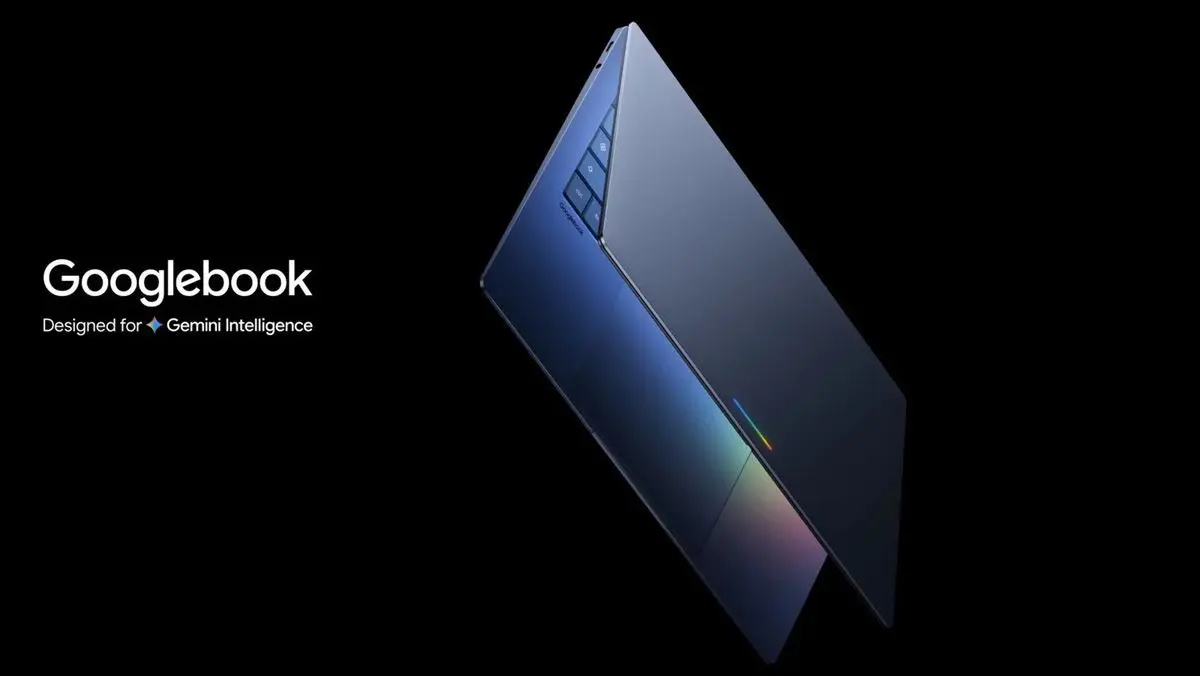
Leaked press images reveal Lenovo's Googlebook 15, the first AI-driven laptop combining Android and ChromeOS into Aluminium OS. The device features a dedicated Google key for Gemini AI, robust connectivity with HDMI and USB-C ports, and launches fall 2026 at $800-plus pricing.
Detailed press images of the Lenovo Googlebook 15 have surfaced online, offering the first comprehensive look at Google's new AI-driven computing experience
1
2
. The leaked renders, obtained by Digital Citizen, showcase a 15.6-inch Google-branded laptop that represents a significant evolution from traditional Chromebooks1
. This first Googlebook laptop combines Android app compatibility with ChromeOS functionality through a new operating system called Aluminium OS, while integrating Gemini AI throughout the user experience3
4
.
Source: 9to5Google
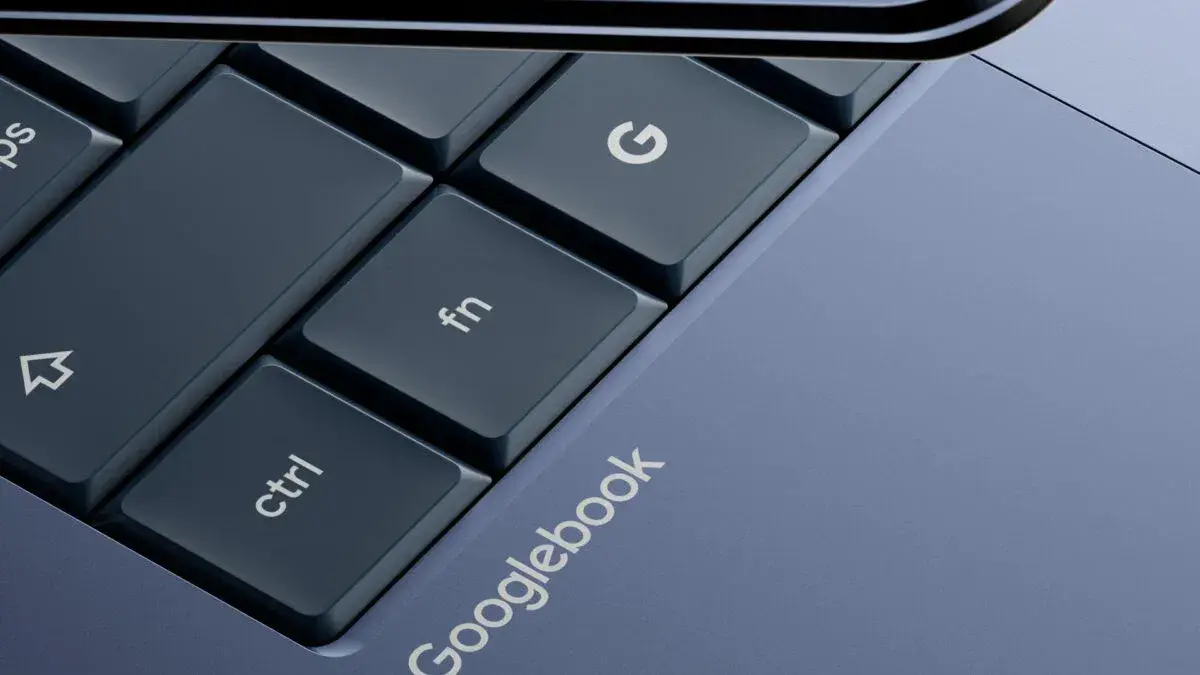
The Lenovo Googlebook features distinctive branding elements, with "Googlebook" printed beneath the left side of the keyboard and a prominent dedicated Google key positioned between the function and alt keys
1
5
. Tapping this G key activates the Gemini AI assistant, positioning artificial intelligence as a core component of the device's functionality1
. The keyboard layout departs from ChromeOS conventions by including 14 function keys (F1 through F14) instead of the typical shortcut keys found on Chromebooks1
.The AI-ready device showcases modern design choices with ultra-thin bezels surrounding the display and a top-mounted notch housing the webcam with an integrated privacy shutter
1
2
. This webcam privacy shutter, common on Lenovo laptops, could help build trust in a platform that leans heavily into AI features2
. The laptop's bottom cover features a horizontal fluted texture, distinguishing it from the flat surfaces typically found on competing devices1
5
.
Source: PC Magazine
Connectivity appears robust for a streamlined device. The Lenovo Googlebook 15 includes a full-sized HDMI port, two USB-C ports positioned on opposite sides, a single USB-A port, and a 3.5mm audio jack
2
5
. While the exact specifications of these USB-C ports remain unknown, the port selection provides enough flexibility to handle external displays, headphones, and charging2
. Google appears to be targeting macOS users with this functionality5
.The Googlebook runs on Aluminium OS, a new operating system that bridges the Android and ChromeOS merger Google has been developing
3
4
. Unlike Chromebooks, which require users to download Android apps from the Google Play Store, Googlebooks will provide native access to the full range of Android applications1
. The display features a status bar similar to Android smartphones, showing icons for Gemini AI, notifications, Wi-Fi connectivity, and battery status1
2
.Source: TechSpot
A taskbar at the bottom provides quick access to frequently used apps, including shortcuts for Gemini AI, Chrome, YouTube, Canva, and Adobe Premiere Pro
1
2
. The inclusion of Adobe Premiere Pro signals that Googlebooks will launch with a robust software suite and that the underlying hardware will be powerful enough to handle demanding tasks like video editing2
. Google and Adobe maintain a partnership that integrates Adobe Photoshop and Premiere Pro into Gemini AI1
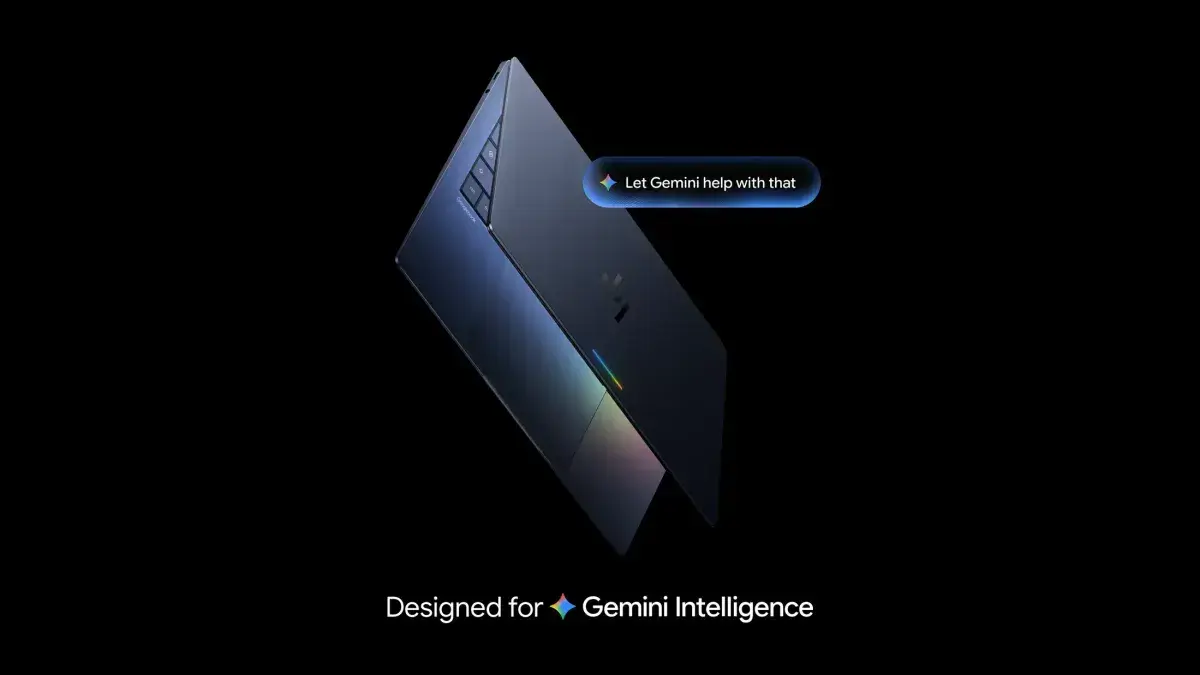
.Gemini Intelligence powers a feature called Magic Pointer, which allows users to infuse AI anywhere as they work
4
. This contextual cursor requires only a brief wiggle for the AI to take action. Moving the Magic Pointer over a date in an email prompts Gemini Intelligence to suggest adding that date to your calendar, while selecting two photos with the Magic Pointer combines them4
. Google has called the Googlebook its most advanced laptop yet, built to maximize Gemini chatbot capabilities, with the company framing intelligence as the new spec that matters most3
.The keyboard includes dedicated shortcuts for accessibility features and profile switching, with an accessibility key positioned on the upper right—a rarity in laptop designs
1
3
. This accessibility key helps users with vision, hearing, and mobility needs access screen readers, live captions, and mobility controls1
.Beyond the Lenovo Googlebook 15, Android Headlines revealed a Lenovo 2-in-1 tablet featuring Googlebook branding and the same dedicated Google key on its keyboard
1
4
. This convertible device will include Dolby Atmos speakers, a quad-speaker setup, and stylus support1
. Google announced at The Android Show in May that Lenovo, Acer, ASUS, Dell, and HP would be the first companies to produce Googlebooks, with devices going on sale in fall 20261
4
.Related Stories
While Google announced a fall 2026 launch window, Lenovo has not specified an exact month or date
1
4
. PCMag reported in May that customers should expect to pay at least $800 and possibly more than $1,0001
. Critical specifications remain undisclosed, including processor type, display resolution and refresh rate, memory and storage configurations, battery capacity, and overall weight1
4
. Lenovo will likely announce the Googlebook at IFA Berlin, one of the world's largest technology trade shows1
.The heavy reliance on agentic AI has sparked debate about whether Googlebooks represent the first wave of anti-personal computers—devices designed to act on user intent while no longer solely under their control
3
4
. Because Googlebooks are designed to recognize user intent and act accordingly, they operate semi-autonomously, raising questions about user agency4
. This represents a fundamental shift in how users interact with their devices, with automation and AI assistance taking precedence over direct manual control. Watch for how consumers respond to this new paradigm as Googlebooks enter the market, and whether the convenience of Gemini Intelligence outweighs concerns about reduced personal control.Summarized by
Navi
12 May 2026•Technology

14 May 2026•Technology

30 May 2026•Technology
1
Technology

2
Technology

3
Technology