Bolt and Lucid Partner to Deploy 25,000 Autonomous Vehicles Across Europe


3 Sources
[1]
Bolt, Lucid plan to deploy 25,000 robotaxis in Europe
Bolt will own and operate the new fleet of autonomous vehicles. Estonian ride-hailing service Bolt has partnered with US carmaker Lucid to deploy at least 25,000 fully autonomous vehicles (AV) across multiple European cities, marking the latest attempt by businesses to bring robotaxis to the
[2]
Lucid and Bolt to deploy 25,000 autonomous EVs across Europe
Lucid and Bolt announced a partnership today to build and deploy autonomous vehicles across Europe, with the ride-hailing platform aiming to put at least 25,000 self-driving Lucid EVs on its network. It's the second big autonomous-fleet deal Lucid has signed in just over a year. And it rides on a
[3]
Lucid Motors Partners with Bolt to Launch 25,000 Robotaxis in Europe
Lucid recently announced that it's partnering with mobility platform Bolt to develop and deploy around 25,000 fully autonomous vehicles across multiple European cities and countries. The collaboration is focused on building a vehicle which will be able to support SAE Level 4 autonomous driving --
Share
Copy Link
Estonian ride-hailing service Bolt has partnered with US carmaker Lucid to deploy at least 25,000 fully autonomous vehicles across multiple European cities. The collaboration will use Lucid's upcoming Midsize platform and Nvidia's Hyperion AV reference architecture to build SAE Level 4 autonomous mobility solutions designed specifically for European roads and regulation.
Bolt and Lucid Announce Major Autonomous Vehicle Partnership
Estonian ride-hailing service Bolt has partnered with US electric vehicle manufacturer Lucid to deploy 25,000 robotaxis across multiple European cities, marking a significant push to bring fully autonomous vehicles to the region
1
. The collaboration positions Bolt, Europe's largest shared-mobility platform with more than 200 million customers and operations in over 850 cities, as a major player in the autonomous ride-hailing market2
. Bolt will own and operate the new fleet, representing a major step toward its ambitious goal of deploying 100,000 autonomous vehicles by 20351
.
Source: Electrek
Building SAE Level 4 Autonomy on Lucid's Midsize Platform
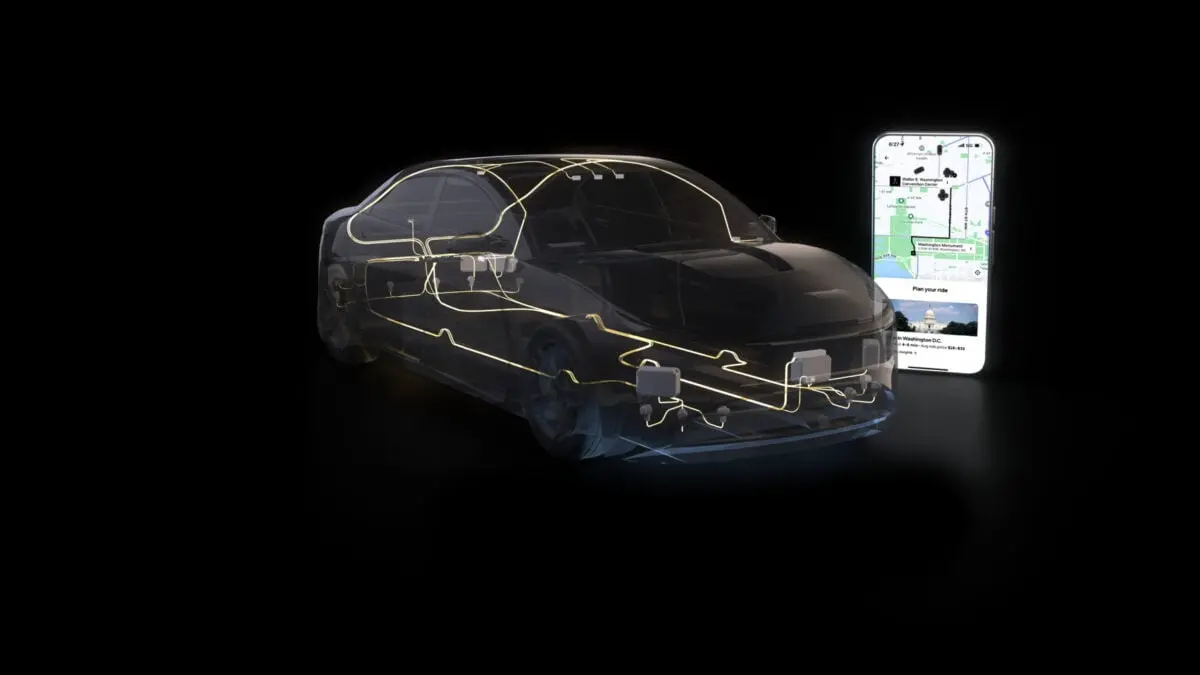
The partnership will utilize Lucid's upcoming Midsize platform combined with Nvidia's Hyperion AV, a production-ready reference architecture that bundles high-performance compute with a standard sensor suite, to develop vehicles capable of SAE Level 4 autonomy
2
. This level of autonomous driving system allows vehicles to operate without human intervention in specific conditions. Lucid CEO Silvio Napoli stated that shared autonomous mobility solutions offer the perfect opportunity to extend the company's technology beyond consumer vehicles3
. The work on Lucid's side will be spearheaded by the newly established Lucid Technologies division, which consolidates the company's AI-driven autonomy functions, driver assistance systems, and AI technologies under one roof3
.Bolt Takes the Operator Role with Extensive European Data
Bolt will work across product development through to commercial operation, helping define vehicle requirements, software, safety protocols, and rider-experience parameters
1
. The company's dedicated unit, Bolt Autonomous Driving Solutions, will build the fleet infrastructure, operating systems, and city partnerships needed to deploy autonomous vehicles at scale2
. Markus Villig, founder and CEO of Bolt, emphasized that autonomous driving in Europe requires data, software, vehicles, and operations to work as one system built specifically for European roads and regulation1
. Bolt's extensive operating data from more than a decade across 850 cities, combined with 4.5 million drivers and couriers on its mobility platform, provides crucial insights for developing autonomous mobility solutions tailored to European conditions2
.
Source: Silicon Republic
Related Stories
Regulatory Complexities and European Market Challenges
While robotaxis have become common across major US and Chinese cities, expanding into old European roads with often rainy weather has been a challenge for global autonomous vehicle leaders
1
. Both companies state they will collaborate closely with technology partners, European regulators, and policymakers to ensure a safe and secure rollout of autonomous mobility services throughout the region3
. The partnership comes as regulators attempt to play catch-up with autonomous vehicle technology. Last month, Alphabet-owned Waymo announced it would introduce driverless robotaxis on German roads by the end of next year, while Uber and Pony AI said they would deploy more than 2,000 robotaxis across Europe1
. Uber launched its first European robotaxi service in Croatia late last month in partnership with Pony AI and Croatian mobility company Verne, while its London deployment began taking rides earlier this month1
.Lucid's Second Major Robotaxi Deal Amid Operational Challenges
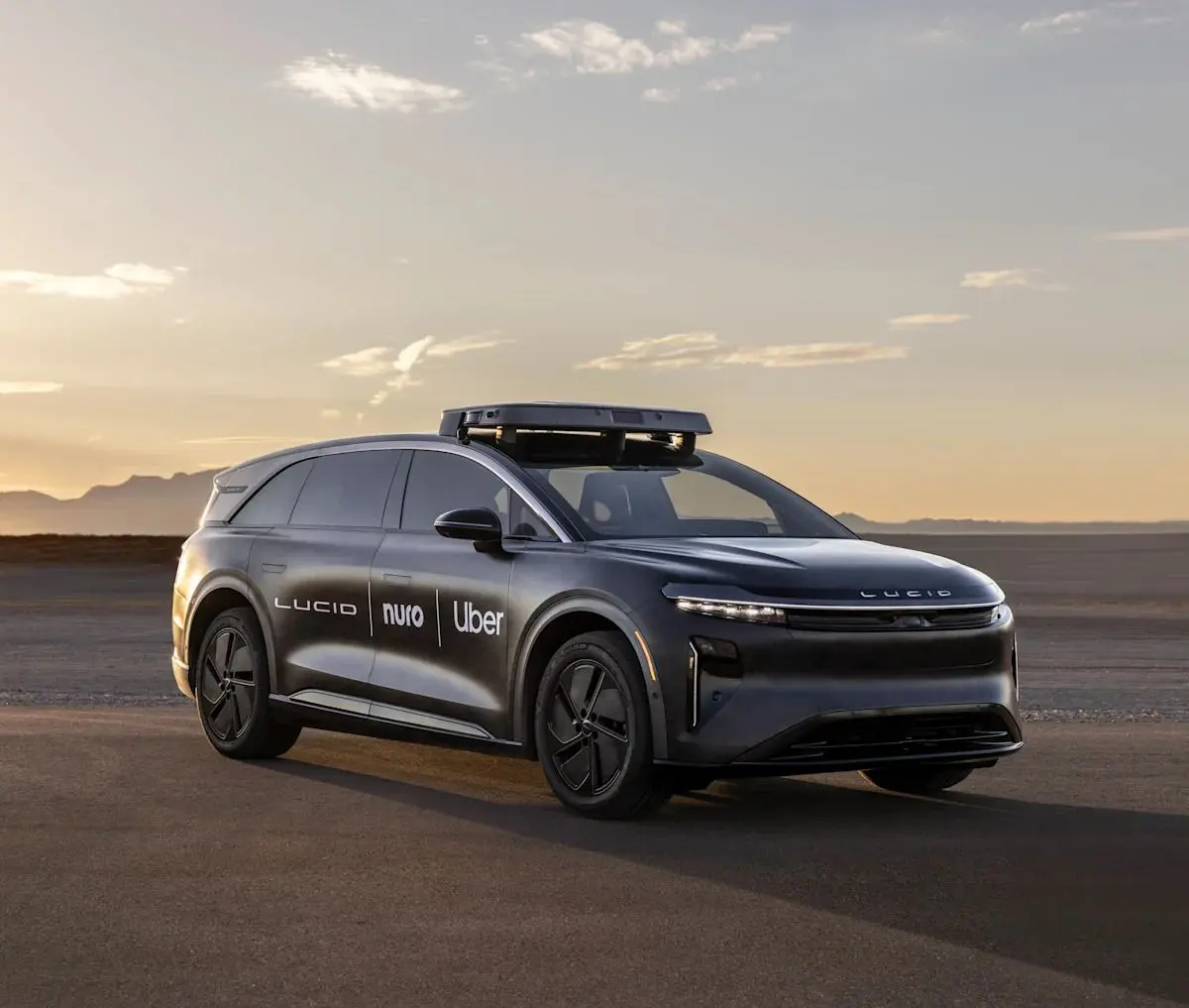
This marks Lucid's second significant autonomous fleet deal in just over a year. In July 2025, Uber committed to deploying 20,000 Lucid Gravity robotaxis in the US, running Nuro's Driver system, alongside a $300 million investment, with Uber building its stake in Lucid up to roughly 11.5%
2
. On paper, Lucid now has commitments for 45,000 autonomous vehicles across two continents. However, the Midsize platform these 25,000 vehicles depend on doesn't exist yet. On August 4, in its Q2 operational reset, Lucid delayed the Midsize program2
. That reset has defined Lucid's year, with Silvio Napoli becoming permanent CEO on June 1, the company cutting 18% of its workforce—about 1,500 jobs—later in June, withdrawing its 2026 production guidance, and delivering just 3,953 vehicles in the second quarter2
. Neither company gave a deployment date for the Bolt fleet, though Bolt's 100,000-vehicle target extends to 20352
. What stands out is that in both deals, Lucid serves as the hardware vendor while the autonomy comes from technology partners, meaning the company has yet to solve the autonomous driving system challenge at scale2
.References
Summarized by

Navi
[1]
Related Stories
Uber's Ambitious Robotaxi Plan: 20,000 Lucid EVs with Nuro's AI Technology
18 Jul 2025•Technology
Lucid Motors Partners with Nvidia to Develop Consumer-Owned Level 4 Autonomous Vehicles
29 Oct 2025•Technology

Autobrains targets Europe for robotaxi growth with cost-effective autonomous driving tech
30 Jun 2026•Technology
Recent Highlights



Recent Highlights
Today's Top Stories









Don’t drown in AI news. We cut through the noise - filtering, ranking and summarizing the most important AI news, breakthroughs and research daily. Follow topics that matter to you and stay ahead.


