SpaceX warns orbital AI data centers may never work as $1.75 trillion IPO looms


10 Sources
[1]
At SpaceX, AI is burning the cash that Starlink earns
April 24 (Reuters) - Elon Musk is touting SpaceX as humanity's ticket to Mars. But the company's pitch to investors for a potentially historic IPO reveals that its main business will be the same as Big Tech: building artificial intelligence. The difference is in how the companies fund the
[2]
Musk's SpaceX Goals Shift Ahead of Its I.P.O.
For years, SpaceX's mission was clear: Get humans to Mars. "The most powerful thing we could do is establish a second, self-sustaining civilization outside of Earth," Elon Musk, SpaceX's chief executive, told Forbes in 2003, a year after founding the company. "And the only place that's really
[3]
SpaceX S-1 warns orbital AI data centres may not be viable, months after Musk called space-based AI a no-brainer
Summary: SpaceX's confidential S-1 pre-IPO filing warns that its orbital AI data centre plans "involve significant technical complexity and unproven technologies, and may not achieve commercial viability," contradicting Elon Musk's January claim at Davos that space-based AI was a "no-brainer"
[4]
Trillion-Dollar Flip-Flop? SpaceX Says Orbital Data Centers May Never Make Money
For more than a year, Elon Musk has been prophesying a new era for AI. The SpaceX CEO has said that building AI data centers in space is a “no brainer,†and that it would be the cheapest place to put AI within two to three years. But the company’s pre-IPO filing presents a much more
[5]
Exclusive: SpaceX says unproven AI space data centers may not be commercially viable, filing shows
NEW YORK, April 21 (Reuters) - SpaceX warned investors that its ambitions to build space-based artificial intelligence data centers, as well as human settlements on the moon and Mars, rely on unproven technologies and may not become commercially viable, according to a company filing. The business
[6]

SpaceX Admits AI Data Centers in Space May Be a Really Terrible Idea
Can't-miss innovations from the bleeding edge of science and tech SpaceX CEO Elon Musk has been adamant that putting enormous AI data centers in Earth's orbit is a "no-brainer." At the World Economic Forum in Davos earlier this year, Musk claimed that the unconstrained solar power beyond our
[7]

SpaceX quietly whispers the risk of its ambitious AI data centers in space
SpaceX is preparing the biggest IPO in history, but its own filing is full of "we're not sure this works" warnings. Elon Musk has been talking up SpaceX's space-based AI ambitions like they are a done deal. At the World Economic Forum in January, he called building AI data centers in space "a
[8]

SpaceX Warns Investors Elon Musk's Space-Based AI Data Centers May Not Pay Off - Decrypt
The filing also warns that Starship delays could slow the company's growth. SpaceX is warning investors that one of Elon Musk's most ambitious artificial intelligence bets -- putting data centers in orbit -- may never become a viable business. According to a report by Reuters, in a newly
[9]

SpaceX conquered the stars, now eyes bigger opportunity in AI - The Economic Times
SpaceX estimates that its total addressable market - a closely watched metric - could be as much as $28.5 trillion, according to a S-1 filing reviewed by Reuters. TAM is the maximum revenue a company could generate if it captured every customer in a particular market.Over the last quarter century,
[10]

SpaceX says unproven AI space data centers may not be commercially viable, filing shows
NEW YORK, April 21 (Reuters) - SpaceX warned investors that its ambitions to build space-based artificial intelligence data centers, as well as human settlements on the moon and Mars, rely on unproven technologies and may not become commercially viable, according to a company filing. The business
Share
Copy Link
SpaceX's confidential S-1 filing ahead of its historic IPO admits that orbital AI data centers involve significant technical complexity and unproven technologies that may not achieve commercial viability. This contradicts CEO Elon Musk's January claim that space-based AI was a "no-brainer" achievable within two to three years, raising questions about the company's aggressive AI spending strategy.
SpaceX IPO Filing Contradicts Musk's Space-Based AI Vision
SpaceX has warned potential investors that its ambitious plans for orbital AI data centers may never become commercially viable, according to excerpts from the company's confidential S-1 filing reviewed by Reuters
1
5
. The pre-IPO filing states that initiatives to develop orbital AI compute "involve significant technical complexity and unproven technologies, and may not achieve commercial viability"3
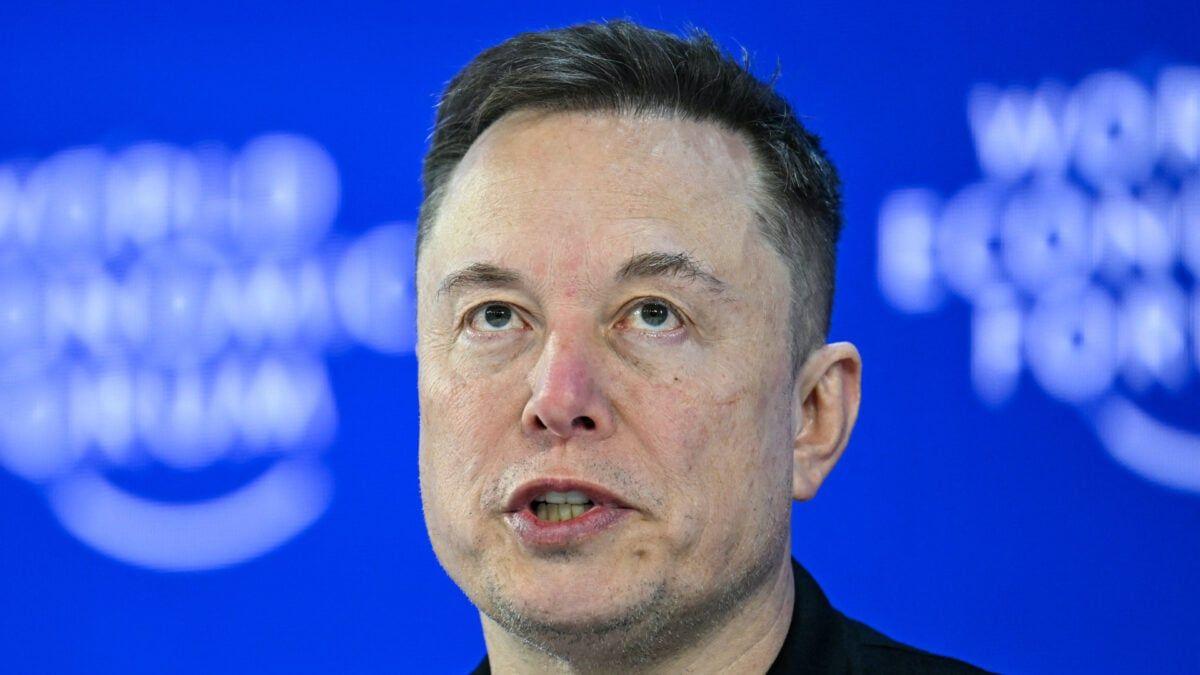
. This cautious assessment stands in stark contrast to Elon Musk's public statements just three months earlier at the World Economic Forum in Davos, where he described space-based artificial intelligence as a "no-brainer" achievable within two to three years5
.
Source: Gizmodo
The disclosure comes as Elon Musk's SpaceX prepares for what could be the largest initial public offering in history, targeting a valuation of $1.75 trillion with a $75 billion raise
1
. The S-1 filing further warns that any future space-based compute infrastructure will operate "in the harsh and unpredictable environment of space, exposing them to a wide and unique range of space-related risks that could cause them to malfunction or fail"3
. While risk factors in prospectuses are legally required and designed to shield companies from future liability, the contradiction between Musk's confident public pronouncements and the company's legal disclosures raises questions about the feasibility of SpaceX's transformation into an AI-first company.Aggressive AI Spending Outpaces Starlink Revenue
The financial picture revealed in the SpaceX IPO documents shows a company with a cash burn profile more typical of a late-stage startup than a trillion-dollar incumbent. In 2025, the AI division—home to xAI—accounted for 61% of SpaceX's consolidated $20.74 billion total capital spending, while rising costs pushed the unit to an operating loss of $6.4 billion
1
. This aggressive AI spending is being bankrolled primarily by Starlink satellite broadband, which doubled its operating income last year to $4.42 billion, easily covering losses in the space division1
.However, SpaceX's capital spending more than doubled last year, exceeding revenue by roughly $2 billion
1
. Analysts warn this gap could widen dramatically as the company pursues plans to launch a constellation of one million data center satellites, with costs potentially reaching into the trillions of dollars1
. "What investors will be looking for is clear visibility on how the business model evolves with this financing and whether it can make the economics of compute work at scale," said Melissa Otto, head of research at S&P Global Visible Alpha, adding that "in many ways, SpaceX looks like a super-sized startup"1
.Engineering Constraints Challenge Space Data Center Dreams
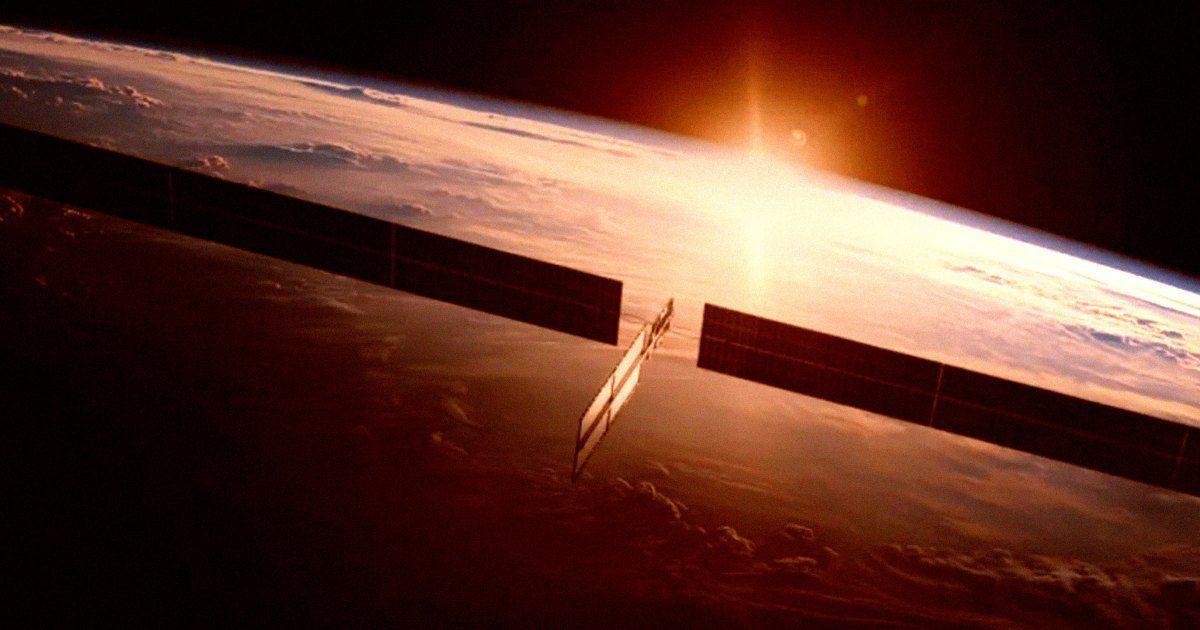
The significant technical complexity SpaceX acknowledges in its filing reflects fundamental engineering constraints that have not changed since Musk's optimistic Davos predictions. Heat dissipation presents a particularly thorny challenge: in vacuum, all cooling happens through radiation with no convection, liquid cooling, or fans
3
.
Source: Futurism
To radiate just one megawatt of heat at 20 degrees Celsius, an orbital data center would need roughly 1,200 square meters of radiator surface—the area of four tennis courts
3
. By comparison, the International Space Station's entire electrical system produces only 0.2 megawatts, while ground-based hyperscale data centers are racing toward gigawatt scale3
.Power generation poses equally daunting challenges. While solar panels in orbit receive roughly five times more energy than on the ground, it would take approximately one square mile of solar array to produce one gigawatt at 30% cell efficiency
3
. Hardware obsolescence may be the most underappreciated constraint, as GPUs depreciate every two to three years when new architectures emerge. On Earth, racks are swapped continuously, but in orbit, every hardware replacement requires a launch, docking, or robotic servicing mission3
. Radiation exposure causes bit flips and permanent circuit damage, while radiation-hardened chips lag multiple generations behind commercial processors3
.Cursor Deal and Starship Delays Add Uncertainty
A newly revealed deal with AI code-generation startup Cursor adds more uncertainty to SpaceX's financial outlook. The company has the option of buying Cursor for about $60 billion, or walking away and paying roughly $10 billion for a collaboration
1
. Neither company has disclosed how the deal would be financed, but even a small cash component could accelerate the need for a fresh capital raise or require significant spending cutbacks1
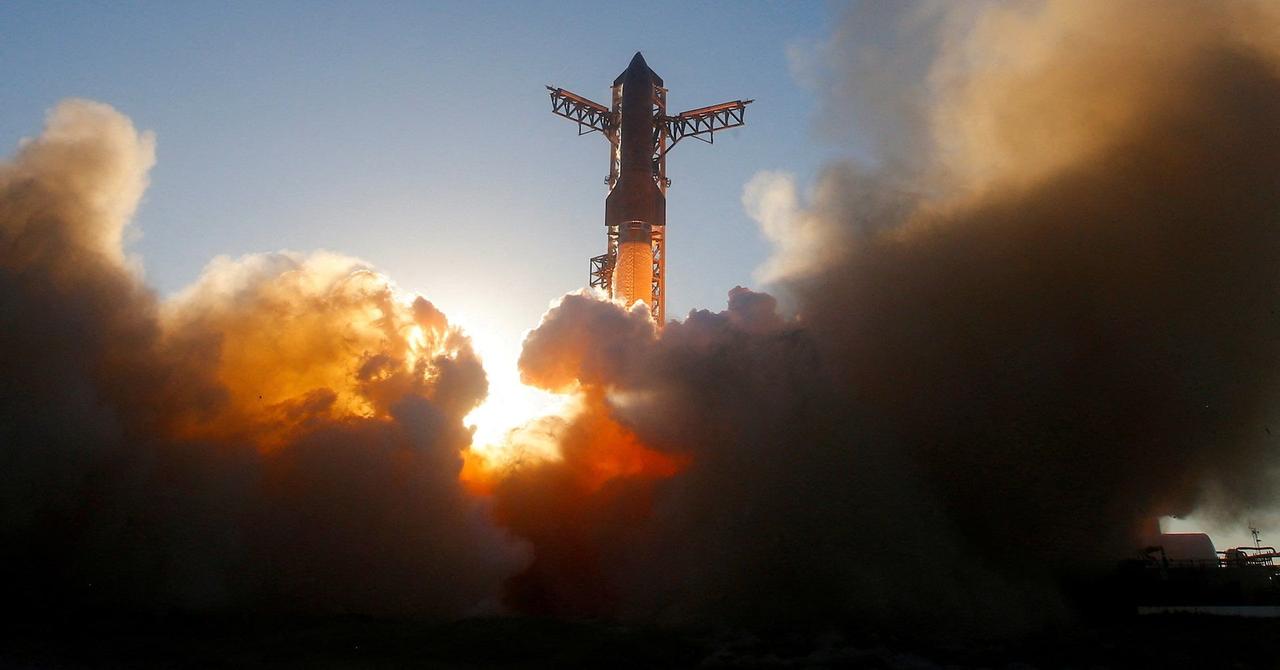
.The S-1 filing also highlights SpaceX's heavy dependence on Starship, its next-generation fully reusable rocket, which has suffered several delays and testing failures
5
. "Any failure or delay in the development of Starship at scale or in achieving the required launch cadence, reusability and capabilities thereof would delay or limit our ability to execute our growth strategy," the filing states5
. Musk has said SpaceX could build orbital data centers by "simply scaling up Starlink V3 satellites," which the company has yet to debut, and would launch them using Starship, which has yet to demonstrate the rapid reusability and launch cadence required4
.
Source: Reuters
Related Stories

Mission Shift From Mars to AI Raises Governance Questions
The changing priorities at SpaceX have caused whiplash among observers and investors. For years, the company's mission was clear: establish human settlements on Mars
2
. But over the last six months, Elon Musk has de-emphasized Mars colonization in favor of orbital AI data centers, moon-based factories, and AI chip manufacturing plants2
. "It's a hallucinogenic business plan," said Ross Gerber, chief executive of Gerber Kawasaki, an investment firm that owns SpaceX shares, adding that Musk "has lost his mind" as he tries to drum up excitement for the public offering2
.Shifting aims before an IPO would be unthinkable for most corporate leaders, who tend to focus on core businesses and project steadiness to potential investors. Yet Musk has an uncanny ability to bring investors along, said Brian Quinn, a law professor at Boston College: "In most other corporations where the CEO makes promises that do not prove out, investors tend to react in an adverse way, and they usually do not last long. But with Mr. Musk, people believe him or want to believe him"
2
. Eight former SpaceX executives and employees told The New York Times they had become accustomed to Musk's whipsaw directives and his use of social media to make announcements or product changes2
.What Investors Should Watch
The financial overhang from SpaceX's AI ambitions is manageable if revenue ramps arrive on the timeline management implies, according to Shay Boloor, chief market strategist at Futurum Equities. "It becomes much riskier once Starlink subscriber growth matures or if AI spend keeps scaling faster than monetization," Boloor said
1
. While Big Tech companies like Alphabet, Microsoft, Meta, Amazon, and Oracle are collectively set to spend more than $600 billion on artificial intelligence this year, they generate far more revenue from existing businesses spanning digital advertising, cloud computing, and enterprise software, giving them both a longer runway and a cushion if AI demand falls short1
.SpaceX is touting a total addressable market of $28.5 trillion—much of it tied to AI for businesses—but may need to return to markets in a few years if capital spending growth continues to outpace revenue
1
. "The company's financials are closer to the rocket and satellite company it is than the AI infrastructure giant it wants to become," Boloor noted. "That doesn't make the story broken but it does mean IPO buyers would be paying upfront for a transformation that still needs to show up more clearly in the numbers" [1](https://www.reuters.com/business/finance/spacex-ai-is-burning-cash-that-starlink-earns-2026-04-24/].References
Summarized by

Navi
[3]
Related Stories
SpaceX IPO banks on orbital AI data centers to justify $1.77 trillion valuation
03 Jun 2026•Business and Economy

SpaceX AI infrastructure bets on Earth-based compute while orbital plans remain years away
07 Jul 2026•Business and Economy
xAI burns $6.4 billion as SpaceX IPO filing reveals why AI spending will accelerate further
14 May 2026•Business and Economy
Recent Highlights



Recent Highlights
Today's Top Stories







Don’t drown in AI news. We cut through the noise - filtering, ranking and summarizing the most important AI news, breakthroughs and research daily. Follow topics that matter to you and stay ahead.


