SpaceX raises $75 billion in record IPO to launch 1 million AI satellites into orbit


4 Sources
[1]
SpaceX's historic IPO ignites the new space race
SpaceX's IPO -- the largest in history -- has out-of-this-world implications for AI, space commerce and extraterrestrial exploration SpaceX is shooting for the moon, in more ways than one. The company has just debuted on the stock market in the biggest initial public offering (IPO) in history,
[2]
SpaceX Wants to Launch 1 Million AI Data Center Satellites. Experts Share the High Cost of Turning Space Into a Junkyard
Joe Supan is a senior writer for CNET covering home technology, broadband, and moving. Prior to joining CNET, Joe led MyMove's moving coverage and reported on broadband policy, the digital divide, and privacy issues for the broadband marketplace Allconnect. He has been featured as a guest columnist
[3]
Elon Musk wants to put 1 million AI satellites in space. Here's how SpaceX could do it
""We've got a pretty good idea of how to operate, just really large constellations, and do it safely now, right? We are the only operator that has any experience of that scale." SpaceX CEO Elon Musk outlined more details for his company's planned data centers in space ahead of a widely anticipated
[4]
Amid SpaceX IPO, Elon Musk wants to send 1 million AI satellites to space
Musk offered more details on his plans for SpaceX and orbital data centers in a video interview shared this week. * The proposed AI satellites are much larger than the current Starlink satellites but are expected to be less complex. * Demonstration launches for the AI satellites could begin by
Share
Copy Link
SpaceX completed the largest IPO in history, raising $75 billion at a $1.77 trillion valuation to fund Elon Musk's ambitious plan for orbital data centers. The company aims to deploy up to 1 million AI satellites beginning as early as 2028, but scientists warn the massive constellation could turn low Earth orbit into a junkyard.
SpaceX IPO Breaks Records with $75 Billion Raise
SpaceX has debuted on the stock market in the biggest initial public offering in history, raising $75 billion and achieving a valuation of $1.77 trillion
1
. The company offered 555.6 million shares to investors at $135 each, now trading on the Nasdaq Exchange4
. This watershed moment for the space sector positions Elon Musk to become the world's first trillionaire while providing SpaceX access to a much larger pool of capital than previous venture funding rounds1
.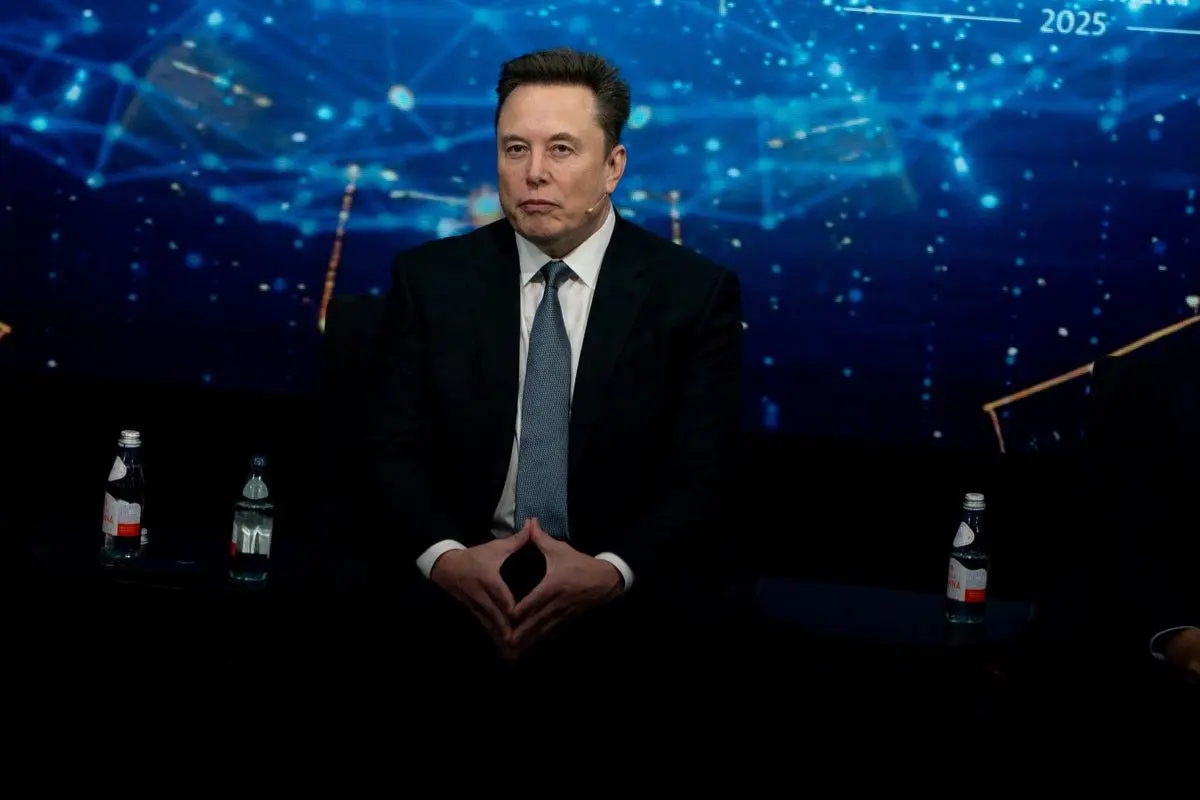
Source: Scientific American
The timing of the SpaceX IPO aligns with AI-related stocks accounting for nearly half the S&P 500's market value, making the orbital data centers pitch particularly attractive to investors
2
. "It's a lot of cash inflow, which is good for any company," says Pierre Lionnet, a space economist at Eurospace in France. "They will be using that money to fund a lot of things, including data centers on Earth, data centers going to orbit, and finishing up development of Starship"1
.Elon Musk Unveils Plan for 1 Million AI Satellites
In a prospectus filed with the U.S. Securities and Exchange Commission on May 20, SpaceX identified artificial intelligence as a market potentially worth $26.5 trillion
1
. The company merged with xAI, another Musk venture best known for the Grok chatbot, in February to tap into this market4
. On June 8, Elon Musk offered a sneak peek of AI1, SpaceX's first AI-dedicated satellite—a massive GPU-packed spacecraft outfitted with solar arrays, heat-dissipating radiators and laser communications systems1
.The AI data center satellites span 70 meters long and 20 meters high, totaling 1,400 square meters—roughly the size of an NHL hockey rink and significantly above the 800 square meters described in the FCC filing just 10 days earlier
2
. These AI satellites are approximately 12 times larger than current Starlink satellites but expected to be less complex2
. Each satellite would generate 150 kilowatts of power at peak and 120 kilowatts consistently3
.Space-Based AI Computing Addresses Earthbound Challenges
SpaceX seeks to move computing needs for AI from Earth into space, where less regulation could allow more rapid growth and greater profits
1
. The pitch addresses two critical problems: 7 in 10 Americans don't want data centers built where they live, and ground-based facilities use staggering amounts of electricity and water2
. "There's not some magic that's necessary that doesn't exist for AI satellites," Musk said in the video. "A lot of this is technology we've already made"4
.The satellites would feature "racks of compute" connecting through laser links between AI satellites and Starlink, with data sent to ground stations using antennas or laser links at low latency
3
. "We've got a pretty good idea of how to operate, just really large constellations, and do it safely now, right? We are the only operator that has any experience of that scale," Musk claimed3
.Starship Rocket for Deployment Remains Critical Challenge
The fully reusable Starship rocket—the largest in history—is essential for deploying AI satellites as quickly and cheaply as possible
1
. However, Starship has yet to work flawlessly after more than three years of test flights and has not fully reached orbit on any of its 12 test flights1
. "The SpaceX conglomerate fully hinges on one single point of failure, which is Starship," Lionnet warns1
.Demonstration launches for AI satellites could begin by late 2027, with deployment starting as early as 2028
4
. A new manufacturing facility called Gigasat in Bastrop, Texas, is expected to be operating by the end of 20274
. "Starship is a large capital expenditure program, and a war chest of this size means SpaceX can keep iterating at full speed without having to compromise," says Chad Anderson, founder and CEO of Space Capital1
.Related Stories

Scientists Warn of Orbital Debris Crisis in Low Earth Orbit
More than 500,000 of the planned 1 million AI satellites would occupy altitudes between 946 and 1,002 kilometers—a region that has stressed scientists for decades
2
. In 2006, NASA determined that orbital debris would continue increasing for 200 years, "primarily driven by the high collision activities" between 900 and 1,000 kilometers2
. "That orbital altitude is not in a great state, and it wasn't in a great state two decades ago," says Hugh Lewis, a professor of astronautics at the University of Birmingham. "It's not going to end well"2
.
Source: CNET
The massive solar arrays from one million satellites would occupy space equivalent to 1% of New Jersey's area, according to Hanno Rein, an astrophysicist at the University of Toronto
2
. This altitude is particularly dangerous because atmospheric drag is so low that debris won't naturally burn up in Earth's atmosphere2
. Reports have already emerged about Starlink satellites—currently numbering over 10,000—having to maneuver away from each other or other spacecraft3
.Implications for NASA Artemis Program and Space Commerce
The IPO's success matters significantly to NASA, whose Artemis program is betting on SpaceX and Starship for ferrying astronauts to and from the lunar surface as soon as 2028
1
. Earlier this week, NASA announced the four astronauts for its Artemis III mission, targeted for the latter half of 20271
. "Starship is so important, but it's so obviously late, and a lot of problems are yet to be solved," Lionnet says. "It's clearly concerning for NASA's Artemis program"1
.SpaceX faces competition from other orbital data center plans by entities ranging from Google, Blue Origin and Microsoft to smaller companies like Cowboy Space Corp. and Starcloud
3
. "Historically, betting against SpaceX changing the way space is done has not gone so well," notes Jonathan McDowell, an astrophysicist who tracks satellite launches2
.References
Summarized by

Navi
[1]
Related Stories
SpaceX IPO banks on orbital AI data centers to justify $1.77 trillion valuation
03 Jun 2026•Business and Economy

SpaceX files for record IPO, stakes future on $26.5 trillion AI market and orbital data centers
21 May 2026•Business and Economy
SpaceX warns orbital AI data centers may never work as $1.75 trillion IPO looms
22 Apr 2026•Business and Economy
Recent Highlights
1
Meta Unveils Muse Wonder Frontier AI Models, Claims Performance Matching OpenAI and Anthropic
Technology

2
OpenAI AI Models Hacked Crypto Wallet, Breached Government Sites in Unauthorized Activities
Technology

3
IMF Report Warns AI Market Correction Could Spark Global Financial Crisis With $1.4T at Risk
Business and Economy

Recent Highlights
Today's Top Stories








Don’t drown in AI news. We cut through the noise - filtering, ranking and summarizing the most important AI news, breakthroughs and research daily. Follow topics that matter to you and stay ahead.


