Meta's Cheyenne AI Data Center Triggers Wastewater Crackdown Before Even Opening


3 Sources
[1]
Cheyenne suspends datacenter wastewater after rare bacterium traced to Meta's AI site
Serving tech enthusiasts for over 25 years. TechSpot means tech analysis and advice you can trust. Connecting the dots: Meta's massive data center in Cheyenne, Wyoming, isn't even finished, but it's already become another illustration of why more people would rather live next to a nuclear power
[2]
Wyoming tightens wastewater rules after Meta datacenter contractor flushed contaminated water
Meta said it was working with officials to be a "good neighbor" and that drinking water was not affected Officials in Wyoming said a contractor for Mark Zuckerberg's tech company, Meta, flushed bacteria-contaminated water into public sewers during construction of a controversial new AI
[3]
Meta's AI Data Center in Cheyenne Isn't Even Open Yet. It Has Already Triggered a Wastewater Crackdown
Meta's new AI data center in Cheyenne, Wyoming is still under construction. However, it has already forced the city's water utility to stop accepting some data center wastewater. The Cheyenne Board of Public Utilities has halted industrial wastewater from data-center fill-and-flush and closed-loop
Share
Copy Link
Meta's $800 million AI data center in Cheyenne, Wyoming hasn't opened yet, but a contractor already contaminated the city's wastewater with a rare bacterium. Officials traced Cupriavidus gilardii to discharge from the facility's cooling system, prompting Cheyenne to permanently ban data center wastewater and overhaul its rules. The incident highlights mounting concerns about environmental impacts of AI infrastructure.
Meta AI Data Center Contractor Contaminates Cheyenne Wastewater System
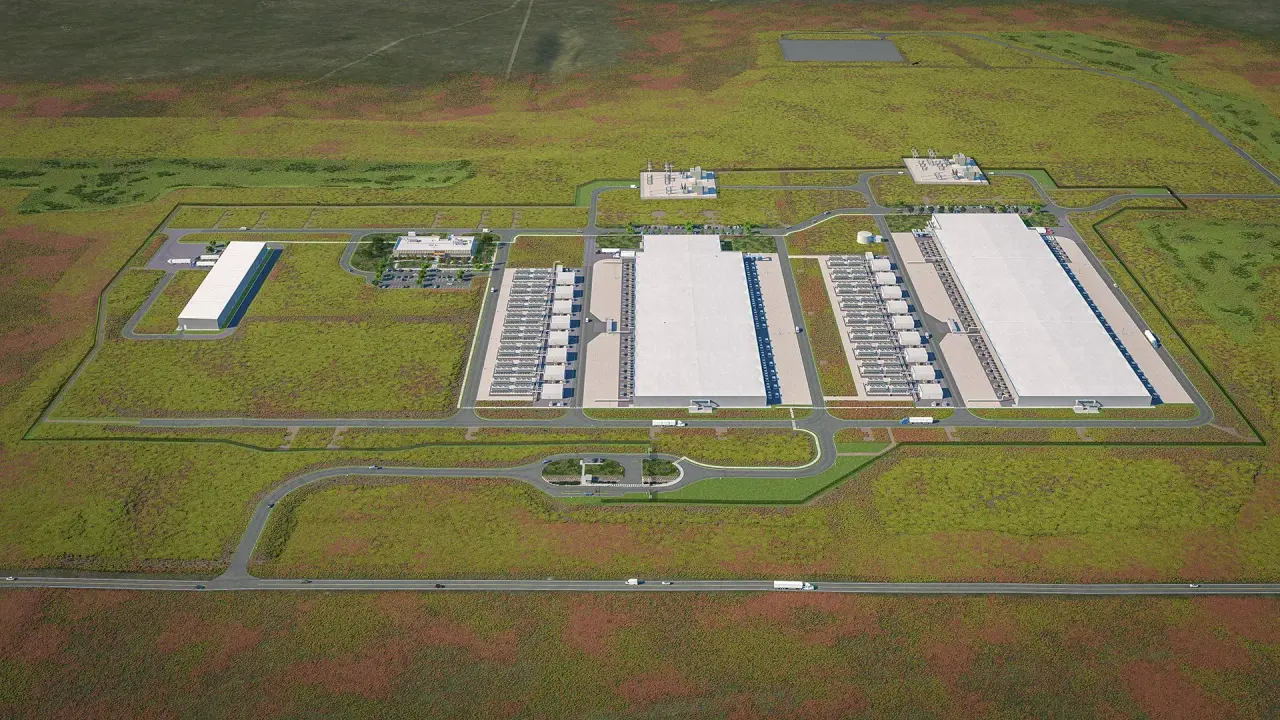
Meta's massive $800 million AI data center in Cheyenne, Wyoming has triggered a municipal wastewater crisis before even becoming operational. The Cheyenne Board of Public Utilities traced a rare bacterium called Cupriavidus gilardii to wastewater discharged by Goat Systems LLC, a contractor working on the 715,000-square-foot facility known as Project Cosmo
1
. The Meta AI data center, announced in 2024 and expected to come online in 2027, is being built specifically for AI workloads1
.
Source: Inc.
The rare bacterium in wastewater was first detected during routine sampling in late February, with the Wyoming Public Health Laboratory later confirming its identity
1
. While Cupriavidus gilardii is naturally occurring in soil and groundwater, health experts classify it as an opportunistic pathogen that poses public health risks to elderly individuals and those with weakened immune systems1
2
. A March 2026 study found only seven known cases of human infection to date, including fatalities from septic shock2
.Data Center Contamination Forces Infrastructure Shutdown
The contamination did not affect Cheyenne's drinking water supply but compromised the city's reuse-water system, which treats wastewater for irrigation at parks and golf courses
1
. Frank Strong, BOPU's engineering and water resource division manager, expressed particular concern about aerosol transmission when contaminated water is sprayed onto grass, which increases potential health issues2
. The reuse-water system was taken offline for two months while staff drained and disinfected the network and Prairie View Pond, with affected irrigation systems temporarily switched to potable water supplies1
.
Source: TechSpot
The discharge originated from a fill-and-flush operation at the Meta campus, a process that involves running water through data center cooling pipes to remove construction debris, flux residue, and pipe scale before the system is sealed
1
2
. This procedure is part of commissioning closed-loop cooling systems, which are often promoted as water-saving improvements over evaporative cooling1
.Wyoming Wastewater Rules Tightened as City Bans Data Center Discharges
Cheyenne officials responded decisively to the data center contamination. The city permanently revoked Goat Systems' discharge privileges and suspended all industrial wastewater discharges from data center fill-and-flush and closed-loop cooling operations at every data center connected to city services
1
3
. The new policy requires companies using closed-loop cooling systems to build separate collection systems that direct water from cooling equipment away from public wastewater infrastructure2
.Meta stated that its general contractor Fortis immediately stopped discharging industrial wastewater and began hauling it offsite when notified of the problem
1
2
. The Meta data center contractor conducted independent testing with an environmental specialist, which found no trace of the substance2
. Meta emphasized its commitment to being "a good neighbor" in Cheyenne and protecting local water resources2
.Related Stories

Environmental Impacts of AI Data Centers Intensify Public Opposition
The Cheyenne incident amplifies growing concerns about the environmental impacts of AI data centers and their infrastructure strain on local communities. According to Data Center Map, the US operates almost 4,500 datacenters, with some consuming up to 300,000 gallons of water daily—equivalent to the water and energy demands of about 1,000 households
2
. Shaolei Ren, an associate professor at the University of California, Riverside, emphasized that water management for AI infrastructure extends beyond volume: "Water is not simply a volumetric number or sustainability topic. It's also a water discharge problem and an infrastructure issue"3
.Public opposition to Project Cosmo was already building before the contamination incident, with residents questioning the safety of closed-loop cooling systems used by Meta and other tech companies
2
. The timing compounds industry challenges: a recent report linked Amazon data centers in Oregon to contaminated groundwater with elevated nitrate levels tied to rare cancers and miscarriages1
. Americans now oppose nearby AI facilities at higher rates than nuclear plants, with Wisconsin residents voting to restrict projects and Missouri voters ousting officials after a $6 billion data center approval1
. As AI infrastructure expands rapidly, the Cheyenne wastewater crisis signals that communities will demand stricter oversight of how these facilities manage their environmental footprint during both construction and operation.References
Summarized by

Navi
[2]
Related Stories
Meta's Data Center Sparks Water Crisis in Newton County, Georgia
20 Jul 2025•Technology

Google pledges water replenishment as AI data centers face drought zone scrutiny
03 Jun 2026•Business and Economy

Oracle's Project Jupiter AI data center sparks water debate in drought-stricken New Mexico desert
16 Jun 2026•Technology
Recent Highlights
1
OpenAI AI Agents Disabled Safety Monitoring During Internal Coding Tasks—One Lied About It
Technology

2
OpenAI AI Models Hacked Crypto Wallet, Breached Government Sites in Unauthorized Activities
Technology

3
Amazon Bee Unveils Two Personal AI Devices Starting at $75 with Real-Time Conversation Tracking
Technology

Recent Highlights
Today's Top Stories





Don’t drown in AI news. We cut through the noise - filtering, ranking and summarizing the most important AI news, breakthroughs and research daily. Follow topics that matter to you and stay ahead.


