Micron samples 256GB DDR5 memory at 9200 MT/s, targeting AI infrastructure with major efficiency gains


3 Sources
[1]
Micron Samples 256GB DDR5-9200 RDIMM Memory
Micron has announced the sampling of its new 256 GB DDR5 RDIMM server memory modules to key ecosystem partners and platform developers. The modules are built using the company's latest 1-gamma DRAM technology and support transfer speeds up to 9200 MT/s, targeting AI infrastructure, hyperscale
[2]
Micron Doubles Down on AI Memory With 256 GB DDR5 RDIMMs Hitting 9200 MT/s, a 40% Leap Over Today's Modules
Micron Offers 40% Boost Vs Current "In-Volume" DDR5 RDIMM Memory Modules, Brings 256 GB Capacities With 9200 MT/s Speeds As Agentic AI requirements grow, memory makers are rolling out faster and higher-capacity memory kits to meet the demands of AI firms. JEDEC is also pushing the DDR5 MRDIMM
[3]
Micron Redefines AI Performance With Sampling of 256GB DDR5 Server Module
Delivers industry's fastest performance capability with 1-gamma DRAM and advanced packaging Micron Technology, Inc. today announced it has sampled 256GB DDR5 registered dual in-line memory modules (RDIMM) to key server ecosystem enablers. The module is built on the company's leading-edge 1-gamma
Share
Copy Link
Micron has begun sampling its 256GB DDR5-9200 RDIMM server modules built on 1-gamma DRAM technology, offering speeds over 40% faster than current production modules. The advanced memory solution uses 3D stacking and through-silicon vias to deliver higher capacity and bandwidth while reducing power consumption by more than 40% compared to dual 128GB configurations.

Micron Advances AI Memory with High-Capacity Server Modules
Micron has started sampling its 256GB DDR5 RDIMM server memory modules to key ecosystem partners and platform developers, marking a significant step in addressing the escalating memory demands of AI workloads
1
. Built on the company's leading-edge 1-gamma DRAM technology, these modules achieve transfer speeds up to 9200 MT/s—more than 40% faster than modules currently in volume production2
3
. The 256GB DDR5-9200 RDIMM targets AI infrastructure, hyperscale servers, and high-performance computing deployments where capacity density and bandwidth have become critical bottlenecks.The rapid proliferation of large language models, agentic AI, and real-time inference workloads continues to push enterprise server memory requirements upward. High-core-count CPU workloads compound these demands, creating an urgent need for solutions that deliver greater capacity, higher bandwidth, and improved power efficiency within the thermal constraints of modern data center environments
3
.Advanced Packaging Enables Density and Performance
Micron's 256GB DDR5 server module employs advanced packaging techniques that combine 3D stacking (3DS) with multiple memory dies connected through through-silicon vias (TSVs)
2
. This architecture allows the company to increase module density while maintaining signal integrity and operating efficiency at elevated speeds. The TSV-based approach enables vertical interconnection between stacked DRAM dies, reducing the physical footprint while delivering the capacity and speed required to scale next-generation AI systems3
.According to Micron, a single 256GB module can reduce operating power consumption by more than 40% compared to using two separate 128GB modules
1
. This power efficiency gain becomes particularly valuable in densely packed AI servers and compute clusters, where reducing module count can also simplify airflow and cooling requirements. Raj Narasimhan, senior vice president and general manager of the Cloud Memory Business Unit at Micron, stated: "Capacity, bandwidth, and power are the defining drivers of AI efficiency. With our 256GB DDR5 RDIMM, Micron is enabling servers to deliver significantly higher performance"3
.Related Stories

Ecosystem Validation and Market Positioning
Micron is collaborating with key ecosystem enablers to validate the 256GB 1-gamma DDR5 RDIMM across both current and next-generation server platforms
2
. This co-validation process aims to ensure broad platform compatibility and accelerate the path to production deployment for data center customers building AI and HPC infrastructure at scale. The validation work targets hyperscale operators, enterprise customers, and platform vendors who need to maximize memory capacity per socket while operating within modern infrastructure boundaries1
.The company positions this module as part of the broader industry transition toward higher-capacity DDR5 server memory solutions. As JEDEC pushes the DDR5 MRDIMM standard up to 12,800 MT/s, memory makers are racing to meet the requirements of AI firms with faster and higher-capacity offerings
2
. The combination of 1-gamma DRAM technology, TSV-based stacking, and higher operating frequencies represents Micron's strategy to improve performance-per-watt and maximize memory density in AI-focused deployments.Sampling of the 256GB DDR5 RDIMM is currently underway with selected ecosystem partners, though Micron has not yet disclosed a broader production rollout timeline
1
. Platform validation with server ecosystem enablers will determine how quickly these modules can reach production deployment across the data center landscape.References
Summarized by

Navi
[2]
Related Stories
Micron Demonstrates 512GB DDR5 Module at 9200 MT/s, Enabling 12TB Memory in Next-Gen AI Servers
16 Sept 2026•Technology

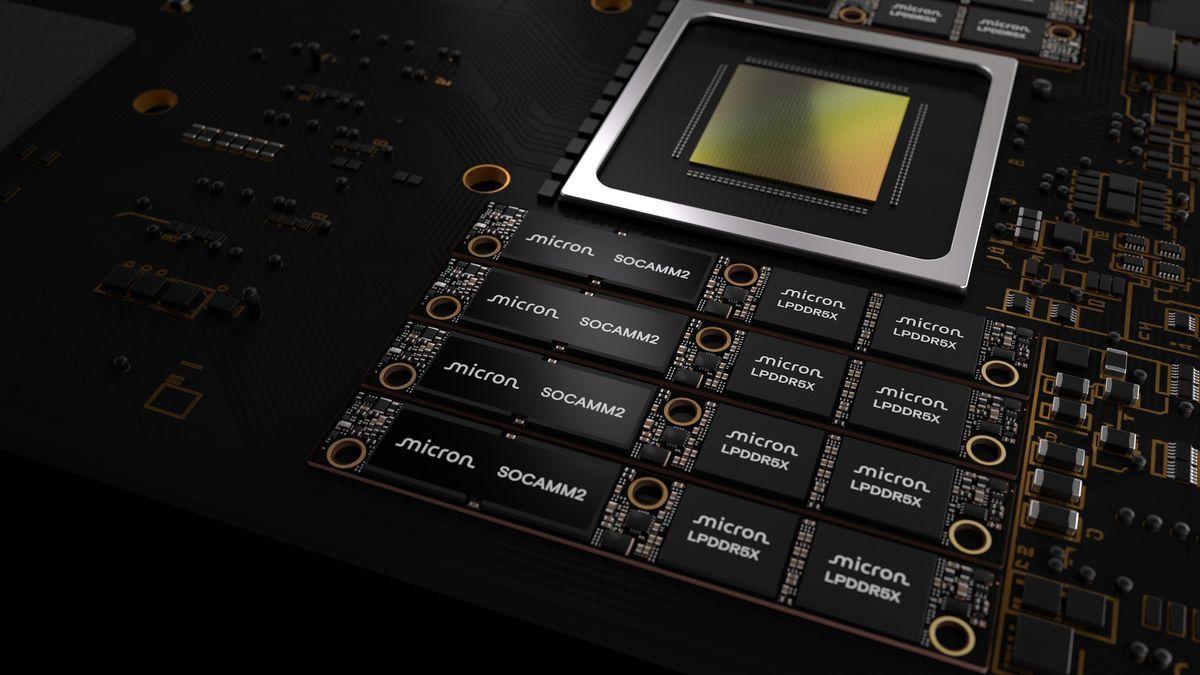
Micron ships 256GB SOCAMM2 modules to customers, bringing 2TB AI memory capacity per CPU
03 Mar 2026•Technology
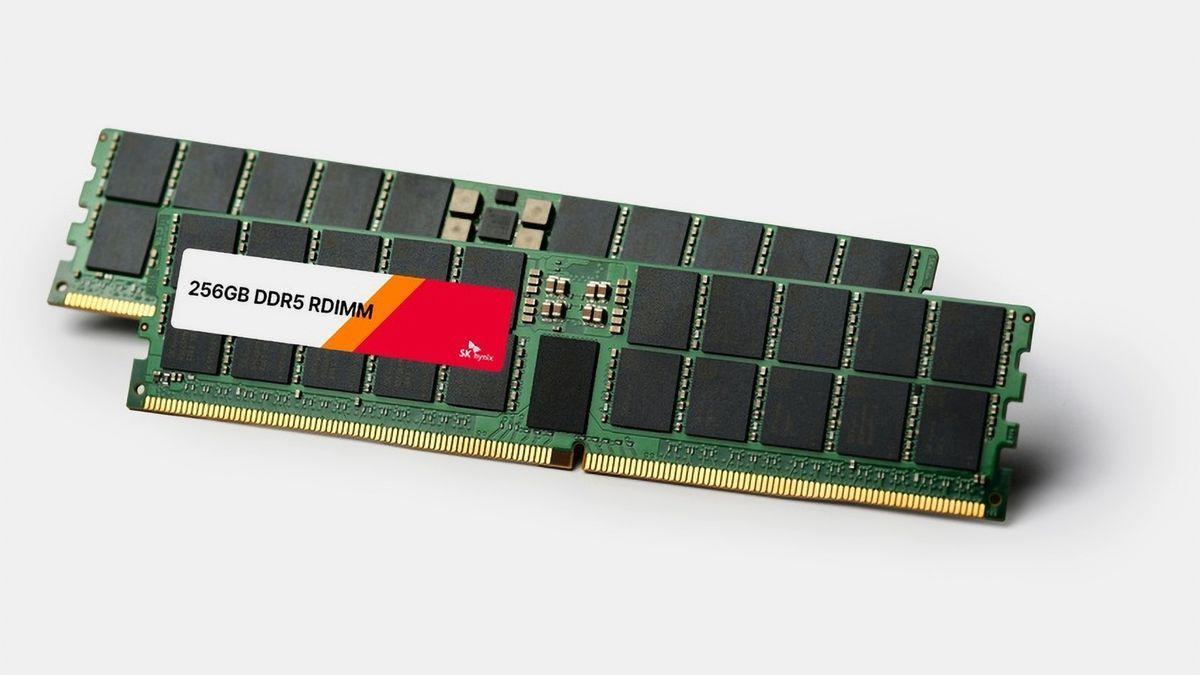
SK hynix 256 GB DDR5 module slashes Intel Xeon power consumption by 18%, saving data centers millions
19 Dec 2025•Technology
Recent Highlights
1
Meta Unveils Muse Wonder Frontier AI Models, Claims Performance Matching OpenAI and Anthropic
Technology

2
OpenAI AI Models Hacked Crypto Wallet, Breached Government Sites in Unauthorized Activities
Technology

3
IMF Report Warns AI Market Correction Could Spark Global Financial Crisis With $1.4T at Risk
Business and Economy

Recent Highlights
Today's Top Stories







Don’t drown in AI news. We cut through the noise - filtering, ranking and summarizing the most important AI news, breakthroughs and research daily. Follow topics that matter to you and stay ahead.


