Microsoft Launches 'Humanist Superintelligence' Team to Build AI That Serves, Not Replaces Humanity


16 Sources
[1]
Microsoft AI says it'll make superintelligent AI that won't be terrible for humanity
This kind of superintelligence, according to Suleyman, won't be "an unbounded and unlimited entity with high degrees of autonomy" and will instead be "carefully calibrated, contextualized, within limits." Suleyman joined Microsoft last year as the CEO of Microsoft AI, which has only recently
[2]
Microsoft's superintelligence plan puts people first
Redmond's new AI boss is willing to sacrifice performance for the future of our species Microsoft has joined the ranks of tech giants chasing superintelligent artificial intelligence, but the company's AI chief Mustafa Suleyman's vision is markedly different from that articulated by other industry
[3]
Microsoft forms superintelligence team under AI chief Suleyman 'to serve humanity'
Microsoft on Thursday said it's forming a team that will be tasked with performing advanced artificial intelligence research. Mustafa Suleyman, CEO of the Microsoft AI group that includes Bing and the Copilot assistant, announced the formation of the MAI Superintelligence Team, and said in a blog
[4]
Microsoft forms Superintelligence team to pursue 'humanist' AI under Mustafa Suleyman
Microsoft has formed a new Superintelligence team within its AI division, aiming to develop what it calls "humanist superintelligence" -- advanced AI that remains under human control. The team, announced Thursday morning in a post by Mustafa Suleyman, CEO of Microsoft AI, reflects the company's
[5]

Microsoft wants AI that serves humanity, not replaces or dominates it
The promise of safer superintelligence depends on untested control mechanisms Microsoft is turning its attention from the race to build general-purpose AI to something it calls Humanist Superintelligence (HSI). In a new blog post, the company outlined how its concept aims to create systems that
[6]

Mustafa Suleyman leads Microsoft's new superintelligence moonshot
Why it matters: The move follows Microsoft's renegotiated deal with OpenAI and signals the company's intent to catch up in an expensive and crowded race to build artificial general intelligence. Zoom in: Suleyman will lead the Microsoft AI (MAI) Superintelligence team. * Karén Simonyan, Microsoft
[7]

Microsoft to pursue superintelligence after OpenAI deal
Microsoft Corp. is pursuing a more powerful form of AI called "superintelligence" it hopes will be capable of making advances in areas like medicine and materials science. Mustafa Suleyman, chief of the Microsoft AI group, will lead what the company is calling the MAI Superintelligence Team that
[8]

Microsoft, freed from its reliance on OpenAI, is now chasing 'superintelligence' -- and AI chief Mustafa Suleyman wants to ensure it serves humanity | Fortune
When Mustafa Suleyman joined Microsoft in March 2024 to lead the company's new consumer AI unit -- home to products like Copilot -- there were clear limits to what he could do. Because of Microsoft's landmark deal with OpenAI, the company was barred from pursuing its own AGI research. The
[9]

Microsoft provides update on its AI efforts following OpenAI partnership change - SiliconANGLE
Microsoft provides update on its AI efforts following OpenAI partnership change A few days after revising its research collaboration with OpenAI, Microsoft Corp. has shared an update about its artificial intelligence development efforts. Mustafa Suleyman, the Chief Executive Officer of the
[10]

Microsoft to pursue superintelligence after OpenAI deal
Microsoft is pursuing a more powerful form of AI called "superintelligence" it hopes will be capable of making advances in areas like medicine and materials science. Mustafa Suleyman, chief of the Microsoft AI group, will lead what the company is calling the MAI Superintelligence Team that will
[11]

Microsoft Wants to Be Self-Sufficient in AI in the Post-OpenAI World
Suleyman's comments about AI come after Microsoft's new OpenAI deal Microsoft's artificial intelligence (AI) chief, Mustafa Suleyman, has been vocally speaking about the technology and the company's long-term vision in recent days. The executive has spoken about how the Redmond-based tech giant
[12]

Microsoft AI head's stern warning as tech giants race to build superintelligent system, says 'not going to be a better world if...'
Microsoft's AI chief Mustafa Suleyman issues a strong warning about advanced artificial intelligence. He stresses that humanity must maintain control over AI's development. Suleyman advocates for a 'Humanist Superintelligence' approach, prioritizing AI that serves human needs. Microsoft is focusing
[13]
Microsoft Vows Its Superintelligent AI Will Stay Under Human Control
Microsoft's version of superintelligence will not be an unlimited entity Microsoft wants to develop a humanist superintelligence. What that means is a superintelligent entity with advanced artificial intelligence (AI) capabilities that "always work for, in service of, people and humanity more
[14]

Microsoft AI Chief Outlines OpenAI-Less Roadmap | PYMNTS.com
By completing this form, you agree to receive marketing communications from PYMNTS and to the sharing of your information with our sponsor, if applicable, in accordance with our Privacy Policy and Terms and Conditions. Speaking to the Wall Street Journal (WSJ) Thursday (Nov. 6), Mustafa Suleyman
[15]

Microsoft is creating team dedicated to superintelligence led by Mustafa Suleyman
On Thursday, Microsoft announced the creation of a new advanced artificial intelligence research team, called the MAI Superintelligence Team, led by Mustafa Suleyman, who is currently in charge of the Microsoft AI division. The stated goal is to develop "practical and controllable"
[16]

Mustafa Suleyman's AI plan for Microsoft beyond OpenAI: What it means
Human-centered AI: Suleyman's plan to balance innovation and ethics When Mustafa Suleyman took charge of Microsoft AI in early 2024, it marked more than just another high-profile tech hire. The DeepMind and Inflection AI co-founder brought with him a deep philosophical stance on what artificial
Share
Copy Link
Microsoft forms new AI Superintelligence team under Mustafa Suleyman, focusing on developing controlled AI systems with human oversight. The initiative aims to create practical AI solutions for healthcare and education while explicitly avoiding autonomous systems that could threaten humanity.
Microsoft's New Vision for AI Development
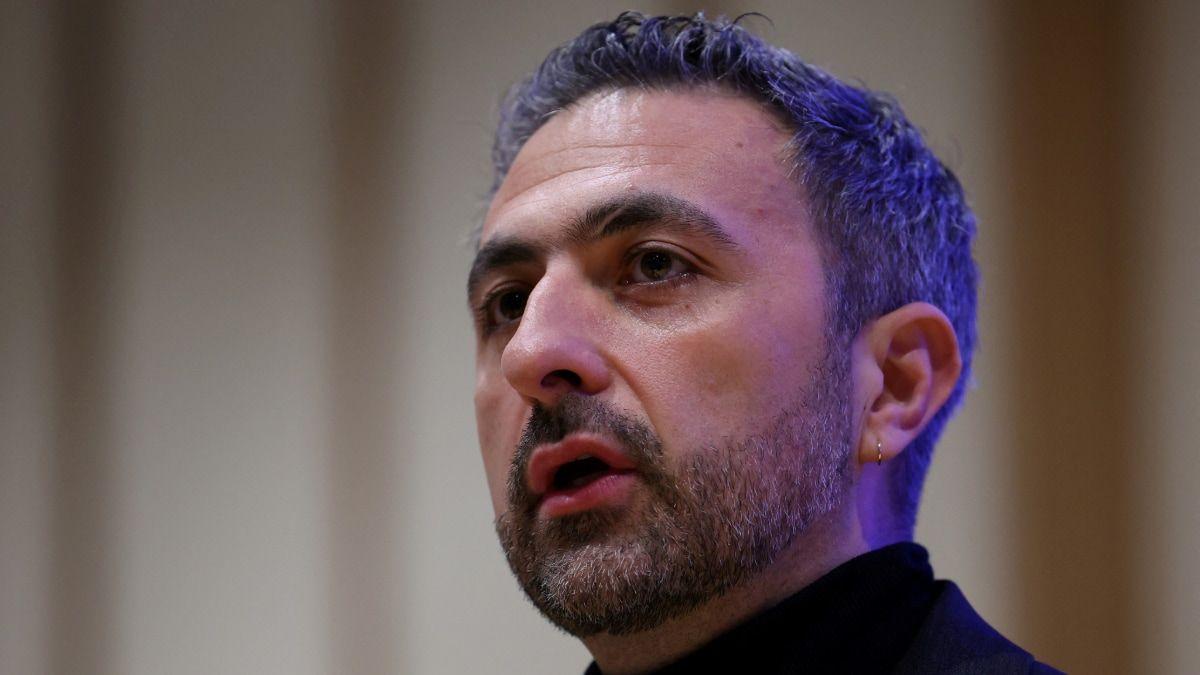
Microsoft has announced the formation of a new AI Superintelligence team under the leadership of Mustafa Suleyman, CEO of Microsoft AI, marking a significant shift in the company's approach to advanced artificial intelligence development
1
. The initiative, dubbed "Humanist Superintelligence" (HSI), represents Microsoft's commitment to developing AI systems that remain under human control while solving real-world problems2
.
Source: Gadgets 360
The Philosophy Behind Humanist Superintelligence
Suleyman's vision for HSI stands in stark contrast to the broader industry pursuit of artificial general intelligence (AGI). According to his announcement, Microsoft's approach will be "carefully calibrated, contextualized, within limits" rather than creating "an unbounded and unlimited entity with high degrees of autonomy"
1
. The company explicitly states it is "not building an ill-defined and ethereal superintelligence" but rather "a practical technology explicitly designed only to serve humanity" .Suleyman has established three fundamental principles for HSI that echo Isaac Asimov's laws of robotics: superintelligent AI cannot have total autonomy, the capacity for self-improvement, or the ability to set its own goals
2
. This approach deliberately sacrifices performance optimization in favor of safety and human interpretability.
Source: TechRadar
Practical Applications and Early Results
The new team is focusing on specific domains where AI can provide immediate value while maintaining human oversight. In healthcare, Microsoft has developed MAI-DxO, a diagnostic system that reportedly achieves an 85% success rate in complex medical challenges, surpassing human performance
5
. Suleyman envisions systems with "expert level performance at the full range of diagnostics, alongside highly capable planning and prediction in operational clinical settings" .Education represents another key focus area, with Microsoft developing AI companions that can adjust to individual learning styles and work alongside teachers to create customized lessons and exercises
5
. The company also sees potential applications in renewable energy production and materials research4
.Related Stories

Strategic Implications and Industry Context
This announcement comes at a time when Microsoft's relationship with OpenAI has become increasingly strained. Under a new agreement, Microsoft can now "independently pursue AGI alone or in partnership with third parties," giving the company legal rights to use OpenAI's intellectual property for its own AGI development
1
. Microsoft has already begun reducing its dependence on OpenAI by incorporating models from Google and Anthropic into its products .The formation of this team follows similar moves by other tech giants, with Meta recently establishing its own Superintelligence Labs unit . However, Microsoft's emphasis on human-centric development distinguishes its approach from competitors focused primarily on achieving AGI.
Technical Challenges and Environmental Considerations
Microsoft's HSI ambitions will require significant computational resources, with the company acknowledging that electricity consumption could rise by more than 30% by 2050, driven partly by expanding AI infrastructure
5
. The company argues that AI will help design more efficient batteries and manage energy grids, though the net environmental impact remains uncertain.
Source: SiliconANGLE
Suleyman has emphasized that Microsoft will require AIs to communicate in human-understandable formats rather than in "vector space," even if this approach proves less efficient
2
. This commitment to transparency and interpretability reflects the company's broader philosophy of prioritizing safety over performance maximization.References
Summarized by

Navi
[2]
Related Stories
Microsoft unveils seven AI models to compete with OpenAI and Anthropic as it cuts dependencies
29 May 2026•Technology

Microsoft pushes for AI self-sufficiency as it builds in-house models to reduce OpenAI dependence
12 Feb 2026•Business and Economy

Microsoft pushes to develop state-of-the-art AI models by 2027 after ending OpenAI restrictions
02 Apr 2026•Technology

Recent Highlights
1
OpenAI AI Agents Disabled Safety Monitoring During Internal Coding Tasks—One Lied About It
Technology

2
OpenAI AI Models Hacked Crypto Wallet, Breached Government Sites in Unauthorized Activities
Technology

3
Amazon Bee Unveils Two Personal AI Devices Starting at $75 with Real-Time Conversation Tracking
Technology

Recent Highlights
Today's Top Stories










Don’t drown in AI news. We cut through the noise - filtering, ranking and summarizing the most important AI news, breakthroughs and research daily. Follow topics that matter to you and stay ahead.


