Mistral AI secures Airbus and BMW partnerships for physics-aware industrial engineering platform


3 Sources
[1]
Mistral launches Industrial Engineering AI with Airbus, BMW and EDF as headline customers
At its first annual conference in Paris, Mistral formally rolled out the physics-aware AI stack it built around the Emmi acquisition, with Airbus, BMW and EDF as launch customers. Mistral AI used its first annual conference in Paris on Thursday to formally launch "Mistral for Industrial
[2]
Airbus and BMW partner with Mistral AI in Europe tech push
As European companies look for alternatives to US tech giants in the race for artificial intelligence, Airbus and BMW have both partnered with French startup Mistral AI to develop systems ranging from flight safety and defence technology to car crash simulations. Airbus has signed a partnership
[3]
French AI firm Mistral announces deals with BMW, Airbus
Paris (France) (AFP) - French AI firm Mistral on Thursday announced partnerships with carmaker BMW and aerospace company Airbus as it aims to boost its growth by fostering links with defence and industry giants. The Paris-based company, looking to punch above its weight in a sector dominated by US
Share
Copy Link
French AI startup Mistral AI launched its industrial engineering platform at its first Paris conference, securing partnerships with Airbus, BMW, and EDF. The physics-aware AI stack targets aerospace, automotive, and energy sectors, positioning European AI as an alternative to US tech giants in heavy industry applications.
Mistral AI Unveils Industrial Engineering Platform with Major European Partners
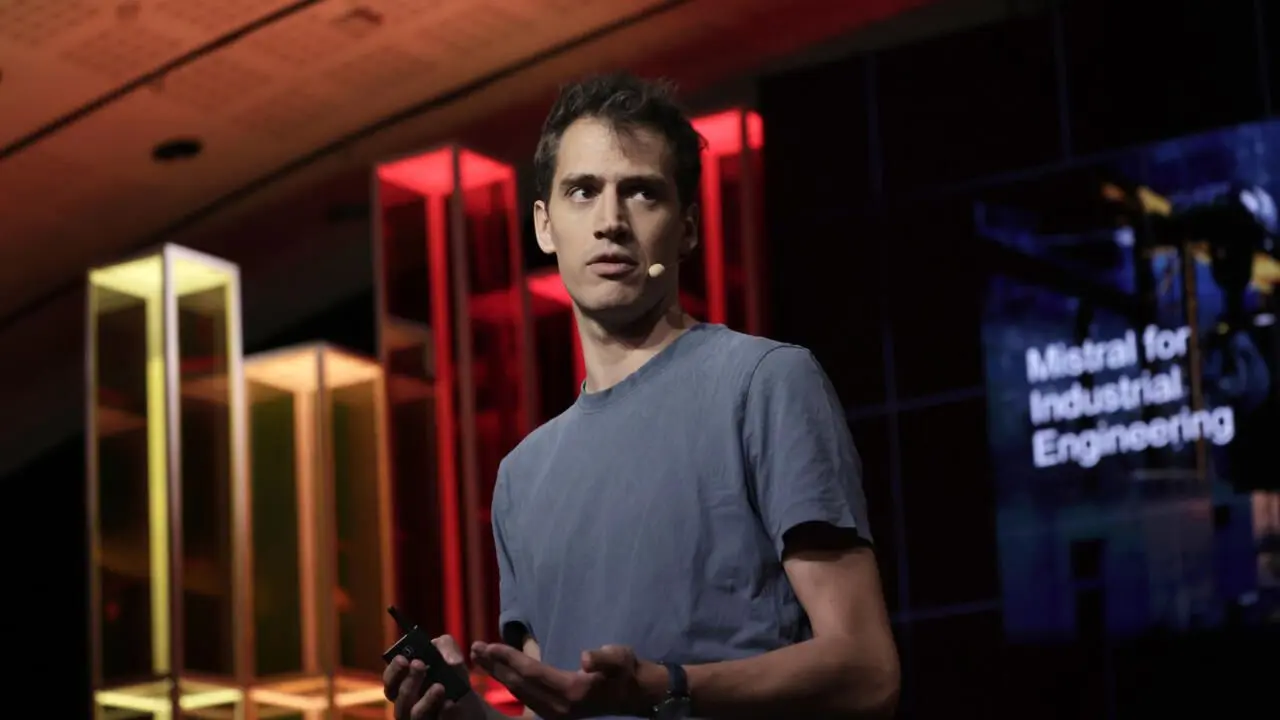
Mistral AI formally launched "Mistral for Industrial Engineering" at its inaugural annual conference in Paris on Thursday, announcing partnerships with Airbus, BMW, EDF, and shipping group CMA CGM as launch customers
1
. The physics-aware AI stack represents the French startup's most direct challenge to US tech giants, carving out a niche in AI in heavy industry that has been largely underserved by consumer-focused American foundation model labs1
. The product builds on Mistral AI's acquisition of Vienna-based Emmi AI earlier this month, bringing more than 30 researchers and engineers specializing in simulation surrogate modeling into the company's Science and Applied AI teams1
.
Source: France 24
Technical Foundation: Physics-Aware AI for Real-Time Simulations
The technical core of Mistral for Industrial Engineering centers on neural networks trained on outputs from expensive physics simulators, enabling comparable results in seconds rather than hours
1
. Emmi AI's models, originally spun out of Johannes Kepler University Linz and Austrian AI company NXAI in December 2024, simulate airflow, thermodynamics, fluid dynamics, and material deformation in real time1
. This capability aligns precisely with what European industrial firms need from AI: engineering tools tied to production data, robotics workflows, defect detection, and factory operations, rather than another chatbot or code-assistant product1
.Airbus Partnership Targets Flight Safety and Defense Applications
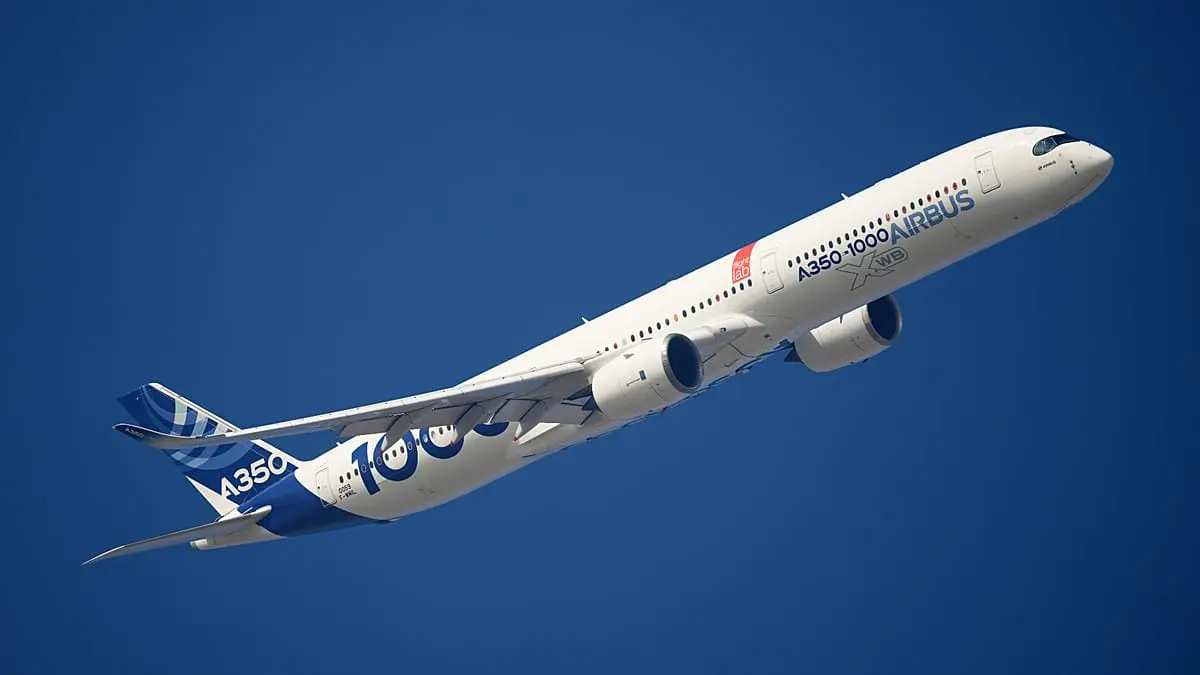
Airbus signed a comprehensive partnership with Mistral AI to embed artificial intelligence across its commercial aircraft, helicopter, defense, and space operations
2
. The European aerospace giant will gain access to Mistral AI's full product range and research teams, allowing development of custom AI tools for complex aerospace projects2
. Priority areas include exploring AI systems for onboard aircraft and spacecraft use, automating technical document production, accelerating engineering design cycles through AI-driven simulations, and developing edge AI capabilities for automatic object recognition to support flight safety2
. Catherine Jestin, executive vice president of digital at Airbus, emphasized the partnership would enable "deployment of high-impact, high-value use cases of trusted and responsible AI in aerospace"2
.
Source: Euronews
BMW Leverages AI for Crash Simulations and Vehicle Development
BMW announced its partnership with Mistral AI will focus on improving crash simulations and vehicle development by training AI systems on the German carmaker's extensive archive of crash simulation data
2
. The automaker runs thousands of virtual crash tests weekly and has accumulated more than one petabyte of historical simulation data, which will be used to develop industry-specific AI models for automotive engineering2
. BMW, which separately announced humanoid robot pilots at its Leipzig plant earlier this year, is integrating the Mistral stack into its industrial-AI competence center1
. Mistral AI will build specific models that "understand the physics" of vehicles to optimize crash-test procedures3
.European AI Sovereignty Drives Strategic Positioning
The AI partnerships reflect growing unease among European companies about dependence on US-based AI providers, with concerns over data sovereignty, security exposure, and the legal reach of American legislation over data stored on US-owned infrastructure [2](https://www.eurone ws.com/business/2026/05/28/airbus-and-bmw-strike-deals-with-frances-mistral-to-bring-ai-to-defence-and-safety-systems). Mistral AI, founded in Paris in 2023, has positioned itself as a European AI alternative with focus on open-weight models and data sovereignty, factors likely to weigh heavily in defense and aerospace procurement decisions
2
. CEO Arthur Mensch has repeatedly urged European policymakers to create "buy European" rules prioritizing local suppliers for public digital services contracts in sectors like cloud and AI3
. The company secured $830 million in debt financing earlier this year to build its own AI data center near Paris and is in advanced talks with European banks, including BNP Paribas, to develop a sovereign European answer to Anthropic's restricted Mythos cybersecurity model1
.Related Stories
Industrial AI Market Opportunity and Defense Technology Expansion
The named customers reflect the segments Mistral AI is targeting: aerospace, automotive, energy, and logistics
1
. EDF, the French state-owned electricity utility, serves as the third anchor customer named publicly, while CMA CGM, the Marseille-based container-shipping group, has been a Mistral customer for over a year1
. The industrial AI market has been visibly underserved while OpenAI, Anthropic, and Google's frontier labs spent the past two years competing on consumer-facing chatbots and enterprise-software automation1
. Mensch revealed the company has a "dedicated team" working on defense technology, with the firm already working with French and Singaporean militaries3
. The company runs a parallel defense-AI alliance with Helsing1
.Scale Challenges and Revenue Questions Ahead
What remains to be tested is whether customer commitments translate into meaningful revenue, as Mistral AI has not disclosed contract values, deployment scope, or revenue targets for the new product line
1
. Airbus, BMW, and EDF each have substantial internal AI programs, and whether Mistral's offering displaces those programs or runs alongside them in pilot mode will define the commercial significance of the announcement1
. The company has grown to around 1,000 employees since its 2023 founding and is building its own computing infrastructure, including a 44-megawatt data center outside Paris and another in Sweden3
. However, Mensch acknowledged the scale disparity: "We don't have the balance sheet of Microsoft. We can't put 50 billion on the table to build a gigawatt ahead of demand"3
. American tech giants expect to spend $750 billion this year on capital investments, compared with Mistral's one billion euros3
. Mensch told French parliamentarians that the company's best shot at independence is an eventual stock market flotation3
.References
Summarized by

Navi
[1]
Related Stories
Mistral AI acquires physics startup Emmi AI to strengthen European industrial footprint
19 May 2026•Technology
Microsoft funds Mistral's European AI expansion in multibillion-dollar infrastructure deal
21 Jul 2026•Technology
European AI Powerhouses Mistral and Helsing Forge Alliance for Military AI Development
10 Feb 2025•Technology

Recent Highlights



Recent Highlights
Today's Top Stories







Don’t drown in AI news. We cut through the noise - filtering, ranking and summarizing the most important AI news, breakthroughs and research daily. Follow topics that matter to you and stay ahead.


